

Curious mind, hacking and building since childhood.
Earth
Joined April 2009
- Tweets241
- Following138
- Followers2.5K
- Likes5.5K


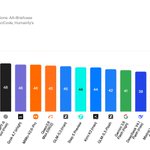



Impressive benchmark; this could make a great day-to-day coding companion. We’re already testing it with Lisa and will release an update once it's stable ;)

Some of you thought that Inkling 2 Small was too big at 594B parameters. We heard you: Inkling 2 Mini is a looped transformer with just 26B parameters, small enough to run on your laptop, powerful enough for agentic work with a score of 20.1 on AA Index.
thinkingmachines.ai/news/ink…

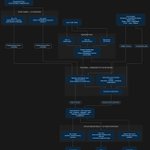
After countless hours of architectural discussions and design work with @briche_arnaud, we've reworked Lisa around a clearer separation of responsibilities.
A few key design decisions:
1. Models define computation plans. Weight schemas, operation dependencies, and numerical rules live in model definitions, independent of any concrete hardware backend.
2. The engine owns inference orchestration. Weight binding, plan execution, batching, cache management, sampling, and speculative decoding share a common implementation.
3. Backends focus on device execution. They manage buffers, kernels, queues, and synchronization, but don't own model orchestration.
4. Checkpoint formats stay independent of execution.
5. Readers for MLX checkpoints and GGUF preserve original tensor encodings and metadata. The engine handles weight binding and device imports.
6. One inference core, multiple interfaces. The native app, CLI, and HTTP API build on the same engine.
7. Metal powers the language and image models today. CPU execution currently supports Laya, while ROCm remains future work.
The goal is to make new models easier to integrate and new backends possible without duplicating the surrounding inference infrastructure.

This makes integrating a new model family much faster: define its computation plan, map its weights, and add any missing kernels to the device backend.
The shared engine already handles batching, cache management, sampling, and speculative decoding.
Most of the work stays focused on what makes the model different.
1
21
Still a lot to build, but the foundations are in place.
github.com/agnosticeng/lisa

10
FYI, Lisa is coming to the iOS and Mac App Stores, we’re just waiting for @Apple to open the gate 🤷♂️
@olesovhcom and @OVHcloud team just released Olala v1.0 Mini, its new open-weight AI model.
We're bringing day-one, first-class support to LISA, with custom Metal kernels and an optimized inference engine that delivers ~150 tokens/sec on short prompts on Apple M5 Max.
Fully local, no cloud required.
github.com/agnosticeng/lisa
Feel free to borrow any of our optimized kernels and engine architecture, more optimizations are on the way ;)
github.com/agnosticeng/lisa/…
1
71
Didier FRANC retweeted

Over the past week, I’ve been overwhelmed by the love and support of friends, industry colleagues, and people I've never met. Thank you to everyone who has shown kindness to my family and me. It means the world to me.
I came to the United States 53 years ago, and becoming an American citizen is one of the greatest gifts and proudest moments of my life. NVIDIA has been my life’s work. Building it into the company it is today alongside my colleagues has been a privilege and an honor. Nowhere but in America could a company like NVIDIA be possible. I love our country, and I love NVIDIA.
I did not live up to the standards expected of everyone at NVIDIA, and I have made serious mistakes in my personal life. I created problems for the Board that I deeply regret. I own my mistakes completely, and I am committed to cooperating with the Board’s independent investigation.
Since my departure, I’ve seen an outpouring of calls from NVIDIA’s employees, investors, business partners, and customers for me to return as CEO. Many continue to reach out to me directly as the company navigates complex technology, market, competitive, and geopolitical dynamics. NVIDIA is a once-in-a-generation company. If the Board of Directors decides that my return is in the best interest of our shareholders, our employees, the company, and America, I would be honored to answer these calls and return as CEO.
Thank you again to everyone who has shared their good wishes. I am profoundly humbled by your support. To my family: I love you, and I will spend the rest of my life being worthy of yours.
Jensen
Didier FRANC retweeted

OVH annonce Olala mini 7A1B
OVH sa première famille de LLM. Premier représentant de cette famille, Olala mini 7A1B est un modèle compact bâti sur une architecture inédite.
Olala : le modèle innovant dans l’attention hybride
Olala mini repose sur une architecture de 7 milliards de paramètres (7B) avec un milliard activés répartis entre 256 experts par couche, l’attention hybride avec Differential-TPA et Mamba-3, au format BF16. Seule une fraction du modèle est sollicitée à chaque requête, ce qui le rend plus rapide et moins gourmand en mémoire. Conséquence directe: le modèle fonctionne sur un GPU doté d’un minimum de 8 Go de mémoire, il atteint 160 tokens par seconde sur une RTX A4500, et même sans GPU, sur un simple processeur, à 50 tokens par seconde. Sa fenêtre de contexte atteint aujourd’hui 32 000 tokens. Olala mini sera disponible en open source sur Hugging Face, sous licence Apache 2.0.
Entraîné avec l’aide publique européenne et en fonctionnement chez Qwant
Olala mini a été entraîné sur trois supercalculateurs publics européens, Jupiter, MeluXina et Jean Zay, équipés de GPU GH200, A100 et H100. Ce soutien, qui représente l’équivalent de 7 M€ en heures de calcul, a été déterminant, et OVH tient à en remercier les pouvoirs publics. L’initiative publique s’est révélée un succès à plus d’un titre : elle a fait émerger une équipe d’exception en intelligence artificielle et a donné naissance au Lab Agentique d’OVH: OVHai LLM. Olala mini est publié avec ses poids, son modèle de base pré-entraîné, son rapport technique et sa documentation de conformité à l’AI Act. Qwant l’a déjà adopté pour sa fonctionnalité de réponse flash, avec des gains significatifs : des réponses 20 % plus rapides et des coûts de fonctionnement divisés par trois par rapport au modèle précédemment utilisé.
En route vers la v1.1, puis la v2.0
Attendue d’ici la fin de l’année, la version 1.1 portera la fenêtre de contexte à 128 000 tokens et améliorera ses performances en raisonnement mathématique. Avec la version 2.0, OVHai LLM entend développer des modèles spécialisés dans trois domaines. D’abord, l’agentique pour les entreprises : à terme, Olala alimentera OVHai Workspace, dont la version chiffrée nécessitera des modèles capables de tourner en local, directement sur le poste de travail. Ensuite, le DevOps cloud, avec des déclinaisons adaptées aux développeurs, aux architectes et aux équipes d’exploitation qui assurent la continuité de service 24h/24. Enfin, la cybersécurité, dans ses volets défensif comme offensif. Olala v2.0 dépassera les 100 milliards de paramètres.
corporate.ovhcloud.com/fr/ne…

🤷♂️

An internal post urging the board to consider employee sentiment about Nvidia’s former CEO has drawn more than 1,600 comments, the majority in full support of reinstalling him. buff.ly/iaZuiLF

83
Didier FRANC retweeted

Kimi-K3.1-Pro is now open-weights
huggingface.co/moonshotai/Ki…

Didier FRANC retweeted

There's a buzzy new paper about GPT-6 Astra being able to directly interpret model weights (prompts full of floating point numbers) - I tried it with Qwen 3.8 27B on my laptop and found that, after 45+ minutes, that model could achieve the same thing simonwillison.net/2026/Nov/3…
🔥

LLMs accumulate a lot of declarative knowledge.
That's how they can answer a large number of questions.
That's also why they require so many parameters and hence so much memory.
But one can replace the accumulation of knowledge by *understanding*
That what JEPA world models do.
That's one reason they can be useful with considerably less memory and training data than LLMs.
This paper merely shows that the underlying similarity structure of the data, whether text or image (e.g. co-occurence of words in text or objects in images) uniquely determines the shape of the representation point cloud, when the encoder is trained trained with a common anti-collapse criterion like SIGReg or VCReg (not by reconstruction).
66
Didier FRANC retweeted

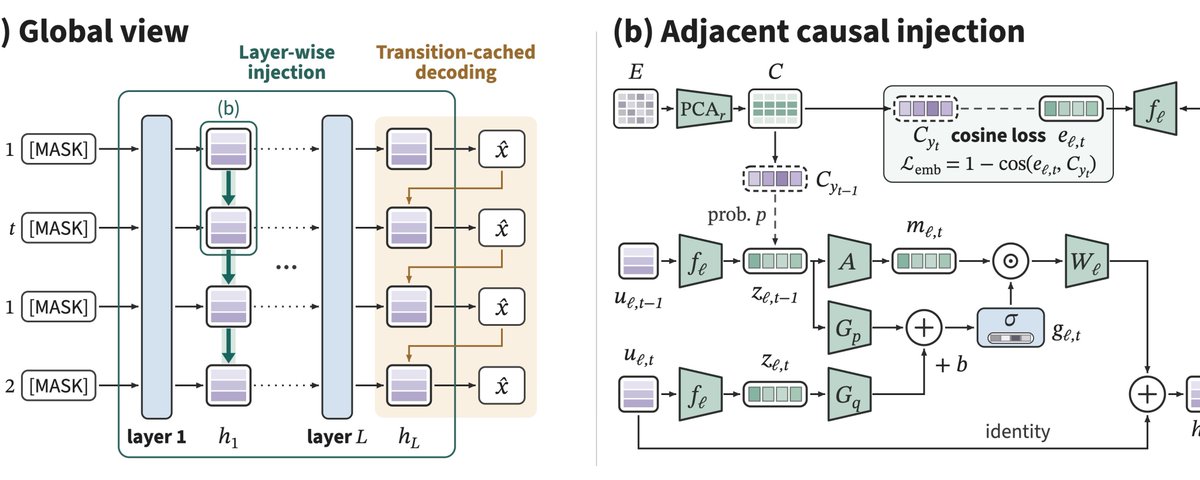
Yann LeCun and Randall Balestriero just Proved the Platonic Representation Hypothesis, and found a better way to achieve it.
The Platonic Representation Hypothesis suggests that AI models trained on different modalities, like images and text, eventually learn similar representations of the world. But this paper shows that how models are trained matters more than simply scaling them up.
So they mathematically show that, under certain conditions, two JEPAs trained completely separately can learn essentially the same underlying representation of the world. One learns from different images of the same scene, while the other learns from different descriptions of that scene, without ever being trained on image-text pairs.
Their approach achieves the same image-text alignment with 42x fewer training samples than next-token prediction. A 109M-parameter text JEPA even outperforms LLMs up to 72B parameters on cross-modal alignment benchmarks.
alphaxiv.org/abs/2610.39302

Didier FRANC retweeted

Going down a rabbit hole.
Here is Qwen 3.8 27B vs the best models from 2 years ago today on Artificial Analysis.


