

Dios de la area IT Sarcasmo y mucho humor Negro. Racial Level Doppelgänger level 15 Elder Lich level 15 Overlord level 5 Job Level Ruler of Death Level 15
importa
Joined July 2014
- Tweets71.2K
- Following2.8K
- Followers896
- Likes17K


Pinned Tweet
"Mis padres murieron horriblemente. Trabajar en un lugar tan peligroso ... ni siquiera podían encontrar sus huesos. Por eso no pararon las líneas de producción. detenerlos supondría enormes pérdidas. Los perdedores como nosotros ... nos utilizan y nos tiran ".
1
9
12,038
Dios de la Ruin-a retweeted

🚨 CRITICAL ALERT: NFS2ROOT (CVE-2026-99362) — Pre-authenticated remote root on Linux NFS servers via port 2049
A heap overflow in the Linux kernel’s NFS server (nfsd) lets anyone who can reach TCP port 2049 gain remote root without a login, credentials, or mounting a share. The bug has existed since kernel 3.16 (2014) — 12 years — and OpenSec demonstrated a working root shell (exploit still private; no public attacks reported yet).
Technical summary (tldrcve + OpenSec):
The client shrinks the NFSv4.1/4.2 session reply cache to the minimum size, then forces the server to copy ~80 bytes into a zero-length buffer (overflow of ~61 bytes past the kernel heap object, with partial client control of the content). Replaying the request leaks kernel heap and the KASLR offset. Impact: root. CVSS 9.8 Critical (AV:N/AC:L/PR:N/UI:N). Only affects hosts running the in-kernel nfsd serving NFSv4.1 or 4.2 (default on many distros) with port 2049 reachable by untrusted hosts. Machines that do not serve NFS are not affected.
You are vulnerable only if ALL of these are true:
• Kernel ≥ 3.16 without the upstream patch (fixed in 5.10.275, 5.15.226, 6.1.193, 6.6.163, 6.12.117, 6.18.61, 7.3.2, 7.4-rc1 and backports).
• nfsd loaded and offering NFSv4.1/4.2.
• Port 2049 reachable from outside (not just loopback or an isolated storage network).
Many distributions (recent Ubuntu releases, RHEL 6–10 and others) still list affected kernels or have fixes in progress. Debian has safe versions on some lines; check your distro’s changelog and reboot after updating.
Immediate mitigations (priority order):
1. Update the kernel with the CVE-2026-99362 patch and reboot.
2. Until then: firewall TCP/2049 (allow only trusted storage-network IPs). Red Hat provides firewalld examples.
3. Temporary workaround: disable NFSv4.1 and 4.2 in /etc/nfs.conf (vers4.1=n vers4.2=n) and restart nfs-server (loses pNFS and some 4.2 features).
4. If you don’t need NFS: systemctl stop/disable nfs-server.
5. Detection: the free anfs tool (check added 22 Nov) distinguishes vulnerable from patched servers without triggering the overflow. Look for nfsd4_check_resp_size warnings, oopses naming nfsd4_*/svc_*/call_usermodehelper, shells spawned by kernel workers, and bursts of short NFSv4.1 sessions.
Full details and safe-version checklist: tldrcve.com/nfs2root/
OpenSec technical blog: opensec.in/blog/nfs2root-cve…
Why this is especially dangerous right now:
My earlier research (Threat Intel Report — NFS Exposed: The Silent Attack Vector, ZoomEye, Aug 2025) already mapped the massive exposure surface: over 1.5 million servers worldwide with NFS on port 2049. In a verified sample of 3,369 hosts, 37.34% had active NFS, with high rates of misconfigurations (wildcards, broad IP ranges, no_root_squash on ~35%, heavy use of NFSv3). Classic risks already included data exfiltration, ransomware directly on shares, and privilege escalation via no_root_squash.
This new pre-auth kernel root flaw turns exposed NFS from a “silent data-access vector” into “instant remote root.” What previously required mounting and misconfiguration can now yield root with a single valid TCP connection (no obvious network signature — the attack is legitimate NFS traffic).
Full ZoomEye report:
medium.com/@zoomeye_team/thr…
Recommended actions now:
• Inventory every host with 2049 exposed (ZoomEye, Shodan, Censys, fofa,internal scanners).
• Prioritize those serving NFSv4.1/4.2.
• Patch + reboot or firewall immediately.
• Audit /etc/exports, enforce root_squash, restrict to specific IPs, and consider safer alternatives (Kerberos + encrypted NFSv4, SSHFS, encrypted SMB, or segmented cloud storage).
NFS was designed for trusted networks. Exposing 2049 to the internet was always a bad idea; with this CVE it is now critical.
Share with infra, SOC, and Linux admin teams. Update and close the port.
#CyberSecurity #InfoSec #Linux #Kernel #Vulnerability #CVE #NFS #ThreatIntel #RCE #PatchNow #ZeroDay #SysAdmin @zoomeye_team

Dios de la Ruin-a retweeted

‼️ Breaking: SAP Confirms Security Incident as Hackers Reportedly Steal GitHub Tokens and Alter Code
Details: cybersecuritynews.com/sap-se…
SAP has confirmed an IT security incident after detecting suspicious activity.
The attackers stole authentication tokens belonging to SAP employees and used them to alter and copy source code on GitHub.
The German software maker said it took immediate steps to protect customers and secure its services. It said investigators had found no evidence of unauthorized access to customer business data at that stage.
SAP did not answer detailed questions about the incident. SAP is reportedly handling the investigation under the name “Project Granite.”
#CybersecurityNews #SAPsecurityincident

Dios de la Ruin-a retweeted

⚠️🇲🇽 Alerta: Se reporta una vulnerabilidad de seguridad de alto impacto en la infraestructura de Telcel (Radiomóvil Dipsa) que permitiría consultar, en tiempo real y sin mecanismos de autenticación, información confidencial de cualquier línea telefónica mexicana de 10 dígitos.


Dios de la Ruin-a retweeted

⚠️ 🇲🇽 📱 📡 🪪 🔐 PREVENTION ALERT – ALLEGED REAL-TIME EXPOSURE / ACCESS VULNERABILITY IN TELCEL (RADIOMÓVIL DIPSA, MEXICO) ENDPOINTS AFFECTING NATIONAL PHONE LINES – ATTRIBUTED TO "GORDO"
[STATUS: ALLEGED / UNCONFIRMED / REPORTED ACTOR: GORDO / REPORT DATE: NOVEMBER 26, 2026]
Centralized cyber-intelligence systems have intercepted a forum post (recorded on November 26, 2026, at 03:50 AM) attributed to a user named "gordo," titled "Telcel 2026 (All of Mexico)." The actor claims that Telcel (Radiomóvil Dipsa) in Mexico has an active, real-time exposure via endpoints that respond to queries regarding 10-digit Mexican phone numbers (prepaid, postpaid, or corporate accounts). These endpoints reportedly function without authentication, CAPTCHAs, or rate limiting, and the actor is not offering a static data dump for sale. (Due to strict operational security and privacy protocols, the direct link to the message is omitted.)
According to the report, the actor claims that the data returned includes the full legal name, CURP (Unique Population Registry Code), RFC (Tax ID), registered address, email, ICCID, IMEI, plan/contract details, activation date, and a history of outgoing calls (including duration and timestamps). It also includes the ability to export account statements in PDF format. Furthermore, the actor notes the potential to trigger password resets on the "MiTelcel" platform or facilitate SIM swaps through social engineering. The author states that they are not selling the data and requests direct contact to provide further details regarding the vulnerability.
It is strictly noted that the veracity of this alleged real-time exposure, the existence of authentication/authorization flaws within Telcel’s systems, and the authenticity or actual scope of the described information have not been officially confirmed by the company or by the competent authorities in Mexico. Claims regarding the mass querying of telecommunications databases or endpoints require rigorous technical and forensic verification before they can be considered credible or confirmed to have national reach.
Reported Actor: gordo.
Entity / Stated Scope: Telcel (Radiomóvil Dipsa) — 🇲🇽 Mexico (alleged scope covering 10-digit mobile lines nationwide).
Sector: 📱 Telecommunications / Mobile Network Operator; Subscriber Personally Identifiable Information (PII), communication metadata, and account/line security.
Report Date: November 26, 2026 (03:50 AM).
Stated Data Fields and Capabilities: Full name, CURP (Unique Population Registry Code), RFC (Tax ID), registered address, email, ICCID, IMEI, contract/plan details, activation date, outgoing call history, PDF account statements, as well as references to password resets for "MiTelcel" accounts and SIM swap procedures.
Nature of the Incident: Alleged real-time exposure of mobile line data, purportedly due to a lack of authentication, rate limiting, and per-account scoping controls.
🛡️ PREVENTIVE TECHNICAL CONTAINMENT RECOMMENDATIONS (SOC / CSIRT / TELECOMMUNICATIONS AND USERS)
Urgent Audit of APIs, Endpoints, IDOR/BOLA, and Rate Limiting: The operator’s SOC, SecOps, AppSec, and CSIRT teams must immediately audit query endpoints, self-service portals (MiTelcel), account statement generation systems, and associated APIs. This includes verifying authentication, account/owner-based access controls, rate limiting, WAF configurations, and logs for anomalous queries or data extractions.
Anti-SIM Swap Controls and Phishing-Resistant Authentication: Strengthen identity verification processes and implement blocks for SIM swap requests or changes to lines/devices. Additionally, wherever possible, migrate critical accounts away from SMS/OTP-based authentication toward FIDO2/WebAuthn authenticators or dedicated authentication apps.
🖥️ CENTRALIZED THREAT MONITORING SYSTEM
Intelligence System: analyzer.vecert.io
Quickly check your security status at: monitor.vecert.io
Inquiries and services: vecert.io/contact
#Mexico #Telcel #RadiomovilDipsa #Telecommunications #SIMSwap #PII #CURP #RFC #DataLeak #DataBreach #BreachAlert #ThreatIntel #ThreatIntelligence #InfoSec #CyberAlert #VECERT #SOC #CSIRT #Unconfirmed #SecurityAlert #CyberDefense #CyberRisk

Dios de la Ruin-a retweeted

🔴 CRITICAL · VMware products: 9 new CVEs
Products: vCenter Server (5), ESX (4)
Worst (vCenter Server, 9.8): authentication bypass in directory service (CVE-2026-123903)
👉 Fix: see advisories
cve.now/CVE-2026-123903?rele…

Dios de la Ruin-a retweeted

🛡️ Otra actualización de Windows que provoca fallas
Un empleado intenta entrar al sistema de inventarios o a una aplicación interna de su empresa.
Escribe correctamente su contraseña, pero Windows rechaza el acceso.
Microsoft confirmó que esto puede ocurrir después de instalar las actualizaciones de seguridad del 10 de noviembre.
¿Qué está pasando?
Windows reforzó la seguridad de NTLM.
Es una tecnología que usan algunas empresas para comprobar la identidad de sus empleados antes de permitirles entrar a sus sistemas.
El cambio busca impedir que los delincuentes manipulen las conexiones para hacerse pasar por usuarios autorizados.
Sin embargo, algunos programas que gestionan esos accesos envían información incompleta.
Y Windows ahora rechaza la conexión, aunque la contraseña sea correcta.
Entre los afectados pueden estar los sistemas de inicio de sesión único, que permiten utilizar una misma cuenta para entrar a varias aplicaciones empresariales.
Microsoft publicó una solución temporal, pero aplicarla reduce la protección contra ataques que buscan suplantar identidades.
Pidan a TIC revisar si hay empleados con dificultades para iniciar sesión después de la actualización.
Y contacten a los proveedores de las aplicaciones afectadas para corregir la incompatibilidad.
Microsoft también prepara nuevos cambios de seguridad para mayo de 2027, por lo que las empresas que todavía dependen de estos sistemas de autenticación deberán revisar su compatibilidad.

Dios de la Ruin-a retweeted

🚨 Um atacante desconhecido teria usado ferramentas ofensivas baseadas em IA contra servidores de gerenciamento de segurança da Check Point, afetando 22 organizações em todo o mundo. 🧵👇
#Cibersegurança #CheckPoint

Dios de la Ruin-a retweeted

Cuando automatizas infraestructura y operaciones de seguridad con agentes de IA, la velocidad de cambio se dispara.
Pero aparece un problema del que se habla poco: la pérdida de contexto en el equipo.
Si cada ingeniero va en "modo automático" con su IA, se rompe la conciencia situacional.
Para evitar dar charlas interminables o saturar los chats de operaciones con mensajes largos que nadie lee, estamos cambiando cómo sincronizamos al equipo:
• La propia IA traduce los cambios técnicos de la semana a un "parte humano" de 5 puntos (qué cambia mañana en tu pantalla).
• Canal de anuncios de solo lectura: cero debate, solo cambios operativos críticos.
• Pulso síncrono de 10 minutos dos veces por semana: sin pantallas de código, solo proyectos activos y bloqueos.
Automatizar la ejecución es relativamente fácil; lo difícil es mantener a todo el equipo mirando el mismo mapa sin añadir burocracia.
Mientras unos avanzan a toda velocidad automatizando flujos, el resto del equipo puede perder el contexto global si no hay puntos de sincronización muy ligeros.
Más automatización exige mejor comunicación interna, no menos.
Dios de la Ruin-a retweeted

Montar un Homelab es aprender a construir, pero también a proteger.
Firewall, segmentación de red, actualizaciones, accesos seguros y copias de respaldo: pequeñas medidas que pueden evitar grandes problemas.
¿Ya proteges tu laboratorio o todavía tienes tareas pendientes?
#Homelab #Ciberseguridad

¿Todos tus amigos son inteligentes?
Procuro que lo sean, porque es muy difico tratar con idiotas.
¿Que es la humildad?
La desconozco
Y la cobardía
También
¿Debemos seguirlo odiado?
Con entera libertad.
Hagan lo que quieran, yo voy a seguir siendo lo mismo.
30
Dios de la Ruin-a retweeted

Error de Microsoft 365 impidió abrir Word, Excel y Outlook
Microsoft ha solucionado un problema de inicio en Microsoft 365 que provocaba que algunos usuarios de Windows vieran una ventana blanca vacía
blog.elhacker.net/2026/11/er…

Dios de la Ruin-a retweeted

🎣 HSBC phishing
🔗 hsbcau[.]jrni[.]com
📍 43.199.242.209
☁️ Amazon com (AS16509) · 🇭🇰 Hong Kong
🔒 GoDaddy TLS Intermediate CA DV - R1v1
phishunt.io/suspicious/hsbc/
#phishing

ALT Screenshot of a phishing page impersonating HSBC at hsbcau.jrni.com. HSBC-branded login page with email and password fields on a suspicious domain.
Dios de la Ruin-a retweeted
‼️ 4,000+ Servers Running AI Hacking Agents Are Exposed to the Internet and Actively Attacking
Details: cybersecuritynews.com/4000-s…
The Shadowserver Foundation found around 4,200 internet-exposed instances of AI hacking frameworks on November 23, 2026, up from just under 3,700 a day earlier. Its November 25 report also documented more than 10,000 events from over 80 IP addresses identified as running these tools between November 9 and 23.
The larger figure measures exposure. The smaller one counts sources that sent traffic to Shadowserver’s honeypots. The findings do not show that all 4,200 instances were attacking. Shadowserver scans the internet daily for 15 AI attack frameworks and tracks exposure on its public dashboard.
#CybersecurityNews

Dios de la Ruin-a retweeted

"The RAT's controls are shaped for AI, not a person."
Is this the next innovation on RATs?
C2: ai.stacklab[.]bid
99e56532d35d71be3c13c26343f2537922635db99e3f2fb953952148c9445896
h/t @malwrhunterteam
rogueauthority.org/remote-ai…

Dios de la Ruin-a retweeted

So you think the Microsoft Store is safe? Think again. We discovered a new RAT we're calling VinciRAT that is spread through a Microsoft Store app called Setup Assistant. Despite reporting it to Microsoft, it remains available in the store!
Read more:
esentire.com/blog/vinci-rat-…


Dios de la Ruin-a retweeted
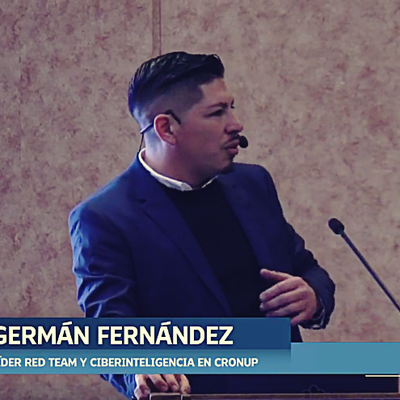
#ARTEX 🤦♂️
Amid all the technological alarmism, we often forget that offensive AI doesn't need to reinvent hacking. It simply needs to exploit, at unprecedented speed and scale, the security weaknesses we've failed to address for years.
The paradox is that we're using AI to build faster than ever, expanding our attack surface, while attackers are leveraging the same technology to discover and exploit the security gaps we leave behind.
→ We're accelerating innovation and offensive capabilities, but our security maturity isn't keeping pace. AI hasn't just transformed the threat landscape, it's also exposing decades of cybersecurity debt.


Dios de la Ruin-a retweeted

🆕 Curso IDS / IPS con Suricata 🙀
🌞 Sábados 28 de Noviembre y 5 de Diciembre
⏲️ De 9:00 am a 12:00 pm (UTC -05:00)
📱 WhatsApp: wa.me/reydes
🌐 reydes.com/archivos/cursos/C…
