

Academic. Tweeting about #psychology, #decisionmaking and other random topics (especially baseball). My views are my own.
St. Louis, MO
Joined April 2009
- Tweets40.2K
- Following2.2K
- Followers3.3K
- Likes126K







Matt Grawitch retweeted

As I’ve mentioned a few times before, a recent Harvard study claimed that cellphone bans improved grades based on a SD of .01. Here’s what that actually looks like in a graph by @TommyCBlanchard. Yes, those are basically completely overlapping bell curves.
Please, researchers, please…whatever the topic,…stop telling the general public or policy makers that outcomes like this support your hypothesis. It’s just bad science and deeply misleading.

Matt Grawitch retweeted

Steven Pinker (@sapinker) has written a magnificent 13,000 word essay expounding on intelligence, consciousness, rationality and the AI doom movement.
It's now free to read in @Quillette
quillette.com/2026/11/23/wil…

Matt Grawitch retweeted

This is incredible.
Tenants went on a rent strike.
When the owner got foreclosed on, tenants launched a "buyer beware" campaign to scare away investors.
They hoped a nonprofit would step in.
Instead, the building failed to sell at auction.
"Auctions closed without a bid, sending them back to the bank for just $500 apiece," the article says.
The city tried to intervene by backing a proposed bid from one selected group. But the creditor rejected the bids, which did not match the "upset price" -- the size of the judgment the bank holds.
The tenants are now "trying to get repairs on their neglected buildings."
But there's no money for it. The building is being managed by a court-appointed receiver.
citylimits.org/rent-stabiliz…

Matt Grawitch retweeted

Your Thanksgiving dinner is loaded with toxic chemicals!
Does that mean turkey is cancer-causing poison? Nope.
Check out @ACSHorg's holiday dinner menu for a breakdown of all the not-so-scary chemicals you eat without realizing it. acsh.org/news/2026/11/19/pas…


Matt Grawitch retweeted

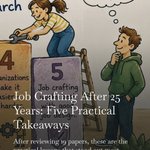
‘Job crafting’—workers reshaping their work, making it more meaningful, engaging, and sustainable—was coined 25 years ago. 19 new papers revisit the concept and @docgrawitch distils them into three takeaways:
•richer (what→how)
•broader
•more nuanced
buff.ly/IXhC4fu

Matt Grawitch retweeted
Given that—whatever we believe about the consciousness of AI—we don’t know for certain that they’re not conscious, how should we act towards them, based on the available evidence?
@docgrawitch doesn’t have the answer, but asks some penetrating questions:
buff.ly/EyvbOq5

Matt Grawitch retweeted
“AIs can’t get horny, because they’re just software, lines of code. They don’t have genitals that get hard or wet…”—no hormones and other biological stuff that comes to mind when you say ‘horny.’
@horganism weighs in on the controversy:
buff.ly/q7YsKLt
HT @docgrawitch

Matt Grawitch retweeted
I've always worried about the "grass is greener" effect when it came to the idea of relocating to Europe from the US: wired.com/story/they-fled-tr…

Matt Grawitch retweeted

"Before the drug police turn more consumers into criminals, they should at least demonstrate how doing so will make those consumers safer." My latest. reason.com/2026/10/20/the-de… via @reason


Matt Grawitch retweeted
What happens when AI agents operate autonomously over longer periods of time? Do they evolve like living beings?
The idea has been tested, in multiple variants.
“Things got weird pretty damn quickly!”, writes @docgrawitch:
buff.ly/ctAcvzF

Matt Grawitch retweeted
Principled people—aren’t we all?—conveniently gloss over the fact that their sacred values only feel absolute until real tradeoffs must be made.
As Meat Loaf sang, they would do anything… but that, writes @docgrawitch:
buff.ly/LO7Dovi

Matt Grawitch retweeted
Three schools take three different perspectiveson expertise—Expert Performance–stored in memory
Embodied Cognition–emerges from interaction w/ environment
Naturalistic Decision Making–constructed from patterns
@docgrawitch argues it’s all of the above:
buff.ly/ESAERMo

Matt Grawitch retweeted
Blogged: Should decisions be driven by numbers?
Good decisions must be evidence-based, and—especially for investors—the financials of a business are strong evidence. But are numbers really what should drive our decisions?
buff.ly/8tG3n0o

Matt Grawitch retweeted
There’s more to meaningful work than social purpose—@docgrawitch argues meaning in work tends to be viewed too narrowly.
Psychological worth can come from other work aspects, from challenge to autonomy:
buff.ly/oyZtDCF

Matt Grawitch retweeted

McDonald's is spending 8.5 billion dollars to find out why families stopped coming.
I can save them the 8.5 billion.
They took out the playground.
The plan, announced Wednesday at investor day. Better food, faster service, new equipment, AI tools, hospitality training, and a bigger push into chicken and beverages. They call it Next. The goal, they say, is making customers feel more comfortable.
Wall Street loved it so much the stock fell 5 percent to its lowest since 2022.
Over five years McDonald's shares are down 3 percent. Burger King's parent is up 14. The owner of Taco Bell and KFC is up 13.
This is not a hamburger problem. This is a McDonald's problem.
So let us talk about who used to eat there.
Parents. That was the whole business. Parents at 5:40 on a Tuesday with three kids in the back and nothing thawed at home.
You did not go for the burger. You went because your kids could run screaming through a plastic tube for 40 minutes while you sat with a coffee and experienced silence.
That was the product. The food was the cover charge.
The first PlayPlace opened in 1971 in Birmingham, Alabama, and for fifty years it did one job. It made small children demand to go to McDonald's.
Then 2020 arrived, every play area in the country closed, and a great many never came back. The equipment came out during a remodeling program named Experience of the Future.
The Experience of the Future turned out to be a touchscreen.
Their own chief executive said he did not know if ball pits were in their future.
Sir, you were not selling ball pits. You were selling forty minutes.
So now there is no counter, no playground, and no reason for a seven year old to want to go. A screen, a window, and a bag.
And for that we pay prices that require a moment of reflection in the parking lot.
For thin, overcooked, oddly uniform pucks that taste like a memory of beef.
I did not love them because they were good. I loved them because I was eight and there was a slide.
And have you seen the new buildings.
The old ones were unmistakable. Red roof, yellow arches, legible from a highway at 70 to a child who could not yet read.
The new ones are a flat gray box with a small logo and a drive through wrapped around it. A regional claims office with a fryer.
They removed the color, the characters, the counter, and the playground, and then hired consultants to find out why it no longer feels like anywhere.
Which is why, when I have to eat fast food, I go to Chick-fil-A.
Not for the politics. For the competence.
They have led the customer satisfaction index for fast food eleven years running, and average 8.5 million dollars per location against McDonald's 4 million.
More than double, while closed on Sundays. Fifty two days a year with the lights off, and still double.
A seventeen year old hands you a bag and says my pleasure and means it about 70 percent, which is 70 percent more than a touchscreen has managed.
McDonald's is spending 8.5 billion on hospitality training.
Chick-fil-A earns 8.5 million per restaurant by just having some.
So here is my consulting proposal, free of charge, on behalf of mothers everywhere.
Put the playgrounds back.
Not a nostalgia campaign. Not a retro cup. The structure. Tubes, slides, a door the kids cannot open from the inside, and a bench where a tired woman can sit.
And understand what you are buying, because it is not lunch.
A six year old does not know your food is bad. He has no basis for comparison and no functioning palate. He thinks the burger is incredible because he is standing in a castle made of tubes.
That is the window. That is the only window you get.
You catch them before the taste buds arrive, and thirty years later they drive past your sign, feel something they cannot explain, and pull in anyway.
That is not a menu strategy. That is imprinting, and you shut it down in 2020 to save on cleaning.
Eight and a half billion dollars for AI tools and hospitality training.
Or a slide.
🦋

Matt Grawitch retweeted

I guess that's one way to never forget where you put your keys.
This can't be real.

Matt Grawitch retweeted

Hyperbolic claims of AI fabricating viruses to wipe out humanity just do not hold water.
