

Associate Professor, Strength Scientist @LaTrobe. Founder/director of ForceLab Strength Science Solutions.
Melbourne, Australia
Joined February 2011
- Tweets2.1K
- Following565
- Followers2.7K
- Likes3.7K






Pleased to have the endorsement and CDP recognition for this one from the @the_ASCA. Reach out if you have any questions.

ForceLab Strength Science Mentorship with @DocLachJames
6 month PD program for S&C coaches, sport scientists & high-performance practitioners seeking to advance their capability in strength assessment and development of strength qualities. Enquire via strengthandconditioning.org/…

Check out the latest article in my newsletter: Not All Strength Is Created Equal: A Modern Guide to Strength Classification and Diagnosis linkedin.com/pulse/all-stren… via @LinkedIn

Check out the latest article in my newsletter: Test your explosive strength IQ linkedin.com/pulse/how-well-… via @LinkedIn

Check out the latest article in my newsletter: Late-Stage RFD Doesn’t Exist linkedin.com/pulse/late-stag… via @LinkedIn

Check out the latest article in my newsletter: Heavy Strength: The Cornerstone of Athletic Performance linkedin.com/pulse/heavy-str… via @LinkedIn

Explosive strength (isometric RFD) is one of the most specific yet misunderstood strength qualities.
I’ve developed a reference sheet for sport scientists & S&C coaches to help interpret it correctly.
Free download ⬇️
subscribepage.io/4BVoD0

Check out the latest article in my newsletter: Which Training Method Best Supports Sprinting? linkedin.com/pulse/which-tra… via @LinkedIn

Check out the latest article in my newsletter: RFD Isn’t a Generic Strength Quality linkedin.com/pulse/rfd-isnt-… via @LinkedIn

Strength diagnostics are meaningless without benchmarking. Check out the discussion below.
linkedin.com/posts/lachlan-j…


Check out the latest article in my newsletter: Have We Forgotten How to Test Max Strength? linkedin.com/pulse/have-we-f… via @LinkedIn

🚨 𝗡𝗲𝘄 𝗥𝗲𝘀𝗲𝗮𝗿𝗰𝗵 𝗔𝗹𝗲𝗿𝘁
We just published a head-to-head comparison of two cornerstone strength assessments: the 𝗶𝘀𝗼𝗺𝗲𝘁𝗿𝗶𝗰 𝘀𝗾𝘂𝗮𝘁 vs. the 𝗜𝗠𝗧𝗣.
🔬 Using 𝗳𝗼𝗿𝗰𝗲-𝘁𝗶𝗺𝗲 and 𝗘𝗠𝗚 data, we unpack their unique neuromuscular profiles—and the findings might challenge some assumptions in applied testing.
🧠 Coaches, sport scientists, and researchers—if you're using iso tests to inform training or diagnostics, this one's for you.
👉 Read the full article here: journals.lww.com/nsca-jscr/f…


Lachlan James, PhD retweeted

Job opportunity: Lecturer or Senior Lecturer in Sport Analytics and Data Science
Work with us on our Master of Sport Analytics program at La Trobe University
careers.pageuppeople.com/533…

🧠Lower body isometric strength tests are not interchangeable.
Here's how the IMTP, Iso Squat, and Iso Belt Squat differ in:
⚙️Setup
📈Force-time data
🎯Use case
📊 Based on years of data, athlete testing, and a limited body of research.
🔎Context is king—but this should help clarify.
#SportScience #Strength #ForceLab

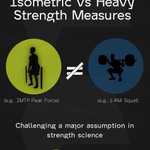
𝗠𝗮𝘅𝗶𝗺𝗮𝗹 𝗦𝘁𝗿𝗲𝗻𝗴𝘁𝗵 ≠ One Thing 💪🔍
It’s the most used term in strength science—yet it describes two distinct domains:
🔹 Heavy Dynamic Strength
🔹 Isometric Strength
They might moderately correlate at a single point in time (10–50%), but after training?
➡️ Shared variance drops to ~3%.
📉 A change in one tells you almost nothing about the other.
Are you separating these in your diagnostics?
👇 Full breakdown in the comments.

🧠 Read the full post with references + implications here: doclachjames.substack.com/p/…
🚀 Strength qualities overlap, interact, and can distort 1-to-1 correlations with sprint speed & other performance metrics.
🚨Ignoring these interactions leads to misinterpreted data and wasted resources.
I break it down in my latest Substack: ⬇️
🔗tinyurl.com/4aba25dm
