

Founder + CEO @biolightshop @biolightlabs⚡️ Host of The Energy Code 🎙️ Mitochondrial Medicine isn't the future.... it's NOW! 🧬
Joined June 2022
- Tweets430
- Following63
- Followers219
- Likes1.1K
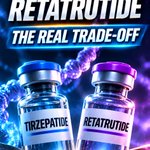


The peptide producing the most dramatic weight loss may also be the one putting more stress on your system. ⚖️🧬
That’s what makes tirzepatide vs. retatrutide much more interesting than a simple “which one works better?” debate.
Retatrutide’s efficacy data are remarkable.
But the added glucagon activity, along with changes in heart rate, HRV, and tolerability, may be the part people aren’t talking about enough.
In my own experience, retatrutide has pushed my resting heart rate up 10+ BPM and dramatically crashed my HRV — even at micro-dose levels.
So the real question isn’t, “Which one causes more weight loss?”
It’s more so, “Does the extra efficacy come with a physiological trade-off?”
Red light therapy for stem cells? ⚡️🧬
A new 2026 study suggests 660nm red light may do more than support mitochondrial energy production — it may actually help “prime” stem cells into a more regenerative state.
Researchers found improvements in mitochondrial function, ATP production, cartilage-forming signals, and — when those preconditioned cells were implanted into rabbits — better tissue regeneration and mechanical support.
Even more interesting: more light wasn’t better. The optimal dose outperformed the higher dose, reinforcing the importance of the photobiomodulation “Goldilocks” effect.
This is still early-stage animal and cell research, but it points toward a fascinating future where light may be used to influence stem-cell behavior through the mitochondria.
What if a NASAL SPRAY could deliver peptides to your brain in ways an injection can’t?! 🧠⚡️
Researchers are exploring how intranasal delivery could bypass parts of the blood-brain barrier through specialized pathways connecting the nose and brain. 👃🧬
From cognition and stress regulation to neuroprotection and mitochondrial health, the research possibilities are intriguing — even if many applications remain experimental.
Because it’s not just WHAT you’re delivering… it’s WHERE you’re delivering it.
🎃 The scariest monsters aren't hiding under your bed… THEY'RE LIVING INSIDE YOU. 💀🧬
What if some of the most terrifying things imaginable were happening inside your body RIGHT NOW? 👀
And what if I told you they're not science fiction… they're backed by REAL science?! 🤯
From bizarre biological phenomena to unsettling discoveries about aging, your brain, and cellular health, these 5 spooky facts might just give you chills.
💀 And trust me… #1 might be the most terrifying of all.
Happy Halloween! 🎃👻
Cartman Discovers Peptides 🤣💉
Director’s notes: This took waaaay longer than it had any business taking. 😂 And yes, there are some hilariously questionable moments courtesy of AI hallucinations. 🤪
But hey, that’s the beauty of AI filmmaking… you never quite know what you’re gonna get. 🍿
Enjoy the chaos! 😂
Methylene blue just showed some fascinating effects on the brain’s mitochondria 🧠⚡️
In a new Huntington’s disease rat study, methylene blue:
⚡ Increased mitochondrial Complex II activity by 43%
🧠 Improved spatial working memory
🔥 Reduced mitochondrial oxidative stress
🔋 Helped restore mitochondrial membrane potential
The proposed mechanism? Methylene blue may act as an alternative electron carrier, helping maintain electron flow through the mitochondrial respiratory chain when normal function is impaired.
This is preclinical research — not evidence that methylene blue treats Huntington’s disease in humans.
But it reinforces a fascinating idea in neurodegeneration:
Protecting the brain may sometimes begin by protecting its mitochondria.
A new MOTS-c study found a way to protect diabetic kidneys — but the most surprising part wasn’t blood sugar, inflammation, or oxidative stress 💉🧬
It was what the kidney cells were doing with fat.
Researchers found that MOTS-c reduced kidney injury, lipid buildup, and inflammatory signaling in diabetic mice.
But the real clue came when they looked at the cell’s cleanup system.
MOTS-c appeared to activate lipophagy — the process cells use to break down and recycle stored fat.
And when researchers disrupted that pathway, much of MOTS-c’s protective effect disappeared.
So the bigger question is:
Could one of MOTS-c’s most important effects be helping metabolically damaged cells clean themselves up?
This was preclinical research, not a human trial — but the mechanism is fascinating.
Watch to the end for the pathway researchers believe may explain it — then save and share this with someone following mitochondrial or peptide research.
I ranked 12 major peptide categories and picked one standout for each.
Tissue repair. Mitochondria. Fat loss. Cognition. Inflammation. Longevity. Skin. Stress — and more.
The catch: “best” doesn’t mean proven. Some have meaningful human data, while others are still highly experimental.
Save this Reel as your peptide cheat sheet — and share it with someone who keeps asking, “Which peptide is best for what?”
GHK-Cu might be one of the most interesting peptides in the anti-aging world.
It’s only 3 amino acids long, yet research suggests it may influence pathways tied to:
• collagen + skin remodeling
• wound repair
• inflammation
• antioxidant defense
• hair growth
• tissue regeneration
That’s why you’ll hear about the “GHK glow” and why GHK-Cu is becoming such a major part of peptide protocols.
But there’s a catch: the mechanistic and preclinical science is far ahead of the human clinical evidence.
Topical GHK-Cu has the strongest support. Injectable use is intriguing, but still largely unproven in humans. Oral use has even less evidence.
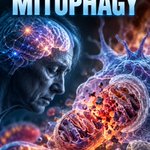
🧠 What if Alzheimer’s isn’t only about what builds up in the brain — but what your cells fail to clean up?
New research is putting mitophagy, the process that identifies and recycles damaged mitochondria, under the spotlight.
When this mitochondrial cleanup system becomes impaired, damaged mitochondria can accumulate and release signals that fuel neuroinflammation, potentially creating a vicious cycle of mitochondrial dysfunction and inflammation.
The good news? Mitophagy is something we may be able to support through strategies like HIIT, resistance training, intermittent fasting — and urolithin A.
That last one is exactly why we created BioLight BioLithin Lite: Urolithin A + Taurine to support mitochondrial quality control, function, and resilience.
BioLithin Lite→ biolight.shop/products/bioli…
Scientists may have just found a quantum-like light–matter state inside mitochondria — and it was linked to increased ATP production. ⚡️
Researchers are calling it the “mito-polariton”: a proposed phenomenon where electromagnetic energy interacts with vibrations in the inner mitochondrial membrane.
Even more intriguing, specific mid-infrared frequencies were associated with roughly a 10% increase in ATP production.
If this holds up, mitochondrial cristae may not just organize energy production — they may also behave like microscopic resonant structures that interact with light.
It’s early. The work is still a preprint and needs independent replication.
But if confirmed, this could open an entirely new chapter in mitochondrial biology.
Mitochondria may be more than cellular powerhouses. They may also be light–matter resonators.
Dr. Mike Belkowski retweeted

I've been writing the ENERGY book for more than a year—with all my early morning time, weekends, and a few productive writing retreats. This book weaves together the science of energy and our research on mitochondria with stories of lived experiences, including some of our own and many others. I also share practical evidence-based guidance on how to apply energetic principles into our lives: ways to live a scientifically-informed, energetically-inspired life.
The full draft is now with the publisher. The book should launch early 2028. Translated in nine languages so far. Can't wait to share this with everyone!
I am grateful for the amazing people who are working on bringing this book to life and sharing it with the world. More here: energy-book.com/

Red light face masks are everywhere — but do they actually work? 🚨
A new systematic review examined 8 clinical studies and 365 people using at-home LED devices for facial rejuvenation.
The results? Improvements across wrinkles, skin texture, elasticity, hydration, pore size, and crow’s feet — with red and near-infrared light showing the most consistent benefits.
And this isn’t just cosmetic camouflage. PBM can influence cellular signaling involved in collagen, elastin, and skin structure.
Those viral red light masks may actually deserve some of the hype. 🔥
Scientists just found a way to make aging egg cells act younger — and the signal came from a peptide produced in the mitochondria 🔬⚡️
In a new 2026 study, MOTS-c improved mitochondrial energy production, reduced oxidative stress, and enhanced maturation-related outcomes in aged oocytes, while also strengthening the metabolic support cells that surround the egg.
The treated eggs didn’t fully return to youthful levels — but they moved in that direction.
It’s still preclinical, not a human fertility treatment. But it raises a fascinating possibility: reproductive aging may be partly a mitochondrial energy problem — and mitochondrial peptides could become one way to target it.
What if a peptide made of just 4 amino acids could influence some of the biology we associate with aging? 🧬
Epitalon has been linked to telomere maintenance, circadian regulation, oxidative stress pathways, and mitochondrial changes in cellular and preclinical research.
That’s why it’s become one of the most talked-about peptides in longevity.
But there’s a major catch: we still don’t have a well-powered human trial showing that Epitalon actually slows aging or extends lifespan.
The mechanism is fascinating. The human proof is still missing.
One of the NFL’s top linebackers calls red light therapy the foundation of his recovery 👀
Jack Campbell says red + near-infrared light have become the base of his recovery routine — supporting his energy, joints, recovery, sleep, and ability to stay ready week after week.
His philosophy is simple: find what works, stay consistent, and keep looking for that extra edge.
“Any time I can get a little edge, I’m gonna do it.”
Now, Jack is officially part of the BioLight family 🤝⚡️
PEMF may be doing more than stimulating tissue. ⚡
New research suggests pulsed electromagnetic fields may interact directly with mitochondria, selectively increasing respiration linked to ATP production.
Even more interesting, the effect appeared to involve the machinery of ATP synthesis rather than simply speeding up the entire electron transport chain.
The research is still mechanistic — but it points toward a fascinating possibility:
Some of PEMF’s biological effects may begin at the level of cellular energy production. 🧬⚡
The peptide world is moving fast…
In just the past few days:
⚡ GLP-1s are being studied for potential effects on biological aging
⚡ MOTS-c showed new mitochondrial and vascular-protective effects
⚡ U.S. peptide regulation may be heading toward a major shift
The bigger story? Peptides are rapidly expanding beyond weight loss and recovery into metabolism, longevity, mitochondrial health and cellular resilience.
We may be watching an entirely new era of peptide medicine take shape.
Red light therapy may be changing more than your oral tissue. 🦷🔴
New research is exploring a fascinating connection between photobiomodulation and the oral microbiome.
The twist? PBM may not need to directly kill bacteria to influence the microbial ecosystem.
By supporting mitochondrial signaling, circulation, inflammation, saliva, and tissue repair, red and near-infrared light may change the environment those microbes live in.
Maybe better oral health isn’t always about attacking the microbes.
Maybe it’s about improving the environment they live in.
Red light therapy is entering the concussion recovery conversation 🧠⚡️
In a new 2026 pilot trial, 50 athletes were treated within 72 hours of a concussion using red and near-infrared light.
After just one 20-minute treatment, normal eye convergence increased from 64% to 98%.
The theory: light may support mitochondrial energy production, blood flow, and cellular repair in the injured brain.
It’s early, and there was no sham-control group — but the signal is compelling.
Brain photobiomodulation deserves a closer look.