

Philanthropist, Activist, Researcher, Sr. Lecturer, Environmentalist. https://nitter.cf/t.co/qtaL1i35c7 tweets in English, Dutch and Indonesian. He/His/Dr.
Bali, Indonesia
Joined December 2020
- Tweets3.8K
- Following244
- Followers253
- Likes3.2K





Check out my latest article: Understanding disruption: beyond the buzzword linkedin.com/pulse/understan… via @LinkedIn

58
6/ The solution? Stop orphanage-based care and invest in family-based alternatives that truly prioritise children’s well-being. It’s time to move beyond institutions and support real, sustainable solutions.
#StopOrphanages #ChildWelfare #OrphanageReform #Indonesia #FamilyBased
55
5/ While this growing awareness is a positive step, real change will only come through a shift to family- and community-based care. Institutionalisation should be the last resort, not the first response.
49
4/ This results in unnecessary family separation and fuels a system where institutionalisation becomes a business model. In Surabaya, authorities are now investigating and sanctioning orphanages that primarily function as donation collectors.
62
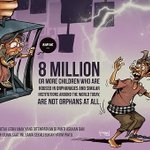
3/ In my PhD research (2020), I concluded that many orphanages in Indonesia operate as funding mechanisms, not child welfare institutions. Children who are not actually orphans are often placed in institutions to attract donations.
42
2/ Many of these orphanages bring in children from outside Surabaya, change their residency status, and shift the burden onto the local government. This is not just a tourism-driven issue in Bali—it’s happening across Indonesia.
44
1/ More people are starting to see the problems with orphanages, highlighted in a recent Kompas article about Surabaya. Mayor Eri Cahyadi raised concerns over the increasing number of orphanages, noting that some are created just to attract donations rather than care for children
39
5/ Research is clear:
❌ Institutions harm children
❌ Orphanages increase abuse risks
❌ 80% of children in orphanages HAVE parents
✅ Family-based care is the only ethical solution
34
5/ Children do not belong in institutions. They belong in families. Research is clear: institutionalisation damages mental health, stunts development, and increases vulnerability to abuse. We must end this system.
34
4/ This isn’t an isolated case. Institutional care does not protect children—it harms them. Around the world, orphanages become breeding grounds for abuse, exploitation, and trafficking. And yet, governments still allow them to operate.
41
3/ GISBH ran a global business, with restaurants and enterprises in 20 countries. Their leaders lived in luxury while children suffered behind closed doors. All of it was hidden under the guise of “Islamic charity” and “child welfare.”
35
2/ The children weren’t orphans. Many had parents who were forced to give them up. Inside the institutions, they faced sexual abuse, forced labour, starvation, and brutal indoctrination. Some were even forced to sodomize each other under the orders of caretakers.
24
1/ When will we finally say enough? Another horrifying case of child abuse and trafficking has been exposed—this time in Malaysia. Over 600 children were rescued from so-called “orphanages” run by GISBH, a business empire built on exploitation. 🧵⬇️
edition.cnn.com/2025/02/01/a…

40
edition.cnn.com/2025/02/01/a…
In public, they ran a successful global business. In private, police allege they abused hundreds of children..
34
Pemilik Panti Asuhan di Surabaya Diduga Cabuli Anak Asuhnya tempo.co/hukum/pemilik-panti…
Again, and again, and again!

1
81
4/ Orphanages in Bali still fail to meet legal and caregiving standards. It’s time for decisive action—not just words—to protect vulnerable children. #ChildWelfare #ActionForChildren
bali.tribunnews.com/2025/01/… via @tribunnews

30
3/ The tragedy in Tangerang highlighted the dangers of unregulated orphanages. Yet in Bali, only now are small steps being taken. Socialisation is not enough. We need real action. #ChildRights
48
2/ Despite national standard 30/2011/HUK, many orphanages in Bali operate unlicensed and full of children placed for economic reasons. Foster care remains nearly nonexistent. #Orphanages #FosterCare
76