

Science at Monmouth Prep School.
Monmouth, Wales
Joined September 2016
- Tweets2K
- Following490
- Followers486
- Likes2.8K





Monmouth Prep Science retweeted

As we close this momentous term, we wish all our students, staff, families, and alumni a Very Merry Christmas and a Happy New Year. We look forward to an exciting 2025, filled with new opportunities and continued success at Haberdashers’ Monmouth School.

Monmouth Prep Science retweeted
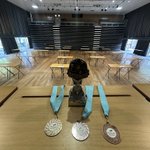
Head of Prep Mr Shaw and Executive Head Mr Dorman awarded the Science Quiz Club Trophy to Arthur, Zach, Sam, and Tesni. This brilliant team triumphed in an online quiz against 120 prep schools, earning a place in the finals at Oxford University this July.


Monmouth Prep Science retweeted

Staff at @Habsmonmouth take a bow at the grand finale of the staff #Themaskedsinger at @blaketheatre as crowd votes for #igglepiggle
Monmouth Prep Science retweeted
Hosting 9th Annual Science Fair 2024
Earlier this month, Monmouth Prep School, along with 6 other local primary schools, hosted the 9th Annual Science Fair!
To read the positive comments from Dr Wall, and to see who won the science fair, click here: buff.ly/3K7Za0z


Monmouth Prep Science retweeted

Well done to our scientists for taking part in Monmouth Science Fair you all did brilliantly well. Deserved winners congratulations.


Monmouth Prep Science retweeted

Smiles all round after a fantastic day @Habsmonmouth celebrating their Science Fair. A well-earned second place for one of our teams and excellent contributions from all. Da iawn! @DrWallScience

Monmouth Prep Science retweeted

PRESS RE:EASE: buff.ly/49ZvwpO
High School Students Contribute to Exoplanet Discovery
A group of high school students from the Galaxy Explorer program at @ChabotSpace made contributions to the field of exoplanet research.
Monmouth Prep Science retweeted

Our scientists are off to Oxford!
Both Science Teams have secured a spot in the final of the prestigious Quiz Club UK National Championships 🙌
Read more on their incredible achievement here: buff.ly/3HGWVQU

Monmouth Prep Science retweeted

Clyde Tombaugh discovered Pluto in 1930 and investigated it across his lifetime.
nitter.cf/Rainmaker1973/st…
He died #Today in 1997, less than a decade before New Horizons spacecraft launch to Pluto.
His ashes are in the spacecraft, making it the longest post mortem fight ever recorded.

Monmouth Prep Science retweeted
With the Year 7 application deadline for September 2024 looming, our Deputy Head Academics, Emma Arrand, has some great tips for academic scholarship hopefuls. For more scholarships info, visit: buff.ly/46N0csD
We wish all Year 7 applicants the best of luck!
Monmouth Prep Science retweeted
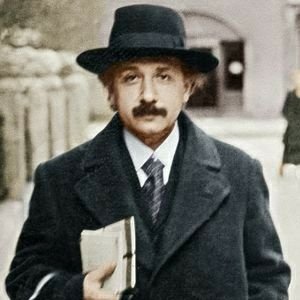
The double slit experiment was first performed by Thomas Young in 1801, as a demonstration of the wave nature of light. He used a coherent light source, such as sunlight or a candle, and passed it through a narrow slit in a card. Then he placed another card with two parallel slits close to the first one, and observed the light pattern on a screen behind the second card. He expected to see two bright spots on the screen, corresponding to the two slits, but instead he saw a series of bright and dark fringes, called an interference pattern. This meant that the light waves passing through the two slits interfered with each other, creating regions of constructive and destructive interference. This was evidence that light was not made of particles, as Isaac Newton had proposed, but of waves, as Christiaan Huygens had suggested.
However, with the development of quantum mechanics in the early 20th century, it was discovered that light could also behave like particles, called photons. In 1905, Albert Einstein explained the photoelectric effect by assuming that light was composed of discrete packets of energy that could knock electrons out of metals. In 1924, Louis de Broglie proposed that matter could also have wave properties, and derived a relation between the wavelength and momentum of any particle. In 1927, Clinton Davisson and Lester Germer, and independently George Thomson and Alexander Reid, confirmed this hypothesis by showing that electrons could produce interference patterns when scattered by crystals. Later, it was shown that atoms and molecules could also exhibit wave-particle duality.
The double slit experiment was then repeated with single photons or electrons, one at a time. Surprisingly, even when only one particle was sent through the slits at a time, an interference pattern still emerged on the screen after many repetitions. This meant that each particle somehow interfered with itself, as if it went through both slits at once. However, if detectors were placed at the slits to observe which slit each particle passed through, the interference pattern disappeared. This showed that the act of measurement affected the outcome of the experiment, and that the particle's behavior depended on whether it was observed or not. This phenomenon is known as quantum superposition and collapse, and it implies that quantum systems exist in a state of uncertainty until they are measured.
The experiment has profound implications for our understanding of reality and the nature of observation. It challenges our classical intuition and forces us to accept that reality is not deterministic but probabilistic at the quantum level.

Monmouth Prep Science retweeted

It was our pleasure! So much fun. And in the wise words of @jesseEODM from @EODMofficial, “Musica est simplex sed non facile.” Ain’t that the truth! 🖤
Monmouth Prep Science retweeted
Budding scientists at Monmouth Prep School have finished runners-up in a prestigious national competition.
For the full story, please visit:
habsmonmouth.org/prep-scient…

Monmouth Prep Science retweeted

@lwspellsongs @jimmolyneux Year 6 sung your beautiful song ‘Little Astronaut’ in the studio where it was originally recorded. Hope you like @Rockfieldstudio @Voices_Found @JackieMorrisArt @FridayPMs
Monmouth Prep Science retweeted

What do viruses, mini brains and strawberries have in common?
They will all be part of the science café tomorrow in Devauden - please come along to this free event and find out how Tom's Fund @cancer_wales is making a difference.

Monmouth Prep Science retweeted
To all of our local friends and the @Habsmonmouth community, please come along on Saturday to Devauden Village Hall and hear about how our fundraising in memory of Tom with @cancer_wales is making a difference. We couldn’t have done this without you.


Monmouth Prep Science retweeted

@MonSchGirls Hall is set up and ready for the 8th Annual Monmouth Science Fair tomorrow. Can’t wait 😀. @Habsmonmouth @MonPrepSchool @RaglanVC @UskPrimary @LlangroveSchool @LlandogoS #ScienceFair #STEM

