

EIS Council hosts international collaboration on resilience & response planning, addressing severe hazards to lifeline infrastructures.
Washington, DC
Joined April 2018
- Tweets267
- Following64
- Followers189
- Likes17




Pinned Tweet
Two months from now, experts from the resilience, energy, government, infrastructure, policy, NGOs, and academia sectors will come together for the Resilient Renewable Society (RRS) Summit once again to explore practical approaches to building resilience in an increasingly uncertain world.
Taking place in London on 16–17 September 2026, the two-day summit will look beyond theory and into the realities of disruption: natural disasters, energy system instability, emerging threats, and the growing need for whole-of-society resilience.
The agenda combines lectures, panel discussions, interactive workshops and a live simulation exercise that will challenge participants to make real decisions under pressure.
At a time when resilience is becoming one of the defining challenges, this summit is a chance to learn, contribute, and help shape the conversation.
Kindly hosted by the Centre for Active Resilience and Security (CARS) and the Department of Civil and Environmental and Engineering at Imperial College London, this summit is open to all who care about building a more resilient, renewable, and prepared society.
Register in advance and join us in London.

We’re proud to have contributed to a new paper on Israel’s preparedness for electromagnetic pulse (EMP) threats, published by the International Institute for Counter-Terrorism at @ReichmanUni.
Our own Dr. @uganani is among the paper’s contributors, alongside Dr. LTC (Res.) Uri Ben Yaakov, PhD and experts in national security, disaster preparedness and infrastructure protection.
The paper examines what happens when electricity, communications and other essential systems are disrupted together, and what Israel can do to strengthen its preparedness.
For EIS Council, this work addresses our central responsibility: preparing for disruptions that cross organizational and national boundaries.
29
An emergency plan may cover the first 72 hours. What helps people keep going when it lasts for months?
At the Resilient Renewable Society Summit, Professor Małgorzata Zachara-Szymańska spoke about resilience as the ability to operate under constant pressure and learn from other people.
For infrastructure operators, public authorities and community leaders, that raises a practical question: how often do we learn from people outside our own organization?
How did a neighbouring utility keep operating with fewer staff? How did a local business keep deliveries moving when its usual routes were blocked? Their experience could expose gaps in our own plans before we have to rely on them.
17
Water, electricity and telecommunications providers plan their systems carefully. But how often do those plans involve the communities they serve?
At our recent Resilient Renewable Society Summit, Michael Bryson, Senior Vice President of Operations at @pjminterconnect, highlighted an opportunity for infrastructure-led organizations:
Work directly with local communities on practical, incremental improvements to resilience.
That means getting specific and asking tough questions. What does the community need to keep functioning during a disruption? Where can utilities and local leaders make progress together today?
Those conversations deserve a place in planning, before an emergency forces everyone into the same room.
Watch Michael’s perspective and write below: which conversation is overdue in your community?
1
27
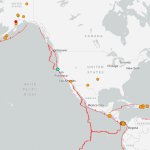
127 earthquakes recorded worldwide today by USGS.*
Most were small. But Panama is still dealing with the consequences of Friday’s magnitude 7.7 earthquake: nearly 900 homes damaged, at least 27 people injured and more than 200 aftershocks.
Damaged bridges now need urgent repairs to help relief reach affected communities.
Earthquake risk also exists in places many people rarely associate with it.
The New Madrid seismic zone spans parts of Missouri, Arkansas, Tennessee and Kentucky. Its 1811–1812 earthquakes destroyed settlements and temporarily forced part of the Mississippi River to flow backwards.
Today, a major earthquake there would threaten infrastructure serving people far beyond the region.
Japan’s 2011 disaster showed how failures can compound. At Fukushima Daiichi, the earthquake cut off grid power. The tsunami then disabled emergency power and critical cooling systems.
A hospital may have backup generators, but how does fuel reach it if bridges are damaged? How do crews restore electricity when communications are down?
These are the connections we need to understand before a disaster hits. They shape EIS Council’s work on resilience and the scenarios explored through the @Ginom_ai platform.
Tell us, does your organisation’s emergency plan account for earthquakes?

1
68
Day 2, here we go.
Yesterday, the RRS Summit focused on what past crises have taught us. Today at @imperialcollege , we ask what can we do with those lessons.
After opening reflections from Professor Washington YottoOchieng,CBE, EBS, CEng, FREng, FCGI and Amb. Dr @ronenhoffman , Jim Robb, President and CEO of North American Electric Reliability Corporation (@NERC_Official ), will set the scene for a day focused on implementation.
Participants will move into workshops on natural hazard preparedness, financing resilient energy systems, and resilience to cyber and AI-related threats.
This afternoon, those ideas will be tested in a live @Ginom_ai simulation before we finish by identifying what can move forward through working groups and partnerships.
Stay tuned!
With thanks to our sponsors, @pjminterconnect and North American Electric Reliability Corporation (NERC).
In collaboration with the Centre for Active Resilience and Security and the @Imperial_CEE


119
Tomorrow, the people responsible for keeping the grid running will meet at the Royal Society in London.
Day 1 of the Resilient and Renewable Society Summit will look at what past crises have taught us, and what we are still not prepared for.
The programme will cover natural hazards, energy-system failures, cyber threats, AI and geopolitical risk. In the final plenary, the focus will move closer to home.
Professor @ianspero, Founder of the Agile Ageing Alliance and Convenor of ISO 25553, will deliver the keynote:
“Resilience Begins at Home: Smart Multigenerational Neighbourhoods and the Future of AI-Enabled Community Infrastructure.”
The lessons from Day 1 will feed directly into Day 2's workshops and live simulation, where participants will put plans and assumptions under pressure.
We look forward to seeing everyone in London tomorrow!
In collaboration with the Centre for Active Resilience and Security and the Department of @Imperial_CEE

24
The largest power grid in the United States serves 67 million people, from Washington, D.C., to Chicago.
At PJM Interconnection, Michael Bryson, Senior Vice President of Operations, leads the team that keeps this vast system running.
We’re happy to welcome him to the Resilient and Renewable Society Summit, where he will bring his unique perspective as someone who deals with grid reliability every day.
We would also like to thank @pjminterconnect and the @NERC_Official for sponsoring the Summit and helping make this important conversation possible.
Join Michael and many other resilience experts in London next Wednesday!
16–17 September 2026 | Free to attend | Registration required
In collaboration with the Centre for Active Resilience and Security and the Department of @Imperial_CEE

52
In case we needed a Labor Day reminder: the grid still depends on people.
After a storm, flood or major outage, recovery depends on people: lineworkers working in difficult conditions, operators balancing the system, engineers finding solutions, and emergency managers coordinating the response.
This Labor Day, we recognise and thank the people whose work keeps essential services running and helps communities recover when they fail.
Technology and emergency plans are important, but they still rely on experienced people to make difficult decisions under pressure.
The human side of resilience will be a big part of the conversation at the Resilient and Renewable Society Summit, bringing together experts from energy, infrastructure, government, and emergency management.
Limited seats, join us for free!
16–17 September 2026 | London
Registration is required using the link below.
In collaboration with the Centre for Active Resilience and Security and the @Imperial_CEE
27
Most people only think about the energy system when the power goes out.
Dr. Deborah Petterson’s job is to think about what could go wrong long before that happens.
As Director of Resilience and Emergency Management at the @neso_energy, she helps prepare Britain’s energy system for disruption.
That work is becoming more complex as wind, solar, batteries and flexible demand change how electricity is generated and managed.
With more than two decades of experience across energy, national security, cybersecurity and critical infrastructure, we’re proud to welcome Dr Petterson to the Resilient and Renewable Society Summit.
Join her and experts from across energy, government, security and emergency management in London!
16–17 September 2026 | Free to attend | Registration required
In collaboration with the Centre for Active Resilience and Security and the Department of @Imperial_CEE

21
We’re honored to welcome the Rt Hon Lord George Robertson of Port Ellen to the Resilient Renewable Society Summit this September.
Lord Robertson has spent decades at the centre of British and international security policy. This September, he will share his insights on what it takes to prepare society for major disruption.
As a former UK Secretary of State for Defence and NATO Secretary General, Lord Robertson brings a rare perspective on the growing connection between geopolitical risk, energy security, critical infrastructure and national preparedness.
Join him in London!
16–17 September 2026 | Free to attend | Registration required
In collaboration with the Centre for Active Resilience and Security and the Department of @Imperial_CEE.

1
31
If the power stays off for days, what fails next?
That was the question at the Electric Sector Black Sky Resilience Conference in Nashville back in June.
Together with @TVAnews, the event brought electric-sector leaders, government experts and emergency planners into the same room to examine the realities of a prolonged outage.
A live EARTH EX exercise then put those plans under pressure.
Now, the conversation moves to London.
At the Resilient Renewable Society Summit, the focus will expand from the electric grid to society as a whole, with sessions on natural disaster preparedness, energy resilience and EMP readiness.
Watch the Nashville recap and join us for London.
16–17 September 2026 | Free to attend | Advance registration required
In collaboration with the Centre for Active Resilience and Security and the Department of @Imperial_CEE.
47
If the power stays off for days, what fails next?
That was the question at the Electric Sector Black Sky Resilience Conference in Nashville back in June.
Together with @TVAnews, the event brought electric-sector leaders, government experts and emergency planners into the same room to examine the realities of a prolonged outage.
A live EARTH EX exercise then put those plans under pressure.
Now, the conversation moves to London.
At the Resilient Renewable Society Summit, the focus will expand from the electric grid to society as a whole, with sessions on natural disaster preparedness, energy resilience and EMP readiness.
Watch the Nashville recap and join us for London.
16–17 September 2026 | Free to attend | Advance registration required
In collaboration with the Centre for Active Resilience and Security and the Department of @Imperial_CEE.
53
Having a crisis plan is NOT the same as being ready to use it.
The real resilience test begins when information is incomplete, key people are unavailable and decisions must be made quickly.
Exercises expose what documents often miss: unclear responsibilities, fragile communications and assumptions that no longer hold.
That is why the Resilient Renewable Society (RRS) Summit, taking place in London on 16–17 September 2026, will go beyond theory and put resilience into practice.
Alongside expert lectures, panels and workshops, the Summit will feature a live simulation exercise, challenging participants to make decisions under pressure and experience the realities of disruption firsthand.
Kindly hosted by the Centre for Active Resilience and Security (CARS) and the Department of @Imperial_CEE.
Free registration, limited seating.


1
20
Global warming is in full swing, and this summer we're feeling it more than ever.
The heat you feel right now is also stress-testing the systems that keep your city running.
Professor @EmmaHowardBoyd CBE, Chair of the National Heat Risk Commission and former Chair of the Environment Agency, will deliver a keynote at the RRS Summit on preparing society for our fastest-growing climate risk.
Join us for free on 16–17 September 2026 | London | Registration required
In collaboration with the Centre for Active Resilience and Security (CARS) and the Department of @Imperial_CEE

31
The news from Indiana is heartbreaking.
At least seven people have lost their lives after days of severe storms and record-setting flooding.
To our partners and friends at TechIndiana, and to everyone affected across the state, please know that you are in our thoughts and prayers.
We are deeply grateful to the first responders, emergency workers, volunteers and neighbors helping people reach safety and supporting those who have lost so much.
Partnership means standing together, especially during the hardest moments.

32
We are very honored to welcome @NercRobb , nerc to the RRS Summit this September in London.
Jim Robb, President and CEO of @NERC_Official, will join us to bring his expert remarks on the pressures facing modern power systems.
We’d like to thank our partners @NERC_Official, who have been great support to EIS Council over the years. NERC is responsible for the reliability and security of the North American bulk power system, which is becoming harder to protect in this day and age.
Join us in London with the link below!
16–17 September | Free to attend | Registration required

37
The grid goes down. Then what?
A crisis does not stay neatly within one system or sector and our planning cannot either.
This September, leaders from government, infrastructure, industry, research and emergency planning will meet in London to tackle the resilience risks no sector can solve alone.
Resilient Renewable Society Summit
16–17 September 2026 | London
Free to attend. Advance registration required.
In collaboration with the Centre for Active Resilience and Security (CARS) and the Department of @Imperial_CEE
פחות
22
Indiana’s technology ecosystem meets Israel’s resilience expertise.
EIS Council and TechIndiana have formalized a partnership to launch the Resilience Tech Indiana Israel Initiative, strengthening the connection between Indiana’s and Israel’s technology, business, research, and public-sector ecosystems.
Operating within the Heartland To Holyland: Indiana ⇄ Israel Corridor network, the initiative will support practical cooperation in infrastructure and organizational resilience, cybersecurity talent development, AI safety, and preparedness for complex disruptions.
The agreement was signed in Jerusalem during an Indiana delegation led by TechIndiana President and CEO Dr. Dennis Trinkle and Indiana Secretary of Business Affairs Mike Speedy, together with EIS Council President Dr. @ronenhoffman.
We are proud to partner with TechIndiana and turn our shared commitment into practical action across both ecosystems.
Read Laura Hatton's article with the link below.


47
What is widely discussed, potentially devastating, yet often ignored in resilience plans?
An electromagnetic pulse.
An EMP can disrupt power, communications, transport, water systems and the tools emergency teams rely on to coordinate a response.
Yet many plans still treat it as too unlikely, too technical or simply too difficult to prepare for.
At the Resilient Renewable Society Summit, participants will partake in a live EMP scenario simulation, examine what happens when multiple interconnected systems fail at once, and learn how we can adapt.
16–17 September 2026 | London
Free to attend | Registration required
In collaboration with the Centre for Active Resilience and Security (CARS) and the Department of @Imperial_CEE at @imperialcollege.

We’re honoured to have Professor Washington Yotto Ochieng lead the conversation at the Resilient Renewable Society Summit this September.
As Director of the Centre for Active Resilience and Security and Head of Civil and Environmental Engineering at @imperialcollege, his work focuses on the systems society depends on and how they perform under pressure.
Across both days, Professor Ochieng will help guide the Summit from insight to action.
Day 1 at The Royal Society will explore lessons from recent crises, critical infrastructure resilience, public trust and inclusive approaches to preparedness.
Day 2 at Imperial College London will feature workshops and extreme-event exercises designed to test assumptions and strengthen cross-sector readiness.
Join us in London!
16–17 September 2026 | Free to attend | Registration required
In collaboration with the Centre for Active Resilience and Security (CARS) and the Department of @Imperial_CEE

1
38