

Economic Policy Research Centre (EPRC) is Uganda's leading think tank in economics and development policy-oriented research and policy analysis.
Kampala, Uganda
Joined November 2012
- Tweets8.5K
- Following4K
- Followers5K
- Likes3.7K







Pinned Tweet
Charcoal Dependence: the dilemma of attaining sustainable production & u... youtu.be/5QHv-SmrSdc?si=wv-m… via @YouTube

EPRC retweeted

I attended the Economic Policy Research Centre (EPRC), in conjunction with the National Council of Sports (NCS) informative discussion under the theme “Maximizing Economic Returns from Uganda’s Sports Infrastructure Investment”
With facilities such as Hoima City Stadium, Akii Bua Stadium and the redevelopment of Namboole Stadium, Namboole already up and ongoing, our next question should be :
How do we transform our sports infrastructure from public expenditure into productive economic assets?
Our stadia must have clear and viable revenue-generation strategies that can sustainably support their operations, maintenance and eventual rehabilitation without placing unnecessary pressure on the national budget.


EPRC retweeted

I had the pleasure of being invited by the Economic Policy Research Centre (@EPRC_official ) in conjunction with the National Council of Sports (NCS) to participate in a very important discussion under the theme “Maximizing Economic Returns from Uganda’s Sports Infrastructure Investment.”
This discussion was particularly important to me, especially as we count down to the much-anticipated AFCON 2027 Pamoja, with only 210 days to go.
As a sportsman who actively participates in football and, more importantly, as Chairperson of the Parliamentary Committee on Budget, I strongly believe that our interest in sports infrastructure must go beyond the physical construction of stadiums and other sporting facilities. We must focus on the economic value these investments are expected to generate for our country.
With facilities such as Hoima City Stadium, Akii Bua Stadium and the redevelopment of Namboole Stadium and the many training centers , the fundamental question we must ask ourselves is ;
How do we transform our sports infrastructure from public expenditure into productive economic assets?
Uganda has committed substantial public resources, estimated at close to UGX 3.5 trillion, towards sports infrastructure development. Such investments must deliver measurable economic returns.
We should therefore assess their contribution not only in terms of sporting activities but also their impact on GDP, household incomes, employment creation, tourism receipts, business opportunities and private-sector growth.
One of the critical issues we must address is the long-term sustainability of these facilities. We need to explore innovative management and financing models, including Public-Private Partnerships (PPPs), professional facility management, commercial leasing, sponsorship arrangements and strategic partnerships with the private sector.
Our stadiums must have clear and viable revenue-generation strategies that can sustainably support their operations, maintenance and eventual rehabilitation without placing unnecessary pressure on the national budget.
As we prepare to host AFCON 2027, we must also recognise that this is much bigger than football. It is an opportunity to stimulate economic activity, promote Uganda as a tourism destination, create jobs, develop local businesses and showcase our country’s potential to the world.
I wish to encourage all Ugandans, particularly our young people to seize this once-in-a-generation opportunity. There are numerous opportunities to participate in the organisation of AFCON 2027 through the volunteer programme coordinated by CAF and FUFA ( @OfficialFUFA )
From media, protocol and stewarding to several other areas of event management, our young people should take the initiative to apply under the volunteers program and become part of this historic continental event.
Let us not simply prepare to host AFCON, let’s prepare to benefit from it both socially and economically. Juuuuu


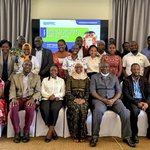
As Uganda prepares to host AFCON 2027, @EPRC_official, in partnership with @NCSUganda1, yesterday convened a stakeholder co-creation meeting to explore strategies for maximising economic returns from investments in sports infrastructure.


The discussions focused on ensuring these investments deliver lasting value beyond the tournament.
The tournament lasts only weeks, while stadiums and supporting infrastructure built for it remains in use for decades.
@KCCAUG @MoWT_Uganda @OfficialFUFA @Parliament_Ug @VipersSC


Since 2021, Uganda’s Micro-Scale Irrigation Programme (MSIP) has helped farmers acquire equipment via 25–75% gov't subsidies & farmer co-payment. What has it achieved? @EPRC_official recently presented our diagnostic study findings to key stakeholders at Golden Tulip Hotel 1/2.


EPRC retweeted

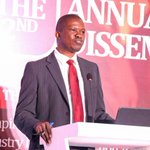
Delivering the keynote address, the Director of Research at Economic Policy Research Centre (EPRC), Dr. Ibrahim Kasirye, representing the Executive Director, Dr. Sarah Ssewanyana, calls on the insurance industry to turn research findings into practical action.
In the presentation themed From Evidence to Action: Unlocking Strategic Growth Opportunities for Uganda’s Insurance Industry, Dr. Kasirye poses a key question: “Why has research on Uganda’s insurance market not changed what insurance companies sell and to whom?” He therefore calls for measurable progress ahead of the 2027 conference.
He also connects the industry’s growth to Uganda’s ambition of growing its economy tenfold by 2040, noting that insurance has a role to play in achieving this target.
While acknowledging the industry’s growth, with premiums surpassing UGX 2 trillion and life insurance business growing by approximately 39%, he notes that insurance penetration remains below 1% with Uganda trailing regional peers such as Kenya and Rwanda.
Dr. Kasirye urges insurers to look beyond public sensitisation and examine their products, pricing and distribution channels. He also calls for better use of industry data to understand customer behaviour and guide business decisions.
#InsuranceResearch


Dr Ibrahim Kasirye (@ikasirye_ug) @EPRC_official Director of Research today gave a keynote address at the Annual Insurance Research Disseminiation Conference organised by @The_UIA at @MestilHotel in Kampala 1/4


@ikasirye_ug stressed that "the sector has stalled because it has focuses on selling a little more to the existing customer. It should grow if a farmer in Kamuli or a vendor in Kalerwe buys a policy, makes a claim, gets paid and then tells their neighbour about it." 3/3

EPRC retweeted

𝐃𝐀𝐊𝐒𝐇𝐈𝐍 𝐃𝐚𝐲 | 𝐒𝐞𝐬𝐬𝐢𝐨𝐧 𝟓: 𝐁𝐮𝐢𝐥𝐝𝐢𝐧𝐠 𝐒𝐮𝐬𝐭𝐚𝐢𝐧𝐚𝐛𝐥𝐞 𝐓𝐫𝐚𝐝𝐞 𝐚𝐧𝐝 𝐈𝐧𝐯𝐞𝐬𝐭𝐦𝐞𝐧𝐭 𝐑𝐞𝐥𝐚𝐭𝐢𝐨𝐧𝐬
The session brought together policymakers, trade experts, researchers and industry leaders to deliberate on building a more diversified, inclusive and development-oriented India-Africa trade and investment partnership.
𝐊𝐞𝐲 𝐏𝐞𝐫𝐬𝐩𝐞𝐜𝐭𝐢𝐯𝐞𝐬
🔹 Chairing the session, Mr Yashvir Singh, Additional Secretary, Department of Commerce (@DoC_GoI), called for a more diversified and integrated India–Africa economic partnership through broader trade engagement, two-way investment and joint value-chain development, leveraging AfCFTA, India’s DFTP Scheme and preferential trade arrangements.
🔹 Dr Sarah N. Ssewanyana (@SNSsewanyana), Executive Director, Economic Policy Research Centre (@EPRC_official), Makerere University, Uganda, joining virtually, called for geographically inclusive and diversified trade built on local value addition, and proposed a joint India–Africa MSME Trade and Investment Facility with a focus on women- and youth-led enterprises.
🔹 Mr Abhijit Das (@Abhijit_trade), Former Head, Centre for WTO Studies, IIFT, emphasised closer coordination among India, African countries and other developing economies to advance development-oriented WTO reforms and safeguard policy space for industrialisation.
🔹 Dr Nasir Jamal, Assistant Secretary General, @phdchamber, highlighted the role of industry chambers in connecting Indian and African MSMEs, and identified agriculture, healthcare, green technologies, energy and digital transformation among key areas for cooperation.
🔹 Mr Aashish Chandorkar (@c_aashish), Former Counsellor, Permanent Mission of India to the WTO, Geneva, called for sustained coordination in multilateral forums, cautioned against green protectionism, and highlighted digital trade, technology-sharing and DPI as enablers of trade connectivity.
🔹 Dr Pankaj Vashisht (@PV_Chat), Associate Professor, RIS, underlined the need for stronger institutional trade frameworks, industry consultations to identify commercially viable sectors, and joint ventures backed by development cooperation instruments such as concessional financing, technical assistance and skill development.
The discussions reflected a shared commitment to an India-Africa economic partnership grounded in value addition, inclusive investment, MSME linkages and collective engagement in shaping fair and development-oriented global trade rules.
@PMOIndia | @DrSJaishankar | @MEAIndia | @dpa_mea | @SudhakarDalela | @SKSharma_World | @RajanRatna | @psbirthal | @Prabir_India | @sabya_saha | @pdash76 | @AmitK_PhD | @susheco | @GaurPankhuri | @monika_koc56097 | @SarinNS1 | @amitdasvaranasi | @cmec_ris | @DakshinNews | @AIC_aseanindia | @fitm14 | @fisd19 | @forum_blue | @FIDC_NewDelhi
#DAKSHINDay #DAKSHIN #RIS #GlobalSouth #SouthSouthCooperation #India #Africa #AfCFTA #Trade


EPRC retweeted

Uganda’s budget went from Shs48.13 trillion in 2022/23 to Shs84.39 trillion this year. That’s 75% higher before adjusting for inflation.
The biggest jump came in 2024/25. The budget grew by Shs19.4 trillion in that year alone, accounting for just over half of the increase since 2022/23.
Where will this year’s money come from? For every Shs100 in the budget, @GovUganda expects to raise about Shs55 in domestic revenue and borrow Shs14 locally.
Source: shorturl.at/Bi7FI
#KnowYourBudget #CEPAProgramming


With partners, @EPRC_official on Thursday Nov 12 disseminated two studies assessing how Front-of-Pack Labelling could influence consumer understanding and food choices in Uganda. 1/4


EPRC retweeted

#ASWNov2026
As Africa celebrates the Africa Statistics Day (ASD) every 18th November, Uganda Celebrates a week of Statistical activities through the Africa Statistics Week (ASW).
Today, we are Launching the Plan for National Statistical Development, alongside side others.
Catch us live on YouTube and Teams for real time proceedings through the links 👇
YouTube
youtube.com/live/RXEoW8zI7PY…
Teams
________________________________________________________________________________
Microsoft Teams meeting
Join: teams.microsoft.com/meet/357…
Meeting ID: 357 784 793 214 645 9
Passcode: Va2cF2or
@ntvuganda @NBSBreakingNews @ubctvuganda @DailyMonitor @newvisionwire
