

Dedicated to understanding and shaping the economic implications of transformative artificial intelligence (TAI).
Joined September 2025
- Tweets83
- Following2
- Followers278
- Likes5


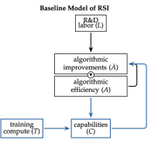
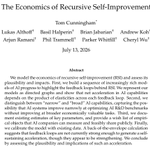


🎧 New episode of The Context Window with @ProfDavidDeming digs into RSI — including a deep dive into “The Economics of Recursive Self-Improvement,” co-authored by EconTAI’s @BasilHalperin and @ElasticityInst.
Listen: youtube.com/watch?v=NeuYfsIa…
Full Paper: elasticity.institute/rsi-pap…


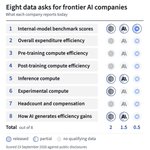
📈What would it actually take to know if an AI lab has triggered RSI?
New from EconTAI’s @BasilHalperin , @cherylwoooo , @arjun_ramani3 , and others from the @ElasticityInst : a note identifying 8 data points that would tell us how close we are to this happening.


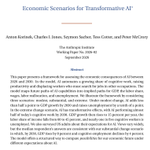
📊New from the @AnthropicAI Institute, with EconTAI's @akorinek: an interactive model of how AI could reshape the US economy by 2030.

📄 What would it actually take for AI to trigger explosive economic growth?
New @voxeu column featuring EconTAI Faculty @akorinek and @BasilHalperin: "AI feedback loops and the conditions for explosive growth."
Read the full column: cepr.org/voxeu/columns/ai-fe…

How fast could AI improve itself?
A new paper featuring EconTAI’s @BasilHalperin, “The Economics of Recursive Self-Improvement,” asks whether feedback loops in AI R&D could generate self-sustaining acceleration.


📬 Our Q2 2026 EconTAI newsletter is here!
This quarter: research briefs on public finance and measuring AI in GDP, major features in The Economist, WSJ, and NYT, and policy workshops on TAI scenarios.
Read: conta.cc/45aGiZi
Sign up: econtai.org/newsletter.html


The statement – co-organized by EconTAI's @akorinek , @erikbryn , @professor_ajay , and @testingham – has now been signed by 16 Nobel laureates and climbing toward 3,000 economists, AI researchers, and technology leaders worldwide.
1
2
48
📰 How will AI transform white-collar work? EconTAI Faculty Co-Director @akorinek discusses the economic implications of advanced AI and the importance of preparing now in a new @nytimes feature by @loracorkelley.
Read the full article: nytimes.com/2026/07/10/busin…

EconTAI Faculty Co-Director @akorinek joins @davidautor and @marthagimbel in @WSJ to unpack AI’s economic impact.
AI marks a new economic paradigm, akin to the Industrial Revolution – except this time it’s labor, not land or capital, that becomes abundant.
🔗 in 🧵

@TheEconomist highlights the world's top "AI-pilled economists." EconTAI Faculty @akorinek and @BasilHalperin are among the small group driving real research on AI's economic impact.
🔗Read the full article: economist.com/finance-and-ec…

🧠 EconTAI co-organized the Economic Scenarios for Transformative AI Workshop with @windfalltrust and @PIIE this week, bringing together 40 leading economists, policymakers, and AI researchers to game out policy responses to AI’s biggest economic risks.

One conclusion: political polarization will make ambitious change difficult, yet inaction will be far more costly.
🔗Read the full WSJ coverage: wsj.com/tech/ai/inside-the-r…

1
49
💬 EconTAI Faculty Co-Director Lee Lockwood quoted in the @nytimes DealBook on the growing debate around how to tax AI – and what the right goals should be.
Read: nytimes.com/2026/06/13/busin…

1
36
🤖Does adopting AI have to mean layoffs?
EconTAI Faculty Co-Director @akorinek featured in @nytimes on whether AI has to mean layoffs – or whether businesses can choose to use it to make workers more productive instead.
nytimes.com/2026/05/29/busin…

1
42

1/🆕 My new @PIIE research with Patrick McKelvey on 𝗠𝗲𝗮𝘀𝘂𝗿𝗶𝗻𝗴 𝘁𝗵𝗲 𝗔𝗜 𝗘𝗰𝗼𝗻𝗼𝗺𝘆 finds the AI sector in the US 𝗴𝗿𝗼𝘄𝗶𝗻𝗴 𝟮,𝟬𝟬𝟬%+/𝘆𝗲𝗮𝗿 in quality-adjusted terms—yet it's nearly invisible in GDP. We can't let this measurement gap become a policy gap!🧵

𝗡𝗲𝘄 𝗘𝗰𝗼𝗻𝗧𝗔𝗜 𝗥𝗲𝘀𝗲𝗮𝗿𝗰𝗵 𝗕𝗿𝗶𝗲𝗳: 𝗣𝘂𝗯𝗹𝗶𝗰 𝗙𝗶𝗻𝗮𝗻𝗰𝗲 𝗶𝗻 𝘁𝗵𝗲 𝗔𝗴𝗲 𝗼𝗳 𝗔𝗜
What happens when transformative AI erodes traditional tax bases like labor income?
🔗in 🧵
1
2
94
📰 New: EconTAI Faculty Director @akorinek featured in @WSJ on compute taxes as a potential policy response to AI's economic disruption.
Read the full WSJ article: wsj.com/tech/ai/job-losses-a…

2
95
🎙️EconTAI Faculty @BasilHalperin joins @DavidBeckworth on @Macro_Musings to discuss macroeconomic policy in the age of transformative AI.
Bond markets aren't pricing in transformative AI yet—real rates remain modest despite Silicon Valley's growth expectations.
Key topics:⬇️
1
3
82
We were honored to have @ghadfield as a visitor at EconTAI in Charlottesville!

Thanks to @akorinek and UVA’s EconTAI Initiative for hosting me today to present my work with @rstriv and @dhadfieldmenell on building AI agents that can participate in democratic life without destabilizing it. Paper at the Knight First Amendment Institute: buff.ly/z4OpSze

2
74