

econ/sta, nongchaoer, anything comforting put me on guard - inquisitor-in-chief
Nairobi, Kenya
Joined December 2019
- Tweets3.1K
- Following938
- Followers396
- Likes28.3K




Abdi Jama retweeted

I congratulate the Puntland Parliament on refusing to approve the proposed constitutional amendments, despite heavy pressure from President Deni's administration to rubber-stamp them. Today, 23 November 2026, may prove a watershed: the moment Puntland's institutions began to act as checks on power rather than extensions of it.
Taken together with the Supreme Court's ruling that the federal government's mandate has expired, this vote points to something new in Somalia's state-building journey: institutions beginning to say no. If it holds, it could mark the start of institutional maturity and the end of a political culture built on one-man rule.
Abdi Jama retweeted

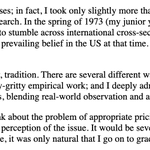
All of economics has been super-mathematicized for like the past 30 years or so. PhD admissions criteria, criteria for judging papers, and the like. I predict this will quickly reverse, and in hindsight future economists will be puzzled why we did such silly things for so long
This rings a bell with the recent Gen-Z protests in Kenya


My latest for @CityJournal
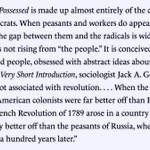
"Dostoevsky had a particularly sharp eye for the contradictions of wealthy radicals. They denounce privilege while enjoying its comforts. They praise equality while remaining exquisitely sensitive to their own social status." city-journal.org/article/dos…

1
83
Abdi Jama retweeted
if you are interested in social science questions but don't like math or coding. it is now the perfect time to try to be an economist. it is the best time in the past 20 years

Chau Ngo has a wonderful take on AI in mathematics. I believe the same about economics.
The profession has placed a very large premium on technical competence over the last three decades or so: for example, the ability to prove the existence of an equilibrium in a complex model, the asymptotic convergence of an estimator, or an understanding of the subtleties of numerical algorithms. I believe that, given the technology available circa 2000 or 2020, this was the optimal decision to push our field ahead (although I need to recognize that, having benefited personally from such a large premium, I am not completely unbiased).
But the world has changed. Thanks to AI, you no longer need an extraordinary ability in stochastic limit theory or functional analysis to answer important questions. What you need is an extraordinary ability to ask important questions and, even more importantly, to understand the implications of the answers.
Do not get me wrong: you will still need to have an adequate command of stochastic limit theory or functional analysis. But think about English: without being able to speak English, you will not succeed in the profession, but you only need to be adequate (have you heard my accent?), not to reach Stephen Fry’s outstanding mastery of the language.
Both undergraduate and graduate education in economics need to be reshaped drastically. The journals’ editorial lines and the peer review system need to change. And how we decide who gets tenure, prizes, and other forms of professional recognition needs to evolve.
I don’t have the answers to how we should do this. But I know that we must definitely not follow the reaction of many in the mathematics community. The Association for Human Mathematics is a pitiful and, I am afraid to say, shameful revolt against reality that confirms the suspicion among many outside academia that we have become an isolated, self-indulgent guild more bent on rent seeking and virtue signaling than on the search for truth.
And, like Ngo, I am extremely optimistic. I truly believe that over the next ten years or so, economics will progress like never before. I am incredibly excited to be alive at this moment. I understand, though, why many graduate students or assistant professors might feel uneasy about the landscape. But the historical record shows that if we handle the transition properly, there will be plenty of gains from the new technology to share.
Thanks to @stablequan for posting Ngo’s note. I borrowed it from him.


Abdi Jama retweeted

A behavioral economist sets out to explain why we’re so prone to overreacting and spiraling. newyorkermag.visitlink.me/SB…

Abdi Jama retweeted
Courts have blocked some of the harshest restrictions proposed by the Administration, but international enrollment—and interest from students abroad—has dropped anyway, leaving schools such as the University of Illinois in a precarious position. newyorker.com/news/the-lede/…

Abdi Jama retweeted

Many in the AI industry expect 2027 to herald the arrival of “recursive self-improvement”. Some worry that crossing this threshold will cause mankind to lose control of the technology economist.com/the-world-ahea…

Abdi Jama retweeted

1. An Introduction to Economics, by Thomas Sargent, Nobel laureate 2011.
In 2007 he gave Berkeley graduates a 335-word commencement speech: twelve lessons and nothing else. Here they are, one by one. The examples and suggested readings are mine, not his.
1) "Much of what we want isn’t feasible."
We want more services, lower taxes and less debt. Not every mix is possible. Economics asks which ones are.
My suggested reading: Robbins (1932), An Essay on the Nature and Significance of Economic Science.
Abdi Jama retweeted

Something poetic in Riemann Hypothesis being proved at the same time GTA6 comes out
Humanity is done with math; all that is left to do is play games
Abdi Jama retweeted

Anthropic just dropped a 37-minute guide on building AI agents that can automate an entire company.
Free. From the engineers who built Claude.
Agents that work, split up tasks, and run everything on their own.
Subtitled in Spanish and English
Save this post. 🔖
Abdi Jama retweeted
Today, in the Wall Street Journal, I publish a review of two outstanding books: ‘Money Beyond Borders’ by @B_Eichengreen and ‘The Almighty Dollar’ by @bhgreeley:
wsj.com/arts-culture/books/m…
I truly enjoyed both of them, so writing a review was hard! You want to add some insight for the reader but not overshadow the excellent work done by the authors.
You will be the judge of whether I succeeded. Suffice it to say that, if monetary history is your thing, you will enjoy both books. And, as the holidays approach, these are two books for gifts for your loved ones who like economic history (yes, we are not a measure-zero set!).

Abdi Jama retweeted

The approach to solving the Riemann hypothesis is markedly different from the 377 results OpenAI released in October, almost all of which were the result of a simple prompt to an AI model. Instead, Levent Alpöge’s mathematical expertise played a major role in iterative attempts with Claude to move closer to the result. quantamagazine.org/updates/t…

Abdi Jama retweeted

BREAKING: Robert Pattinson will play Claude in an upcoming biopic on the Riemann Hypothesis.


Abdi Jama retweeted
At age 25, Kurt Gödel proved there can never be a mathematical “theory of everything.” quantamagazine.org/what-do-g…

Abdi Jama retweeted

Riemann hypothesis proofs are like buses. You wait 167 years for one and then two arrive at once.
Abdi Jama retweeted

An independent, 100% human, claimed proof of RH (only 940 pages long). (Seems like this was finished months ago, but has been privately being reviewed.)
math216.wordpress.com/2026/1…
Abdi Jama retweeted

For those (like me) who prefer to take it slow, I highly recommend this beautiful talk by David Rowe given at Oxford, posted just a few days ago. Timely as ever.
youtu.be/nncrPbf7CEs?is=ePr_…
