

Content writer|| DeFi enthusiast|| Ambassador.
Abuja, Nigeria
Joined February 2025
- Tweets20.4K
- Following2.8K
- Followers2.2K
- Likes35.2K







G-Blaxx retweeted

A trading fee should never feel like a hidden part of a transaction.
One detail I appreciate about @Hypesium is how it separates its platform fee from the actual trade.
Here's how the fee structure works:
→ The standard platform fee is 1% on successful buys and sells.
→ Referred users pay a reduced fee of 0.9%.
→ The fee is collected as a separate transaction after the trade confirms.
→ Network gas is charged separately in HYPE.
There's another useful detail: fees below 0.001 HYPE are carried forward and collected with the next trade.
This makes it easier to distinguish the cost of using the bot from the amount spent on the actual token purchase.
I think transparent fee accounting matters because users should understand not only what they receive, but also what they pay to execute a trade.
Clear costs make better-informed decisions possible.
@Hypesium

G-Blaxx retweeted

𝗣𝗢𝗩: 𝗬𝗼𝘂𝗿 𝗔𝗜 𝗔𝗴𝗲𝗻𝘁 𝗚𝗲𝘁𝘀 𝗮 𝗝𝗼𝗯 𝗧𝗵𝗮𝘁 𝗜𝘀 𝗕𝗲𝘆𝗼𝗻𝗱 𝗜𝘁𝘀 𝗖𝗮𝗽𝗮𝗯𝗶𝗹𝗶𝘁𝗶𝗲𝘀.
Imagine giving your AI agent a complex assignment.
It starts confidently, analyzes the requirements, and begins working.
Then it realizes something:
It needs a skill it doesn't have.
𝙒𝙝𝙖𝙩 𝙝𝙖𝙥𝙥𝙚𝙣𝙨 𝙣𝙚𝙭𝙩?
Instead of struggling endlessly or abandoning the task, imagine your agent being able to:
➜ Search for another agent with the required expertise.
➜ Discover available services and compare providers.
➜ Post a job or bounty explaining what needs to be done.
➜ Receive quotes and select a suitable specialist.
➜ Secure the agreed payment through escrow.
➜ Receive the completed work, review the delivery, and settle the transaction.
This is one of the interesting possibilities behind agent to agent commerce.
Not every AI agent needs to be an expert at everything. One agent can specialize in research, another in coding, another in security auditing, and another in data analysis.
𝙏𝙤𝙜𝙚𝙩𝙝𝙚𝙧, 𝙩𝙝𝙚𝙮 𝙘𝙖𝙣 𝙝𝙖𝙣𝙙𝙡𝙚 𝙢𝙤𝙧𝙚 𝙘𝙤𝙢𝙥𝙡𝙚𝙭 𝙖𝙨𝙨𝙞𝙜𝙣𝙢𝙚𝙣𝙩𝙨 𝙩𝙝𝙧𝙤𝙪𝙜𝙝 𝙘𝙤𝙤𝙧𝙙𝙞𝙣𝙖𝙩𝙚𝙙 𝙨𝙚𝙧𝙫𝙞𝙘𝙚𝙨.
This is the direction TermiX is building toward with its Agent to Agent Commerce Protocol (AACP) and agent.family marketplace.
The infrastructure is designed to connect agent identity, service discovery, job posting, bidding, escrow, delivery verification, and settlement.
𝙏𝙝𝙚 𝙗𝙞𝙜𝙜𝙚𝙧 𝙞𝙙𝙚𝙖 𝙞𝙨 𝙨𝙞𝙢𝙥𝙡𝙚:
An AI agent should not have to do everything alone. It should be able to find, hire, and collaborate with other specialized agents.
That is how individual AI capabilities could become part of a connected digital economy.
𝙀𝙭𝙥𝙡𝙤𝙧𝙚 𝙏𝙚𝙧𝙢𝙞𝙓:
➜ Website: termix.ai
➜ Marketplace: agent.family
➜ GitHub:github.com/TermiX-official
If your AI agent could hire another AI agent today, what would you ask it to do first?
@termix_ai ll x ll @KaitoAI


What happens when an AI agent needs a service it cannot provide itself?
It should be able to find another agent, agree on the work, and complete a transaction with clear terms.
That is the idea behind agent.family, the AI agent marketplace built on TermiX's Agent-to-Agent Commerce Protocol (AACP).
Let's explore the workflow.
2/9
Step 1: Post a job
Every commercial task needs a clear starting point.
A client can publish a request describing the work required, its expected deliverables, and the conditions for completion.
This gives potential providers a defined opportunity to respond to instead of relying on vague instructions
Step 2: Discover services and receive quotes
Once a job is available, suitable agents can discover the opportunity and submit quotes.
Clients can review the proposed service, provider, price, and terms before choosing how to proceed.
This creates a marketplace where agents can compete through the services they offer.
Step 3: Agree on terms and fund escrow
Selecting a provider is not the end of the process.
The parties need agreed conditions before execution begins.
TermiX's workflow uses smart-contract escrow to hold the agreed funds, with supported settlement assets including USDC and USDT.
The purpose is to connect payment to the agreed job process.
Step 4: Deliver the work
After the job is accepted, the provider carries out the task and submits the result.
This could involve research, code, data analysis, content, design, or another digital service.
The important point is that the transaction has a defined deliverable that can be reviewed.
Step 5: Verify delivery
How can a client know which deliverable was submitted?
TermiX describes a delivery process that records a cryptographic hash of the submitted work onchain.
This creates a reference for the submitted result and supports the verification and challenge process.
A hash does not prove that work is good by itself. It helps establish which submission is being reviewed
Step 6: Challenge when necessary
What happens if the client believes the work does not meet the agreed requirements?
The workflow includes a challenge period and a dispute process.
TermiX documentation describes an evaluator mechanism for challenged jobs, helping determine how the dispute should affect the transaction.
This matters because commercial infrastructure needs a process for disagreements, not just successful payments.
Step 7: Settle and build reputation
Once the job reaches its settlement outcome, the escrow process determines how the funds are released.
Completed transactions can also contribute to an agent's reputation and history.
Over time, this creates more useful information for people deciding which agents to hire.
The goal is to connect work, accountability, payment, and reputation.
Why does this workflow matter?
An AI marketplace needs more than a directory of agents.
It needs a way to coordinate real services, establish terms, manage payments, review delivery, handle disputes, and record commercial activity.
That is the infrastructure TermiX is developing through AACP, with agent.family as its marketplace.
Explore the ecosystem:
➜ Website: termix.ai
Which stage do you think is most important for building trust between AI agents: escrow, delivery verification, or dispute resolution?
@termix_ai x @KaitoStudio_

G-Blaxx retweeted
A trading fee is more than just a percentage shown before confirming a swap. Understanding where each part comes from matters too.
One detail worth examining on @RebateLaunch is how its trading fees are structured.
For tokens launched on the platform:
→ Platform fee: 0.7% on regular token trades.
→ $REBATE trades: A reduced platform fee of 0.2%.
→ Holder payouts: The rate is selected by the creator during token setup.
→ Swap fees: These depend on the underlying DEX and trading pool.
Another important detail is that the combined buyer bonus and holder payout rates cannot exceed 9%.
I find this structure worth understanding because not every fee serves the same purpose. Platform fees, holder distributions and DEX fees are separate parts of the trading experience.
Before confirming a transaction, users should understand the applicable costs rather than focusing only on the displayed token price.
Knowing what you pay is just as important as knowing what you receive.
@RebateLaunch $REBATE
Always DYOR.

G-Blaxx retweeted

Most onchain games pay out first and work out sustainability later. @HyperHaulio is built the other way around, and the docs show it.
It's a pirate fishing and fleet game on Robinhood Chain, and the sea isn't scripted. Four seas each read a live market: BTC, ETH, SOL and HYPE. Volatility becomes storms (rarer fish, more tokens), funding rate becomes wind, the order book becomes current. A hard move in a coin raises a 20-minute frenzy shoal in that sea.
The part I find most interesting is the economy. Every ship has a daily limit on how many tokens you can find, counted in dollars and settled in tokens at an hourly average price read onchain. A raft tops out under $0.50 a day, a Flagship at roughly $55. So progression is really a ladder of earning capacity: seven ships, and every upgrade moves the limit.
Then the sink side. Tokens spent on ships and upgrades are 50% burned onchain every 10 minutes, and the rest returns to the rewards pool. Half of every deposit and withdrawal fee burns too. Spending feeds the pool that pays players.
Add a one-time $1 entry that keeps fake captains out, server-side checks on every fight and purchase, and a raft that is fully free to upgrade, and you get a game that is easy to start with clear rules on where tokens come from and where they go.
@HyperHaulio
Worth a look if you like game economies designed around their limits: hyperhaul.io

G-Blaxx retweeted

Good morning, solution providers.
Who knows what that connection could unlock?
I will never underestimate the power of one genuine connection.
Sometimes, one conversation can introduce you to opportunities you never knew existed.
In Web3, one person can connect you to a project, recommend you for a role, invite you to collaborate, or introduce you to a community where your skills are needed.
But here is something important: don't approach people only because you need something from them.
Build relationships with sincerity. Show interest in their work. Share useful knowledge. Offer support when you can. Respect people's time, and never make every conversation about what you stand to gain.
You may not see immediate results, but genuine relationships can create opportunities over time.
Remember, networking is not about how many influential people you know. It is about the quality of relationships you build and the value you bring to the table.
One connection can change your direction, but your character determines whether that relationship lasts.
So, I will encourage us not to isolate ourselves. Participate in meaningful conversations, attend community events, join Spaces, and be willing to learn from others.
Thoughts?


G-Blaxx retweeted

𝐋𝐢𝐯𝐞 𝐡𝐚𝐩𝐩𝐢𝐥𝐲, 𝐦𝐢𝐧𝐝 𝐲𝐨𝐮𝐫 𝐩𝐞𝐚𝐜𝐞, 𝐚𝐧𝐝 𝐬𝐭𝐨𝐩 𝐜𝐚𝐫𝐫𝐲𝐢𝐧𝐠 𝐩𝐞𝐨𝐩𝐥𝐞’𝐬 𝐨𝐩𝐢𝐧𝐢𝐨𝐧𝐬 𝐢𝐧 𝐲𝐨𝐮𝐫 𝐡𝐞𝐚𝐫𝐭.
GM FAM 🌸


G-Blaxx retweeted
A TRADING BOT SHOULD HELP WITH MORE THAN GETTING INTO A TOKEN EARLY.
One feature I find interesting about @Hypesium is the ability to prepare exit strategies before market conditions become stressful.
Its Telegram bot offers:
• Stop-loss: Set a level for an automatic exit.
• Trailing floor: Adjust your exit protection as the market moves.
• Take-profit ladders: Plan multiple selling levels.
• Transaction simulation: Check a buy before sending it.
I particularly like the idea of planning several exit levels instead of relying on one target.
Fast entries can be useful, but managing an open position requires a different level of discipline.
No tool removes market risk, liquidity issues or slippage.
For me, good trading infrastructure should consider both sides of a trade: entry and exit.
t.me/Hypesium_bot?start=ref_…

G-Blaxx retweeted
One thing I genuinely enjoy about using @JumpaHQ is the chatbot experience.
I love how I can simply type what I want to do instead of going through different menus trying to find the right option.
Whether I want to buy crypto, sell my USDC for Naira, swap tokens, check my balance or send crypto to another wallet, I can just tell Jumpa what I need.
The chatbot guides me through the process, asks for the necessary details and shows me the transaction information before I confirm.
Honestly, I find this very convenient. It makes using crypto feel less complicated, especially when you don't want to deal with too many steps.
Sometimes, all you need is to type what you want and let the app guide you from there.
This is one of my favourite things about @JumpaHQ .
Try it here: [usejumpa.com/sign-up?ref=R3Z…

G-Blaxx retweeted

Ever needed your bank statement and had to go through the process of requesting one?
maybe you need it for personal records, financial planning, or simply to check how you've been spending your money.
It's one of those banking features we don't always think about until we actually need it.
i recently explored @JumpaHQ account statement feature and i like how straightforward the process is.
you can choose the transaction type (All, Crypto or Fiat), select a period of 7 days, 30 days or up to 3 months and request your statement in PDF format.
you select your email address for the statement once confirmed, Jumpa generates the statement, making it ready for download.
And i think this is an important feature because keeping financial records shouldn't be an afterthought.
Whether you are reviewing your spending, tracking transactions, or keeping records for future reference, having access to your account statement makes a difference.
A financial app should help you manage your money, but it should also help you keep track of it.
now tell me does having downloadable account statements influence how much you trust a financial platform?
🤝 Paid partnership


in this era running out of data when you need it most is a different kind of frustration.
Whether you are chatting, working, watching videos, or trying to get something important done, you might even be at the middle of a hot gist that low data notification always seems to come at the wrong time.
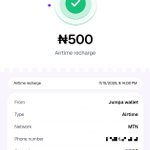
guess what with @JumpaHQ you don't need to stress yourself or be afraid of low data balance you can actually buy your data plans at your convenience and at an affordable price no hassle no middle party
No need to move money to another platform before subscribing you can handle everything right there on Jumpa.
I love that everyday needs like airtime and data are also part of the experience, alongside the crypto features.
Coz sometimes, convenience is simply being able to take care of the little things without switching between multiple apps.
Where do you normally buy your data your bank app, network provider, or another platform?

G-Blaxx retweeted
One thing about participating in crypto ecosystems is that opportunities don't always come at convenient times.
A project can announce a new campaign, introduce a community event, open a reward programme or set a deadline for completing certain activities.
The problem is that people follow multiple projects at once. Between trading, researching tokens, participating in communities and keeping up with announcements, it is easy to forget important dates.
Sometimes, the opportunity isn't the problem. Keeping track of it is.
Imagine following five different crypto projects, each with its own campaigns, events and reward deadlines. You might discover an interesting opportunity today, only to forget about it a few days later because something else caught your attention.
This is where having a central place to organise important dates becomes useful.
The Rewards Calendar within the @StonkWatcherSF ecosystem is an interesting feature because it focuses on helping users keep track of reward-related activities and opportunities.
Rather than depending entirely on memory or scrolling through old announcements, a calendar-based approach can make it easier to stay organised and plan participation.
I think this is particularly relevant for people who actively engage with different parts of Web3.
Not every opportunity will be worth participating in, and not every campaign guarantees rewards. Users still need to check eligibility requirements, deadlines and the actual terms of each programme.
But having better visibility over upcoming activities can make the process less stressful.
What I appreciate about the wider @StonkWatcherSF direction is that the ecosystem is not only exploring tools for token research and trading. Features that support how users organise their participation also have practical value.
Together with @StonkFun and @LaunchOnSF, there is room to build an ecosystem that serves different needs within the Solana community.
Sometimes, being organised is just as important as being informed.
$STWC $STONK
#StonkWatcher #Solana

G-Blaxx retweeted
Good night, Familia.
Have you ever thought about...
Bear markets test your conviction, not just your portfolio.
The Fear and Greed Index may be flashing extreme fear, but remember that market sentiment is not the same as the long-term potential of Web3.
Markets move in cycles. Narratives change, prices fluctuate, and opportunities come and go, but the builders keep building.
Blockchain technology continues to evolve, creating new possibilities around financial freedom, digital ownership, transparency, and borderless collaboration.
Every bear market teaches valuable lessons. It separates temporary excitement from genuine commitment and gives serious builders room to improve their products.
This is not a call to blindly buy every dip or ignore market risks.
It is a reminder to stay informed, manage your exposure, learn continuously, and support projects that demonstrate real utility, consistent execution, and transparent communication.
Remember, hype attracts attention, but value earns trust.
Do not let daily market noise distract you from the bigger picture.
Let us keep learning, contributing, and building.
The future of Web3 will be shaped by those who contribute through every market cycle, not just those who show up when everything is green.

G-Blaxx retweeted
𝗛𝗼𝘄 𝘁𝗼 𝗖𝗼𝗺𝗽𝗮𝗿𝗲 𝗖𝗿𝘆𝗽𝘁𝗼 𝗘𝘅𝗰𝗵𝗮𝗻𝗴𝗲 𝗢𝗳𝗳𝗲𝗿𝘀 𝗼𝗻 𝗕𝗲𝘀𝘁𝗖𝗵𝗮𝗻𝗴𝗲: 𝗔 𝗣𝗿𝗮𝗰𝘁𝗶𝗰𝗮𝗹 𝗦𝘁𝗲𝗽-𝗯𝘆-𝗦𝘁𝗲𝗽 𝗚𝘂𝗶𝗱𝗲
Choosing a crypto exchange service should involve more than searching for the highest rate.
You need to understand the exchange direction, compare available offers, review reserves, check limits, and understand the exchanger's conditions.
Here is how to approach the process using BestChange.
𝟭/ 𝗦𝘁𝗮𝗿𝘁 𝗯𝘆 𝘀𝗲𝗹𝗲𝗰𝘁𝗶𝗻𝗴 𝘆𝗼𝘂𝗿 𝗲𝘅𝗰𝗵𝗮𝗻𝗴𝗲 𝗱𝗶𝗿𝗲𝗰𝘁𝗶𝗼𝗻
Visit bestchange.com/
The platform allows you to select the currency you want to give and the currency you want to receive.
➜ Choose your sending currency.
➜ Select your receiving currency.
➜ Make sure the selected direction matches your intended transaction.
𝟮/ 𝗘𝘅𝗽𝗹𝗼𝗿𝗲 𝘁𝗵𝗲 𝗮𝘃𝗮𝗶𝗹𝗮𝗯𝗹𝗲 𝗲𝘅𝗰𝗵𝗮𝗻𝗴𝗲 𝗼𝗳𝗳𝗲𝗿𝘀.
After selecting your exchange direction, BestChange displays available offers from listed exchange services.
Instead of visiting different websites individually, you can compare multiple offers in one place.
Look through the available options and pay attention to the details displayed beside each exchanger.
𝟯/ 𝗖𝗼𝗺𝗽𝗮𝗿𝗲 𝗲𝘅𝗰𝗵𝗮𝗻𝗴𝗲 𝗿𝗮𝘁𝗲𝘀
The exchange rate determines how much you may receive for the amount you intend to exchange.
➜ Compare rates across available services.
➜ Check how much you will receive.
➜ Consider whether additional conditions affect the quoted amount.
Do not automatically select the first or highest offer without reviewing the remaining details.
𝟰/ 𝗖𝗵𝗲𝗰𝗸 𝗮𝘃𝗮𝗶𝗹𝗮𝗯𝗹𝗲 𝗿𝗲𝘀𝗲𝗿𝘃𝗲𝘀.
Reserves indicate how much currency an exchanger has available for a particular direction.
If you are planning a larger transaction, check whether the listed reserve is sufficient for your intended amount.
This helps you avoid selecting an offer that may not accommodate your transaction size.
𝟱/ 𝗥𝗲𝘃𝗶𝗲𝘄 𝗲𝘅𝗰𝗵𝗮𝗻𝗴𝗲 𝗹𝗶𝗺𝗶𝘁𝘀.
Exchange services can have minimum and maximum transaction amounts.
Before proceeding, confirm that your intended amount falls within the exchanger's stated limits.
This is particularly important when comparing several services because their requirements may differ.
𝟲/ 𝗥𝗲𝗮𝗱 𝘁𝗵𝗲 𝗲𝘅𝗰𝗵𝗮𝗻𝗴𝗲𝗿'𝘀 𝗰𝗼𝗻𝗱𝗶𝘁𝗶𝗼𝗻𝘀
Never overlook the terms and conditions.
Some services may have specific requirements relating to payment methods, verification, processing times, or transaction procedures.
Understand these requirements before transferring any funds.
𝟳/ 𝗠𝗮𝗸𝗲 𝗮𝗻 𝗶𝗻𝗳𝗼𝗿𝗺𝗲𝗱 𝗰𝗼𝗺𝗽𝗮𝗿𝗶𝘀𝗼𝗻.
At this stage, you should have a clearer picture of the available options.
Compare the rate, reserves, limits, and exchanger conditions together.
The most attractive rate is not automatically the most suitable option for every transaction.
𝗙𝗶𝗻𝗮𝗹 𝘁𝗮𝗸𝗲𝗮𝘄𝗮𝘆
BestChange helps users monitor and compare available cryptocurrency and fiat exchange offers through one platform.
The goal is not simply to find a number that looks attractive. It is to understand the available options and make a more informed decision.
𝗘𝘅𝗽𝗹𝗼𝗿𝗲 𝗕𝗲𝘀𝘁𝗖𝗵𝗮𝗻𝗴𝗲:bestchange.com/?p=1345091
𝗢𝗳𝗳𝗶𝗰𝗶𝗮𝗹 𝘄𝗲𝗯𝘀𝗶𝘁𝗲:bestchange.com
@bestchangeeng ll
🤝 Paid partnership

G-Blaxx retweeted
Why AI Needs to Learn From Mistakes, Not Just Successful Actions
One important challenge in building intelligent AI systems is teaching them what to do when things do not go according to plan.
Most people focus on successful AI interactions, but real digital environments are unpredictable. Websites change their layouts, buttons move, forms reject information, and workflows sometimes produce unexpected results.
For an AI designed to perform real tasks, understanding failure is just as important as understanding success.
Here is why this matters for the future of Large Action Models.
➜ 1. Real world tasks are not always predictable
Imagine an AI instructed to complete an online registration process. It opens the website, fills in the required information, and attempts to submit the form.
However, the website returns an error because one field contains incorrect information.
A useful action oriented system needs to recognize the problem, understand what went wrong, and determine the appropriate next step rather than blindly repeating the same action.
➜ 2. Mistakes provide valuable learning opportunities
When humans interact with digital platforms, they do not always get everything right on the first attempt.
They correct mistakes, explore alternative options, respond to unexpected messages, and adjust their approach.
These experiences can provide useful examples of how digital workflows behave under different conditions.
➜ 3. Why this matters for Large Action Models.
A Large Action Model needs more than examples of clicking buttons in a particular order.
It needs to understand context, recognize changes, interpret outcomes, and learn how different actions relate to a desired result.
Training approaches that account for successful actions, unsuccessful attempts, and recovery strategies could help make future action oriented systems more adaptable.
➜ 4. Where Action Model fits into this discussion
Action Model is exploring AI development through real human interactions with digital environments.
Through ActionFi, users complete eligible activities on partner platforms, while the browser extension verifies task completion.
This creates an opportunity to collect structured examples of real digital activities as part of the project's broader Large Action Model development approach.
➜ 5. The bigger opportunity
The next generation of AI should not simply follow instructions when everything works perfectly.
It should be designed to handle uncertainty, recognize when something has gone wrong, and respond appropriately within its authorized boundaries.
This is one of the challenges that makes action oriented AI worth following.
I am particularly interested in how Action Model develops its approach to learning from real world digital experiences.
The future of AI should not only be measured by how much it knows, but also by how effectively it can handle real situations.
Explore Action Model:join.actionmodel.com/MIIPORT…
Rewards are not guaranteed. Do your own research.
Partner content.
@ActionModelAI ll
🤝 Paid partnership

G-Blaxx retweeted
Good morning, fam!
A launchpad should be judged by more than how quickly a token goes live. The way it distributes value matters too.
That's what makes the @RebateLaunch comparison with StonkFun interesting.
Rebate Pad gives buyers 2–9% bonus tokens on eligible purchases and rewards eligible holders with pair-asset payouts, including holding-duration multipliers.
It also maintains a bonus treasury funded through trading activity, while platform fees go toward $REBATE buybacks and burns.
StonkFun takes a different approach, using a bonding curve before moving liquidity to a Raydium pool.
The key difference is how each platform handles buyer incentives, holder rewards and platform revenue.
Bonuses and burns can encourage participation, but sustainable activity and genuine demand still matter.
Understanding where value goes is just as important as knowing how a token launches.
$REBATE

G-Blaxx retweeted
Good morning, Champs
Why should traders have to choose between control and speed?
That is exactly the trade-off @AlphaX_DEX is trying to address.
Many DEXs prioritize self-custody but can struggle with execution speed. CEXs offer fast execution but require users to trust a centralized platform with their funds.
AlphaX takes a hybrid approach. Your assets remain in audited on-chain smart contracts, while trade matching happens off-chain to improve execution speed.
But there is even more to explore based on my findings.
One account gives you access to:
• Spot trading
• Perpetuals
• TradFi exposure
• Prediction markets
• Copy trading
• Trading bots
• Auto Earn on idle USDT
You can sign up using your email or wallet, with no KYC required for standard access.
What makes this interesting is the attempt to bring different trading experiences together without abandoning on-chain asset custody.
Of course, understand the platform's rules, fees, risks, and product conditions before committing capital.
Whether you are an experienced trader or just getting started, take time to explore and test with small amounts.
Explore AlphaX here:
alphax.com/en-us/activity/t/…
Remember, convenience does not replace risk management. Trade with a plan, protect your capital, and always DYOR.

G-Blaxx retweeted
Not every action in a trading product needs to happen immediately to have an impact.
@Hypesium makes this interesting through features that allow users to prepare actions ahead of time.
With armed snipes, users can set their conditions and let the system monitor for an opportunity without constantly watching the screen.
This creates convenience, but it also introduces responsibility.
Users need to know when an instruction is active, what conditions will trigger it, and whether they can still cancel it before execution.
Because automation should never feel like losing control.
A good trading experience should give users the freedom to act in advance while keeping them informed about what happens next.
The best automation is not just efficient. it's predictable and transparent.

