

Independent coverage of the EFB ecosystem Tokenomics | On-chain data | Volume stats Not financial advice
Joined March 2026
- Tweets195
- Following35
- Followers93
- Likes257








Pinned Tweet
Welcome to $EFB Insights
Tracking the $EFB ecosystem and @ETHFanToken:
• Volume
• $EFT rewards
• $EFT buybacks & burn
• On-chain data
The goal: explain the mechanics behind the ecosystem.
Follow for insights.
Some crypto ecosystems create a flywheel effect.
Trading activity → generates taxes
Taxes → fund rewards and development
Rewards → attract more holders
More holders → more trading
A healthy ecosystem can fuel its own growth.

What is a token burn?
A burn permanently removes tokens from circulation.
Less supply → more scarcity.
Many ecosystems burn tokens to:
• reduce supply
• support price stability
• reward long-term holders
One of such ecosystems are @ETHFanToken

What is a token burn?
A burn permanently removes tokens from circulation.
Less supply → more scarcity.
Many ecosystems burn tokens to:
• reduce supply
• support price stability
• reward long-term holders
One of such ecosystems are @ETHFanToken
DEX trading works through liquidity pools.
Instead of buyers and sellers matching orders:
Users trade against a pool of tokens.
Liquidity providers deposit tokens and earn trading fees.
This is how decentralized trading works.

What is slippage?
Slippage is the difference between the price you expect and the price you get.
It happens when:
• liquidity is low
• trades are large
Low liquidity → higher slippage.

Bitcoin key levels:
Support: $71K
Momentum pivot: $72K
Resistance: $75K
$BTC is trading above major short‑term moving averages after breaking $73K, signaling a strong rebound channel.
The crypto market has seen an increase of more than 90B, in total value today.
$BTC alone has gained more than 60B, while the rest has went to alts.
Will the surge continues, or is it just a short term pump, before yet another mass sell?
93
The crypto market has seen an increase of more than 90B, in total value today.
$BTC alone has gained more than 60B, while the rest has went to alts.
Will the surge continues, or is it just a short term pump, before yet another mass sell?
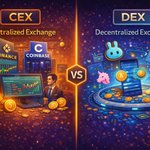
Two main ways to trade crypto:
CEX (Centralized Exchange)
• @binance
• @coinbase
• @kraken
• @KoiniApp
DEX (Decentralized Exchange)
• @Uniswap
• @pancakefi
CEX = order books
DEX = liquidity pools
Both have advantages.

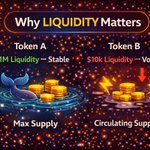
Supply matters more than price.
Two important concepts:
Circulating Supply → tokens currently tradable
Total / Max Supply → total tokens that can exist
Price without supply data means nothing.
Always check market cap + supply together.

Let's do some more crypto education.
What is tokenomics?
Tokenomics describe how a crypto ecosystem works.
Trading → generates taxes
Taxes → fund rewards, liquidity and development
Strong tokenomics create sustainable ecosystems.
An example could be @ETHFanToken

Let's do some more crypto education.
What is tokenomics?
Tokenomics describe how a crypto ecosystem works.
Trading → generates taxes
Taxes → fund rewards, liquidity and development
Strong tokenomics create sustainable ecosystems.
An example could be @ETHFanToken
Can @ETHFanToken family tell me, what do you 0.00000001 $EFT?


Start: 10,000
Growth: 5% yearly
After:
• 5 years → 12,763
• 10 years → 16,289
• 20 years → 26,533
It starts slow.
Then suddenly it accelerates.
The basic compounding formula is:
A = P(1+r)^t
Where:
A = final amount
P = starting amount
r = yearly growth rate
t = time
The secret?
Time.
The longer you compound, the faster the growth.

Most people in crypto underestimate the power of compounding.
Compounding = earning rewards…
and then earning rewards on those rewards.
That’s how small yields turn into big gains over time.
$EFB → earns $EFT rewards
Reinvest $ETH → earn more rewards
Repeat.


Supply matters a lot in crypto.
Two main types:
Circulating supply
Tokens currently tradable.
Max supply
Total tokens that will ever exist.

Volume = how much trading happens.
Usually measured over 24 hours.
High volume means: • strong interest
• active market
Low volume means: • fewer traders
• less activity

