

Political Science • International Relations • Beyond headlines • Beyond borders • Politics • Geopolitics • Perspectives
Joined August 2026
- Tweets9.2K
- Following9K
- Followers10.5K
- Likes28K


Pinned Tweet
If Ukraine can strike Russian assets abroad, why should Moscow rule out striking weapons shipments or military infrastructure across Europe? How far can this escalation go before NATO becomes directly involved?
5
123
There is a dangerous precedent emerging: military assets linked to this war are increasingly exposed far beyond the battlefield.
If Russia and Ukraine continue extending their reach abroad, European territory could face growing security risks.
The real question is whether NATO and Moscow can maintain deterrence without turning indirect confrontation into direct conflict.
Strategic restraint may now matter more than military bravado.
15
Eunoia retweeted
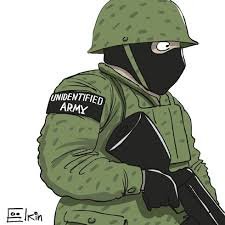
BREAKING: Last months call between Baltic Leaders and Putin was actually about averting a conflict with Russia over the Baltic area after Russia wrote a former nuclear threat to NATO over the Baltic and started to rapidly militarise Kaliningrad over fears of losing seaborne exports in the Baltic Sea-WSJ
-The call was first proposed to be about Ukraine but it has been revealed another large reason was calming incredibly high tensions over the Baltic.
-Russia became increasingly paranoid about NATO and Ukraine cutting of its Baltic Sea exports which count for 60% of its seaborne oil especially in light of the Black Sea becoming impassable from drone strikes.
-Russia in response began quickly militarising the Baltic region deploying for the first time nuclear armed warships which escorted tankers, militarising Kaliningrad with more troops, radars, huge amounts of drones and Electronic Defence Equipment.
-Crucially Russian parliament passed legislation allowing Russia to use military force to protect its assets in the Baltic and issued NATO with a scary direct nuclear that it would use weapons to protect its interests in the Baltic.
Japan and Estonia are now firmly involved in supporting Ukraine Tokyo through financial, humanitarian and non-lethal military assistance, and Tallinn through weapons, ammunition, training and long-term military commitments. Ministry of Foreign Affairs of Japan +1
Russia did not invade Japan or Estonia. Yet both are choosing to deepen their involvement in a war fought on Europe’s eastern frontier.
Japan is thousands of miles away. Estonia shares a border with Russia. Different geography, same commitment to Kyiv.
Europe’s security debate is no longer staying in Europe. 🇯🇵🇪🇪🇺🇦
1
6
223
Europe keeps preaching peace whilst funding a war, demanding escalation and avoiding any direct responsibility for the consequences.
Apparently, Europe has discovered a remarkable strategy: fight Russia until the last Ukrainian, then call it European security.
5
150
For years, Western leaders have predicted that sanctions, military losses and diplomatic isolation would leave Russia strategically weakened.
Yet Moscow continues to wage war, maintain military production and pursue partnerships beyond Europe.
This does not mean Russia is winning. But it raises a serious question about the assumptions behind Western strategy.
If the objective was to force Moscow into submission, how long before the West admits that the strategy needs reassessing?
100 reasons people cite when explaining support for Russia’s position 🇷🇺
1. NATO’s eastward expansion.
2. Russia’s long-standing security concerns.
3. The absence of a wider European security settlement.
4. Western military involvement in Ukraine.
5. The failure of the Minsk agreements.
6. The unresolved status of Donbas.
7. The protection of Russian-speaking communities.
8. Historical ties between Russia and Ukraine.
9. Opposition to a US-dominated world order.
10. Western double standards in international affairs.
11. NATO’s intervention in Kosovo.
12. The invasion of Iraq in 2003.
13. The intervention in Libya in 2011.
14. Selective application of international law.
15. Western sanctions as a political instrument.
16. Russia’s exclusion from European security discussions.
17. The militarisation of Eastern Europe.
18. Western weapons deployments near Russian borders.
19. Ukraine’s unresolved neutrality debate.
20. The failure of diplomacy before February 2022.
21. The strategic importance of Crimea.
22. Russia’s Black Sea security interests.
23. Sevastopol’s importance as a naval base.
24. Crimea’s historical significance to Russia.
25. The Black Sea balance of power.
26. Concerns about foreign military infrastructure in Ukraine.
27. Opposition to foreign-backed regime change.
28. Russia’s desire for strategic depth.
29. The US role in post-Cold War European security.
30. The perception that Western security concerns receive more attention.
31. The expansion of Western military alliances.
32. The decline of diplomatic engagement with Moscow.
33. The absence of a durable arms-control framework.
34. The collapse of trust between Russia and the West.
35. The failure to establish a lasting European security architecture.
36. Economic sanctions as a means of political pressure.
37. Russia’s opposition to unilateral Western interventions.
38. The principle of multipolarity.
39. The desire for greater strategic independence.
40. Opposition to Western political conditionality.
41. Russia’s permanent membership of the UN Security Council.
42. Its role in global energy markets.
43. Its importance in nuclear arms control.
44. Its influence in the Middle East.
45. Its role in international diplomacy.
46. Its strategic partnership with China.
47. Its cooperation with India.
48. Its influence within BRICS.
49. Its position in Eurasia.
50. Its importance to global commodity markets.
51. The Soviet Union’s role in defeating Nazi Germany.
52. The Soviet contribution to the Allied victory in World War II.
53. Russia’s geographical and strategic significance.
54. Its nuclear deterrent.
55. Its military-industrial capabilities.
56. Its energy resources.
57. Its agricultural exports.
58. Its influence in the Arctic.
59. Its space programme.
60. Its scientific and technological legacy.
61. Its cultural influence.
62. Its literary heritage.
63. Its contribution to classical music.
64. Its historical role in European affairs.
65. Its long-standing relationships with neighbouring states.
66. Its opposition to a unipolar international system.
67. Its demand for recognition as a major power.
68. Its concerns about military encirclement.
69. Its objections to foreign military deployments.
70. Its preference for negotiated security arrangements.
71. Its opposition to unilateral sanctions.
72. Its criticism of Western interventionism.
73. Its demand for reciprocal security guarantees.
74. Its concerns about strategic missile deployments.
75. Its concerns about the militarisation of the Black Sea.
76. Its opposition to Ukraine joining NATO.
77. Its demand for negotiations on European security.
78. Its argument that security should be indivisible.
79. Its demand for recognition of Russian strategic interests.
80. Its opposition to Western dominance in international institutions.
81. The importance of diplomatic engagement rather than isolation.
82. The argument that permanent hostility with Russia benefits nobody.
83. The need to avoid direct NATO–Russia confrontation.
84. The danger of nuclear escalation.
85. The economic consequences of prolonged sanctions.
86. The disruption of global energy supplies.
87. The impact of the war on food security.
88. The importance of keeping diplomatic channels open.
89. The need for a negotiated end to the conflict.
90. The importance of acknowledging security concerns on all sides.
91. The argument that military victories rarely resolve historical disputes.
92. The need for a sustainable European security settlement.
93. The importance of treating Russia as a negotiating party.
94. The argument that isolation has not ended the conflict.
95. The need to distinguish Russian citizens from government policy.
96. The importance of protecting civilians on all sides.
97. The need for consistent application of international law.
98. The importance of diplomacy over indefinite military escalation.
99. The belief that a stable Europe requires engagement with Moscow.
100. The principle that understanding Russia’s position does not mean endorsing every Russian action.
The central argument: You can question NATO policy, Western double standards and the failure of diplomacy without endorsing Russia’s invasion or denying Ukraine’s sovereignty.
4
45
Eunoia retweeted
Military victories are measured in territory, equipment and strategic objectives. Yet much of the public debate revolves around casualty figures and daily battlefield claims.
Russia has not collapsed. Ukraine has not surrendered. Both sides continue to absorb enormous costs.
So why do commentators keep presenting this war as though one decisive victory is always just around the corner?
Is the world analysing the battlefield, or simply believing the narrative it prefers?
Eunoia retweeted

Some people still believe Russia has lost 700,000 soldiers in four years.
The US lost 58,000 in Vietnam over a decade in a country of 200 million and it nearly tore the place apart.
Russia has 145 million people. 700k dead means millions of families directly affected. You don’t hide that. Not even in a real dictatorship, and Russia isn’t one.
It’s pure propaganda.
If you believe it, you’re an idiot.
The problem with these figures is that estimates are repeatedly presented as confirmed fatalities.
Russia's military losses should be scrutinised, but so should the methodology behind every headline figure.
Comparing estimated casualties with confirmed deaths is not serious analysis.
If the numbers are credible, show the evidence. If they are estimates, stop presenting them as facts.

Some people still believe Russia has lost 700,000 soldiers in four years.
The US lost 58,000 in Vietnam over a decade in a country of 200 million and it nearly tore the place apart.
Russia has 145 million people. 700k dead means millions of families directly affected. You don’t hide that. Not even in a real dictatorship, and Russia isn’t one.
It’s pure propaganda.
If you believe it, you’re an idiot.
1
4
234
Eunoia retweeted

Happy Thanksgiving everyone! ♥️♥️
I'm grateful to connect with each of you
We'll face challenges on X with our goals, targets, and impressions, but we're in this together.
Let's always support each other
Thank you 🙏🙏
#Thanksgiving
Europe speaks endlessly about standing with Ukraine, but how much of its own security, money and military capacity is it prepared to put on the line? Supporting Kyiv is one thing. Assuming responsibility for the consequences is another. Is Europe prepared to defend the position it keeps demanding Ukraine maintain?
1
4
306
Zelensky needs a strategy, not just promises of support.If Washington can negotiate with Putin, why must Ukraine keep paying the price of a war whose endgame is increasingly shaped by others?
3
6
331
If Russia genuinely believes Estonia is crossing a red line, is Moscow prepared to test Article 5—or is this pressure designed to expose divisions within NATO? Estonia is a small country, but its NATO membership gives it a much bigger strategic significance.
2
4
270
Eunoia retweeted

Let's be honest:
🇺🇸 America is pursuing its own strategic interests.
🇷🇺 Washington is willing to sit across the table from Putin.
🇨🇳 It is also engaging with China over its own economic and geopolitical future.
Meanwhile, Ukraine continues to bear the human and economic cost of this war.
Zelensky cannot afford to treat American support as a permanent guarantee.
If Washington can negotiate with Moscow, why can't Ukraine openly question whether continuing the war is still in its national interest?
🇺🇦 Ukraine should have considered surrendering earlier rather than allowing the country to be devastated for years.
