

Innovation and Data for better Cities at @BHcityleaders and @IIPP_UCL If interested in this topic, consider subscribing to: https://nitter.cf/t.co/NPXgicOAZZ
Joined April 2011
- Tweets2.2K
- Following1.7K
- Followers671
- Likes2.2K

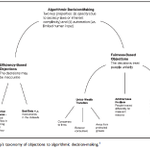




I had to write these notes to clarify my thinking on why - with AI - this “time is different” for governments.
There is much more to say about the topic, but writing this already helped me.
Why this wave of AI will reshape the government fermonge.substack.com/p/why-…
Fernando Monge retweeted

A quick EU founder survey: eusurvey.vercel.app.
Fernando Monge retweeted

You may have been told to watch this video about the OpenAI AI hack. You really should, even if you don't usually care about tech stuff.
If nothing else, click this link to the 18 minutes in & see how the agents spoke with each other. Its eye opening. youtu.be/87DyyMV0kCY?si=DMfq…


Governments may not be interested in AI, but AI is interested in Governments, by @FerMongeC open.substack.com/pub/fermon…
What surveys can (and can’t) tell us about AI in government, by @FerMongeC open.substack.com/pub/fermon…
Fernando Monge retweeted
An interesting trend we're noticing at Stripe: US startups are pulling ahead of their peers elsewhere.
These charts show averaged revenue growth for software startups in each location. US startups typically grow somewhat faster than those elsewhere. However, since mid-2023, US companies have accelerated a lot. Interestingly, this is not just because of AI startups: if we strip those out, there's still a big divergence. Our leading hypothesis is that US startups (even those that aren't AI companies as such) are adopting new technologies (AI, stablecoins, etc.) faster than companies elsewhere. (This pattern of faster adoption among US companies was also seen with the internet itself.)
Whatever the cause, the pattern is striking.
[Methodological note: this pattern appears to hold beyond Europe as well.]


Fernando Monge retweeted

Aretian team representatives will present at the Smart City Expo World Congress: come visit us! We will present recent projects and the brand new CDT!

I am thinking a lot about feedback loops in city governments.
What are the key differences between how information flows in public versus private organizations, as well as within functions within governments (operations, service delivery, policy shops)?
Why is building in legacy cities so costly? One reason is that there is a lot already built above but also underground. And we do not have good information to know where these pipes and cables are. Wellington, NZ, is tackling that.
open.substack.com/pub/fermon…
Fernando Monge retweeted

If you’re a city leader, you’re probably using data to make critical decisions. But is your organization getting the most out of available data? Explore eight key ways cities can use data to solve problems and create public value using a free framework developed by the Bloomberg Harvard City Leadership Initiative and based on research published in Information Polity. Learn more: bit.ly/4nkdNzM.
Research and Action Insights authors: Jorrit de Jong, @FerMongeC, Quinton Mayne, Nick Vachon, and Yamile Nesrala

ALT People working at a table with papers containing graphs and numbers in the foreground
I was inspired to write this piece after listening to a great conversation between @patio11 and @Alethios3
Mapping the Invisible City: open.substack.com/pub/fermon…
Collaboration around data can unlock building abundance. @CenterforCities
Some thoughts on when can data, both government and corporate, be a public infrastructure, and the policy implications of it all.
Is Data a Public Infrastructure? open.substack.com/pub/fermon…
Fernando Monge retweeted

1/8¿Vivienda en alquiler o en propiedad?
El debate que marcará el futuro de España no va de ideologías, sino de qué tipo de sociedad queremos ser. Y de si estamos dispuestos a desmontar el contrato social que ha definido nuestras ciudades y barrios desde hace más de 70 años. 🧵

Fernando Monge retweeted
A new CS review: Fernando Fernández Monge (@FerMongeC) from the Bloomberg Center for Cities at Harvard University (@CenterforCities) discusses 'City Science: Performance Follows Form' (@actar_publisher):
"How graceful science can make urban beauty"
open.substack.com/pub/fermon…

Even if large parts of our lives are shaped by seemingly intangible technologies, material conditions still determine our destinies. It’s hard to measure and model how street geometry shapes wages or carbon:
The Performance of the Form, by @FerMongeC open.substack.com/pub/fermon…
If Keynes were an urbanist: “Practical men who believe themselves to be roaming free through city streets and buildings are usually the slaves of some defunct urban planner.”
Fernando Monge retweeted
Citizen One Videopodcast: part 2 of the conversation with Douglas Stuart McDaniel (@urbannext_net), focused on urban resilience, climate impact mitigation, design for sustainability, and prosperity creation in up-and-coming innovation districts.
open.substack.com/pub/multiv…

Why do individual people adopt innovations much faster than (public) organizations? Weeding the right from the wrong motives to delay the adoption of innovations in governments is more important than ever!
open.substack.com/pub/fermon…