

Building https://nitter.cf/t.co/Ju2jPCnHmG | Retention Marketing for 8-10 Figure DTC Brands | Your favorite agency's favorite agency
Joined April 2019
- Tweets7.2K
- Following710
- Followers8.1K
- Likes6.7K




Feras Khouri retweeted
The second you think you know it all in business is the second you fail.
As a business owner who’s been through the ups and downs of growing a brand to 8-figs and scaling an agency to 7-figs in 6 months,
I know it’s not easy.
It takes grit and a lot of learning and collaboration from others.
And I’m incredibly grateful for the people and mentors who’ve helped me along the way.
That’s why I’m never afraid to share what’s working for me in business.
I want you to succeed too, and maybe even surpass what I’ve done.
Because the DTC landscape isn’t what it was a few years ago.
Sure, the industry’s getting more competitive, but beating the competition isn’t enough anymore.
With
- Customer acquisition costs climbing,
- Loyalty slipping
- Economic uncertainty upon us
Business owners need to be sharper than ever with their strategies.
We need to operate like well-oiled machines.
Which means we need to be more open to learning new tactics and strategies from other business owners.
That’s how we grow—by learning from each other and sharing real value that sharpens our strategies and strengthens our businesses.
I’ve noticed a lot of people only sharing the surface-level stuff. Just enough to reel your interest but holding back the real sauce to apply the principles to your own brand.
If we’re going to truly level up, we need to be serious about collaboration.
So, never play small.
- Share what’s working
- Be a student of the game no matter where you are in your journey
- Keep learning from each other
and let’s all grow and succeed together.
Because at the end of the day, that’s how you build something that lasts.
Black Friday will be interesting this year.
I think we have a bifurcated consumer base. Many are thriving and looking to spend. Many more are struggling and don’t have disposable income.
We also have brands who’ve tried to move upmarket to make more money, and others who’ve cut prices to increase their TAM. I’m not convinced a lot of brands actually know their own positioning or their consumer base.
Feras Khouri retweeted
One bad partnership cost my current partner over $100k. It is not a lesson you want to learn, and it’s never something you get over fully.
So you see these 5 red flags at ANY point in a business relationship - client-side or otherwise…
It’s time to jump ship.

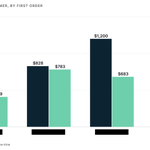
12 month LTV broken out by first product purchased (looking at top 4 SKUs by volume) and whether customers started on subscription or OTP.
Too often we see brands pushing products with low repurchase rates or low LTV in general. Obviously this needs to be calculated in reference to CAC and contribution margin, but you would be shocked how many brands don't know the LTV of their top products or product categories.
This data can help shape your acquisition strategy or at the very least, your customer lifecycle strategy.

Feras Khouri retweeted
Too many people waste time writing SOPs for every little thing.
They
• Over-optimize the process, then wonder why their team lacks autonomy.
• Micromanage tasks they should’ve delegated months ago.
• Hold onto busywork that feeds control, not growth.
The shift happens when you clean your own calendar first:
• Cut the tasks that don’t need you
• Hire senior talent and get out of the way
• Diagnose the real bottleneck before chasing growth
Stop obsessing over systems.
Start clearing space so the right people can actually execute.
We tell brands not to hire us all the time.
Multiple times a month, we meet with brands and tell them it’s not a good fit.
Not enough agencies realize that during the sales process it’s a two-way interview.
If the brand isn’t a fit, in our case if they’re too small or have mismatched expectations, the right thing to do is save both of us the time and headache and not work together.
Feras Khouri retweeted
I hate to break it to you…
If you’re JUST now attempting to optimize these before BFCM:
- SMS
- Email
- Retention program
It’s pretty much too late.
But don’t start burning your business to the ground just yet.
You still have a chance. But you need to take it RIGHT NOW.
Here’s how:
There’s still a solid month before the start of BFCM.
So start focusing on these 3 things.
- Segmentation
- Flows
- Channel health
Your first priority is ensuring these are good, especially your channel health going into Black Friday.
Address any
- Spam
- Unsubs
- Bounces
This will help you increase your quantity of sends during BFCM and avoid spam.
EVERYONE will be sending more, so make sure you’re not going to spam.
As for segmentation you’ll forfeit a lot of leftover revenue if you’re not properly optimizing.
Segmenting:
- Engaged
- Unegaged
- Buyers
- and Non buyers
Test offers for the purpose of incremental revenue.
For example, run tests for 30/60/90 days and see how far out you can push it while gaining incremental revenue without tanking your KPIs
You can do this tomorrow… (and you should).
Add those segments in and measure your incremental revenue.
This is where you can do offer testing and test what type of messaging works for buyers vs. non-buyers.
That is what will help you craft your offers going into Q4 and BFCM if you already haven’t.
Also, do NOT neglect your flows.
They are incredibly important.
If your flows aren’t dialed in here, you’re kinda f*cked already.
BUT if this is the case, just focus on the most important ones.
Split-test the first email in your top flows for 30 days.
- Welcome flow
- Post purchase flow
- Abandoned browse, cart, and checkouts
This will help you maximize the traffic you are sending to your website with high interest in purchasing.
When we work with clients, we optimize these things starting on day 1, WELL before BFCM.
But again, no need to stress.
Segmentation, deliverability, and flows will be your lifeline for BFCM if you’re falling behind.
We don’t work with 7-figure brands, but I’ll audit them from time to time to help.
And here’s what surprises me: A lot of the time, their retention is more dialed than 8- and 9-figure brands.
Why? Because smaller brands have to be scrappy. They don’t have the luxury of coasting on scale.
Meanwhile, a lot of 9-figure brands are duct-taping retention together. ACQ revenue hides the cracks.
We haven’t talked publicly about our internal initiatives around AI and automation yet, but this has been one of the priorities I’m most excited about.
We just released a version of our tool last week that saved our most expensive resource, our senior strategists, about 1-2 hours per client, per week. The goal is to take any non value-add task off their plate so they can spend more of their time on the high-leverage work.
Our plan of attack:
- R1: Save our strategists time, add some value to clients.
- R2: Save our strategists time, add more value to clients.
- R3: A pure client-value release.
More details to come.
Feras Khouri retweeted
Thankful to be a part of the podcast - thanks for having me on my man!
Great convo, looking forward to the next one 💪🏽

- Starting an ecom brand with a cop
- Scaling to 8 figures in 3 years
- Leading ecom growth for an agency
- Starting another ecom brand
@Ferastotle is doing stuff all at once which for someone else could be phases of their life.
Great guy. Great conversation.
Tune in👇🏻
youtu.be/uBbl0wjGDJQ?si=Nfxh…

What a lot of brands don’t realize is that their consumer often changes during sale periods, especially major ones like Black Friday.
Leading up to that moment, you have to reengage past BFCM purchasers through smarter segmentation and intentional messaging.
For a lot of our apparel brands specifically, the gender mix changes drastically think a man or woman buying something for their significant other.
It’s important to make sure you’re speaking to that demo, reactivating them, and incentivizing them to repurchase.
Feras Khouri retweeted
Even if you'd had more than 24 hours in a day, I bet 90% of people would waste it doom scrolling.
We all have the SAME 24 hours. How you maximize it is completely within your control.
Lately for me - that means about 50% of my time is spent inside the business, 25% is spent working outside of the business, and 25% is spent planning for the future.
Founders can often wear many hats like leader, brand ambassador, and visionary all in one. Intentionally dividing up my time is the only way I get everything done.
Internal Operations (50%)
Currently, most of my time is spent managing and developing in-house through:
Hiring and training
Client onboarding and expectation-setting
Team structure
Task delegation
Promotions
Balanced workload
Optimizing workflows
External Growth (25%)
Besides internal tasks, I’m also focused on building the business externally..
Developing key partnerships is a top priority.
And masterminding with other like-minded entrepreneurs is a fun bonus.
Future Forward (25%)
The remaining portion of my time at work is spent looking ahead and planning for 6-12 months in advance. This means looking out for:
Industry trends projections
Risk assessments
Tech stacks and automation
New Ideas
Personal Growth Through Active Learning
When free time comes around, either in between meetings or after work. I still keep myself busy.
My brain is ALWAYS occupied with new learnings or new ideas. This constant state of learning has helped me stay sharp and engaged.
For entrepreneurs, personal and business growth are linked. Spend time developing yourself and your brand to cover all the bases.
Feras Khouri retweeted
DTC Twitter
What are the top 3-5 apps or services you use outside of the standard practice ones (i.e. your ESP)?
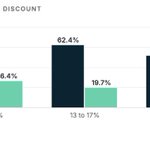
We often see deeper first order subscription discounts result in higher take rates, but also higher M2 or M3 churn rates.
Here’s data from an 8-figure brand showing that subscribers who came in at sale depth (18% or more off) ordered again by month 6 at a lower rate than with no discount.
Every subscription brand should be testing first order discounts, but not just using take rate or revenue as the success metric.

Feras Khouri retweeted
Ecommerce evolves fast, and every year there’s less room for slop.
Ad costs are higher. Margins are tighter. Customers are smarter.
If your organization doesn’t communicate effectively within itself, you’ll have leaks everywhere.
Bad handoffs between teams / Missed opportunities in the funnel / Retention crushed by silos.
At 8- and 9-figure scale, those leaks aren’t small. They’re millions.
These are consistently some of the top reasons people cancel their subscriptions.
Reason: Too much product
Try: It's important to help your customers build habitual use of your product. This should be communicated early and often.
Reason: Didn't work
Try: Did you set expectations properly? What are they supposed to feel, and by when? How long should they take it?
Reason: Too expensive
Try: This means they don't see the value. It's a symptom of them not thinking it works well.

Also need to keep a list of everyone that doubted you and update them too
