

Futures / Stocks / Options. Home of Bad Shark Land Art NFT's in Next Earth Funded by: https://nitter.cf/t.co/0IyBsGLcye
Los Angeles
Joined April 2020
- Tweets5.6K
- Following1.1K
- Followers472
- Likes10.1K




Jeremy Clark retweeted

the S&P is up almost 400 points in a week and market makers are still short gamma at every level for 500 points under us
that's the position going into Monday
here's what they hold tonight and what it makes them do
(thread)


Jeremy Clark retweeted

I think a lot of traders are trying to solve a discipline problem when what they really have is a lack of clarity around their system.
This came up a few times during our group coaching call with the @growthhubcrew this week. When you haven't clearly defined what you're looking for, almost everything in the market has the potential to look like an opportunity. You see price moving away from a level you marked, start thinking about how much you could have made, and suddenly you're negotiating with yourself about whether or not to take a trade.
The more time you spend defining your entry models, the easier it becomes to sit out of trades. You can watch a stock make a huge move without feeling like you've missed anything because the criteria you needed to see were never there.
There's also something to be said about how much easier it becomes to evaluate your own performance when your rules are clear. If your strategy leaves a lot of room for interpretation, it's very easy to convince yourself at the end of the day that you followed your plan.
Before spending more time trying to improve your discipline, I'd encourage you to spend some time looking at your system. How much of it is actually defined on paper, and how much of it still lives in your head?
You might find that the clarity you've been missing is a big part of the discipline you've been struggling with.
If you're not quite sure where to focus your efforts, I've put together a free, two-minute Process Audit to help you take a closer look at your trading process and identify where you have the biggest opportunity for growth.
Take the audit here: meganmarlow.com/audit

Jeremy Clark retweeted

Got monthly Bookmap-style Heatmap bills? Prefer a 1 time payment with 10hrs of free training?
Want institutional order flow training and analytics?
Of course you do - Save up to $200. 50 coupons only.
Jeremy Clark retweeted
ETFs are a good way to trade.
Cheaper than mutual funds.
But leveraged and commodity funds can go to zero.
Stock sell offs tend to create panic and an exaggerated move. Like product recalls often trigger an overblown sell off and usually comes back.
These products - individual stock leveraged ETFs and Futures ETFs are best used intraday.
Like when oil is in contango, the roll each month kills them.
Don't FOMO into a leveraged short ETF after a big drop


Jeremy Clark retweeted

90% OF TRADERS DON'T KNOW WHAT A REAL BEAR MARKET LOOKS LIKE.
Yet they're afraid of one every time stocks start falling.
I've been trading for more than 20 years, and one thing I've noticed is how quickly traders become bearish when the market starts correcting.
They see stocks declining 20%, 30%, or even 50% and immediately expect another financial crisis.
But here's what many traders don't understand:
A sharp market correction and a REAL, prolonged bear market are two very different things.
And understanding the difference can completely change how you approach the stock market.
Let me explain.
1. REAL BEAR MARKETS ARE RARE.
When I study the last 25+ years of market history, three major periods stand out to me as prolonged, structural bear markets:
• 2000–2003
• 2007–2009
• 2022–2023
Look at the chart below.
These were not simply sharp sell-offs. They were extended periods of weakness, often lasting many months or even years.
But between those periods, we experienced numerous corrections that eventually led to new buying opportunities.
That's an important distinction.
Not every 20% decline turns into another 2008.
2. A NORMAL CORRECTION CAN BE BRUTAL.
A correction doesn't mean stocks only decline 5–10%.
Leading growth stocks can easily lose 30–50% of their value.
Breakouts fail. Stops get triggered. Fear spreads quickly.
But corrections are often relatively short, lasting several weeks rather than many months.
Eventually, the market stabilizes, stocks start building new bases, and new leaders emerge.
That's why I don't automatically assume the worst when stocks begin falling.
I become defensive, protect my capital, and start preparing for the next opportunity.
3. A REAL BEAR MARKET BEHAVES DIFFERENTLY.
I've traded through the financial crisis and the 2022 bear market.
Both taught me to be extremely cautious with long positions during prolonged market declines.
The biggest danger?
Bear-market rallies can look incredibly convincing.
Stocks rally sharply. Breakouts appear. Everything starts looking like a new bull market.
And just when traders become optimistic again, the market rolls over.
Sometimes this happens repeatedly over many months.
That's why I prefer the short side during genuine bear markets rather than trying to catch every apparent bottom.
I want to see convincing evidence that the market has established a sustainable bottom before becoming aggressive on the long side again.
4. THE DEPTH OF THE DECLINE IS NOT THE MOST IMPORTANT FACTOR.
Many investors define a bear market as a 20% decline in a major index.
For my trading, that's not particularly useful.
I'm much more interested in HOW the market behaves.
• How long has the decline lasted?
• Are rallies holding their gains or repeatedly failing?
• Are leading stocks building constructive bases?
• Are breakouts working and producing sustained advances?
• Is new leadership emerging?
These observations help me distinguish a temporary correction from a more serious deterioration in market conditions.
5. DON'T BECOME A PERMANENT BEAR.
This is probably the most important lesson.
I see traders become so pessimistic during corrections that they completely miss the next bull market.
They keep expecting another leg lower.
They question every rally.
They refuse to buy even when leading stocks are breaking out and making substantial advances.
By the time they finally become bullish, many

Jeremy Clark retweeted
Imagine not having to pay Bookmap every month.
Then imagine up to $500 in discounts.
Platform, Market Analysis - the lot.
I said no. Marketing said yes.
So jump in before my wife finds out....
jigsawtrading.com/blog/save-…


Jeremy Clark retweeted

A lot of traders think think experiencing losses is a sign of failure, then end up partaking in negative expectancy habits to "force fix" the situation
This leads to them not being able to manage their downside risk long enough to even get +expectancy results on their strategy.
As shown, you can have a 65% win rate and still have a 77% chance of experiencing four consecutive losses.
🔖Bookmark this post, make peace with this chart, and keep reading.
A profitable strategy is often uncomfortable. You can't avoid it. If you want to actually sustain any type of success in trading you have to make peace with baked in, mathmatic probabilities.
A real trading edge isn't just discipline or simply "following your rules." It is a system that combines a model with a statistical advantage that dances with capital management.

Jeremy Clark retweeted

$NVDA is knocking on the 50/80 door, joining the list of MANY past leaders, particularly in the tech space. You can read about this phenomenon in my both my books Trade Like a Stock Market Wizard and Think & Trade Like a Champion.

Jeremy Clark retweeted

When conditions are like this, major market making firms who are not committed to managing multi-billion dollar funds with pensions and what not go on the attack. They smell blood in the water and sense weakness everywhere so they keep shorting and prices easily plunge.
Jeremy Clark retweeted
Weeks like this are a good reminder of just how important the process behind your trading really is. When the market gets volatile, it's easy to get caught up in the speed of everything. We start feeling like we need to make decisions faster, take advantage of every move, or make back what we lost earlier in the week. And sometimes, without even realizing it, we start making exceptions to the very rules we've worked so hard to build.
Maybe you widened a stop because the ranges were bigger than usual, increased your size to recover a loss, or took a trade away from your planned location because you didn't want to miss the move. These are all things worth paying attention to, because they often have very little to do with the strategy itself and much more to do with how we're executing it.
Something I noticed this week was that the traders who managed the volatility well weren't necessarily the ones who predicted the selloff. They were the ones who continued to respect their locations, adjusted their risk to account for the larger ranges, and were comfortable sitting out when they didn't have a clear setup or enough information to make a good decision.
I think there's a tendency to believe that faster markets require us to do more, when often the opposite is true. We need to be even more selective about where we're participating and what we're willing to risk.
So if this week was a difficult one for you, I'd encourage you to spend some time reviewing more than just your P&L. Look at the decisions you made along the way. Where did you follow your process well? Where did you start making exceptions? And what could you do differently the next time we experience a week like this?
Those are the conversations and observations that can really help us grow as traders. Not every difficult week means something in your strategy needs to change. Sometimes it's an opportunity to get a little better at following the one you already have.
And if you're not quite sure where your biggest opportunities for improvement are, I've created a free, two-minute Process Audit to help you take a closer look at how you're preparing, executing, reviewing, and holding yourself accountable.
Sometimes knowing where to focus your attention is the best place to start.
meganmarlow.com/audit


Jeremy Clark retweeted

A historic moment for Southern California! 🐢🌊
54 endangered olive ridley sea turtle hatchlings have made their way into the Pacific Ocean after their eggs were rescued from Orange County beaches and cared for at the Aquarium of the Pacific.
The milestone follows the first-ever confirmed natural sea turtle nesting on the U.S. West Coast, marking a major win for wildlife conservation.
Read more at the link below.
lamag.com/environment/sea-tu…
Jeremy Clark retweeted

The making of Madvillainy.
Pre-order @MFDOOM and @madlib's Madvillainy 45 Box Set today.
sthrow.com/madvillain45


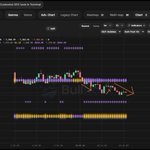
Using @BullflowIO to spot the breakout from the Pin: the first attempt out of the box and got chopped a little, waited on the 2nd back-test under. Captured +39 ticks.


1
165