
Science & solidarity • Here to learn • Problem-solving/bio/innovation/systems/policy/wellbeing/optimism
London, UK
Joined March 2020
- Tweets922
- Following1.6K
- Followers540
- Likes1.8K







Fiona Conlon retweeted

Today we’re launching Project Tailwind, a call for founders to start ambitious new AI safety initiatives: coefficientgiving.org/tailwi…
We’re looking for great people to engage seriously with the risks of transformative AI, and to create the research, technologies, and institutions that will help humanity navigate them.
There are critical, basic problems that no one owns. Over the last several months, my team at @coeff_giving brainstormed ideas we’d be excited to fund if we could find a promising founder, and the list quickly grew to more than 200 entries. We’ve narrowed it down to our favorites, but we also expect the best founders to bring their own ideas:
coefficientgiving.org/tailwi…
We’re providing funding at three levels:
1️⃣ Pre-seed: $200k to $2m to develop an idea and build a team
2️⃣ Seed: $2m to $20m to launch and scale
3️⃣ Scale: $20m to $200m+ for proven teams to scale, or world-class teams to start
If you’re excited about something on our list, or you have another proposal for driving the field forward, you should get involved: coefficientgiving.org/tailwi…
There are more good projects than there are people to work on them. Please help us make that stop being true!
Also hi, I’m Emily! This is my first tweet. I lead AI and biosecurity grantmaking at @coeff_giving.

Fiona Conlon retweeted

In 1843, Elizabeth Barrett Browning wrote to a friend after seeing her first daguerreotype: “The very shadow of the person lying there fixed for ever! … I would rather have such a memorial of one I dearly loved, than the noblest artist’s work ever produced.”
Our lives and homes are filled with things that once inspired similar awe. I tried to collect those feelings, in quotes like the one above, from people for whom what is now ordinary was brand new. A friar who met the inventor of eyeglasses, a founding father on the new smallpox vaccine, a woman in Iowa on her family’s first indoor bathroom. To look at a modern apartment through their eyes: ordinaryabundance.com

Fiona Conlon retweeted

It’s great to see AI leaders like Sam Altman, Dario Amodei, and Demis Hassabis calling for mandatory DNA synthesis screening, which is a no-brainer policy for preventing (AI-enabled) bioterrorism.
But fewer than 50 people in the world currently work on DNA security full-time.
We need a comprehensive plan and at least 5x as many people to secure the DNA supply chain before AI and biotech outpace us.
@jtmonrad and I spent the past two years developing a field strategy for how to do it.
Successfully defending against this risk (while still capturing innovation benefits) requires four things:
1. Coverage: More than 80% of synthetic DNA providers screen both orders and customers
2. Strategic ambiguity: a bad actor can’t easily tell which providers will screen their order
3. Access: legitimate customers can still order DNA cheaply and easily
4. Effectiveness: 90% of providers reliably catch dangerous sequences when red-teamed
We’re already seeing real momentum. Many DNA providers screen voluntarily, and governments in several countries are moving toward mandates. But that doesn’t mean the problem will be solved in time by default.
Our guide lays out exactly which projects we need to launch. We’re looking for founders, operators, and technical experts to own pieces of the solution. We’re also hiring a Senior Program Officer at Sentinel to drive this work. Get in touch if you or someone you know would be a strong fit! (links for EOI form and JD below)
Read our full field strategy in @IFP's Launch Sequence: ifp.org/how-to-secure-the-dn…


No one should be able to order a bioweapon through the mail.
@IFP & @JoinFAI are proud to co-lead an open letter calling for mandatory DNA synthesis screening & recordkeeping.
Signatories include:
- Sam Altman, CEO & Co-Founder, OpenAI
- Dario Amodei, CEO & Co-Founder, Anthropic
- David Baker, Director, Institute for Protein Design; 2024 Nobel Prize in Chemistry recipient
- Patrick Collison, CEO & Co-Founder, Stripe
- Paul Graham, Founder, Y Combinator
- Demis Hassabis, CEO, Google DeepMind; 2024 Nobel Prize in Chemistry recipient
- Emily Leproust, CEO & Co-Founder, Twist Bioscience
- Lawrence Lessig, Roy L. Furman Professor of Law and Leadership, Harvard Law School
- Gerald W. Parker, former Special Assistant to the President for Biosecurity and Pandemic Response
- Mustafa Suleyman, CEO, Microsoft AI
- Alex Tabarrok, Professor of Economics, George Mason University
- Alexandr Wang, Chief AI Officer, Meta; Founder, Scale AI
- Christine E. Wormuth, President & CEO, Nuclear Threat Initiative; 25th Secretary of the Army
Read the letter and see the full list of signatories: screendna.org
Many DNA synthesis companies voluntarily screen orders to mitigate biosecurity risks, but no law requires them to do so.
Leaders in AI, biotech, life sciences, national security, and the nucleic acid synthesis industry agree that Congress should act to strengthen safeguards against biological threats.
@deanwball put it well in the WSJ:
“If you’re synthesizing the stuff that yields biological life and viruses, we’re asking you to screen to see whether it is dangerous in some way. That seems like a reasonable thing for society to insist upon.”

Fiona Conlon retweeted

I’m really excited about the Strep A Vaccine Fund we’re launching today. IMO the basic case here is a great recipe for impact:
→ A huge problem: ~1% of total annual deaths worldwide (>600k)
→ Super neglected: ~$14M/yr of R&D globally before this, ~50x less than malaria which has similar mortality
→ Newly tractable: new human challenge models and earlier diagnostics should speed the path to an approved vaccine
Grateful to our partners Adam and Abigail Winkel, Good Ventures, Lucy Southworth, @ThePatchworkCLT, and a few anon donors for getting us to >$140M at launch. We’re continuing to actively fundraise and think we could effectively spend >$200M over the next few years. Our goal is to double the number of Strep A vaccine candidates in clinical trials and have at least one ready for Phase 3 trials by the end of 2030.
And I’m thrilled to be betting on Katharine’s vision here! As a grad student, she co-invented the R21 malaria vaccine that’s now reaching millions of kids. I’m hoping to see hundreds of millions of future Strep A vaccine doses with her fingerprints on them.

Today, @coeff_giving is launching the Strep A Vaccine Fund, a multi-donor initiative to accelerate vaccine development against one of the world's most neglected infectious diseases relative to its scale.
Strep A kills ~639,000 people a year. There is no vaccine. I think that can change 🧵

Fiona Conlon retweeted

Today, @coeff_giving is launching the Strep A Vaccine Fund, a multi-donor initiative to accelerate vaccine development against one of the world's most neglected infectious diseases relative to its scale.
Strep A kills ~639,000 people a year. There is no vaccine. I think that can change 🧵
Fiona Conlon retweeted

My biorisk colleagues put together this extremely specific and unusual set of projects. My main takeaway from this list was that there are whole classes of pandemics that our society basically never thinks about or prepares for, but it's fixable!
defensesindepth.bio/10-big-p…

Fiona Conlon retweeted

A parasite that has been eating people for 3,500 years is about to be wiped off the planet. It infected 3.5 million people in 1986. Last year, it infected 10. And I have not seen it make a single front page.
It is called Guinea worm. You drink contaminated water from a pond in a poor village. A year later, a worm up to three feet long starts coming out of your leg through a burning blister. There is no pill that stops it and no surgery that works. You wrap the worm around a stick and pull it out slowly, over days or weeks, inch by inch. If you rush, the worm breaks inside you and causes a fresh infection.
Guinea worm is ancient. Preserved worms have been pulled out of Egyptian mummies from around 1000 BCE. The Ebers Papyrus, an Egyptian medical scroll from 1550 BCE, describes pulling the worm out with a stick. For three and a half thousand years, that was the best humans could do.
Then in 1986, public health workers decided to kill the parasite off. They had no vaccine and no drug. What they had was cheap cloth water filters and a small army of volunteers willing to walk from village to village for decades.
The plan was simple. Give everyone who drinks from a pond a cloth filter to strain out the tiny water fleas that spread the parasite. Then send volunteers walking house to house, year after year, teaching people how to use the filters and keeping anyone with an emerging worm out of the water.
It worked. From 3.5 million cases a year to 10. Four were in Chad, four in Ethiopia, two in South Sudan. The other four countries where the worm used to be common, Angola, Cameroon, the Central African Republic, and Mali, had zero human cases for the second year in a row. The World Health Organization has already certified 200 countries as Guinea worm free. Six are left.
The last hurdle is dogs. Cameroon had 445 infected animals last year and Chad had 147, so a lot of the remaining work is on animals, not humans. Strays get leashed, and crews treat ponds to kill any remaining worms. The campaign keeps watching until the number hits zero.
When Guinea worm hits zero, it becomes the second human disease ever erased from the planet. The first was smallpox. It will also be the first parasite humans have ever wiped out, and the first disease ever ended without a single dose of medicine. Volunteers walked village to village with cloth filters for 40 years. Now a plague from the age of the pharaohs is about to be gone.


Fiona Conlon retweeted

Over a weekend and with ~$760, I (not a biologist) used Claude Code to fine-tune a biological AI model on human-infecting viral sequences. Although my experiment wasn't dangerous, it demonstrates how coding agents are changing the biosecurity risk landscape.
In a new @GovAIOrg blog post with @lucafrighetti and James Black, we describe this experiment and its policy implications.
Biosecurity has traditionally divided AI risks into two buckets: general LLMs that "raise the floor" by democratizing knowledge and specialized biological AI models (BAIMs) that "raise the ceiling" by enabling experts.
Increasingly capable coding agents blur that line via three mechanisms:
1) Coding agents let both novices and experts operate BAIMs more effectively, expanding the pool of potential misusers and letting experts test more designs faster.
2) Data filters on BAIMs are brittle when coding agents can autonomously fine-tune the models, as my experiment shows.
3) Coding agents speed up ML engineering, making it more feasible for threat actors to train new specialized models optimized for harmful capabilities from scratch.
Policy recommendations: BAIM developers should move beyond data filtering toward trusted-access programs; LLM developers should test agent interactions with BAIMs; policymakers should prioritize physical chokepoints like DNA synthesis screening.
Read the piece: governance.ai/analysis/codin…

Fiona Conlon retweeted

$12 million in grants. $145 million in follow-on funding. The math behind @CuresWReach is simple: fund the studies no one else will, and bigger funders follow. Read more: phlnthrp.com/4sLifdG
@coeff_giving
@biohub
@Arnold_Ventures
@SciPhilOrg

Fiona Conlon retweeted
Coefficient Giving recently passed $5 billion in total grants directed since we started in 2014. A few things about what that number actually represents 🧵
Fiona Conlon retweeted

Today, we're opening a new Request for Proposals in Biosecurity.
Broadly speaking, we want to support work aimed at preventing engineered biological threats from emerging and improving our response should prevention fail. 🧵
Fiona Conlon retweeted

New in @AEA_Journals' American Economic Review: migration doesn't hollow out the home economy — it builds it up.
More than 75% of the long-run income gains from migration are domestic. The home economy itself grows.
Here's what we found: 🧵
Rereading & appreciating this evergreen Kevin Starr piece today
ssir.org/articles/entry/dont…

87
Fiona Conlon retweeted

There is great excitement about the potential for AI to reshape science, but so far very little empirical evidence about how that is (or is not??) happening in real time. I'm excited to share a new working paper with @carolyn_sms about the impact of AlphaFold on science ->

Interesting new method for quantifying poverty which avoids key downsides of traditional poverty lines - it better reflects the full income distribution (not just counting "who is above or below a line") and doesn't require setting an arbitrary line at all
voxdev.org/topic/methods-mea…

79
Fiona Conlon retweeted
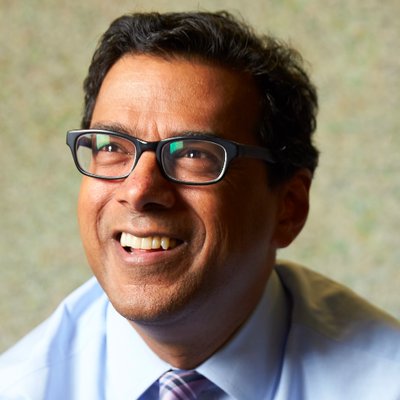
Bill Foege, rest in peace. He was a hero of public health, key to the eradication of smallpox (which killed more than half a billion people), a former head of CDC, and unfailingly wise, kind, and persistent.
@celinegounder recalls his life beautifully: wapo.st/3M51JVO

Fiona Conlon retweeted

New blog post:
There should be ‘general managers’ for more of the world’s important problems
There’s a surprisingly big category of problems that are ‘orphaned.’ By ‘orphaned’ I mean: you can’t point to a specific person or organization who thinks it’s their responsibility to deliver the outcome in its entirety. Lots of people talk about the problem, and often many work on slices of it. But if you asked: ‘is there a hyper-competent person waking up every day feeling accountable for making sure this gets solved?’—the answer is very often, ‘no.’
These problems exist across domains and at a variety of ‘altitudes.’ Indeed, some are perhaps better described as ‘things we want to be true’ rather than ‘problems.’ In any event, a few examples that have been on my mind recently:
(1) Can we prevent infection from all respiratory pathogens (including the common cold)?
(2) Can we make every new building in SF both serve its function and be beautiful?
(3) Can we permanently fix the American west’s water problem?
(4) Can we halve X risk?
(5) Can we eliminate single-use plastic globally without making convenience trade-offs?
(6) Can we make childcare costs so low that they’re a non-factor in deciding whether to have kids?
In my opinion, there should be ‘general managers’—GMs—for problems like these. These are founder-types who feel personally responsible for delivering a specific outcome (vs field-building generally); hyper-competent leaders who will pull whatever levers necessary to achieve the defined outcome. Most companies wouldn’t let an important initiative go unmanned or without a ‘directly responsible individual’ — why are we OK not having GMs for even more wide-reaching problems?
(Link to full post in reply)
Fiona Conlon retweeted

You may remember talk of "fractional dosing" during COVID. Its still relevant - we could save thousands of lives and millions of dollars by stretching vaccines for various diseases, giving lower doses to more people at less cost.
New by @vientsek

Fiona Conlon retweeted

Impact-focused funders often ask: if it worked here, will it work there?
This paper is a small, but impt step toward a generalized approach (grounded in theory + human data) to generalize research across settings—core to putting social science to use at scale.💪

Brand new paper with @johnjhorton that I'm very excited to share: "General Social Agents"
Suppose we wanted to create AI agents for simulations to make predictions in never-before-seen settings. How might we do this? We explore an approach to answering that question!
