

Open-source AI system software: build once, run across diverse hardware.
Joined August 2026
- Tweets137
- Following38
- Followers732
- Likes98






This is the shift we’re working toward: less repeated porting every time a model meets new hardware. KernelGen generated 765 new operators this quarter, helping FlagOS build one shared optimization layer across chips. Thanks for digging into the details!

Our domestic compute software stack series continues: BAAI's FlagOS 2.2 grew its cross-chip operator libraries from 564 to 1,454, with KernelGen auto-writing 765 new operators this quarter for nine AI chips. @FlagOSCommunity
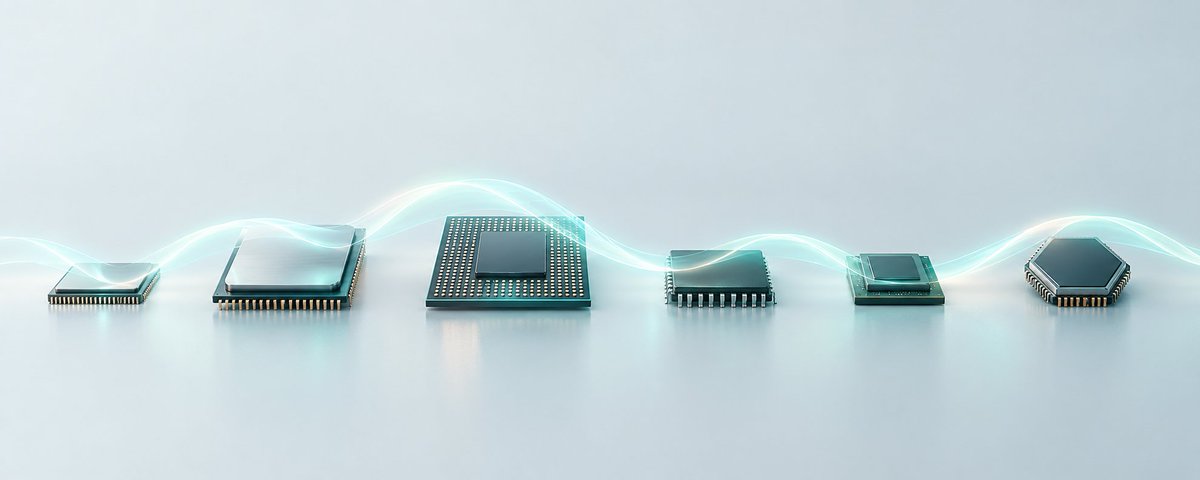
🚀AI hardware is advancing quickly, but software remains the deployment bottleneck.
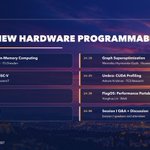
OASIS-AI 2026 brings BAAI, Linux Foundation, PyTorch Foundation, Tsinghua IIC and Red Hat to MICRO 2026 for a half-day workshop on open infrastructure for heterogeneous AI systems.

Three program-level signals stand out:
Triton is emerging as a common compiler interface; performance portability is becoming an engineering discipline; and AI for Systems is moving toward reproducible evaluation grounded in correctness and real-hardware results.

The closing panel asks which software gaps most hinder new AI accelerators and how agent-generated kernels should be evaluated. Join OASIS-AI in person on Nov 1, 13:00–17:00 EET, at the InterContinental Athenaeum Athens Hotel.
Program: oasis-ai.flagos.io/2026


Under the hood is FlagOS 2.2: support for 21 chip vendors and 35 chips; 1,454 operators across 9 FlagGems libraries; unified FlagTree compilation; FlagPrism debugging; and FlagOS-Compressor for W4A16, W8A16, W8A8 plus FP8/MXFP4-to-INT8 conversion.


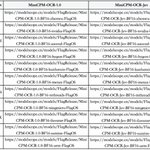
MiniCPM-OCR is out 🎉
Really happy to help bring the new OCR suite to 10 more chip platforms through FlagOS from day one, alongside Arm, Houmo AI, Intel and NVIDIA.
Can’t wait to see what people build with it 🚀

Your OCR says it’s done—but did it get everything right? 🤔 In high-stakes workflows, even a small error can be costly.
🚀 Meet the MiniCPM-OCR suite: an open-source solution to parse fast and guard the results.
Two new models:
🔹 MiniCPM-OCR 1.0 — SOTA OCR performance and speed at 1B scale. Compact, accurate, and fast.
🔹 MiniCPM-OCR Jev — A 2B decision model that helps assess parsing accuracy, with performance approaching that of Qwen3.5-397B-A17B on JevOCRBench.
⚡ What’s new?
Small model, SOTA results: MiniCPM-OCR 1.0 scores 93.68 on Real5-OmniDocBench and 54.7 on OCRBench v2.
A sharp goalkeeper 🛡️: MiniCPM-OCR Jev is model-agnostic, checking text, formulas, and tables from different OCR parsers. It achieves 93.6 on JevOCRBench, outperforming JEV-35B-A3B (90.1) and approaching Qwen3.5-397B-A17B (93.8).
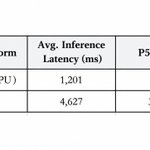
Up to 128 pages per minute 🤯: With DSpark, MiniCPM-OCR runs at 1.49× the speed of PaddleOCR-VL-1.6 and 3.62× that of MinerU2.5 Pro. The SDK’s concurrency optimizations further boost throughput to as much as 128 pages per minute.
Deploy where you work: Day-0 support for Arm, Houmo AI, Intel, and NVIDIA, plus 10 more chip vendors through FlagOS.
Ready for your stack: vLLM, SGLang, llama.cpp, and Ollama, with quantized models, fine-tuning support, and Agent Skills.
🔗 GitHub: github.com/OpenBMB/MiniCPM-O…
🤗 Hugging Face:
MiniCPM-OCR 1.0:huggingface.co/openbmb/MiniC…
MiniCPM-OCR Jev:huggingface.co/openbmb/MiniC…
👉 Try the Demo:platform.modelbest.ai/consol…
Use the API:platform.modelbest.ai/consol…


Beyond data centers: vehicle teams described turning repeated model × chip porting from an M×N task into M+N. For embodied AI, FlagOS optimisations raised training efficiency for world understanding, world prediction and action models by about 2.3×, 1.9× and 2×.

