

Portable devices for fluorescence lifetime analysis.
Rome, Italy
Joined March 2020
- Tweets854
- Following1.9K
- Followers918
- Likes10.5K



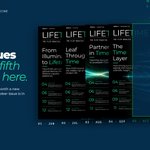


Issue 05 of #LIFETIME is out! 🔬
“Lowering the Barriers to #FLIM” explores how #fluorescencelifetimeimaging is becoming more accessible — from modular #microscopy platforms to dedicated, easier-to-integrate FLIM solutions.
Read the full issue: flimlabs.com/lifetime/octobe…
🤖 Made with AI

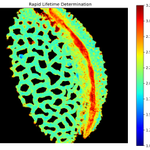
🔬#FluorescenceLifetimeFriday — One lifetime, different ways to measure it!
This time, we used #RLD (Rapid Lifetime Determination) to estimate fluorescence lifetime from TCSPC data without fitting the entire decay curve.
How does it work? Find out in our next #TechniqueTuesday!

The FLIM LABS team is growing, and like everything that grows, it needs food. 🍝
A little team dinner to fuel the next big things coming our way!
#FLIMLABS #MeetTheTeam #TeamDinner #TeamBuilding

🎙️Scientist Spotlight — Benedict Diederich (@beniroquai), founder & CEO of @OpenUc2, on modular #microscopy and the FRAME system. 🔬
“It’s really about democratizing cutting-edge research instruments."
Full interview in the next issue of #LIFETIME - FLIM LABS' monthly magazine.

Issue 05 of #LIFETIME is almost here, but did you miss the previous ones?
📖 Catch up:
🔹 Issue 01 – June: flimlabs.com/lifetime/june20…
🔹 Issue 02 – July: flimlabs.com/lifetime/july20…
🔹 Issue 03 – August: flimlabs.com/lifetime/august…
🔹 Issue 04 – September: flimlabs.com/lifetime/septem…

Great to have been part of Meet in Italy for #LifeSciences 2026!
#Technology is essential, but business grows through the relationships and connections we build along the way.
Events like this remind us that networking and #collaboration are what turn ideas into opportunities.


#TechniqueTuesday — #IRF: your instrument’s temporal fingerprint.
Laser pulse width, detector uncertainty, and TDC effects shape the decay you measure.
Accounting for the Instrument Response Function helps separate your sample’s #fluorescencelifetime from instrumental effects.

U-SCREEN takes shape. 🔬
Our collaboration with @scuolanormale enters its operational phase: a joint laboratory at the NEST centre in Pisa, dedicated to #nanomedicine innovation.
The spaces will be fully operational in early 2027 — but the science has already started.
#USCREEN

📦 The FRAME microscope from @OpenUc2 has arrived at #FLIMLABS!
Combining a rigid structure with modular optics, FRAME can integrate our FLIM add-on to enable #fluorescencelifetimeimaging.
Unboxing and first measurements — here's our newest arrival in action!

For years, #FLIM was often bundled into large multipurpose platforms: powerful, but costly and complex.
Democratizing FLIM means changing that — reducing cost, complexity, integration hurdles and portability limits. #Accessibility is an engineering direction.

A new member has joined the #FLIMLABS team! 👋
Welcome, Maria! Already diving into new technologies and ideas about what’s next for #FLIM. 🔬
Great to have you with us — excited for what’s ahead!
#Microscopy #LifeSciences #fluorescencelifetimeimaging

🔧 #TechniqueTuesday — #galvo scanners: moving light, not the sample.
Tiny mirrors steer the laser across the sample for faster, smoother scanning with less mechanical stress.
On modular platforms like @OpenUc2, that means compact, stable scanning for more practical #FLIM.

Issue 04 of #LIFETIME is out! ⏱️
“The Time Layer” explores how science measures events too fast to see — from accelerators and synchrotron light to #TCSPC, pawFLIM, quantum photonics, and #FLIM.
Read the full issue: flimlabs.com/lifetime/septem…
🤖 Made with AI

Sometimes the best tool for deep tech is not a laptop. It’s chalk and a blackboard.
To democratize #FLIM, we first need to explain it clearly and make #fluorescencelifetimeimaging feel less like a specialist-only technique.
The goal? Turning FLIM into an everyday tool.

🔧 #TechniqueTuesday — pawFLIM.
More photons = more reliable #lifetime, but also longer acquisitions and more light on the sample. #pawFLIM uses wavelet-based denoising to balance spatial and molecular resolution: cleaner #FLIM with fewer photons.
@GreccoHernan
@maurosilber

"We measure #time because, for the same level of accuracy, it is the simplest and most cost-effective way to understand a phenomenon — even when that phenomenon has little to do with time itself" - Prof. Nicola Lusardi (@polimi).
Full #interview in our end-of-month magazine.


#QuantumPhotonics, in one modular workflow. ⚛️
Picosecond-pulsed laser + #SPAD single-photon detector + TDC Felix TimeTagger + #TEDIEL software.
The #laser pulses, the SPAD catches individual photons, the time tagger records when they arrive, the software handles analysis.


