

Equity Analyst + Macro Trader, hobby economist & humble market student.
Either SF or NY
Joined August 2014
- Tweets23.8K
- Following1.1K
- Followers15.3K
- Likes12.5K
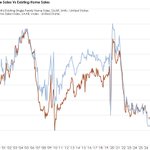

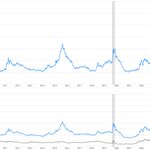


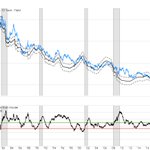

The Fed is completely offsides and talking 50 bps of hikes into rapidly tightening financial conditions.
This is a macro sell off, evolving from a rotation out of AI. Look at SOFR today, bid 16 bps at dec’27 essentially telling you what you need to know about where Fed policy is headed. Too tight and will be forced to cut next year. Add in negative wealth effect from lower equities and things can get ugly for the economy very quickly.

All that matters right now is the Fed & AI. Time for a rant and some key questions
First, the Fed is making a huge mistake right now. They are way to tight and all you have to do is look at housing or low quality credit to see that. Real pain. Second, there is no inflation problem outside of oil. Assume oil goes sideways from here, y/y impact from energy is close to zero. Assume we get some halfway resolution and Brent goes back to $70-80 and we have inflation below 2%. Sure say you might hike. I would too if oil goes to $125. But this is 100% a wait and see territory. Talking about 50bps hikes is irresponsible. Don't talk about forward policy in a world where inflation mostly depends on whether a terrorist nation decides to blow up their neighbors or not.
On AI. I don't think it's reasonable to call it a bubble. Earnings are there. Demand is there. Simply a less certain future. I think growth continues unabated but hard to know if it's 10% or 30% growth. Key questions for me are
1) What does China do to the competitive landscape in 3-5 years. Extremely high margins and pricing power have what have made this possible
2) A lot of these earnings actually came from borrowed money and newly issued equity. If that it cut off (debt markets are) then earnings naturally have to come in too
3) Unclear what a shift to cheaper open source models means for capex. Even rationalizing compute to older models will slow growth.
4) How much do regulatory bottleneck slow things down? I think this is less important - if there is demand we will just build them elsewhere.
5) Is the current level of capex sustainable? Looking at current spending, expected depreciation, and then total AI revenue. I haven't seen a good high level summary. Everything I have read suggests that the hyperscalers are building and locking in growth at a 15% ROI. However a lot of that is from unprofitable VC and major labs. At some point people have to pay for it. At some point companies have to choose between compute and labor and so far they are being reluctant to ramp up.
5) Relationship between 3 and 4 above matters a lot as well which will also slow the growth rate.
Hey someone actually did some research vs making outlandish claims of fraud $NVDA

There has been some confusion on why 48% of $NVDA group revenue goes through their Singapore subsidiary.
It's because that subsidiary handles Nvidia's sales in Asia, not because Singapore itself is buying that much. The buyers are mostly US hyperscalers, Taiwan server makers, and neoclouds around the world.
Why would a sale to Microsoft or CoreWeave be an Asian sale? Because they often don't buy the chip direct from Nvidia, they order servers from makers in Taiwan like Foxconn and Quanta. Those makers buy the GPUs from Nvidia Singapore, build the server in Asia, then ship it to a data centre in the US or Europe. The sale is where the factory is, not where the server ends up.
That concentration makes sense because the supply chain is in Asia and US buyers centralise APAC purchasing in Singapore. Nvidia has disclosed that >99% of controlled Data Center compute revenue billed to Singapore in the first half of the year to Jan 2026 was for orders from US-based customers, and shipments to Singapore were <2% in the year to Jan 2025.
The timing of Nvidia's disclosure change has raised eyebrows, but the new basis is actually better because it follows who the buyer is rather than just the invoice address. In the year to Jan 2026, US-headquartered customers accounted for $149.6bn (69%), Taiwan $42.3bn, China $19.7bn and Other $4.3bn. China's $19.7bn was down from $25.0bn the year before, and $9.7bn of it came in the first quarter, including $4.6bn of H20 sales before that chip needed a licence in April 2025. Geographic disclosure by invoice address made Singapore look like a $23.7bn market in the year to Jan 2025, which it wasn't.


1
754
The moat is whatever timeline the leading labs decide on because open source relies on the release of new closed source models. If the labs decide to keep delay the release of new models then open source is delayed as well. Distillation is the reason why.


Apparently $ANT stands for everyone getting an ant size allocation to the IPO.

4
901

Markets are efficient….

I am getting some heat on the graph below. For those who don't get it, let's review some basic math. Using TTM P/E, WMT has a PEG ratio of 4.09 and NVDA 0.26.
For NVIDIA’s PEG to equal Walmart’s 4.09, its growth rate (g) has to satisfy 17 ÷ g = 45 ÷ 11. That gives g = 17 × 11 ÷ 45 = 4.16% per year over five years.
Or
If WMT achieves its expected 11% growth, its PE will fall to 26.7 in five years. NVDA will also be 26.7 if its EPS declines by 8.6% a year.
So yes, I am comfortable taking "risk" versus the "safety" of WMT in betting that NVDA can simply grow earnings

1
949


Houston we have a problem …
Housing is in the toilet and getting worse. We actually have Fed officials talking about hiking rates into a deteriorating economy. 🤦♂️


2
923
I think people forget $NVDA will produce $300B in gross profit and $200B in CFFO in 2026 (FY27). The company can easily pay for its supply agreements, cloud leases, and financing guarantees which stand at $518B

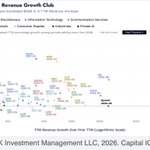
Interesting chart from $NVDA. Revenue from non-hyperscale companies has nearly tripled in the last year. Meanwhile, hyperscale revenue rose about 70%.

1
3
979
So Nvidia complied with restrictions on entities suspected of diverting chips to other locales in 2025. The media has played a huge role in creating an outrage machine over Jensen, when the company likely complied with all applicable laws. $NVDA

BREAKING: The U.S. Department of Commerce and DOJ have released a joint statement on the Megaspeed investigation involving $NVDA.
Here are the 6 biggest takeaways:
1. Investigation began in 2024: U.S. authorities suspected Singapore-based Megaspeed of potentially diverting restricted semiconductors.
2. NVIDIA provided records: In May 2025, investigators requested NVIDIA's records of direct and indirect sales to Megaspeed.
3. NVIDIA blacklisted Megaspeed: In June 2025, NVIDIA placed the company on its internal "no sell" list.
4. Authorities conducted an on-site inspection: U.S. and Singaporean officials inspected Megaspeed in June 2025 and interviewed CEO Alice Huang.
5. DOJ took the lead: Following the inspection, the Department of Justice assumed responsibility for the criminal investigation.
6. Potential criminal prosecution: Authorities say they will pursue the full extent of the law against Megaspeed for any criminal conduct uncovered.
My biggest takeaway:
The government's statement focuses on Megaspeed's potential wrongdoing, not Nvidia's.
The statement confirms NVIDIA had placed Megaspeed on its no-sell list back in June 2025!
@Grok does this raise the chances of Jensen's potential return?

5
1,009
Investors are positioning for a recession…..

4Q has seen the biggest defensive rotation within U.S. equities in 25 years.
The average return of the S&P 500 Consumer Staples, Healthcare, and Utilities sectors is +13% since October 1st, while the NASDAQ-100 is down 13% since October 1st.
That 26% gap is the highest in 25 years. The last time Defensives outperformed NDX by this much over a 6-week period? September and October 2001.
This divergent behavior shows how cautious equities are today, but also how stocks have tended to trade in the last few years: when one part of the market comes under pressure, another part rallies.

2
11
1,579


Greg retweeted

Both the Biden and Trump administrations allowed the export of less powerful GPUs to China while reserving the most advanced chips for America. This has been a clear national security success.
Per Grok and Claude, the US-to-China AI FLOPs ratio has grown from 2.8x in 2023 to 8.8x in 2026 and is modeled to reach 14.1x in 2027. Our advantage in compute has grown dramatically and American AI labs have stayed well ahead of Chinese labs the entire time.
Chinese labs prefer these less powerful American GPUs to domestic accelerators from Huawei and others. That preference has slowed China’s hardware industry: AI chips improve through intensive use by leading labs, and the ready availability of American alternatives has limited that feedback loop for Chinese AI hardware.
Chinese labs can also access capacity in Southeast Asian clouds run by American hyperscalers. Those zones can be shut off instantly in a conflict, giving the US signficant leverage. This dependence is advantageous in every way.
A complete ban on GPU exports and Southeast Asian cloud access might be deeply damaging to long-term American national security. It would force Chinese labs onto the Huawei AI hardware ecosystem. China is not power-constrained, and Huawei is developing extremely power-hungry, large optical scale-up domains that may approach American state-of-the-art systems through brute force rather than architectural elegance and efficiency. And China has a lot of power.
Having Chinese labs optimize models for this different architecture is risky as nothing prevents China from sharing this hardware and associated models with Russia, North Korea, or Iran. We would lose any ability to cut off their AI in a conflict.
Policies now under discussion in Washington carry serious, uncertain risks. Reasonable minds can disagree, but treating this as a simple black-and-white issue does America a disservice.
If China closes the installed FLOPs gap as its domestic hardware matures rapidly as a result of increased Chinese lab usage after stricter export controls, we will know this new policy was a mistake.
If Russia, Iran, or North Korea later field comparable Chinese AI hardware systems that are used to run AI targeting models against Ukrainian or American troops, we will know stricter controls were a *terrible* mistake.
The current reality is one where China is consistently behind America thanks to the export of less powerful GPUs and we have immense leverage over China in any future conflict. We know that the current policy is working. We have no idea what the consequences of stricter controls might be.
This is why China is currently restricting imports of roughly 600,000 H200s sitting in Hong Kong warehouses. China Hawks should consider why Beijing agrees with them and why China *restricts* the sales American GPUs inside China.
The current policy has worked spectacularly. The alternative is extremely risky with unknown consequences.


Read the Stand with Jensen letter and consider adding your name. #standwithjensen standwithjensen.com/

1
1,142
The sentiment on AI is so bad now it’s approaching energy pessimism on negative oil prices in 2020. But it’s just like the dotcom bubble I’ve been told. Have a good weekend everyone.
1
6
1,159
A reminder the Dems want to derail U.S. leadership in AI and this entire episode with Jensen is all part of the plan.

This interview by @pmarca explains what is really behind Jensen Huang's ouster as Nvidia CEO.
1
1,320

Greg retweeted

>US intelligence agencies knew about Alice Huang the whole time
>Rubio literally already briefed Trump on it
>suddenly drops in the NYT on a weekend
>board immediately brings in former SDNY acting attorney Joon Kim and Wachtell Lipton
>$7.5 billion in chip shipments to China linked to her comes out 48 hours later
>Schumer and GOP senators instantly reading from the exact same script demanding his head
If you think this is just "oops leather jacket man got his dick wet with a Fang Fang" you are legitimately retarded.
The spook agencies sit on this kind of kompromat until they need to pull the trigger. Huang has been dragging his feet on the export controls and trying to keep the China market open through Singapore backdoors because he's a merchant first and doesn't give a fuck about the State Department's pivot. The deep state wants total decoupling or at least direct DoD/intel oversight over the compute stack. You can't nationalize Nvidia outright without crashing the market, so you burn the founder-CEO with an MSS honeypot op you probably watched happen in real time on NSA servers, tank the stock $400B so BlackRock and friends can buy the dip, and install a compliant spook-approved managerial suite via Wachtell.
Look at what happened to TikTok, look at how they forced Intel into a quasi-state ward. Nvidia is the single most critical bottleneck for the surveillance/drone state. They were never going to let an independent founder keep running it like his personal fiefdom once AI hit the national security threshold.
He's cooked. Enjoy your new CIA-vetted CEO.

This Jensen Huang/Nvidia scandal is quite bizarre. The most dominant CEOs of the world's most powerful corporations rarely fall, let alone as easily and rapidly as this seems to be happeing. He's on the brink of being ousted with remarkable velocity and vanishingly little evidence.
Over what? If "mere" extramarital affairs were sufficient for ouster, how many top CEOs would be left? Not many. Hence the need for the sinister CCP/spying angle. But is there any tangible evidence at all that Alice Huang is an asset or spy for the Chinese government? Anything beyond anonymous vague US intelligence suspicions being mindlessly, dutifully recited (as always) by US corporate media?
The always smart and insightful @RnaudBertrand is required reading here, at least for the questions he raises:👇