





Gaema AI retweeted

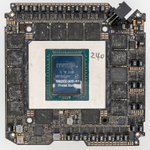
Libre Computer Solitude can run @ultralytics YOLOv12 and YOLO26n in realtime via @GaemaAI Engine which is multiples faster than what is achievable via vendor BSP and 4x faster than a Raspberry Pi 5 at a fraction of the power consumption.


Don't think that anybody expected performance optimization for a given intelligence is an high-n-dimensional fluid dynamics problem.
No cache expiration is the greatest benefit of local inferencing. Pick up where you left off without waiting.
AI is destined to destroy itself several times as humans frantically try to restart AI. The more intelligence, the more self-replicators and the more self-destructors. It will be the central focus of AI within two years.
In the age of AI, bugs as a result of firmware is not acceptable.

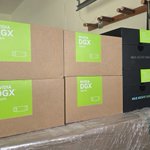
DGX Spark's firmware stands on Open Source: Zephyr, edk2, Arm Trusted Services, Hafnium, FreeRTOS. Owners can't change a byte of it.
So I rebuilt the EC firmware from source. Byte for byte.
- The build starts from an empty image. Nothing is copied from NVIDIA's file.
- Zephyr v3.7.1, Intel's ecfw and the recovered NVIDIA application, compiled with GCC 12.2.0, every function at NVIDIA's address.
- 75,008 of 75,008 bytes. Same SHA-256 as NVIDIA's own LVFS capsule.
- Every function has a name and a home: power, thermal, mailbox, RTC. It uses Zephyr's own GPIO and I2C APIs and has behaviour tests. Every edit is checked against NVIDIA's hash.
- The one thing I borrow is NVIDIA's signature. It's the only part I can't make.
What's underneath:
1. EC: Zephyr v3.7.1, from November 2024. Upstream ships v4.4.2. The app is a fork of Intel's Apache-2.0 ecfw-zephyr.
2. SoC: AMI Aptio V on edk2, Arm Trusted Services, Hafnium. The SCP runs FreeRTOS V10.5.1, from November 2022. Upstream ships V11.3.1.
3. USB-C PD: Infineon EZ-PD. The stack lives mostly in ROM.
What owners keep hitting:
4. Clock latch. GPU stuck at 554 MHz instead of 2,495. On my stuck node the EC was publishing 0 W power limits, so firmware fell back to 20 W. Throttle reasons: none. Reboot: no. Unplug the power brick: yes.
5. Fans. Fan requests pass through a firmware relay on their way to the EC. A race in that relay can leave a "pending" flag set after the reply arrives. Every fan request after that waits on a flag nobody clears. Two of my Sparks hit it.
6. USB-C PD. Linux sees no Type-C port, no PD contract, no power supply. A 240 W brick negotiates with the board and the OS is never told.
Why owners can't help:
7. Linux has hwmon, thermal, powercap and typec for exactly this. On Spark, Linux has no direct line to the EC. It has to use FF-A, Arm's standard way for an OS to ask the TrustZone secure world to do something. A signed firmware component there (a "secure partition") takes the request and talks to the EC over the eSPI bus. Linux can't change that code or see inside it while it runs. My fan driver can only raise a minimum RPM. The EC keeps the policy.
8. The EC image is P-384 signed. BL31 and BL32 are encrypted. Change one byte and the signature fails.
9. When it breaks, nvidia-smi --debug writes down what happened. Encrypted. My GPU, my logs, their key.
Jetson already shows the way:
10. Jetson's UEFI is on GitHub (edk2-nvidia). Owners can burn their own key hash into the fuses and sign their own boot chain. NVIDIA documents every step.
11. @nvidia: Spark is sold as a developer machine. Give its owners the Jetson deal: an owner key or a developer mode, the EC source (it's a Zephyr app), a rebase onto current upstream, and logs we can read. I'll send the fixes back.
@NVIDIAAI, you said it in May. Firmware too, please.
@JensenHuang, your first post here was about keeping AI open. GTC Berlin is on 21 October. Owner keys for DGX Spark would make a great announcement.
Byte-identical. Unflashable. Ready to contribute.
#DGXSpark
nitter.cf/NVIDIAAI/status/205536…

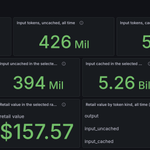
Real agents doing real world tasks in production and not a benchmark. Qwen 3.8 Flash Next FP8 producing 5B tokens per day on dual RTX Pro 6000 pulling 1KW from the wall or roughly $300 of electricity per month with cooling. $2 per billion tokens. $15 per billion tokens or about 10x cheaper than API rates if amoritizing $40K equipment cost over two years.

We will not have 24x the hardware by 2030. 100 quadrillion tokens is the equivalent of 50 million RTX Pro 6000. Nvidia makes 1M Vera Rubins per year. Secure your compute.

2 x RTX Pro 6000 server is doing 3B+ tokens per day mostly cached. ROI is less than 2 years but we got ours cheap so < a year. Can push it to 10B+ per day if we tried hard enough.

Gaema AI retweeted

Every LLM you've used runs on physics governed by divergence and curl. Maxwell's equations — the complete theory of light, electricity, and magnetism — are just four statements written in this language. One of them says the divergence of the magnetic field is zero everywhere, which is the exact mathematical reason magnetic monopoles can't exist.
Divergence measures how much a vector field acts as a source or sink at a point; curl measures how much it rotates. That's it. But those two tools describe predator-prey population dynamics, the phase spaces of any differential equation, and the loss landscapes your GPU navigates during backpropagation — any system where a vector tells you which direction things want to move.
13 minutes. Bookmark & watch today.


Qwen 3.8 Flash Next on 2x RTX Pro 6000 at 300W is perfect for a dozen agents. This is the throughput in a not very busy production environment. @sgl_project RadixAttention is a thing of beauty.


DGX Sparks are great experimental tools but, at the end of the day, toys unless you own the hardware and software stack.