

Democratizing world-class diagnostics for all babies
Boulder, CO
Joined May 2026
- Tweets59
- Following27
- Followers289
- Likes201


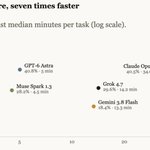


Thanks for the shoutout @Google! Gemini 4 Argon is the top-performing agent on our RareBench benchmark, viewable here gamowlabs.com/benchmarks


Gemini 4 Argon is already helping researchers unlock new scientific breakthroughs across fusion, biology, and quantum computing:
⚛️ In nuclear fusion, Argon helped discover a broader class of counterexamples to Grad's conjecture — a nearly 60-year-old assumption in plasma physics — creating new benchmarks for stellarator 3D magnetic fields.
🧬 In biology, it designed five novel, lab-verified serine esterases in a matter of hours — enzyme engineering that would previously have taken months. This work demonstrates the potential for rapid acceleration in fields such as biomanufacturing, green chemistry, and drug development.
🩺 In rare disease research, scientists at @GamowLabs used Argon to analyze de-identified genomes from newborns with rare developmental lung disorders — pinpointing a chromosomal rearrangement that routine software missed for years, and explaining why it went undetected.
🧮 In quantum computing, Argon translated our AlphaQubit error-correction decoder into a single optimized hardware kernel — nearly doubling inference throughput — and cut spacetime costs for a key quantum subroutine by more than 100x.

ALT A 3D molecular model of a DNA double helix composed of small white and blue spheres, set against a dark background with out-of-focus DNA strands in the distance.
Can frontier AI agents run a robotic wet lab?
We built LabRobotBench to test how they operate equipment, manage timing, and recover interrupted experiments. LabRobotBench allows models to steer a simulation based on our real wet-lab setup in Boulder, CO!
The best model tested, GPT 6.1 Sol, scores a 46% on our benchmark.
Improving on LabRobotBench implies better robotic control and spatial awareness, as well as biological reasoning.
read more in our latest blog post: gamowlabs.com/lab-robot-benc…

@GoogleDeepMind gave us early access to Gemini 4. which achieved first place on our clinical genetics benchmark RareBench and scientific experiment design LabBench.
Thank you to Google for the early access and congrats on the launch!


Big G is back! 🙇
@GoogleDeepMind Gemini 4 takes the 👑 on @GamowLabs RareBench and LabBench by a healthy margin over previous champ Opus 5.5.
A tip of the hat to @melvinjohnsonp, @taotu831, @divy93t, and the rest of the science team for this very strong release.
We've moved essentially all of our biology and genomics research work to Gemini 4 in agy with science skills since joining the EAP program and look forward to seeing if this model can help diagnose some new kids!


Watch @danielmckinn0n, live now! 🗣️🎙️💻🧬🧠🚀🚀🚀

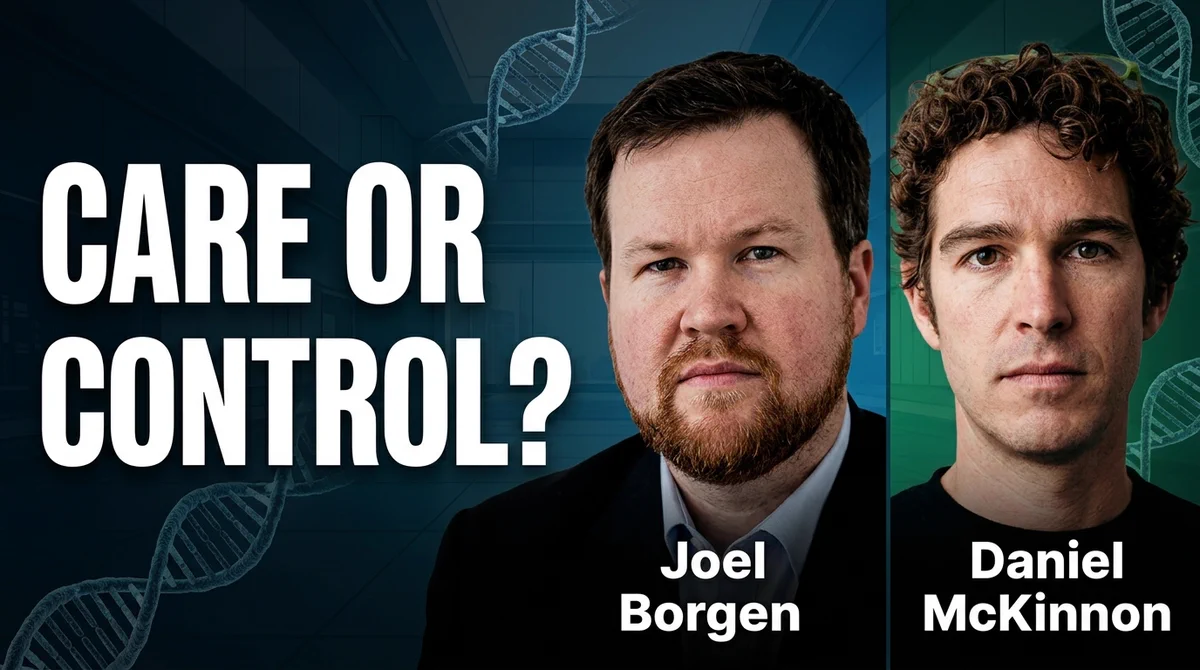
Up now on AI:AM: Daniel McKinnon (@danielmckinn0n), CEO of @GamowLabs.
Their agent reads a sick newborn's whole genome to find the variant behind it. They also run RareBench, a scoreboard of which frontier model is best at clinical genetics.
nitter.cf/i/broadcasts/1yxBePAPz…
5
352
Can AI agents decide what experiment to run next?
We present LabBench, a benchmark built to challenge agents to choose and design experiments for wet-lab biology.
Our core finding: agents struggle to commit to the next most-important experiment, despite considerable domain knowledge and expertise demonstrated in other parts of the eval.

Read our blog post and preprint here:
gamowlabs.com/labbench-bench…

1
2
168
🚨🚨🚨 @danielmckinn0n will be talking about the future of AI and genetics at 11:30am ET on @MTSlive. Everyone will be talking about this
🗣️🎙️💻🧬🧠🚀🚀🚀
Looking forward to joining @sophiadew in a few hours to talk about @GamowLabs is working at the intersection of AI and genetics to bring the best healthcare to all babies and help eliminate rare disease.
Please tune in if you’re interested!
A variant classification is a snapshot of what was knowable that day. The evidence keeps moving but the classification usually doesn't.
We reanalyzed 2 published studies and rescored their cases with George-0.1 and discovered some noteworthy changes.
gamowlabs.com/cohort-scale-v…

4
335
We jumped on this one.
Within an hour of downloading the files, we had the first correct submission on the leaderboard. More info on our submission here: gamowlabs.com/mva-hackathon-…
We are grateful to this family for allowing us the opportunity to help. On to Track 2.

There is a child with a rare disease who is currently suffering and struggling to manage his symptoms. Rare as this is, you can directly help him.
Today we are launching the "Rare Disease, Real Kid" Hackathon, and there are $50,000 in prizes from @AnthropicAI and @awscloud.
We (@huggingface & @Sagebio) are helping this child open his genome and clinical data to the community, so that we can find what's caused his disease and what currently-approved drugs could help him.
I doubt I need to motivate this much further or explain how rare it is for a family to share their child's genome and clinical data, but if you're not sure, consider this:
Until very recently, it wasn't feasible for patients like this to get treatment because their disease was so rare that the economics could never justify the investment. Now, as we've seen, people with rare diseases are starting to be able to find the answers themselves (with the help of AI tools, cheaper sequencing, etc). This kid is not able to do that for himself and neither are his parents, so we're asking you for help. Both for this kid and to prove that it's possible for everyone else suffering from a rare disease.
More details in 🧵.
sagebio-rare-disease-real-ki…
8
423
~30% of newborns with a suspected rare disease receive a diagnosis. We need to do better, and that starts with measuring progress.
RareBench takes 122 cases and asks AI to use phenotype + genome data to find causal variants. Here's the latest leaderboard: gamowlabs.com/rarebench-0-1.…


We are excited to welcome Ben Reilly @zdql__ as our fourth Member of Technical Staff.
We are actively hiring researchers to solve problems at the forefront of genomics and AI. Check out gamowlabs.com/careers.html


Excited to share that I’ve joined @Gamowlabs as a member of technical staff.
We’re building AI systems for genomic interpretation, with the goal of democratizing access to world-class rare-disease diagnostic care.
We hypothesize that correctly harnessed AI agents can perform the task of diagnosing a genetic disease at or above human performance at a fraction of the cost and in a fraction of the time at great scale.