

Our X site has stopped updating. Go to https://nitter.cf/t.co/U1BcyxuC4V for new posts
Manhattan, NY
Joined June 2012
- Tweets3.3K
- Following175
- Followers4.8K
- Likes1.3K








GayFilmMagazine.com retweeted

Klaus Mann (b. 18 November 1906) was a German novelist, essayist, journalist, and outspoken anti-Nazi whose literary achievements were frequently overshadowed by his famous father, Nobel Prize-winning author Thomas Mann. Born in Munich into one of Germany’s most distinguished intellectual families, Klaus grew up surrounded by artistic privilege, formidable expectations, and a father whose emotional reserve made their relationship particularly complicated.
Openly homosexual at a time when discretion was generally considered essential, Mann explored sexual identity, alienation, and the hypocrisies of bourgeois society in his writing. His early novel Der fromme Tanz (The Pious Dance, 1926) was among the first German novels to portray homosexuality sympathetically. His romantic life included a significant relationship with actor Gustaf Gründgens, who was later married (1926-1929) to Klaus’s sister Erika. Gründgens' subsequent prominence in Nazi Germany inspired Mann’s most celebrated novel, Mephisto (1936), a devastating portrait of an ambitious actor who sacrifices his principles for professional success.
The Mann family was rife with homosexuality. Klaus had two siblings who were gay—his older sister Erika (with whom he maintained a lifelong close relationship) and a younger brother Golo (who was a popular German historian and essayist). Erika—an actress and writer—later married the homosexual poet W. H. Auden, purely to obtain a British passport and avoid becoming stateless when the Germans cancelled her citizenship. Their father, the imminent Thomas, also experienced lifelong same-sex attraction and homoerotic desire, though he kept these feelings strictly private and lived publicly as a conventional family man.
When Hitler came to power in 1933, Klaus fled Germany and became a tireless opponent of Nazism, publishing anti-fascist literature and helping establish the influential exile journal Die Sammlung. Eventually settling in the United States, he served in the American Army during World War II, returning to Europe in uniform to witness the destruction of the civilization he had once known.
Despite his considerable talent, Klaus struggled throughout his life with depression, drug addiction, financial insecurity, and the burden of his father's towering reputation. His homosexuality, which he refused to disguise, further complicated his search for acceptance and belonging. On May 21, 1949, at just 42, he died in Cannes, France, following an overdose of sleeping pills, generally understood to have been suicide.
Brilliant, restless, politically courageous, and frequently unhappy, Klaus Mann spent much of his life fighting fascism, convention, and his own demons. His tragedy was that he could imagine a freer, more tolerant world with remarkable clarity, yet never quite managed to find a comfortable place for himself within it. 🏳️🌈
[Below - Klaus, left, with his sister, Erika, right]

GayFilmMagazine.com retweeted

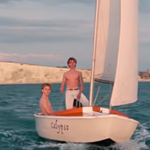
#JohnSavage, as Peter
and #RobbyBenson, as John
ALL THE KIND STRANGERS (1974)
GayFilmMagazine.com retweeted

We were never new. We were never a trend. We have always been here, loving, living, and standing together. History just didn’t always give us the recognition we deserved. 🏳️🌈

GayFilmMagazine.com retweeted

That time Danny Nucci talked AIDS to Tiger Beat in 1987. (And in the comments, the story behind it.)


GayFilmMagazine.com retweeted

ᴠ ɪ ɴ ᴛ ᴀ ɢ ᴇ ᴍ ᴏ ᴏ ᴅ
Richard Reagan was one of the men photographed by the Athletic Model Guild during the golden age of physique photography.
Reagan appeared in Physique Pictorial in August 1961, and he was remembered by fellow model Rick Alexander as one of the standout AMG era models, particularly for his rugged build and masculine features.
Beyond the photos, surprisingly little seems to have survived about Reagan himself. Like so many of Mizer’s models, his image became far better documented than his life. Today, photographs like this offer a glimpse into the men who helped define the visual culture of the early 1960s.

GayFilmMagazine.com retweeted

Paintings by Nebojša Zdravković
Born in Belgrade in 1959, Nebojša Zdravković is a Serbian artist known for his precise drawing and dynamic color palette.
He graduated with a Masters Degree in the Arts and was granted a scholarship by the Spanish government for his post-graduate studies in Madrid.
Zdravković’s images of male eroticism are executed using a highly expressive color range in a classic impressionistic style. He paints primarily from life, using models for reference, with a particular focus on the effect of light upon his subjects and the posed surroundings.


GayFilmMagazine.com retweeted
ʀ ᴇ ᴛ ʀ ᴏ ᴍ ᴏ ᴏ ᴅ
In 1989, Bruce Weber photographed model John Nies at Bear Pond in New York’s Adirondacks, capturing the kind of relaxed, athletic masculinity that became so closely associated with Weber’s work.
Nies was more than just a pretty face. He was a model and athlete, and later played professional football, while his younger brother Eric would go on to become one of MTV’s most recognizable faces on The Real World: New York. Both brothers appeared in Weber’s 1990 photography book Bear Pond, a collection that mixed photographs with poetry by Reynolds Price.
But this particular image feels more like a stolen moment at the lake than high art imho. Weber was very good at making photographs of beautiful people feel strangely intimate and unguarded. This one is a perfect example.

GayFilmMagazine.com retweeted

"You're just a hole": Andrew Scott is a dom daddy therapist in new queer series It Gets Worse
buff.ly/5nAaQZB

GayFilmMagazine.com retweeted

French heartthrob Pierre Clémenti was BOTD in 1942 & died in 1999 at 57. The handsome & sexy Clémenti, whose screen persona was sexually ambiguous, louche, and carnal, worked w/ great auteurs including Bunuel, Bertolucci, Pasolini, Garel, Cavani, Costa-Gavras, Rivette & Ivory


GayFilmMagazine.com retweeted

3 gündür queer as folk izleyeceğim diye uyku düzenimi mahvettim. Şimdi onlara veda etmemek için 5.sezona başlayamıyorum😭 Sevgileri, nefretleri, bağlanma problemleri, birbirleri olmadan yapamamaları her şeyleriyle inanılmaz güzel bir çift dinamiği izlettiler. Tadı damağımda kaldı
GayFilmMagazine.com retweeted

Um dia o blur acordou e falou "vou criar a musica mais bissexual da história da musica" e nasceu essa preciosidade !!
GayFilmMagazine.com retweeted
RIP Richard Harrison, 90. This guy was an original AMG model 70 years ago (and sold his own pics, OnlyFans-style), was in "South Pacific" and then became an internationally famous B-movie stud. Classy, elegant man.

GayFilmMagazine.com retweeted
In the queer love story SAUNA, young Johan finds his place as a receptionist at the Adonis Club amidst the fleeting encounters of Copenhagen's gay scene.
queermdb.de/film/sauna-2025/

GayFilmMagazine.com retweeted
ᴅᴀɪʟʏ ᴠɪɴᴛᴀɢᴇ
I love the lighting in this one.
George Platt Lynes photographed Carlos McClendon in 1947, during the two years the photographer spent in Los Angeles running Vogue’s West Coast studio. The picture is usually titled Carlos McClendon, back to window. McClendon, then in his early twenties, leans into a frame of louvered shutters, shirtless, looking out.
McClendon was not only a model. Born in Bakersfield in 1923, he studied at UCLA, worked in MGM’s design department, and danced with Marie Bryant. In those years he moved through the same Santa Monica and Hollywood circles as Christopher Isherwood and Denham Fouts.
After posing for Lynes he left for New York and opened Chequer, an early boutique that mixed imported objects and clothing from Mexico, Haiti, and Morocco. Greta Garbo shopped there.
He retired to New Mexico in 1986 and then on to Puerto Vallarta. The photo remains one of Lynes’s quietest and most complete portraits from that California period.

GayFilmMagazine.com retweeted
ᴠ ɪ ɴ ᴛ ᴀ ɢ ᴇ
Way, way back, in the summer of 1927, before Hollywood claimed him, F. W. Murnau took a camera to a quiet lake in Brandenburg. The man sitting on the edge of the boat is Hans Jahnke, a Berlin newspaper carrier. He holds a paddle, one knee drawn up, looking off across the water as if the day itself were enough.
Murnau, already the director of Nosferatu and The Last Laugh, was about to leave Germany for Sunrise. These pictures were never meant for the studio. They come from a cache of private stereo negatives later found among leftover film from Tabu. Some frames were shot with a self-timer. A few even included Murnau himself.
Ruth Landshoff, who knew both men, remembered the outing. Jahnke appears in the surviving negatives both in a swim shorts and without. The photographs are unhurried and almost tender in their attention to light on water and the easy lines of the human form at rest.
They surfaced decades later, were restored and published in 2013. One ordinary afternoon that somehow lasted forever.


