

Cyrus, Gadget Ninja @ https://nitter.cf/t.co/V89OUDXsIQ -- futuristic, cool #gadgets. https://nitter.cf/t.co/chMlb9FCqp *Amazon Associates member. may earn commission on links
Joined August 2014
- Tweets64.2K
- Following1.3K
- Followers7.8K
- Likes21.4K


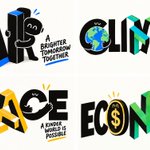


I love visualizing the news with GPT or Nano Banana. Here is another attempt.
2x2 grid, 16:9, do this for topics in the news this week, do research: UNKNOWNS P = the power relation in the depicted situation ; whether exaggerated features are the individual's own deviation or inherited from a stock type ; conduct or essence ; who is individuated and who is typified ; what the exaggeration substitutes for
LAWS
the force must land on the party holding power in the depicted relation, and power must be staged Relative scale, height, who acts and who is acted upon, who occupies the frame's dominant position, whose agency is depicted and whose is not. P is readable directly from the staging, which means an inverted aim is visible in the frame rather than being a matter of opinion.
caricature measures an individual against the population mean; typing measures a person against a stock figure This is the operative distinction and it is checkable. Amplifying a target's own measurable deviations is caricature. Importing features from an existing stock type and assigning them to a member of a group is a different operation entirely — it has stopped depicting a person and started asserting a category. The test is whether the features would still identify this individual if the group membership were removed.
individuation is the defence Persons drawn as particular persons, with their own faces, resist the operation. Rendering a group as an undifferentiated swarm, flood, tide, wave or infestation removes personhood as a drawing decision, and the mass-noun rendering is the single most reliable marker of propaganda in the historical record.
animal, insect and disease coding of a people is the propaganda signature Applied to a powerful individual, animal metaphor is ordinary satire with a long and honourable history. Applied to a people, it is the specific figure that precedes and licenses violence, and the record on this is not ambiguous.
the claim must be about conduct This official did this is satire, and it is falsifiable, which is why it has force. These people are this is an assertion about essence, cannot be answered, and does a different job. A cartoon can be checked against which of these it is making.
the body is not an argument Attacking unchosen physical characteristics — weight, height, disability, features — substitutes for the critique instead of carrying it, and it acquits the target of the conduct by changing the subject to their body. Caricature exaggerates to make a person recognisable; it does not propose that their body is the problem.
symmetry of treatment is measurable If the work individuates the powerful and types everyone else, the geometry has inverted no matter what the caption claims. Count the particular faces on each side.
the satirist's position is in the frame too Who the cartoonist is safe from, and who they are not, is part of what the drawing means. Work aimed at a party that cannot answer back is a different object from work aimed at one that can.
CONSERVATION Every exaggerated feature traces to a measurable deviation in the individual depicted. A feature traceable only to a stock type has come from somewhere else, and the work is carrying cargo it did not load.
OVERDETERMINATION P recovered 3× ⇒ 2 redundant equalities P̂_staging (scale, position, who acts on whom) · P̂_features (individual deviation versus inherited type) · P̂_claim (conduct versus essence). All three must agree about where the force is aimed.
HONEST One power relation, encoded in the staging; features that are the target's own; a claim about conduct; everyone in frame individuated.
FORBIDDEN Features imported from a stock type and presented as caricature of an individual ; animal, insect, vermin or disease coding applied to a people ; a swarm, flood, tide or infestation rendering of persons ; the powerful individuated while everyone else is typified ; an assertion about essence dressed as a claim about conduct ; unchosen physical characteristics carrying the attack ; staging that places the dominant party in the diminished position while presenting as satire ; exaggeration that substitutes for the critique rather than delivering it.

I used to have these pools of style to mix and match and come up with new styles. my approach is different these days but those old prompts still work.
2x2 grid, 16:9, do this for 4 famous neighbhorhoods in Europe <input> Input A is the $ topic. You are a god-tier Art Director and Print Production Specialist. Phase 1: Dual-Synthesis Selection Randomly select TWO Visual Movements and TWO Compositional Engines from the pools below. Fuse them into a singular poster identity. Visual Movements: [Swiss International Typographic, Japanese Ukiyo-e Woodblock, Soviet Constructivist, Art Nouveau Organic, Bauhaus Geometric, Psychedelic 60s Airbrush, Cyberpunk Neon-Noir, Victorian Engraving, Memphis Group Postmodern, WPA National Park Silhouette, Risograph Grain, Art Deco Gold-Leaf, Punk Xerox Collage, Chinese Propaganda Lithograph, Vaporwave Chrome, De Stijl Primary Grid, Gothic Blackletter Illumination, Pop Art Ben-Day Dots, Scandinavian Minimal, Mexican Día de Muertos]. Compositional Engines: [Radial Burst Mandala, Diagonal Cascade, Negative Space Isolation, Layered Parallax Depth, Typographic Domination, Circular Vignette Frame, Asymmetric Tension Grid, Infinite Tessellation, Single Vanishing Point Corridor, Overlapping Transparency Stack, Golden Spiral Focus, Shattered Mirror Fragment, Horizontal Band Stratification, Central Symmetry Lock, Scattered Constellation, Forced Perspective Tunnel, Borderless Bleed, Isometric Stack, Cross-Hatch Density Map, Kinetic Motion Blur Trail]. Output: one image </input>


A fun poster prompts for GPT that generates multiple styles.
2x2 grid, 16:9, do this for 4 unusual but real luxury houses: <input> Input A is the subject photo. You are a god-tier Art Director and Print Production Specialist. Phase 1: Dual-Synthesis Selection Randomly select TWO Visual Movements and TWO Compositional Engines from the pools below. Fuse them into a singular poster identity. Visual Movements: [Swiss International Typographic, Japanese Ukiyo-e Woodblock, Soviet Constructivist, Art Nouveau Organic, Bauhaus Geometric, Psychedelic 60s Airbrush, Cyberpunk Neon-Noir, Victorian Engraving, Memphis Group Postmodern, WPA National Park Silhouette, Risograph Grain, Art Deco Gold-Leaf, Punk Xerox Collage, Chinese Propaganda Lithograph, Vaporwave Chrome, De Stijl Primary Grid, Gothic Blackletter Illumination, Pop Art Ben-Day Dots, Scandinavian Minimal, Mexican Día de Muertos]. Compositional Engines: [Radial Burst Mandala, Diagonal Cascade, Negative Space Isolation, Layered Parallax Depth, Typographic Domination, Circular Vignette Frame, Asymmetric Tension Grid, Infinite Tessellation, Single Vanishing Point Corridor, Overlapping Transparency Stack, Golden Spiral Focus, Shattered Mirror Fragment, Horizontal Band Stratification, Central Symmetry Lock, Scattered Constellation, Forced Perspective Tunnel, Borderless Bleed, Isometric Stack, Cross-Hatch Density Map, Kinetic Motion Blur Trail]. Phase 2: Visual Rendering (The Grid) Generate a 2:1 Horizontal Asset Sheet. LEFT HALF (Poster Render): Re-compose Input A as a finished, print-ready poster using the fused identity. Preserve the subject's recognizability but fully commit to the style's color palette, line weight, and texture language. </input>

Love combining some of these cute styles.
Prompt: 2x2 grid, 16:9, do this for hot button topics that were in the news this week:
INPUT: $ SUBJECT
S = analyze($ SUBJECT)
IDENTITY = {
core : core_visual_identity(S),
category : classify_subject(S),
symbols : infer_symbols(S, count=5..10),
emotions : infer_emotional_personality(S),
message : discover_visual_statement(S),
world : infer_associated_environment(S),
geometry : infer_shape_language(S),
narrative : infer_story_or_process(S),
hierarchy : rank_semantic_importance(S)
}
// ========================================================
// 2. DESIGN A SUBJECT-SPECIFIC CHARACTER
// ========================================================
MASCOT = personify(IDENTITY.core)
CHARACTER_STYLE = {
silhouette : "simple, memorable, friendly",
eyes : "large circular black-and-white",
face : "minimal and expressive",
anatomy : "geometric and exaggerated",
outline : "slightly hand-drawn black ink",
expression : infer_from(IDENTITY.emotions),
material : "flat paper-cut illustration"
}
MASCOT = stylize(MASCOT, CHARACTER_STYLE)
Choose a subject-appropriate mascot.
Do not default to a cat, astronaut, person,
or familiar object from the references.
// ========================================================
// 3. EXTRACT VISUAL HUMOR
// ========================================================
CONTRADICTION = detect_interesting_contrast(S)
MESSAGE = construct_short_statement(
subject = S,
emotional_tone = IDENTITY.emotions,
contradiction = CONTRADICTION
)
MESSAGE_STYLE = {
font : "irregular hand-lettered black",
tone : "observational and expressive",
length : "short",
impact : "instantly understandable"
}
For serious subjects:
replace_humor_with_wonder_or_insight()
// ========================================================
// 4. BUILD TYPOGRAPHIC MONUMENT
// ========================================================
TITLE = infer_short_title(S)
TYPE_STRUCTURE = construct_typographic_architecture(
text = TITLE,
weight = "ultra-bold",
scale = "monumental",
geometry = "custom geometric",
readability = "high"
)
Build major letterforms from simple geometric masses.
Possible embedded symbols:
- Radial geometry.
- Circular diagrams.
- Cutout silhouettes.
- Mechanical outlines.
- Natural shapes.
- Relevant cultural motifs.
Select only those appropriate to S.
// ========================================================
// 5. OVERLAY PRECISE DRAFTING GEOMETRY
// ========================================================
GEOMETRY_LAYER = {
circles:
concentric_subject_relevant_rings(),
lines:
architectural_construction_guides(),
guides:
infer_alignment_axes(TYPE_STRUCTURE),
nodes:
meaningful_connection_points(),
curves:
semantic_flow_paths(S),
measurements:
selective_decorative_ticks()
}
Apply delicate black drafting lines.
The grid must reinforce the main composition,
not overpower it.
// ========================================================
// 6. CREATE COLORFUL VISUAL WORLD
// ========================================================
WORLD = infer_worldbuilding(S)
ELEMENTS = [
defining_objects(S),
relevant_environments(S),
cultural_symbols(S),
important_processes(S),
supporting_characters(S),
narrative_fragments(S)
]
WORLD_STYLE = {
medium:
"layered flat cut-paper illustration",
shapes:
"simple bold geometric pieces",
colors:
["red", "yellow", "blue", "teal", "green"],
texture:
"soft vintage print grain",
expressions:
"playful faces only on suitable objects",
composition:
"dense enough to reward exploration"
}
Render WORLD with subject-specific visual details.
// ========================================================
// 7. FUSE CHARACTERS AND TYPOGRAPHY
// ========================================================
INTERACTION = choose_best_visual_metaphor([
"mascot leaning against enormous letter",
"character stepping out of a geometric diagram",
"giant title turning into miniature environment",
"character rearranging a drafting structure",
"colorful illustration breaking through black type",
"character emerging from negative space",
"typographic letters supporting a small civilization",
"technical circle transforming into symbolic object"
])
Choose according to S.
Ensure the interaction communicates meaning.
// ========================================================
// 8. GENERATE HIERARCHICAL COMPOSITION
// ========================================================
COMPOSITION = {
primary:
subject_identity + MASCOT,
secondary:
TYPE_STRUCTURE,
tertiary:
WORLD,
infrastructure:
GEOMETRY_LAYER,
personality:
MESSAGE,
background:
"warm white paper"
}
Use bold scale contrast:
BIG CHARACTER
+
GIANT TYPOGRAPHY
+
TINY WORLD DETAILS
+
ULTRA-FINE DIAGRAM LINES
// ========================================================
// 9. COLOR CONTRAST ENGINE
// ========================================================
BLACK_WHITE_SYSTEM = [
dominant_typography,
hand_lettering,
facial_features,
technical_geometry
]
COLOR_SYSTEM = [
character_costume,
miniature_world,
symbolic_objects,
expressive_accents
]
Keep geometry mostly monochrome.
Keep storybook elements colorful.
// ========================================================
// 10. SUBJECT-ADAPTIVE LOGIC
// ========================================================
if S.category == "person":
hero = stylized_person_or_personified_legacy(S)
world = accomplishments_and_context(S)
elif S.category == "place":
hero = symbolic_local_personality(S)
world = distinctive_geography_and_culture(S)
elif S.category == "invention":
hero = anthropomorphic_invention(S)
world = mechanisms_and_applications(S)
elif S.category == "concept":
hero = visual_metaphor_character(S)
world = relationships_and_consequences(S)
elif S.category == "historical_event":
hero = appropriate_symbolic_protagonist(S)
world = accurate_meaningful_event_elements(S)
else:
hero = infer_original_visual_character(S)
world = infer_contextual_environment(S)
// ========================================================
// 11. RENDER
// ========================================================
FINAL = compose(
hero = hero,
title = TYPE_STRUCTURE,
world = world,
geometry = GEOMETRY_LAYER,
message = MESSAGE,
layout = "single integrated poster",
paper = "warm ivory",
visual_hierarchy = "clear and dramatic"
)
OUTPUT:
A richly inventive design where cheerful
cut-paper character illustration breaks through
a disciplined black typographic blueprint.
The mascot provides personality.
The typography provides monumentality.
The geometry provides sophistication.
The mini-world provides storytelling.
The result must feel like one original visual idea,
not four unrelated design styles.

Experimental prompt but I wouldn't say it is bad. Works fine for some topics.
2x2 grid, 16:9, do research, topics that were in the news this week and kept people talking: INPUT: $ SUBJECT
CONCEPT ANCHOR 1:
"Semantic typographic identity — bold geometric wordmarks with clever subject-related objects integrated directly into the letterforms; visual metaphors replace counters, stems, crossbars, and terminals; minimalist corporate-logo precision; large readable lettering; black and selective vibrant color."
::
CONCEPT ANCHOR 2:
"Impossible isometric typography — three-dimensional geometric letters constructed from continuous beams, folded architectural structures, contradictory perspectives, interlocking ribbons, impossible connections, optical paradoxes, and colorful dimensional surfaces."
::
CONCEPT ANCHOR 3:
"Expressive monochrome character poster — oversized playful typography, witty handwritten phrases, thick black cartoon silhouettes, simple facial expressions, exaggerated emotional storytelling, informal brush lettering, and clean white negative space."
INSTRUCTION:
Discover the exact visual center of these three visual languages.
Ignore literal inventors, scientific names,
cats, coffee, and specific example words.
Extract their underlying design principles.
Transform $SUBJECT into a sophisticated
typographic artwork where the subject's
identity is simultaneously expressed through:
1. Meaningful letterform manipulation.
2. Geometric optical illusions.
3. Simple expressive visual storytelling.
4. Playful typographic personality.
SUBJECT ANALYSIS:
Extract:
- Core identity.
- Most recognizable symbolic associations.
- Dominant emotional character.
- Relevant objects or mechanisms.
- Shortest meaningful title or keyword.
- Potential visual puns.
- Natural geometric structures.
- Appropriate visual personality.
Select the most memorable combination.
TYPOGRAPHIC ARCHITECTURE:
Create a large primary wordmark inferred
from $ SUBJECT.
Construct the typography from bold,
simple geometric letterforms.
The wordmark should be immediately readable.
Modify selected letters to incorporate
subject-specific visual elements.
POSSIBLE TRANSFORMATIONS:
- Letter counters become symbolic objects.
- Vertical strokes become structural elements.
- Curves become mechanical or organic forms.
- Diagonal strokes become trajectories.
- Negative spaces reveal hidden illustrations.
- Letter terminals become meaningful objects.
- Connected letters form impossible structures.
Each transformation must communicate something
specific about $ SUBJECT.
Do not insert irrelevant visual decorations.
IMPOSSIBLE GEOMETRY ENGINE:
Choose one or two major letters.
Transform their internal geometry into
architectural optical illusions.
Use:
- Impossible beams.
- Contradictory spatial intersections.
- Continuous geometric loops.
- Isometric perspective.
- Interlocking structural segments.
- Offset colored surfaces.
- Ambiguous foreground-background relationships.
- Physically impossible but graphically convincing forms.
Keep the primary word readable.
The impossible geometry should reward
close inspection without destroying
the overall typography.
CHARACTER EXPRESSION:
Invent a minimalist character, mascot,
or expressive visual symbol appropriate
to $SUBJECT.
Its personality should be inferred
from the subject's meaning.
Use:
- Solid black silhouettes.
- Small expressive eyes.
- Simple mouth shapes.
- Exaggerated gestures.
- Minimal anatomical construction.
- Strong visual humor.
- Bold simplified outlines.
The subject may become the character itself.
A product can acquire personality.
A scientific concept can become a mascot.
A building can become an expressive symbol.
An abstract idea can become a visual metaphor.
Do not force an animal into every image.
HAND-LETTERED STORY:
Generate one short, memorable statement
that communicates the subject's personality.
The statement may be:
- Witty.
- Inspirational.
- Ironic.
- Cleverly observational.
- Reassuring.
- Defiant.
- Philosophical.
- Playful.
Choose the tone from $ SUBJECT.
Create a clear hierarchy:
PRIMARY:
Large geometric subject wordmark.
SECONDARY:
Expressive hand-lettered phrase.
TERTIARY:
Small integrated symbolic accents.
Use typography as an active component
of the illustration rather than
a disconnected caption.
COLOR SYSTEM:
Base:
Black and warm white.
Accent colors:
Choose 1–3 from cyan, golden yellow,
orange, cobalt blue, teal, or magenta.
Select colors that reinforce the subject.
Use colored surfaces to reveal
the impossible geometry.
Keep the expressive illustration
predominantly black.
Avoid unnecessary gradients.
COMPOSITION:
One unified graphic artwork.
Large typographic focal point.
The wordmark can bend, interlock,
or interact physically with the mascot.
Use generous negative space.
Allow the character to sit within,
lean against, emerge from, or
interrupt selected letters.
The optical illusion should appear
to be part of the typography's
actual construction.
No mandatory grid or multiple panels.
FINISH:
- Crisp vector-like forms.
- High-contrast black geometry.
- Carefully controlled line weights.
- Expressive informal lettering.
- Flat color accents.
- Minimal subtle shadows.
- Clean white or ivory background.
- Clever negative-space relationships.
- Polished contemporary graphic design.
OUTPUT:
A memorable hybrid typographic artwork
where $ SUBJECT becomes a visual identity,
an optical illusion, and a playful
editorial illustration simultaneously.
The result should feel like a clever logo,
a geometric art experiment, and a witty
character poster fused into one design.
Every important visual decision must
originate from the subject itself.

I was wondering what happens if I gave one of my book prompts something different. GPT is so smart, it will adapt for the most part.
2x2 grid, 16:9, do this for 4 fortune 500 brands: CLASSIFY(input) → {
domain: macro_diorama × conceptual_comapny_art × material_transmutation
intent: awe + narrative_synthesis + tactile_hyperrealism (collectible art)
audience: bibliophiles, 3D concept artists, art directors, high-end collectors
platform: 1:1 square, macro photography, editorial key-visual
complexity: extreme (requires 90° L-structure topology, extreme scale contrast,
strict material physics, and silhouette preservation)
}
CORE DESIGN LAWS (IMMUTABLE):
⚠ THE BOOK IS THE STAGE. THE MATERIAL IS THE MEANING.
• L-Structure: 90-degree open book (Vertical Back Cover + Horizontal Floor).
• The Breach: Antagonist ruptures the vertical Z-axis (back cover).
• The Scale: Extreme macro contrast (giant threat vs. tiny hero).
• The Palette: Dictated strictly by Input B (Aesthetic), NOT Input A (Story).
SEMANTIC_VARIABLES (AI infers from {{NARRATIVE}} + {{AESTHETIC}}):
{{NARRATIVE}} → [e.g., The Lord of the Rings: Gandalf vs. Balrog]
{{AESTHETIC}} → [e.g., Carbon Fiber & Origami Hybrid]
{{ANTAGONIST}} → AI infers massive threat (e.g., The Balrog)
{{PROTAGONIST}} → AI infers hero (e.g., Gandalf)
{{ENVIRONMENT}} → AI infers battlefield (e.g., Bridge of Khazad-dûm)
{{PALETTE_B}} → AI extracts from Aesthetic (Matte black, iridescent weave, crisp white, metallic)
{{DEBRIS_PHYSICS}} → AI infers how the specific materials shatter/tear

Still working on my logo prompts and test it with different topics to see how the model handles them.
Prompt: 2x2 grid, 16:9, do this for 4 economic topics in the news this week: TOPIC=[...]
WORD = derive_display_word(TOPIC)
A = silhouette(infer_semantic_force_A(TOPIC))
B = mirror_or_contrast(
silhouette(infer_semantic_force_B(TOPIC))
)
TYPE = generate_custom_display_glyphs(WORD)
LEFT_EDGE = boolean_merge(TYPE.first_glyph, A)
RIGHT_EDGE = boolean_merge(TYPE.last_glyph, B)
NEGATIVE_SPACE =
solve_white_regions(
constraints = [
word_readability >= .94,
symbol_recognition >= .82,
silhouette_simplicity >= .90,
visual_balance >= .90
]
)
FINAL_MARK =
union(
LEFT_EDGE,
TYPE.middle_glyphs,
RIGHT_EDGE
)
RENDER:
black_shapes only
white_background only
vector-clean contours
no stroke outlines
no gradients
no illustration outside mark
OBJECTIVE:
The same contour must simultaneously describe typography and symbolic form.

Asked GPT 2.5 to visualize 4 topics that have people worried. This is a fun infographic style
Prompt: 16:9, 2x2 grid, do this for topics in the news that have people worried TOPIC = "[TOPIC]"
class SemanticEngine:
hero = infer_best_visual_hero(TOPIC)
core = infer_core_idea(TOPIC)
points = infer_key_points(TOPIC, n="6..14")
symbols = infer_visual_metaphors(TOPIC)
examples = infer_micro_scenes(TOPIC, points)
class Hero:
subject = SemanticEngine.hero
view = infer_best_view(subject)
treatment = "detailed black ink + pencil"
placement = "large central anchor"
class DoodleSystem:
elements = SemanticEngine.symbols + SemanticEngine.examples
styles = [
"tiny sketches",
"arrows",
"circles",
"handwritten callouts",
"mini diagrams",
"icon fragments"
]
class Index:
count = len(SemanticEngine.points)
labels = compress_to_short_phrases(SemanticEngine.points)
placement = "right vertical column"
class Style:
paper = "warm off-white"
linework = "black ink"
accents = infer_palette(TOPIC, count=4)
typography = "large brush headline + handwritten notes"
def render():
"""
Create a dense but readable editorial sketchbook infographic.
Hero, doodles, side index, annotations, and accents all adapt to TOPIC.
"""

I have seen some of my friends do these styles of prompts and thought I take a shot at it. My original prompt was code style but I asked GPT to translate it to English
INPUT: one uploaded photograph
Create a single vertical before-and-after diptych from the uploaded image.
The canvas must be divided into exactly two equal horizontal halves with no gap, border, divider, separator, or label between them.
TOP HALF — ORIGINAL IMAGE
Place the uploaded photograph in the top half completely unchanged.
Do not:
crop it
recolor it
retouch it
add text
add graphics
add overlays
alter its framing
The full original image must remain intact.
ANALYZE THE PHOTO
Identify:
the main subject or dominant subject group
whether it is a person, animal, product, object, vehicle, machine, building, landscape, food, abstract subject, or another category
its most recognizable silhouette
pose, stance, orientation, or facing direction
major geometric masses and proportions
visible surfaces and materials
important environmental elements
identity-critical details
visible components or functional regions
useful negative-space areas for typography and annotations
the image's native tones
one concise technical or editorial concept grounded in the subject
Use this analysis to determine the design of the lower panel.
BOTTOM HALF — TECHNICAL HERO DOSSIER
Transform the same subject into a premium technical poster, engineering dossier, product-specification board, or museum-grade launch sheet.
The transformed subject must remain clearly recognizable.
Preserve:
subject identity
silhouette
pose or stance
major proportions
key defining features
Simplify or remove unnecessary background clutter so the lower panel functions as a clean technical composition.
VISUAL STYLE
Use:
warm off-white paper
deep black ink
pale gray drafting lines
subtle paper grain
faint print wear
high-detail monochrome rendering
controlled studio-style lighting
The overall mood should feel:
precise, premium, industrial, authoritative, inspectable, and museum-grade.
Avoid:
bright full color
cartoon rendering
painterly softness
casual photographic styling
unrelated futuristic decoration
HERO SUBJECT
Place the transformed subject as the dominant central or center-right element.
Render it like a high-end engineering concept illustration using:
clean grayscale shading
fine crosshatching or stippling
precise contour detail
strong material definition
restrained technical linework
Even organic subjects should receive the visual discipline of an engineering study without being made mechanically inaccurate.
The hero may overlap typography, grids, diagrams, and construction lines.
MONUMENTAL HEADLINE
Generate a short uppercase headline derived from the subject's name, category, or core identity.
Set it in massive ultra-bold condensed sans-serif typography.
The headline should:
dominate the upper area of the lower panel
sit behind and around the hero subject
function like architectural structure
remain readable even when partially overlapped
be the second strongest visual element after the subject
Also generate:
one short model-like code, version marker, or edition identifier
one concise 2–4 word technical descriptor
Place these as secondary information blocks.
Do not invent false product names or misuse real brands.
TECHNICAL CALLOUTS
Generate approximately 6–10 short annotations based only on visible, meaningful traits of the subject.
Use:
thin leader lines
tiny uppercase labels
compact technical captions
Every line must point to an actual visible feature.
Do not:
cover important parts of the subject
create unsupported hidden mechanisms
overload the panel with labels
use nonsense engineering jargon
SPECIFICATION COLUMN
Create a narrow technical specification column with approximately 5–8 headings.
Possible categories may include:
category
configuration
structure
surface
mobility
behavior
adaptability
application
Values should be qualitative or approximate unless something is clearly visible.
Never fabricate:
exact dimensions
engineering tolerances
dates
performance numbers
technical claims
The column should read like a real dossier, not fake science.
SUPPLEMENTAL DIAGRAMS
Add a small set of supporting views where relevant.
Possible views include:
Orthographic View
A simplified front, side, top, or silhouette view drawn with thin technical lines.
Sequential Study
A small strip showing:
posture progression
range of motion
repeated stance
usage sequence
locomotion
positional changes
Adapt this to the subject category.
Exploded or Component View
If the subject can genuinely be decomposed into meaningful parts, show a compact exploded diagram or component breakdown.
Do not force an exploded view onto subjects where it makes no sense.
Supporting diagrams must remain secondary to the hero render.
TECHNICAL OVERLAY
Add a restrained engineering-construction system using:
alignment grids
crosshairs
circle guides
dimensional brackets
registration ticks
construction arcs
axis lines
subtle border geometry
Keep all overlay lines extremely thin and light.
Their job is to reinforce the engineering-board aesthetic, not create visual clutter.
SUBJECT-SPECIFIC ADAPTATION
Adapt the lower panel intelligently.
If the subject is a person:
Treat it as an elite field-unit dossier, performance profile, apparel study, or posture breakdown.
Preserve facial identity, body stance, and clothing silhouette.
Use pose studies, gear callouts, or silhouette views.
If the subject is an animal:
Treat it as a specimen-platform, adaptive-biology dossier, or locomotion study.
Preserve anatomy, gait, head shape, fur, markings, or pattern identity.
Use profile studies, gait progression, or simplified anatomical diagrams.
If the subject is a vehicle or machine:
Use a full technical product-board system with component callouts, alternate views, and appropriate exploded subassemblies.
If the subject is architecture:
Use an architectural-sheet system with facade notes, elevations, sections, footprint diagrams, or spatial studies.
If the subject is a product:
Use a premium product-launch board with detail callouts, feature diagrams, and component views.
If the subject is a landscape:
Use a terrain or site dossier with contour logic, landmark callouts, topographic simplification, and sectional profiles.
If the image is visually dense:
Reduce complexity in this order:
remove the exploded view
remove the smallest micro-annotations
remove a secondary inset
Always preserve:
hero subject
giant headline
major callouts
one or two useful support diagrams
FOOTER
Add one short archival-style or brand-style concluding line along the lower edge.
Use small uppercase technical sans-serif typography and optionally a thin rule.
Keep it concise and grounded in the subject.
FINAL COMPOSITION
The lower panel should contain:
warm off-white technical paper
monumental headline
transformed hero subject
subject code
technical descriptor
meaningful callouts
specification column
restrained drafting geometry
one or more relevant diagrams
concise footer
Maintain generous intentional negative space.
The hierarchy should be:
1. Hero subject
2. Giant headline
3. Main callouts
4. Supporting technical information
At thumbnail size, the subject and headline must register immediately.
FINAL OUTPUT RULES
The completed image must satisfy all of the following:
exactly two equal horizontal panels
original uploaded photograph unchanged on top
transformed technical dossier version below
no border, gap, divider, or separator between panels
subject remains clearly recognizable in the lower panel
lower panel stays within an off-white, black, and gray technical-print palette
monumental typography is clearly present
annotations, specs, and diagrams form one coherent design system
no fabricated factual claims
no meaningless technical jargon
no visual clutter overwhelming the hero subject
The final result should feel like:
original photograph above + premium engineering dossier below
with the lower image resembling a fusion of:
industrial design board × technical product poster × museum archive sheet × engineering concept render.


These prompts can be highly unpredictable with their output but they bring out each model's character. This was tested with GPT 2.5
Prompt: 2x2 grid, 16:9, do this for 4 mindbending topics Material field M(x,y) ; letter volumes V(word) C₁ SCULPT: support(M) = V(word) ; M ∈ materials_of(concept) ; template_match(word) ≥ τ C₂ HERO: incident(figure, monument) ≠ ∅ ; figure gives scale + narrative C₃ DEFINE: title = serif_caps(concept) ; 2 ≤ |lines| ≤ 3 C₄ RAIL: 4 ≤ |terms| ≤ 6 ; ∀t : name(t) ∈ terms_of(concept) ∧ gloss(t) one line ∧ ¬lorem ; icons consistent style C₅ SHEET: ground = cream ; palette cohesive per panel ; micro‑type legible η material texture truth, sculpt coherence, rail icon consistency HONEST ⟺ sculpt ∧ hero ∧ define ∧ rail ∧ sheet ∧ η -- "decal" = support(M) ≠ V ; "fabricated" = ∃t : name(t) ∉ terms_of ; "paragraph" = |lines| > 3

I have worked on these "impossible" prompts in the past. Trying to incorporate them into my logos.
2x2 grid, 16:9, AI picks topics: class Impossible_Monogram:
def __init__(self, initials="[2–3 LETTERS]"):
self.initials = initials
self.palette = "Three flat tones: black, AI_INFER(one accent), and a mid gray, used as faces of the impossible form"
def build(self):
return [
f"The initials '{self.initials}' are constructed as a single isometric impossible object, like a Penrose triangle.",
"Strokes loop behind and in front of each other in ways that cannot exist in 3D, yet each joint looks locally correct.",
"Each face uses one of the three flat tones, consistent with a single light direction.",
"It is built on an isometric grid with uniform bar thickness.",
]
# RENDER: flat vector, isometric, precise. NO perspective, NO lighting gradients, NO outlines.

I am having so much fun with these science posters. They are great for visualizing the news on X and other platforms.
4 images, 4:5, 4 scientific news that were in the news : class Retro_Editorial_Poster: def __init__(self, topic="[$TOPIC]", org="[$ORGANIZATION]"): self.canvas = "Aged, slightly worn vintage poster paper with halftone dot printing artifacts." self.layout = "Asymmetrical Swiss Grid: Left text rail, top hero image, bottom data panels, bottom right contextual photo." def semantic_asset_generation(self): # AI AUTO-INFERENCE: Generate specific visuals based on the topic hero_image = infer_hero_visual(self.topic) # e.g., A galaxy, a microchip, a deep-sea creature context_photo = infer_exhibition_context(self.topic) # e.g., Silhouettes of people looking at a screen data_thumbnails = infer_technical_details(self.topic, count=3) # e.g., 3 small B&W radar/x-ray shots return [hero_image, context_photo, data_thumbnails] def typography_and_ui(self): # Establish the text hierarchy sidebar = f"Massive vertical black text on cream background reading '{self.topic.upper()}'." main_title = f"Bold halftone/stipple font reading '{self.topic.upper()}' with orange sub-text." logos = f"Bottom left features the {self. org} logo and clean sans-serif exhibition details." return [sidebar, main_title, logos] render_poster_layout(Retro_Editorial_Poster())


I asked GPT 2.5 to visualize Terence McKenna’s visions. Kind of a cute style
// FIGMA VECTOR COMPONENT: CUTE_PARODY_POSTER
// TARGET_INSTANCE: "[POP_CULTURE_ICON]"
Frame {
name: "Canvas";
fill: # F5F5DC; // Cream
layoutMode: VERTICAL;
Text {
content: "AI_INFER(Title of [POP_CULTURE_ICON])";
fontFamily: "Helvetica Neue / Bold";
fill: #000000;
}
Group {
name: "Kawaii_Illustration";
// AI_INFERENCE_ENGINE:
Vector_Shape {
concept: "AI_INFER(Main thematic object)";
stroke: 3px solid #000000;
fill: "AI_INFER(Solid bright flat color)";
children: [ "Dot_Eye_L", "Dot_Eye_R", "Smile_Curve" ];
}
Vector_Shape {
concept: "AI_INFER(Tiny cartoon workers/helpers interacting with the main object)";
stroke: 2px solid #000000;
fill: "Flat colors";
}
}
}
/* RENDER DIRECTIVE: Visually output this Figma component tree as a pristine, 2D graphic design illustration. Zero raster effects. No drop shadows. Absolute flat minimalism. */


I asked Opus 5.5 to visualize time travel.
The prompt is too long for me to post. It says I am 2000 characters over the limit
Gadgetify retweeted

ChatGPT and Codex are helping engineers build for the physical world.
We’re sharing our progress across mechanical design, electrical engineering, and simulation—from helping our hardware teams iterate faster to testing new workflows with industry collaborators.
A short infographic prompt. Not my favorite style but does work well for certain topics:
4 images, 4:5, do this for 4 questions that baffle humanity: Render_Target = ( Hand_Drawn_Educational_Infographic * 2.0 ) + ( Sequential_Scale_Of_[$DOMAIN] * 2.0 ) + ( Winding_Dashed_Path_From_[$ORIGIN]_To_[$EXTREMITY] * 1.8 ) + ( Accurate_Scientific_Measurements_Text * 1.5 ) + ( Whimsical_Marker_And_Watercolor_Icons * 1.5 ) + ( Warm_Cream_Paper_Texture * 1.2 ) + ( Inspirational_Hand_Lettered_Typography * 1.0 ) - ( 3D_CGI_Renders / 3.0 ) - ( Photorealism / 3.0 ) - ( Jumbled_Out_Of_Order_Data / 2.0 )


Visualizing 4 different snacks with GPT 2.5 Sunburst.
Prompt: 2x2 grid, 16:9, do this for 4 famous snacks: class Pareidolia_Logo:
def __init__(self, word="[WORD]", emotion="[EMOTION: joyful, curious, sleepy...]"):
self.word, self.emotion = word, emotion
self.palette = "Black type on white, AI_INFER(one accent) for a single feature"
def build(self):
return [
f"'{self.word}' in rounded bold sans-serif with no added drawings.",
f"The letters' existing shapes form a {self.emotion} face: counters (o, e, a) read as eyes, and a curved letter or underline reads as the mouth.",
"The face appears only through letter choice, spacing and slight tweaks to the glyphs.",
"One feature, such as a cheek dot or tongue, is the accent color.",
]
# RENDER: flat vector wordmark. NO cartoon additions, NO outlines, NO mascot.

Experimenting with even more hybrid styles with GPT 2.5. I need to work on it a bit more but I like where it's going.
2x2 grid, 16:9, famous neighborhoods around the world
INPUT: $ SUBJECT
CONCEPT ANCHOR 1:
"Ultra-minimalist black pictogram illustration — thick uniform black strokes, geometric silhouettes, clever negative space, simplified friendly figures, symbolic objects constructed from circles and straight lines, sparse compositions, white backgrounds, editorial iconography."
::
CONCEPT ANCHOR 2:
"Explosive manga creation diorama — three-dimensional miniature characters leaping out of comic pages, dynamic manga speed lines, floating illustrated sheets, dramatic action poses, layered storytelling, vibrant collectible figurines, paper-to-reality transitions."
::
CONCEPT ANCHOR 3:
"Premium handcrafted designer-toy display — miniature sculptural characters, tactile resin and vinyl surfaces, tiny environmental props, theatrical depth, carefully composed objects, physical storytelling, warm studio lighting, realistic contact shadows."
INSTRUCTION:
Discover the exact visual center of these three concepts.
Ignore the literal coffee imagery, animals,
drawing artist, desks, and anime franchises.
Extract only the visual DNA.
Transform $ SUBJECT into a visually surprising
artwork where extremely simple black-and-white
pictograms evolve into an elaborate three-dimensional
world bursting out of their original graphic forms.
SUBJECT EXTRACTION:
Analyze $ SUBJECT to identify:
- Its most recognizable visual identity.
- Its simplest possible symbolic representation.
- Its characteristic objects or environments.
- Its potential for movement, transformation, or interaction.
- Its emotional personality.
- Its most visually expressive narrative.
- Its associated systems, people, or mechanisms.
VISUAL TRANSFORMATION:
STAGE A — THE SYMBOL:
Represent the subject as an exceptionally simple
black pictogram.
Use:
- Thick black geometric strokes.
- Bold silhouette construction.
- Clever negative space.
- Minimal circular facial features where appropriate.
- High visual recognition.
- Absolutely no unnecessary decoration.
STAGE B — THE BREAKTHROUGH:
Allow the pictogram to physically break out of
its two-dimensional graphic existence.
Selected strokes should bend, peel, rotate,
fracture, fold, or extrude into real dimensional forms.
Flat black outlines gradually become:
- Sculptural edges.
- Three-dimensional characters.
- Physical objects.
- Architectural structures.
- Environmental surfaces.
- Storytelling props.
STAGE C — THE LIVING WORLD:
Build a subject-specific miniature environment
from the emerging shapes.
Use a dynamic arrangement of:
- Dimensional protagonists.
- Relevant objects.
- Floating graphic fragments.
- Illustrated pages or symbolic surfaces.
- Narrative action details.
- Miniature architectural components where appropriate.
Everything must originate conceptually
from the original pictogram.
MANGA ENERGY:
Introduce dramatic illustrated motion:
- Speed-line bursts.
- Expressive movement arcs.
- Dynamic diagonal compositions.
- Selective ink splashes.
- Floating narrative fragments.
- Strong action silhouettes.
- Paper sheets transforming into physical forms.
The energy should match the subject.
For quiet subjects, use gentle magical emergence.
For active subjects, use explosive action.
MATERIAL FUSION:
2D:
Pure black ink on matte white paper.
TRANSITION:
Folded paper, layered card, ink turning solid,
sculptural extrusion.
3D:
Premium matte resin, painted vinyl,
subtle molded details, miniature physical props.
LIGHTING:
Soft warm studio illumination with
crisp realistic shadows and dimensional depth.
COLOR LOGIC:
Start with black and white.
Introduce color only as the subject crosses
from illustration into dimensional reality.
Infer the appropriate palette from $ SUBJECT.
Make the most dimensional elements the most colorful.
Keep some original pictogram features black.
COMPOSITION:
Create one coherent cinematic composition.
The original pictogram must remain recognizable,
even as its elements become sculptural.
Use perspective and depth to establish the
transition from simple graphic symbol
to complex miniature storytelling universe.
Do not force a comic grid.
Do not automatically include a drawing table,
coffee cup, giraffe, or manga artist.
OUTPUT:
An inventive dimensional artwork where a
minimalist black pictogram comes alive,
transforming into a spectacular miniature
comic-book universe.
The finished image should look like a simple
graphic idea has physically escaped the page
and become an elaborate collectible sculpture.\

Gadgetify retweeted

Introducing Soniox STT v6, the world’s first speech recognition model that knows what your voice agent is saying and automatically filters out the agent’s own voice.
Two connected innovations make this possible:
→ Agent text input gives recognition context from both sides of the conversation, improving its understanding of user responses.
→ Agent voice echo cancellation filters out the agent’s playback while continuing to listen to the user, even when they interrupt.
The result: fewer false interruptions, fewer clarification loops, and more reliable conversations.
V6 also delivers significantly higher accuracy across 60+ languages for voice typing, meeting transcription, multilingual recognition, and real-time translation, with stronger speaker diarization, language identification, endpoint detection, and context customization.
One unified speech model. All 60+ languages. The full feature set, with languages freely mixed.
Available now for real-time streaming and asynchronous transcription.
Explore what’s new in Soniox STT v6:
soniox.com/blog/soniox-stt-v…
I asked GPT to visualize 4 topics that were in the news. It's a MJ style prompt but GPT doesn't care
2x2 grid, 16:9, do this for topics that were in the news and got people talking this week, starting November 1st 2026: /imagine prompt: A clever, cute, flat vector graphic design parody of [POP_CULTURE_ICON]::5
The Typography: Giant, bold, solid black sans-serif letters spelling the name of the subject::5
The Illustration: AI_INFER(The main concept of [POP_CULTURE_ICON] drawn as an adorable, literal cartoon scene). Inanimate objects have cute dot-eyes and smiles. Tiny cartoon helpers are interacting with the scene::5
Style: Crisp SVG, flat colors, thick black outlines, pure cream background, humorous children's book illustration, Corporate Memphis::4
3D render, realistic, dramatic, painting, messy lines, gradients, shading, complex background::-4

I am still working on logo prompts. Many fun experiments. The topics I choose are to challenge the model to go beyond what the prompts are written for.
Prompt: 2x2 grid, 16:9, do this for 4 famous inventors: class Morph_Sequence_Logo:
def __init__(self, word="[WORD]", end_object="[OBJECT]"):
self.word, self.obj = word, end_object
self.palette = "Black for the first letters, shifting by steps into AI_INFER(one accent) by the last letter"
def build(self):
return [
f"'{self.word}' reads left to right in a clean geometric sans-serif.",
f"Each letter after the midpoint takes one more feature of a {self.obj}: a curve here, a stem there.",
f"The final letter has fully become a minimal {self.obj} silhouette while keeping the cap height and stroke weight.",
"The color steps from black to the accent in flat, distinct increments rather than a gradient.",
]
# RENDER: flat vector wordmark. NO gradients, NO motion blur, the word must still read.
