

The Georgetown University Center on Education and the Workforce (CEW) is a research and policy institute within Georgetown’s McCourt School of Public Policy.
Washington, DC
Joined May 2010
- Tweets21.4K
- Following2.7K
- Followers9K
- Likes14.8K




Pinned Tweet
Our new three-report series helps policymakers, researchers, practitioners, and administrators better define, measure, and assess the value of postsecondary education and training. bit.ly/4zLIy7F

Among recent bachelor’s degree recipients who majored in business, 72% are White, 9% are Latino, 8% are Black, 8% are Asian, and 2% are Multiracial. #ROIBusiness bit.ly/3N43VHG

73% of students who earn a bachelor’s degree in business enroll in a master’s degree program within 10 years of completing their undergraduate degree, and 52% of undergraduate business majors complete a master’s degree in the same timeframe. #ROIBusiness bit.ly/3N43VHG

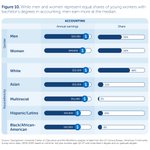
There is an even gender split in the number of bachelor’s degree holders in accounting. However, young men earn more at the median: $53,300 per year, compared to $49,000 for young women. bit.ly/3N43VHG

Bachelor’s degrees in construction management programs lead to the highest median annual earnings net of debt payments for bachelor’s degree holders two years after graduation, at $62,400. #ROIBusiness bit.ly/3N43VHG

(1/3) Two years after graduation, associate’s degree holders in business have median annual earnings of $30K after student-loan debt payments, the 10th-highest returns out of 25 majors at the associate’s degree level.
(2/3) At the bachelor’s degree level, business degrees lead to median annual earnings of $43,200 after debt payments two years after graduation, ranking 10th out of 34 majors.
(3/3) At the master’s degree level, median annual earnings net of debt for business majors are $51,600, ranking 9th out of 27 fields of study. #ROIBusiness bit.ly/3N43VHG
Business is the most popular college degree at the bachelor’s and master’s degree levels, and its #ROI is high. Every year, roughly 20% of bachelor’s degree recipients major in business, or about 400,000 students in a recent academic year. #ROIBusiness bit.ly/3N43VHG
Early in their careers (ages 22–27), 12% of business majors become accountants and auditors, the most common choice for business majors. These workers earn a median of $57,000 per year early in their careers. #ROIBusiness bit.ly/3N43VHG

Explore the rankings of 5,500 business programs at more than 1,700 institutions. Find your college here: #ROIBusiness bit.ly/3N43VHG
Among adults who completed a master’s degree in business within 10 years of graduating from a bachelor’s degree program, 71% are White, 9% are Black, 8% are Latino, and 8% are Asian. #ROIBusiness. bit.ly/3N43VHG

Majoring in business pays off. In most programs, business students’ median annual earnings two years after graduation are roughly 10 times their monthly debt payments. bit.ly/3N43VHG
Student debt dampens the positive economic effects of #highered. Among college grads, Black women are the group most likely to hold student debt. This debt constrains their ability to build wealth. #UncertainPathway bit.ly/39mn6ye

On #UNDay, we recognize the United Nations’ commitment to international peace and progress. Education is essential to advancing these goals by expanding economic opportunity and building a more equitable future.
This week, CEW hosted a webinar to discuss our recent report series. The topics ranged from measuring the outcomes of postsecondary education to what changes would ensure that education delivers on its full potential. Thanks to all who attended! youtu.be/WWOE0gDTqsA
Rural America needs more comprehensive counseling services in schools, colleges, and communities to help individuals make decisions about their career pathways. bit.ly/3SJZIxI

Differences in fields of study contribute to earnings inequality. STEM majors have the highest earnings potential of all bachelor’s degree holders, and White and Asian men are most likely to major in these fields. #UncertainPathway bit.ly/39mn6ye bit.ly/3LPWgwa
"The current debate about the value of college is important, as it challenges us to check our assumptions about the college-for-all movement."—CEW's Jeff Strohl talks about the challenges facing postsecondary education. More here: bit.ly/47ymvEg

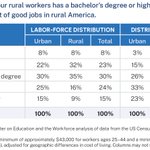
Because women and members of underrepresented racial/ethnic groups bear the brunt of economic inequality in rural areas, we need programs specifically geared toward these groups that offer credentials for good jobs available in the rural economy. bit.ly/3SJZIxI
Racial/ethnic and gender gaps in postsecondary attainment, field of study, occupation, and full-time work combine with persistent discrimination and bias to create an unjust hierarchy of economic opportunity. #UncertainPathway bit.ly/39mn6ye bit.ly/3LPWgwa