

Co-founder of Gero. Doing my best to end aging. Physics-informed AI against aging and age related diseases. Preclinical stage, platform-based biotech company
Joined October 2015
- Tweets1.2K
- Following4.8K
- Followers3.2K
- Likes1.4K



Pinned Tweet
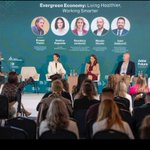
🚀 Thank you, @Nasdaq, for celebrating our potentially multi‑billion‑dollar partnership with Chugai (a member of the Roche Group)!
Why is this deal so important—for science, for the industry, for humanity?
👇 Find out in the comment.
Spoiler: The same tech behind this partnership is being used to design therapies to stop human aging. And now, it’s validated at the next level. Stay tuned—this is just the beginning.
“What can I do to help stop aging?”
People keep asking. Here’s the answer—and it’s never been easier:
👉 Investors who believe in this mission — DM me or tag someone who should see this.
👉 Scientists, engineers, drug hunters — we’re hiring. Let’s build the cure together.
👉 If you believe aging should be treated— share this now. Help spread the word.
Let’s make this decade the last one where aging is still considered “normal.”
#Longevity #Chugai #DrugDiscovery #AntiAging #Healthspan #DeepTech #NASDAQ

Maxim Kholin retweeted

The taming of the human animal.
16,000 ancient genomes show 10,000 years of selection: against germs, against psychosis, for patience and planning. And, in a supplementary table nobody discussed + my insights from the massive genetic study, for longer life.
More on my substack: peterfedichev.substack.com/p…
Like, follow and repost for more like this. Mind that X does not care what I post, the system pushes up the content you like more and interact with better.

Meet Gero @hacking_aging in London at the Jefferies Healthcare Conference 16-19 November 2026 ,and at other events across London Life Sciences Week

2
9
491


We're proud to sponsor the BiotechBikers JPM Energizer, bringing the biotech and life sciences community together ahead of JPM Healthcare Week 2027.
Some of the best industry conversations happen outside the conference room. We're looking forward to connecting with fellow innovators, scientists, and industry leaders for a morning of cycling and networking in San Francisco.
Join us on January 10! Registration details in the original post below.
#JPM2027 #BiotechBikers
lnkd.in/p/eG5dYfzi

142
Human genetics has transformed drug target discovery, with genetically supported targets consistently showing higher rates of clinical success.
Yet as AI, multi-omics, and increasingly sophisticated computational approaches generate new therapeutic hypotheses, a critical challenge remains: How can we reliably benchmark their predictive value against real-world clinical outcomes?


This week at Biomarkers, CDx & Precision Medicine Europe and NextGen Omics Tech & Data Europe 2026 in Basel, Gero’s Head of Translational AI and Target Discovery, Amir Feizi, PhD, presents how we combine longitudinal human health data, multi-omics, and human genetics to understand how disease progresses, identify therapeutic targets more likely to hold up in people, and test those hypotheses experimentally.
The session also includes a panel on bringing AI into R&D and clinical workflows, with speakers from Roche, AstraZeneca, the NHS, and RWTH Aachen University.
If you are attending, we would welcome the chance to meet.
October 13-14, 2026, Congress Centre Basel

1
2
220

On Sept. 22, Gero CEO Peter Fedichev joins the Forbes Middle East Healthcare Leaders Summit to discuss
how human data, AI and aging science can translate that biology into new medicines.
#TheForbesMiddleEastHealthcareLeadersSummit #ForbesME #LongevityScience

Introducing the minds driving healthcare forward.
Our speakers represent the full spectrum of the healthcare landscape, from precision medicine and AI to policy, community health, and next-generation technologies, bringing the insights shaping the future of care to the 5th Edition of the Forbes Middle East Healthcare Leaders Summit, held under the Patronage of H.E. Sheikh Nahyan bin Mubarak Al Nahyan, Minister of Tolerance and Coexistence, and presented by @PureHealthae , on September 22–23 at Emirates Palace Mandarin Oriental, Abu Dhabi.
Be in the room. Register now:
forbesmiddleeastevents.com/h…
@hacking_aging


Gero has been named to the Forbes Asia 100 to Watch 2026 list. Thank you, @Forbes
Gero combines longitudinal human data, AI, and a physics-based aging framework for therapeutic target identification and drug design. Gero's approach was born from a crucial but underappreciated observation: nature has already achieved dramatic slowing of aging and extremely long healthy life in several complex mammals. While in humans the risk of death roughly doubles every eight years after early adulthood, naked mole-rats, for example, can live about five times longer than expected for their size while showing essentially no increase in mortality risk with age. This observation led Gero to develop a physics-based framework that decodes the underlying physical laws of aging from human data to discover new medicines.
While most of aging-focused biotech pursues reversing or reprogramming aging to restore youthful cell function, Gero's framework identifies slowing aging itself as a more durable lever on healthspan, functional decline, and lifespan.
Gero’s thesis is that aging and age-related disease onset follow quantifiable physical laws that can be read in human data and turned into medicines. Gero trained AI world models of human health on approximately 10 million curated longitudinal medical records, selected from more than 100 million records and integrated with molecular, omics, and genetic data. The models distinguish reversible disease biology from deeper, long-timescale aging processes to identify "hub" targets that standard methods miss — single mechanisms shared across multiple chronic diseases. Under the Chugai collaboration, Chugai is developing drug candidates against targets identified by Gero; Gero also previously conducted a research collaboration with Pfizer in 2023.
By pairing a validated discovery engine with non-dilutive partnership revenue, Gero is positioned to advance a portfolio of both disease-modifying and aging-slowing programs in parallel, with proceeds supporting preclinical development of its pipeline and continued expansion of pharmaceutical partnerships.

1
7
534

Maxim Kholin retweeted
João Pedro de Magalhães has published a history of the hyperfunction theory of aging, arguing that aging is “programmatic” — developmental programs that keep running past their usefulness, with molecular damage demoted to a downstream symptom. It is a careful piece and worth reading (@jpsenescence on X). I also think its central inference is the most instructive mistake in the field, because nearly everyone makes it, including people who would never call themselves programmed-aging theorists.
The inference rests on six observations, and all six are real. Individuals of a species go through the same changes in roughly the same order, on a timetable characteristic of that species and sharply different between species — a mouse gets three years, we get eighty. The hallmarks move together, across tissues and across systems. Single genes have outsized effects; daf-2 doubles a worm’s lifespan. Aging runs continuously out of development, with no seam between them. And some of it reverses, under parabiosis, reprogramming, restored youthful factors.
Damage does none of that. Damage is random, unsynchronised, and does not care what species it is in. So: aging is not damage; aging is program.
The premises are correct. The conclusion does not follow. Read more on my Substack (peterfedichev.substack.com/p… <- please subscribe!). Help with likes, follow and repost here please!
aging. program without program

John Archibald Wheeler — Feynman's doctoral advisor at Princeton, and the man who named the black hole and the wormhole — had a habit of naming things by what they lacked: mass without mass, charge without charge, law without law. Each was a case where some familiar quantity turned out to be produced by something that did not contain it. Wheeler's suggestion was that regularity itself might emerge from underlying randomness, so that what looks like a law requires no law behind it.
Aging is program without program. See another sacred caw slayed on my Substack (peterfedichev.substack.com/p… <- please subscribe). As always, please like, repost or follow to see more like this.

Alan Tomusiak has written one of the better surveys of aging theories (“The Great Landscape of Aging Theories”) @fedichev comments
Alan Tomusiak has written one of the better surveys of aging theories (“The Great Landscape of Aging Theories”) I have seen — honest about falsification history, generous to positions he does not hold, and admirably explicit about the limits of his own map. I recommend it (see the link by @alantomusiak in the first comment).
The confusion is the word theory. The sixteen objects on Alan’s landscape are not sixteen answers to one question. They are answers to at least three different questions — why aging exists, what aging is, and how aging works — and these questions live at different levels of description.
For a complex system, a theory can be one of at least two types.
A phenomenological theory is a minimal set of variables and their relations that compresses a large corpus of observations. It classifies and explains without attempting microscopic reduction. Landau-Ginzburg theory of superconductivity is the canonical example: an order parameter, a free energy, a handful of coefficients — and an enormous range of phenomena falls out. Such theories are compressed representations of what happens.
A microscopic theory explains how it happens mechanistically — and, crucially, it earns that status only by being shown to recover the phenomenology in the macroscopic limit. BCS theory is not the theory of superconductivity because it involves electrons and phonons; it is the theory because Gor’kov demonstrated that Landau-Ginzburg emerges from it. The derivation is the price of admission.
The phenomenological theories of aging are the ones with equations: Gompertz mortality kinetics, Strehler-Mildvan, Uri Alon’s saturating removal (yes, it’s a phenomenological effective theory, though the authors confront such classification!), and our own resilience-loss (actually a lot more complete recent work with Jan Gruber) models at Gero. Few effective variables, explicit dynamics, compression of mortality curves and biomarker trajectories. These are the Landau-Ginzburg candidates.
The Hallmarks of Aging — the most cited framework in the field — is the interesting failure case: it is neither. No dynamics, no compression, no recovered macroscopic law. It is a parts inventory. Which is exactly why it feels simultaneously comprehensive and inert: everything is on the list, and the list explains nothing.
Follow, like and repost — read the full argument on Substack this week peterfedichev.substack.com/p… and subscribe.

1
371
There are 100+ drugs in development for erectile dysfunction.
There are 0 for menopause beyond symptom management.
Only 4% of women even use the one hormone therapy that exists.
We're trying to fix that @hacking_aging & @athenabiorg
In most long-lived species, evolution strongly selects for longevity because more years = more offspring. But in humans, menopause breaks that link. It’s rare in nature and may have evolved through the “grandmother hypothesis” — older females stopping reproduction to invest in grandchildren, especially useful in species with long childhoods.
Using our AI platform on massive human datasets, we can now study both the shared aging mechanisms and the ones unique to reproductive aging. Menopause affects every woman in modern societies and has a massive impact on healthspan. The scientific, commercial, and humanitarian case is exceptionally clear.
It’s a perfect example of how cracking aging biology can deliver therapies that are both deeply fundamental and immediately life-changing.
Thank you, @athenabiorg, for the conversation. Friends, learn more below about how we’re working toward treating menopause as an aging problem.


Maxim Kholin retweeted

Our longevity biotech deep dive for Social Capital crossed 350k views (way more than we anticipated). The full report is private. For investors looking at longevity biotech, here are two bets worth understanding:
1) The overcrowded bet: cellular reprogramming. Bezos, Altman, and Brian Armstrong went in early, and NewLimit just raised $435M from tier-1 VCs and Eli Lilly - a genuinely bullish signal. Still, only two studies show a lifespan gain in normal mice (7-12%), so don't expect systemic rejuvenation from the first generation of epigenetic reprogramming therapies, but they'll very likely show efficacy against specific diseases. It might not be too late to enter the field, but it's definitely not early: three companies with only preclinical data are already at unicorn valuations.
2) The asymmetric bet: growing and preserving organs. Today up to 75% of donated hearts and lungs are wasted because they last only hours outside the body, and globally just ~10% of the need is met. The companies fixing that, building new organ sources and learning to bank them long-term, are early, and many are still in stealth. We personally know who's building what, and it's still possible to get in at low valuations. That's where the alpha is hidden.
For the @chamath's @socialcapital deep dive, we assembled a group of 17 leading scientists, founders, and experts. Much of the useful signal is offline: who’s building in stealth, which founders can actually deliver, and which science is real versus merely well-promoted.
With that work finished, we now have capacity for the next longevity biotech project for a family office, fund, private banking team, or private investor looking at the field. Beyond deep dives, we can help you source stealth deals, run due diligence, build custom intel tools, or launch client-facing longevity products.
Know someone who runs a family office or fund and is into longevity? Share this with them.
Want details? Let's jump on a quick call - DM.
