

Nature-Springer journal publishing cutting-edge research in #geroscience, from molecular/cellular mechanisms of #aging to translational and clinical studies.
United States
Joined February 2022
- Tweets4.4K
- Following742
- Followers4.2K
- Likes5.4K



🧬 New in #GeroScience
Can a dietary compound help protect intestinal stem cells from age-related dysfunction?
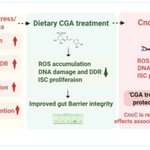
In “Oxidative stress-associated intestinal stem cell dysfunction during aging is attenuated by chlorogenic acid in a CncC-dependent manner,” Hyun-Jin Na, Min-Sun Kim, and Mi Jeong Sung investigate the protective effects of chlorogenic acid in Drosophila models of aging and stress.
🔬 The researchers found that chlorogenic acid was associated with reduced oxidative stress, DNA damage responses, and abnormal intestinal stem cell proliferation. These protective effects required CncC, the fly counterpart of the mammalian NRF2 pathway.
The findings shed light on how redox regulation may help maintain intestinal stem cell function and gut barrier integrity during aging.
📖 Read the article: rdcu.be/sr44dcEiQX8a
#AgingResearch #IntestinalHealth #OxidativeStress #StemCells #NRF2 #Geroscience

🧠 New in #GeroScience | Open Access
What molecular patterns do Alzheimer’s disease and dementia with Lewy bodies share?
In “A pattern to rule them all: tracing a human brain map of molecular aspects shared by Alzheimer’s disease and dementia with Lewy bodies,” Riccardo Rocco Ferrari and colleagues explore shared molecular features of these two major neurodegenerative diseases.
🔬 Understanding these common molecular patterns may help advance our knowledge of disease mechanisms and identify new directions for research into neurodegeneration and brain aging.
📖 Read the open-access article: rdcu.be/ZDnpU3mdYYza
#AlzheimersDisease #DementiaWithLewyBodies #Neurodegeneration #BrainHealth #AgingResearch #Geroscience

🧠 New in #GeroScience | Open Access
Could reduced blood flow to the brain influence the progression of tau pathology?
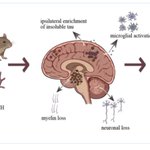
In “Early cerebral hypoperfusion promotes spatially biased tau pathology in tau-seeded PS19 mice,” Shuai Zhao and colleagues investigate the relationship between early cerebral hypoperfusion and the development and distribution of tau pathology.
🔬 This research highlights the potential role of cerebrovascular dysfunction in shaping tau pathology, offering important insights into the relationship between brain blood flow and neurodegenerative processes.
📖 Read the open-access article: rdcu.be/p5Jp35G2vUka
#AgingResearch #BrainHealth #TauPathology #CerebralHypoperfusion #Neurodegeneration #Geroscience

🧠🩸 New in #GeroScience | Open Access
Can protecting the brain’s blood vessels help prevent diabetes-related cognitive decline?
In a new study, Xing Fan, Fan Fan & Richard Roman and colleagues investigated the inhibition of soluble epoxide hydrolase (sEH) as a potential strategy to address cognitive deficits associated with diabetes.
🔬 The researchers found that sEH inhibition improved cognitive deficits while preserving neurovascular integrity and reducing glial activation and neuropathological changes in a model of diabetes-related dementia.
These findings highlight the importance of neurovascular health in cognitive function and suggest that targeting sEH may offer a promising direction for future research into diabetes-associated cognitive impairment.
📖 Read the open-access article: rdcu.be/8eXC17LJfd9a
#AgingResearch #NeurovascularHealth #Diabetes #CognitiveDecline #Neuroinflammation #Geroscience

🧠🩸 New in #GeroScience | Open Access
How are obesity and type 2 diabetes associated with brain oxygen metabolism and cognitive health in older adults?
In a new study, Mohamad N. Elsharydah and colleagues investigated regional oxygen extraction fraction (OEF)—a measure of how much oxygen the brain extracts from the blood—in older adults with type 2 diabetes and obesity.
🔬 The findings indicate higher regional OEF in these individuals, with associations involving cognitive performance and metabolic markers. These results offer insights into the relationship between metabolic health and cerebral oxygen utilization during aging.
📖 Read the open-access article: rdcu.be/SfLoe1RiX3Ba
#AgingResearch #BrainHealth #Type2Diabetes #Obesity #CognitiveHealth #Geroscience

🚶♀️🧠 New in #GeroScience | Open Access
How does aging affect our ability to maintain balance when visual information becomes unreliable?
In a new study, Yaqi Li and colleagues investigated how repeated visual perturbations during walking affect balance control in younger and older adults.
🔬 The findings show that older adults' balance control is more affected by repeated visual perturbations than that of younger adults, highlighting potential age-related differences in adapting to changing visual environments during walking.
Understanding how aging influences balance adaptation may help inform future research on mobility, fall risk, and healthy aging.
📖 Read the open-access article: rdcu.be/wXTafSNaXZja
#AgingResearch #Balance #FallPrevention #Mobility #HealthyAging

🧬 New in #GeroScience | Open Access
Could an imbalance in genome activity help explain why aging accelerates after maturity?
In this new study, Lev Salnikov, Saveli Goldberg, and Eugene Pinsky integrate cross-species epigenetic, transcriptomic, and proteomic data to investigate changes in two functional gene groups during aging.
🔬 The researchers report a post-maturity shift in which housekeeping genes, involved in essential cellular maintenance, lose transcriptional share in low-renewal tissues, while integrative genes associated with specialized tissue functions show increasing variability in promoter DNA methylation.
📖 Read the article: rdcu.be/medqLrULTpHa
#AgingResearch #Epigenetics #GeneExpression #Genomics #HealthyAging

🧬 New in #GeroScience | Open Access Review
How does mitochondrial dysfunction contribute to chronic inflammation and biological aging?
In this new review, Salvatore Nesci and Cristina Algieri explore how declining mitochondrial function connects bioenergetic failure, cellular senescence, and inflammaging.
🔬 The authors examine how oxidative stress, impaired mitochondrial quality control, mitochondrial DNA release, and inflammatory signaling can reinforce one another, potentially accelerating tissue dysfunction and age-related decline.
📖 Read the open-access review: rdcu.be/MjzkLYWBXVoa
#AgingResearch #Mitochondria #Inflammaging #CellularSenescence #HealthyAging

📢 Call for Papers Still Open! 📢
We're inviting submissions on longevity in reproductive tissues — a vital and evolving topic in aging research.
🔬 Explore the details in the comments and submit your work here:
📩 springer.com/journal/11357/u…
#ReproductiveAging #Longevity #AgingResearch #CallForPapers


📢 #CallForPapers focusing on #neurostimulation in #aging! 📢
Read more in the comments and submit 📧at the link⬇️
springer.com/journal/11357/u…
#brainstimulation #brainfunction #deepbrainstimulation #memory #magneticstimulation #centralnervoussystem #agerelatedmemorydecline


📢#CallForPapers📢
Call is open on #cognitiveimpairment and #braininjury in #COVID19, with special emphasis on #cerebralmicrovascularinjury.
Submit at the link! ⬇
springer.com/journal/11357/u…

🧠👁️ New in #GeroScience | Open Access
Could better brain care be associated with healthier retinal structure?
In a new study using data from the UK Biobank, Jun Yu and colleagues found that higher Brain Care Scores were associated with thicker retinal layers and a younger-appearing retinal age.
🔬 Analyzing data from more than 28,000 participants, the researchers also identified potential metabolic links involving lipid metabolism, unsaturated fatty acids, and amino acid pathways.
These findings highlight intriguing connections between lifestyle, physical health, metabolism, and retinal aging. Longitudinal studies are needed to determine whether these associations reflect causal relationships.
📖 Read the open-access article: rdcu.be/WWWmfkaYinSa
#AgingResearch #BrainHealth #RetinalHealth #HealthyAging #Geroscience

🧬 New in #GeroScience | Open Access
Can Resolvin E1 help aged skeletal muscle regenerate after injury?
New research by Ryan Arsenault and colleagues suggests that Resolvin E1 may support muscle regeneration in aged mice by promoting the resolution of inflammation, reducing neutrophil accumulation, and enhancing muscle stem cell activity and myogenic differentiation.
🔬 These findings highlight the potential of inflammation-resolving mediators as future therapeutic targets for age-related muscle dysfunction.
📖 Read the open-access article: rdcu.be/qpVGAhxNh2ua
#AgingResearch #MuscleRegeneration #Inflammation #Geroscience

📢 #CallForPaper
The editorial team of GeroScience invites submissions on the critical role of white matter disease in age-related cognitive decline. 🧠⬇️
We're seeking original research that deepens our understanding of how changes in white matter contribute to neurodegeneration, dementia, and cognitive impairment in aging.
📩 Submit your manuscript here:
🔗 springer.com/journal/11357/u…
#whitematter #cognitivedecline #aging #geroscience #brainhealth #neuroscience #dementia #neurodegeneration #SpringerNature

🥗 Could dietary preferences and biological aging be linked to dementia risk?
🔬 A new prospective cohort study by Mengtong Sun and colleagues investigates the relationships between dietary preferences, biological aging, and incident dementia, exploring how these factors may be connected to cognitive health in later life.
📖 Read the article: rdcu.be/Re1GtcvqJkoa
#GeroScience #Dementia #BiologicalAging #Nutrition #BrainHealth #HealthyAging #AgingResearch

🧠 Can sensory gamma entrainment support cognitive health in older adults?
🔬 A new open-access systematic review and exploratory meta-analysis by Myeonghae Hyun and colleagues examines sensory gamma entrainment in older adults with and without cognitive impairment, evaluating the current evidence for this emerging approach to brain aging and cognition.
📖 Read the review: rdcu.be/jH8AHp1Rixda
#GeroScience #BrainAging #CognitiveImpairment #GammaEntrainment #Neuroscience #HealthyAging

🧠 Can brain connectivity help explain susceptibility to phishing in older adults?
🔬 A new study by Chun-Che Hung and colleagues investigates the role of social white matter tracts in susceptibility to phishing during aging, exploring how brain connectivity may relate to vulnerability to online deception.
📖 Read the article: rdcu.be/S6pDneJCPo3a
#GeroScience #BrainAging #WhiteMatter #CognitiveAging #HealthyAging #AgingResearch

💪 How do bone, muscle, and fat change across adulthood?
🔬 A new study by Jasminka Z. Ilich and colleagues investigates sex- and age-specific patterns in bone, muscle, and fat across adulthood and their relationship to the osteosarcopenic adiposity phenotype, which combines bone, muscle, and fat abnormalities.
📖 Read the article: rdcu.be/hVFadX3i6KFa
#GeroScience #BoneHealth #MuscleAging #BodyComposition #Osteosarcopenia #HealthyAging #AgingResearch
