

Full-time financial market trader | Ex-chip designer | Escaped payroll prison, serving life in freedom
Joined March 2020
- Tweets3.7K
- Following141
- Followers11.8K
- Likes20.7K




Aamodh Kuthethur retweeted

‘I told you so’ is not something to mention cheerfully, especially when what was said is negative.
From the time long term capital gains tax was brought back, I have been tirelessly pointing out how unfair it is to have both STT and long term capital gains tax.
Even when I was a BJP supporter, I criticised how disastrous the 2019 budget was. From that time, I have been consistent in saying that Nirmala Sitharaman is unfit to be a finance minister.
She reduced corporate tax but kept the individual tax rate as it is. In fact, the individual tax rate went as high as 42 percent and is now around 39 percent.
Income tax is paid by a tiny fraction of the population. Still, the amount they pay is more than what all corporates in India put together pay.
Individuals paying cumulatively more than corporates started only during the period of the current Finance Minister. This is a travesty of justice.
This government has no clue about capital markets or risk capital. Prime Minister’s most trusted officer Hasmukh Adhia said making profits from markets requires no effort. Then why do very few create wealth and most get wiped out from capital markets?
Neither Hasmukh Adhia nor Nirmala Sitharaman would have ever invested even a single rupee in capital markets.
All asset classes are not equal because the nature of risk is different. In a capital starved country, risk capital needs to be incentivised.
For those who say it is only the secondary market, without ease of entry and exit in secondary markets, the primary market would cease to exist. And without that, there would be zero risk capital.
The odds of success in trading are already very low. The government has kept increasing STT, making trading unviable.
The government simply does not understand that trading provides two important things for markets: liquidity and price discovery. Without liquidity and price discovery, secondary markets would become practically useless.
Even in 2024, after NDA won the elections, I tagged the Prime Minister multiple times stating that anyone other than Nirmala Sitharaman should be considered for Finance Minister because she would prove to be economically disastrous for the country. And unfortunately, I am proven right.
The Finance Ministry is only good at setting narratives like poverty has been rooted out in India, we would become a developed superpower by 2047, and the latest narrative of how economically powerful we are becoming on a PPP basis.
I have repeatedly shown with data and facts how every single narrative is false and disconnected from reality. The Finance Ministry lives in a completely different reality.
Even developed nations understand how important foreign capital is. But our finance minister said in Parliament it is ok if foreign capital goes away because we have domestic retail investors. Certain statements are coming back to haunt us.
As I have said in the past, it is not that this government did not do anything positive. But given the huge mandate, the last twelve years are wasted opportunities on an overall basis. And the contribution of the Finance Ministry to these wasted opportunities is significant.
For many years, I have been trolled, criticised, and abused for questioning the finance minister and the government’s economic policies.
Now every well meaning individual realises how disastrous the Finance Minister has been for both the economy and capital markets.
My views stand vindicated now. Still, you do not feel happy when your negative views come true.
Aamodh Kuthethur retweeted
Margin Trading Facility is very beneficial for everyone except the one who uses it.
Won't be too long before 90% retail 'investors' lose money on MTF fund and it gets de-leveraged.
And till then lies a good opportunity to benefit by being on the other side as a 'trader'.
Aamodh Kuthethur retweeted

Drawdown hitting harder than a Bangalore pothole? 🕳️
The coward’s blame game is always ready:
❌ "Fed ne kya bola?"
❌ "RBI ka repo rate update?"
❌ "Nirmala Tai ka taxation?"
❌ "Mekhri Circle traffic ne mood kharab kar diya!"
Stop crying over the divisor in your Calmar Ratio.
Every loss is just a subscription fee for a masterclass in humility. The market didn't cheat you; it just invoiced you for being overleveraged.
Take the L. Wipe your tears with that retired ₹2000 note. Say "Always Fair" and move on. 📉➡️📈
#TradingPsychology #StockMarket #NammaBlr #CalmarRatio #AlwaysFair #Maxdrawdown
Aamodh Kuthethur retweeted

How to Vote in SEBI Consultation Paper
sebi.gov.in/sebiweb/publicco…
Aamodh Kuthethur retweeted

A faulty policy used to take yrs before getting reviewed.
But thanks to social media & our collective voices,we've managed d regulator acknowledge our voices in a month! 👏
Now let that not go in vain.
Do full this form & share it with every trader!
forms.gle/7U4qGVdKQvtWMmkb9

Aamodh Kuthethur retweeted
Govt shorting gold through SGB & losing its pants wasn't speculation
Investing in dot com mania & losing 80% wasn't speculation
Investing in AI bubble when AI companies don't know the outcome isn't speculation
But hey,weekly options is speculation & shd be curtailed!
Amazing!

Aamodh Kuthethur retweeted
They brought CAS coz "Hey US markets have it. It's better for price discovery"
FINE!
But by that logic,US markets have
1.Daily expiries for price discovery
2.Way lower spread margin
3. No stupid rule like ELM
4. No stock circuit limits
Why not adopt those features too?

Aamodh Kuthethur retweeted

I wrote, requested SEBI Chairman to review & inquire about #CAS Manipulation & Volatility in last few minutes.
27 August BSE during last 12 minutes of trading at NSE/BSE Sensex crashed over 2,200 points & than recovered 2,000 points.
Want Action against Manipulators


Aamodh Kuthethur retweeted
Two problem statements I continue to work on today:
1. If FnO is made virtually impossible to trade (say STT in FnO is ⬆️ 5x from here) what are my options as a full-time trader?
2. Until I can still trade FnO, how can i utilize existing leverage & maximize returns on my money
Aamodh Kuthethur retweeted
Early bird catches the worm.
With landmark regulatory changes comes regime shifts.
With regime shifts comes new opportunities.
The one who is open minded and adapts fast is the one who survives in market long term
The last early bird offer was when daily 0DTE was introduced.


Aamodh Kuthethur retweeted
🚨 SPREAD THIS EVERYWHERE 🚨
Logic needs to be countered with logic.
They can't give vague answers like "With time it will improve"
No. It won't.
Coz the issue is structural.
We can't simply copy something without assesing suitability to our markets.

Aamodh Kuthethur retweeted

I watched the interview of @ananthng with @_prashantnair. Would love the opportunity for 1-1 debate but for the time being here is a rebuttal to it.
#cas, #nifty50, @NSEIndia , @SEBI_updates , @_anujsinghal @AnilSinghvi_, @Nigel__DSouza


Aamodh Kuthethur retweeted
All good things come to an end... Although the relatively new good may not be as good as the old good, it is still the best good as the newer good may not be as good as new good.
Got to be grateful for what we have at present and make the best use of it as if there's no tomorrow
Aamodh Kuthethur retweeted
This is such a horrible shitty brainless move by SEBI.
ROLL BACK C.A.S!!!
#RollbackCAS
Aamodh Kuthethur retweeted

@SEBI_updates @SEBI_India @NSEIndia @BSEIndia
Stop facilitating manipulation. This is a scam. #CAS_Scam
Traders: Please repost if you agree
Aamodh Kuthethur retweeted

What the hell is happening to the Indian stock market?
Dear @SEBI_India & @NSEIndia @BSEIndia
How many times do you expect traders to rebuild their entire business?
> December 2020 – 50% leverage removed
> March 2021 – 75% leverage removed
>September 2021 – 100% leverage removed
We adapted.
Yes, leverage is a double-edged sword. But thousands of genuine traders with smaller capital were affected. Still, we adapted.
> September 2023 – Bank Nifty expiry was shifted from Thursday to Wednesday, while BSE launched Sensex weekly expiry on Friday. Suddenly, we had expiries almost every trading day.
Many traders, especially algo and 0-DTE traders, redesigned their entire systems.
We adapted.
> November 2024 – Weekly expiries of FinNifty, Bank Nifty and other indices were removed. Only Nifty and Sensex weekly expiries remained.
Again, thousands of traders had to change their strategies.
We adapted.
> February 2025 – Expiry-day margin benefit was removed.
STBT traders were hit badly.
We adapted.
> 1st September 2025 – Nifty expiry shifted from Thursday to Tuesday.
Again...
We adapted.
> Jane Street reportedly made billions of dollars from Indian markets over the years. Later, regulatory action was taken, and subsequently trading restrictions were lifted after payment of regulatory dues/settlement.
How exactly did all of this benefit Indian retailers?
Meanwhile...
- Option STT has increased massively over the last few years.
- Bid-ask spreads have widened.
- Slippage has increased.
- Global volatility has increased.
- Transaction costs keep rising.
We adapted to everything.
And now...
Closing Auction Session (CAS).
Seriously?
Every few months there's another structural change.
Every few months traders are forced to rebuild their systems.
Every few months liquidity takes another hit.
You say these changes are for retail investor protection.
Then please show us the data.
Can you show even one report proving that retail trading losses have actually reduced because of all these interventions?
If not, then what exactly are these constant changes achieving?
Instead of making markets more efficient, you're making trading more expensive, more complicated, and pushing serious traders towards crypto and international markets.
As a full-time trader, my inner soul genuinely cries today seeing the direction our markets are heading.
We survived leverage removal.
We survived daily expiries.
We survived removal of daily expiries.
We survived expiry changes.
We survived removal of expiry margin benefits.
We survived higher STT.
We survived wider spreads and slippage.
Now we are expected to survive CAS as well?
Enough is enough.
I request SEBI and the exchanges to reconsider this rule.
Before implementing such major structural changes, consult the trading community. There should be proper communication, public discussion, and representation from active traders.
I also request every trader to raise their voice through the proper channels. If you genuinely believe these changes are hurting market participants, please send your feedback or complaint to SEBI through its official grievance mechanism. And if anyone from the industry has a direct channel to the exchanges or regulators, please help convey the concerns of the trading community.
Please Retweet this so our voice reaches the right people.
Enough of silent adaptation. It's time the trading community is heard.
@AnilSinghvi_ @_anujsinghal @SarangSood @PRAFULKULKARN18 @adigitalblogger @iarjuntandon @JayneshKasliwal @sunilgurjar01 @piyushchaudhry @SantoshPasi @RakeshPujara1 @TanmayKurtkoti @justnottamomma @AshishGupta325
Aamodh Kuthethur retweeted

A trader who cannot tolerate randomness will eventually abandon a valid system.
Aamodh Kuthethur retweeted
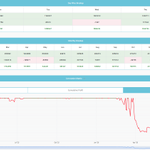
Had this price action happened 9 hours earlier on Nifty 0DTE
1. If short option(SO) legs didnt exit & long option(LO) triggers missed due to LPP: 10% loss
2. If SO legs SL executed & LO missed triggers: 27% profit
3. If SO legs SL executed & LO triggered: 37% profit
How?👇

Aamodh Kuthethur retweeted

ORB on Options - Part 2 | The Long & The Short Ep. 23
In this episode, we apply the Opening Range Breakout (ORB) framework to NIFTY weekly options.
We test two implementations of the same idea - option buying and option selling using backtests from Jan 2022 to Feb 2026, and compare their behaviour across equity curves, drawdowns, and capital requirements.
While option buying shows higher volatility and deeper drawdowns, option selling delivers a smoother return profile but requires more margin.
Interestingly, calls produced smoother equity curves than puts, on both the buy and sell side challenging some common assumptions about option behaviour.
Watch the full video here → youtu.be/erjnU13EYjk

Aamodh Kuthethur retweeted

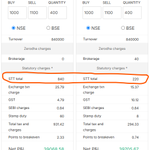
In India, when you trade, you pay:
• Brokerage
• Securities Transaction Tax (STT)
• Exchange Transaction Charges
• GST
• SEBI Fees
• Stamp Duty
• IPFT Charges
If you manage to stay profitable, you then pay 30% income tax + surcharge + cess.
And when you spend what’s left?
You pay GST and other indirect taxes again.
Taxed while earning.
Taxed while winning.
Taxed while spending.
Welcome to the system.
Every year, we hope for some relief.
Instead, the government adds more burden.
And then we talk about competing with global economic giants.
#STT
#budget