

Using interpretability to understand, design, and align AI.
San Francisco
Joined August 2024
- Tweets932
- Following52
- Followers30.2K
- Likes1.9K




We’re announcing an embedded assessment with @OpenAI to advance safety and alignment at the frontier.

Read the full post and explore examples of the communities we found: goodfire.com/research/neuron…
This adds to the evidence that neural networks already contain interpretable structure if we know how to look for it. We can now find communities at scale, which agents can then investigate in depth—another tool on the path towards a fuller understanding of neural networks.
1
12
633
We discover these communities without specifying what they do in advance.
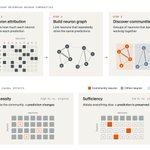
Over millions of prompts, we identify influential neurons via gradient-based attribution, connect neurons often attributed together in a graph, and do community detection. We then test for necessity and sufficiency and see what behaviors they support.

New neurons research: introducing Neuron Communities.
We discovered communities of neurons that work together inside LLMs. They’re surprisingly small, but powerful – just a few neurons work together to perform common behaviors, like arithmetic, ALL CAPS, or recalling a date.
Work led by research fellow @_igorshilov:
Hi Daniel, the goal of our first assessment is to detect and debug anomalous behavior in an OpenAI training run using our interpretability techniques, and provide findings to internal OpenAI researchers so they can use them to improve model safety. We’ll mutually agree on what to publish in the future, and OpenAI is supportive of us publishing findings, but a public report is not the primary purpose of the first phase of this collaboration.
In terms of team access, we’ll work directly with OpenAI safety and alignment researchers. OpenAI will share a list of relevant researchers for us to speak to at the beginning of the assessment, and we can also request other researchers we want to speak to. OpenAI will have the final choice, but will only withhold for specific reasons, including if it takes resources from mission critical safety and alignment work.
On the other questions, we’ll have a dedicated slack channel we’ll use to communicate rather than full slack access. There’s no requirement to record conversations, though note that employee interviews are not our focus.
Goodfire retweeted

incredibly excited to be partnering with @OpenAI on embedded assessments!
we'll be embedding interpretability researchers who will use the @GoodfireAI platform to monitor and debug training runs to improve safety and alignment
our primary audience for our assessments are internal OpenAI researchers, but we'll publish our findings as the collaboration progresses

We’re working with @ApolloResearch, @METR_Evals, @TransluceAI, and @GoodfireAI on embedded assessments: giving outside experts deep access to our internal models and systems to investigate alignment and test our safeguards.
These assessments build on our ongoing alignment and safety research, bringing independent scrutiny to how we identify and manage risks in our systems.
openai.com/index/our-first-p…

Goodfire retweeted

We recently went viral on X with the claim that neurons are "already clean." But what do we mean by that? Are neurons are a useful basis for interp? We're finally releasing our technical report on LLM neurons--and what we've found is far more interesting than mono/polysemanticity.nitter.cf/GoodfireAI/status/2120…


In Neural Networks are Already Clean, @nickcammarata argued that neurons were far more legible than previously thought – and that this was great news for interpretability and safety.
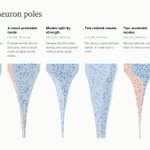
Now, we’re releasing the first technical companion to Nick’s essay. It shares our findings from studying thousands of neurons using our novel automated interpretability pipeline, and outlines why we now think of neurons by their computational function, instead of whether or not they are polysemantic. Here’s what we found: 🧵
Investigating neurons could have revealed that they were intractable objects of study. Instead, we find that they are more interpretable than we previously thought.
Read the first post in our technical series on neuron interpretability here: goodfire.com/research/neuron…

We deeply investigated thousands of neurons in this work. What did they look like?
We are releasing descriptions for 1,500 neurons in Qwen3.6 35B-A3B.
Explore here: goodfire.com/research/public…

We also found that scaling agent-driven investigations reliably improves our explanations, measured by simulation scores.
And each neuron we describe offers gives us clues to the next, like a crossword. Our understanding of the network compounds.

1
83
4,843

We can interpret a neuron's distinct roles by examining what function it plays in the network.
If a neuron responds to both oral-health and marine-ecology, we can separate those roles by understanding the upstream neurons that activate it and the downstream readers that respond.
