

We turn material research into systems for human performance. Smart textiles, advanced materials & prototyping. Follow the lab: from archive to applications.
- Tweets41.2K
- Following1.5K
- Followers5.5K
- Likes7.2K



ALT Generated reconstruction of sheet formation: gloved hands hold a rectangular wooden mould carrying a wet reddish-brown fibre layer above a water vat while droplets drain from the frame. English card text: MANUALIS — From wet pulp to sheet. This is a reconstruction of observable archive steps, not documentary footage.

ALT Exploded generated concept of a protective helmet with a woven metallic-textile reinforcement layer, teal energy-absorbing liner and shell. A close-up shows interlaced nickel-titanium-like wires. English card text: SAFE-RIDER — SMA textile reinforcement. Historical proposal; generated explanatory concept, not a certified product.

ALT AI concept study showing a bent knee in a black technical-textile sleeve with teal stitched paths and three small placement markers. Text: Movement defines placement. Grado Zero Lab.

ALT Portrait Grado Zero Lab concept card titled Aerogel as a system. Three connected modules show a porous material structure, a layered construction and use conditions represented by movement, cold and moisture. Footer: Concept diagram — not test data.


ALT Grado Zero Lab PROSYS-LASER explanatory card titled Textile layers, different roles. It diagrams an outer reflective surface, textile layers spreading energy laterally and an inner layer. Not to scale, not test data and not an exact glove cross-section.

ALT Grado Zero Lab editorial image using original archive photographs of smart-textile assembly: a textile sample at a sewing machine, a printed conductive geometry and an embroidered circuit path. Work in progress, not a finished product.

ALT Grado Zero Lab explanatory card titled One cell. Two stable states. It diagrams a soft textile actuator switching between two stable shapes. External-research concept illustration, not a Grado Zero prototype.

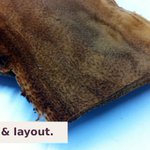
ALT Close photograph of overlapping brown MuSkin archive pieces on a pale background with blue shadows. The upper piece has an uneven outline at left and a straight-cut edge towards the lower right. An ivory title block at lower left reads ‘Outline & layout.’ Original MuSkin and Grado Zero Lab logos sit at upper right.

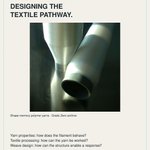
ALT Cream and teal Grado Zero Lab Story card titled Designing the textile pathway. An original Grado Zero archive photograph shows two shape memory polymer yarn packages on metal spools. Three lines below ask about yarn properties, textile processing and weave design. Logo and research credit are intact.

ALT A hand holds a brown flower-shaped assembly with broad overlapping petals and a rolled centre above white paper and a green cutting mat. The photograph occupies the left three quarters. An ivory margin reads "Petals in layers." and "MuSkin archive", with the original MuSkin and Grado Zero Lab logos below.

ALT Original Grado Zero company archive photograph of a mannequin wearing a head-mounted display and a black vest. Ivory portrait layout titled HEAD-MOUNTED DISPLAY, with Grado Zero Lab logo, GZ-004 / LINK VEST and original archive photograph credit.

ALT A rectangular box with a brown surface covering, lid and metal latch is photographed at an angle on white paper against a wall. The entire photograph sits within ivory margins. Text below: Across corners & edges. Original MuSkin and Grado Zero Lab logos at lower right.

ALT Ivory landscape Grado Zero Lab editorial card. Left: Link Vest, The garment as a device interface, wearIT@work, Historical prototype, and company communications archive credit. Right: full original archive photograph of a mannequin wearing a dark device-carrying garment, orange belt and head-mounted display.

ALT Close archive photograph of an artisan holding a black mallet above a small brown piece on a wooden block, while the other hand holds the piece in place. Text at lower right: At the working block. Original MuSkin and Grado Zero Lab logos at upper right.