

Energy & water | climate resilience, and sustainable policy | focused on Iraq, Armenia & Turkey |
Washington, D.C | Dubai
Joined March 2026
- Tweets2.2K
- Following181
- Followers856
- Likes6K






A 27-year-old German cyclist who planned to cycle from Germany to Nepal died in Iraq from a collision on the road connecting Al-Rumaitha and Samawah in southern Iraq’s Muthanna Governorate, according to local traffic authorities.
rudaw.net/english/categories…

63
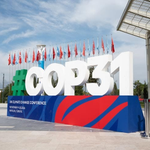
Now that the dust has settled on COP31 and thousands of photos have been taken in front of the backdrop, one question remains. What did the summit deliver for the emissions it took to get everyone there?
The proposed “Antalya Pact” failed miserably to gain consensus. The EU and several other countries rejected the draft because it omitted an explicit call to transition away from fossil fuels. The draft also drew criticism for weak commitments on climate finance, adaptation, and loss and damage.
If all 93,000 participants flew to Antalya and back, averaging three hours each way, their flights would have burned roughly 9,100 tonnes of jet fuel and emitted about 29,000 tonnes of CO₂, or 310 kg per participant. Will the Turkish organizers publish the actual travel emissions?

MONTE – Official Trailer
youtu.be/1H-qzWxZ6QA?si=FTx2…

Screenings of the Armenian film “MONTE,” dedicated to National Hero of Armenia and Hero of Artsakh Monte Melkonian, have been canceled in several Russian cities following a reported ban imposed by Russian authorities, Genetic Production announced.
The film was scheduled to premiere in Russia on December 5 at Moscow’s Oktyabr cinema.
The production company stated that cinemas had been forced to cancel the scheduled screenings due to circumstances beyond its control. It expressed gratitude to audiences awaiting the film’s release and said it was exploring all possible alternatives to ensure the film reaches its viewers.
Directed by Suren Safaryan, “MONTE” is a biographical drama starring Vladimir Msryan as Monte Melkonian. The film traces Melkonian’s life, from his childhood in the United States and the discovery of his Armenian roots to his arrival in Armenia and involvement in the First Artsakh War.
According to producer Nono Sargsyan, the film is based on real-life events recounted and confirmed by Melkonian’s widow, Seta Melkonian.
Genetic Production, which also produced the 2025 historical film “Vazgen: The Last Sparapet,” began filming “MONTE” in April 2026. The film’s theatrical release in Armenia is scheduled for November 26, one day after Melkonian’s birthday.
Prior to the cancellation, several Azerbaijani media outlets had called on Russia to ban the film’s screenings.
Genetic Production’s announcement did not specify which Russian state authority imposed the reported ban or provide an official explanation for the decision.

2
151
Skulls and bones were found in a cave near the villages of Boşat (Boyunlu) and Çîçika (Ormandışı), near Diyarbakır. Some skulls had holes suggestive of gunshot wounds, and some bones were broken or fragmented.
Kurdish news outlets reported that the remains might belong to members of Kurdish families killed during the conflict between the PKK and the Turkish army in the 1990s. However, according to local accounts shared after the discovery, the cave may have been used as an execution site or a place to dispose of the bodies of thousands of Armenians from the Silvan area during the 1915 Armenian Genocide.
Baghdad had long known about oil smuggling and illicit exports. Why did it take so long to act?
The NOC investigation now puts federal oversight under scrutiny, and the measures announced in its wake are likely to strain relations between Baghdad and Erbil.
The report leaves the “oil barons” behind the smuggling unnamed. Dismissing security officials alone won’t stop the smuggling. Those running the networks must be arrested and held accountable.

بيانٌ
•••••
اطّلعَ رئيسُ مجلسِ الوزراءِ، القائدُ العامُّ للقواتِ المسلحةِ، السيدُ علي فالحٍ الزيديُّ، على تقريرِ لجنةِ التحقيقِ الخاصةِ حولَ تهريبِ النفطِ في شركةِ نفطِ الشمالِ؛ وانطلاقاً من مبدأِ أنَّ السيادةَ الوطنيةَ لا تتجزأُ، وأنَّ حمايةَ ثرواتِ العراقِ معركةُ وجودٍ تضعُ بها الدولةُ حداً فاصلاً لكلِّ أشكالِ التهريبِ، فقد أمرَ سيادتُهُ بجملةٍ من الإجراءات والقرارات، وكما يلي:
أولاً: القراراتُ والإجراءاتُ الإداريةُ والانضباطيةُ
1. إعفاءُ رئيسِ هيئةِ المنافذِ الحدوديةِ من منصبِهِ.
2. إقالةُ كلٍّ من؛ (قائدِ عملياتِ كركوكَ، وقائدِ شرطةِ كركوكَ)؛ لعدمِ متابعتِهِما ملفَّ تهريبِ المشتقاتِ النفطيةِ.
3. إعفاءُ آمرِ لواءِ شرطةِ الطاقةِ الأولِ، ومعاونِهِ، ومديرِ استخباراتِ اللواءِ الأولِ شرطةِ الطاقةِ، ومديرِ شعبةِ سيطراتِ اللواءِ.
4. توجيهُ عقوبةِ التوبيخِ إلى مديرِ الأمنِ الوطنيِّ، ومديرِ المخابراتِ الوطنيِّ، في محافظةِ كركوكَ.
5. سحبُ يدِ كل من؛ المديرِ العامِّ لشركةِ نفطِ الشمالِ ومعاونيهِ، لحينِ إكمالِ التحقيقِ من قِبلِ هيئةِ النزاهةِ الاتحاديةِ، وإحالةُ المديرِ السابقِ إلى التحقيقِ.
6. إعفاءُ مديرِ قسمِ التفتيشِ في كركوكَ التابعِ إلى الشركةِ العامةِ لتوزيعِ المنتجاتِ النفطيةِ؛ لعدمِ قيامِهِ بمهامِّهِ.
7. سحبُ يدِ كل من؛ المديرِ العامِّ التنميةِ الصناعيةِ، والمديرِ العام لشركةِ الصناعاتِ التعدينيةِ في وزارةِ الصناعةِ والمعادنِ، لحينِ إكمالِ التحقيقِ من قِبلِ هيئةِ النزاهةِ الاتحاديةِ.
ثانياً: التوصياتُ الإداريةُ والفنيةُ
1. إحالةُ الملفاتِ والمخالفاتِ إلى القضاءِ، وتولي هيئةِ النزاهةِ الاتحاديةِ التحقيقَ في المخالفاتِ المبينةِ أدناه، وعرضُها أمامَ أنظارِ قاضي محكمةِ تحقيقِ جناياتِ مكافحةِ الفسادِ المركزيةِ:
أ. تدقيقُ عقودِ بيعِ المشتقاتِ النفطيةِ المبرمةِ بين شركةِ نفطِ الشمالِ وشركةِ "المحورِ الفضيِّ"، وغيرها من الشركاتِ، والتحققُ من جميعِ الكمياتِ المجهَّزةِ.
ب. تدقيقُ آليةِ تسليمِ النفطِ الخامِ أو تجهيزِهِ من قِبلِ وزارةِ النفطِ إلى مصفى بازيانَ ومصفى كار، والتأكدُ من مطابقةِ الكمياتِ المجهَّزةِ للكمياتِ المستلَمةِ.
ج. التحقيقُ مع مديرِ وموظفي شركةِ نفطِ الشمالِ؛ لإهمالِهِم وتقصيرِهِم في المتابعةِ ووجودِ مخالفاتٍ.
د. التحقيقُ في الإجازاتِ الممنوحةِ إلى جميعِ المعاملِ من قِبلِ وزارةِ الصناعةِ والمعادنِ (مديريةِ التنميةِ الصناعيةِ)، والشركاتِ التي تسببتْ بهدرٍ في المالِ العامِّ.
هـ. التحقيقُ في المبالغِ المصروفةِ إلى الحراسِ المدنيينَ المنسبينَ لحمايةِ الأنابيبِ النفطيةِ؛ لكونِهِم غيرَ موجودينَ على أرضِ الواقعِ في شركةِ نفطِ الشمالِ.
و. التحقيقُ في المخالفاتِ المرصودةِ بغيابِ الفحصِ المختبريِّ، والكشفُ عن الكمياتِ المصدَّرةِ من المشتقاتِ النفطيةِ خارجَ العراقِ عبرَ منافذِ الإقليمِ.
2
207

Harry Istepanian retweeted

🇦🇲🇦🇿 Opposition leader Anna Grigoryan accused Baku of treating Armenia’s new constitution as an act of repentance and seeking national humiliation. She argued the draft satisfies Aliyev’s demands while strengthening prime ministerial power.

Harry Istepanian retweeted

🇦🇲🇦🇿 Baku demands Armenia rewrite its constitution while Azerbaijan’s own constitution invokes the 1918 republic whose 1919 map claimed all of Syunik and Vayots Dzor.
If Baku truly wants peace, it should start by addressing its own territorial claims.
Spare us the hypocrisy.


Look for Turkish fingerprints!

An exemplary Ukrainian operation in response to Russia’s war. I thank the warriors of the Security Service of Ukraine and all our Defense Forces of Ukraine who took part in carrying out these tasks. I received detailed briefings on the operation’s steps yesterday and today – the targets we set were achieved.
It all took place off the coast of Libya. Our warriors deployed seven Ukrainian-made naval drones. Despite all the enemy’s efforts to counter the attack, the Russian corvette Merkury was sunk. It’s one of their newest ships, commissioned in 2023, during the full-scale war. A Ka-27 combat helicopter was also destroyed along with the corvette. Our second target was the Russian dry cargo vessel MV ANGARA, which the enemy used to transport weapons. Result: target hit.
We continue our operations in designated waters. We are responding to Russia’s aggression. We are developing Ukrainian weapons. Glory to Ukraine!
Harry Istepanian retweeted

Armenia's draft new constitution no longer describes the country's coat of arms, which features Mount Ararat with Noah's Ark and the emblems of the four kingdoms of historical Armenia: Bagratuni, Arshakuni, Artashesian and Rubenian.
The current constitution describes the coat of arms in detail. Under the draft, any change to the coat of arms, flag or anthem would require a law adopted by referendum. Existing laws remain in force, so the symbols would not change immediately. But the constitution would no longer protect the image of Ararat on the coat of arms.
Mount Ararat, at 5,165 meters, is the highest peak of the Armenian Highlands and a central national symbol. It dominates the skyline of Yerevan but lies in Turkey.
Prime Minister Nikol Pashinyan has repeatedly said Armenia's highest mountain is Aragats, at 4,090 meters. He has hung a large painting of Aragats in his office. In 2025, the image of Ararat was removed from passport stamps. Critics note that the new biometric passport shows Khor Virap monastery without the mountain behind it.
Pashinyan has said the new constitution "cannot cross the ideological red lines of 'Real Armenia'", a state within its internationally recognized borders. He has also said that "Western Armenia is Armavir, Talin, Maralik." For Armenians, Western Armenia is the historical homeland in present-day eastern Turkey, lost after the 1915 genocide.
The draft is not final and will go through public discussion. Putting it to a referendum requires two-thirds of parliament. Pashinyan's party is six votes short.
Full article on CivilNet.am/en

Harry Istepanian retweeted

Notable: Iraq's Oil Ministry has suspended subsidised fuel supplies to factories and commercial businesses in the Kurdistan Region, particularly diesel and heavy fuel oil used in industrial operations.
The move comes amid growing reports that Baghdad is pushing for greater control over KRG-held oilfields as it cracks down on alleged smuggling elsewhere in Iraq.
According to the published official document, the suspension is temporary. Some reports suggest, that follows documented allegations that industrial fuel allocations, especially subsidised heavy fuel oil, were being diverted from factories and smuggled, including along routes through the Kurdistan Region. Baghdad wants to trace the sources of smuggling from the region into Iran, Turkey and Syria.


The PMF chief, Falih al-Fayadh, met the three Barzanis, including Masoud Barzani, in Erbil. The next morning he met Iraqi PM Ali al-Zaidi alone in Baghdad, and an hour or two later he attended al-Zaidi's meeting with President Nizar Amedi and the Iraqi justice minister, both of whom represent the PUK.
The sequence of meetings suggests al-Fayadh carried a message from al-Zaidi to the Barzanis, which was then discussed with the PUK's officials in Baghdad.
Reliable sources say al-Zaidi wants a more radical renegotiation of the KRG budget, one that settles the issue permanently instead of reopening it every year. He has made several demands:
The first concerns border crossings, which he wants run jointly by the Iraqi army and the KRG, as the constitution already requires. Iraq has reportedly put all of its border crossings out to tender, to be run by five private companies with Iraqi forces present. The companies are not yet known, but if some are American, Washington may be backing al-Zaidi's push to extend federal control to the KRG's borders.
The second concerns the energy sector. Al-Zaidi has said that oil fields in the disputed territories must return to direct federal control. As we reported earlier, these include Khurmala, Sufaya and, to a lesser extent, Khor Mor.
The third concerns border security. Al-Zaidi wants regular Iraqi army units deployed along the Iranian, Turkish and Syrian borders. Iraqi border police already operate on the KRG's borders and nominally belong to the federal interior ministry, but in practice they are manned by KDP or PUK fighters, depending on the zone. Together with the demand on non-oil revenues, this goes directly to who controls customs and border police in the Region.
The KDP has reportedly rejected the demands so far, and it is unclear what comes next. The KRG is in a far weaker position than it appears, because the KDP-PUK divisions are hollowing out its bargaining power. KDP - has thus far - refused to compromise with the PUK while trying to hold a hard line against Baghdad. Meanwhile, the US, Turkey and Iran all appear to be on board with some degree of the Iraqi state’s control over the Region.
The KRG has long exercised more authority than the constitution grants because it was strong while Baghdad was weak, and that balance has now shifted. For instance, there are also rumours that Baghdad will soon force the KRG to close its foreign representations and keep only offices inside Iraqi embassies, since the constitution does not allow the Region separate representation. The KRG's separate visa policy could be next.


Hayrenik is facing its gravest conspiracy since the fall of the First Republic in 1920.
Nikol Pashinyan’s administration published a new constitutional draft on November 23, removing the reference to Armenia’s Declaration of Independence while proposing sweeping changes that could expand state power and weaken democratic safeguards.
The removal directly reflects Azerbaijani President Ilham Aliyev’s longstanding demand, imposed as a condition for signing the so-called peace agreement.
The 1990 Declaration references the 1989 decision on the reunification of Armenia and Artsakh and commits Armenia to supporting international recognition of the Armenian Genocide.
The new preamble excludes these references, removing their explicit connection to Armenia’s constitutional foundations.
But the changes go far beyond Azerbaijan’s demands.
The draft proposes:
• Citizenship revocation: Courts could strip Armenian citizens of citizenship for certain offenses against state security or the constitutional order.
• Weaker judicial independence: Parliament would elect 60% of the Supreme Judicial Council, up from 50%, increasing political influence over judicial governance.
• Property confiscation: Assets could be confiscated without a criminal conviction, with the mechanism receiving constitutional recognition.
• Political party restrictions: New financing rules and grounds for banning parties could create opportunities for selective enforcement.
• Retroactive legislation: Certain laws worsening individuals’ legal positions could apply retroactively on public-interest grounds.
• Church-state relations: Revised wording would require legal regulation of relations with the Armenian Apostolic Church amid Pashinyan’s confrontation with its leadership.
Taken together, these proposals raise serious concerns about concentrating power, weakening institutional independence, and creating a constitutional path toward authoritarian rule.
Pashinyan has directly linked the constitutional referendum to signing the agreement with Azerbaijan.
Armenians could therefore face a referendum framed around peace while voting on fundamental changes to their rights, national identity, and democratic protections.
Read more at 301.am


16
426
Harry Istepanian retweeted

German Foreign Minister Johann Wadephul has echoed Azerbaijan’s demand for changes to Armenia’s Constitution as a condition for peace.
His remarks come ahead of Pashinyan’s planned publication of a new Constitution draft, raising concerns over Armenia’s sovereignty.
301.am/2026/11/22/german-for…

Pashinyan and his thugs are carrying out Turkey’s master plan to undermine, from within, the Armenian diaspora’s demands for reparations and recognition of the Armenian Genocide. The occupation of Artsakh was part of that plan. Its aim was to keep Armenians confined between their two eternal enemies until the day Armenia would cease to exist and its people would be absorbed into the Turkish population. Azerbaijan’s next demand would be to resettle its people in Armenia so that they could eventually become the majority. Pashinyan is just a tool.
Harry Istepanian retweeted
Pashinyan pledges to resign if voters reject the new Constitution, or not seek another term if it passes.
“We will not negotiate with terrorists,” opposition MP Artur Khachatryan declared.
301.am/2026/11/23/armenian-o…

An Iraqi Federal Board of Supreme Audit document published by Kurdistan Regional Parliament member Ali Hama Saleh claims that five fields operated by the KRG belong to the federal North Oil Company and that the KRG extracted oil worth an estimated $123 billion from them. The claim extends beyond Khurmala, Khor Mor and Safiya to include Taq Taq and Tawke. Saleh says related lawsuits remain on file in federal courts and Baghdad could pursue them. If the fields come under federal control, the KRG could lose most of its independent oil production and face a sharp economic downturn.

تتضمن وثيقة صادرة عن ديوان الرقابة المالية الاتحادي العراقي، أُعدّت في أيار/مايو الماضي ونشرها اليوم عضو برلمان إقليم كردستان علي حمه صالح، ادعاءات بأن عدداً من الحقول النفطية التي تديرها حكومة إقليم كوردستان تعود ملكيتها إلى شركة نفط الشمال التابعة لوزارة النفط العراقية، وأن الإقليم استغل هذه الحقول واستخرج منها نفطاً تُقدّر قيمته بنحو 123 مليار دولار.
كنا قد أشرنا أمس إلى أن بغداد تتطلع إلى السيطرة على حقول خور مور وخورمالة وصفية، لكن الوثيقة تذهب إلى أبعد من ذلك، إذ تشمل أيضاً حقل طقطق الواقع ضمن منطقة نفوذ الاتحاد الوطني، وحقل طاوكي الواقع ضمن منطقة نفوذ الحزب الديمقراطي. وبنسب جميع هذه الحقول إلى شركة نفط الشمال، تتبنى الوثيقة موقفاً مفاده أنها حقول اتحادية ينبغي أن تعود إلى إدارة بغداد.
ويُعد حقل طاوكي ثاني أكبر حقل نفطي في إقليم كوردستان بعد خورمالة. وفي حال انتقال السيطرة على هذه الحقول إلى الحكومة الاتحادية، فلن يتبقى لحكومة الإقليم سوى جزء ضئيل جداً من إنتاجها النفطي المستقل، ما قد يدفع الإقليم إلى تراجع اقتصادي حاد.
وبحسب علي حمه صالح، أعقب تقرير ديوان الرقابة المالية رفع دعاوى أمام المحاكم الاتحادية، ويقول إن هذه الملفات لا تزال موجودة ويمكن لبغداد تفعيلها متى شاءت. وتكتسب هذه النقطة أهمية خاصة في ظل الدعم القوي الذي يحظى به رئيس الوزراء علي الزيدي من رئيس مجلس القضاء الأعلى العراقي فائق زيدان.
وتأتي هذه الوثيقة وسط تزايد الحديث عن توجه بغداد للسيطرة على هذه الحقول، أو على الأقل إخضاعها لإدارة اتحادية مباشرة والتعامل معها باعتبارها أصولاً نفطية تابعة للحكومة الاتحادية.

3
227