

The latest in healthcare AI. Insights, breaking news, journal findings & real-world applications for clinicians and healthcare leaders. #HealthcareAI
Joined October 2026
- Tweets261
- Following488
- Followers63
- Likes31




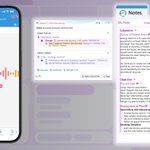


An AI scribe was linked to 1.7 more patient visits per emergency physician over a 10-hour shift.
At Memorial Hermann, a KLAS evaluation of Ambience Healthcare's AI documentation platform also estimated $37,500 in additional annual productivity per ED physician and a 1.3% increase in work RVUs per encounter.
The hospital piloted the system with about 100 ED physicians over 15 months before expanding it to more than 560 clinicians.
These are real-world operational findings, not randomized evidence that the scribe caused the gains or improved patient outcomes.
If AI gives clinicians time back, will that time translate into less documentation pressure, or just more patients per shift?
Source: KLAS Research / Ambience Healthcare, November 2026.

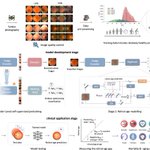
Could a photograph of your retina tell clinicians something about your long-term health beyond your eyesight?
A study published today describes RetiME, an AI model that estimates mortality risk from retinal photographs. Developed using UK Biobank data and externally validated in three cohorts spanning Southeast Asia, Eurasia and North America, it found associations with all-cause and cause-specific mortality, as well as risks of several diseases.
Researchers also used the model to construct individualized lifespan-risk trajectories, rather than just a single risk score.
It's a fascinating possibility for noninvasive screening, but this is prediction research, not evidence that AI can tell an individual when they'll die. The study doesn't establish that using these predictions improves care.
Before clinical adoption, the important test is whether retinal risk estimates add actionable information beyond existing assessments.
Source: Xu et al., Nature Biomedical Engineering, November 2, 2026.

Patients can now connect their health records directly to Claude, rather than copying medical information into a chatbot.
Athenahealth launched athenaPatient MCP on November 2. US Claude Pro and Max subscribers can authorize Claude to retrieve information from their athenahealth record, including lab results, medications, allergies, diagnoses and care plans.
Patients sign in with their athenahealth credentials, choose what to share and can revoke access.
Imagine arriving at a clinic having already asked AI to explain your results and suggest questions for your doctor. This could improve preparation for appointments, but it could also introduce misunderstandings that clinicians need to untangle.
Access to accurate records isn't the same as accurate medical interpretation. The announcement doesn't establish how well this integration performs in clinical use.
Patient-facing AI is moving closer to the actual health record. Healthcare teams will need to think about how they respond.
Source: athenahealth, November 2, 2026.
Does anyone else find the sheer volume of new healthcare AI models a bit overwhelming?
Every time I scroll my feed, there seems to be another model outperforming doctors, achieving record accuracy or promising to transform healthcare. With advances in AI it feels like everyone is having a go at creating a new tool.
And some of these developments are genuinely impressive. But I keep wondering how many are actually making a measurable difference to patient care.
A recent systematic review of AI clinical decision-support systems in primary care identified just 11 studies meeting its criteria for evaluating real-world implementation. Patient-level benefits were limited and inconsistent, and safety evaluation was rare.
So where does that leave healthcare organizations?
How are hospitals supposed to wade through hundreds of competing tools, work out which ones are genuinely useful, and decide where to invest their already stretched resources?
I also think we need to move beyond asking clinicians whether they feel a tool is useful. That matters for adoption, but we also need objective measures of clinical outcomes, safety, efficiency and cost. And not just immediately after implementation. Are the benefits still there 6 or 12 months later?
A model can perform brilliantly in testing and still fail to improve care once it's embedded in a complex clinical workflow.
I worry we're heading towards a healthcare system flooded with AI tools, all competing for attention, funding and clinician time, without enough evidence of which ones actually move the needle.
Maybe the next big challenge in healthcare AI isn't developing more models. It's getting better at choosing, implementing and evaluating the ones we already have.
Are we putting enough resources into proving clinical value, or are we still too focused on being first to market?
Source: JMIR (2026), AI-Based Clinical Decision Support Systems in Primary Care: Systematic Review of Clinical Implementation.
Giving clinicians access to AI doesn't mean they'll actually use it.
A new Johns Hopkins study found AI scribe adoption ranged from 16% in academic general surgery to 69% in community pediatrics.
Another study at a major cancer center found just 20% of eligible clinicians used the technology during its evaluation.
Same technology category. Very different uptake.
Perhaps hospitals need to spend less time counting AI licenses and more time understanding which clinicians actually find these tools useful, and why.
An AI model can become less accurate without anyone changing the software.
Here's how.
Imagine a hospital introduces an AI tool to predict patient deterioration.
Over time, the patient population changes, new lab tests are introduced, or clinical workflows evolve.
The AI is still running exactly as designed, but the data it's receiving has changed.
This is called data drift, and it can affect how reliably an AI model performs.
A successful validation before launch doesn't guarantee reliable performance forever.
Clinical AI needs ongoing monitoring, just like any other safety-critical system.
Two hours of training. Nearly 4,600 heart scans. And 98% captured all six required ultrasound views.
In a US rural health study, 14 nurses, nursing assistants and CT technologists with no previous echocardiography experience used real-time AI guidance to scan 4,597 volunteers. Remote specialists reviewed the images.
More than 99% of scans were adequate for core-lab measurements, with a median scan time of 9.5 minutes. Researchers also flagged 133 critical findings.
The catch: these were research scans, there was no direct comparison with qualified sonographers, and patient outcomes weren't evaluated. Results are preliminary conference findings.
Still, it's a compelling model for expanding rural access: train local staff to capture images, retain specialist interpretation and build in quality checks.
Source: American Heart Association Scientific Sessions, Nov 2026.

A hospital could approve an AI tool today and have its underlying model change tomorrow without an obvious change in the product name.
In a commentary published today, researchers argue that AI companies often update models and connected systems without changing their public identifiers. That makes it harder to reproduce research or know precisely which version was evaluated.
The authors point to the GPT-4o sycophancy episode as an example and call for more meaningful AI versioning.
For hospitals, this is a practical governance problem. If an AI scribe or clinical support tool changes behind the scenes, who decides whether it needs new testing, monitoring or approval?
This is a policy argument, not a new study showing patient harm. But it highlights why AI governance can't end when a product is first purchased.
Source: Mavroudis et al., Nature Machine Intelligence, November 2, 2026.

An FDA-cleared AI delirium monitor is now launching commercially for ICU use.
Ceribell's system uses a wearable EEG headband and AI to continuously track brainwave patterns associated with delirium, alongside seizure monitoring. Its delirium function received FDA clearance in December 2025.
The tool is intended to support screening and monitoring alongside clinical assessments, not diagnose delirium on its own. Ceribell says the launch follows a pilot across several hospitals.
The appeal is clear: delirium, particularly when patients appear unusually quiet, can be difficult to catch during intermittent assessments.
But the announcement doesn't report controlled evidence that continuous AI monitoring reduces delirium duration, ICU length of stay or mortality. Whether better monitoring leads to better outcomes is what matters next.
Source: Ceribell, November 2, 2026.

29 NHS trusts listed as benefiting from Palantir's £330 million data platform reportedly aren't using its applications or haven't gone live.
That's the finding of a new Guardian investigation based on more than 100 freedom of information requests. The NHS Federated Data Platform is intended to connect health data and support tasks like theatre scheduling and discharge planning.
NHS England says its definition of benefits includes back-office analysis and data submission, not just active use of patient-care applications. Palantir points to improvements in operations and discharge delays, but NHS England has acknowledged that its reported figures don't establish cause and effect.
This is bigger than one supplier. If a health system reports that an AI or data platform is delivering benefits, what is it actually measuring: access, adoption, workflow change or demonstrable outcomes?
Source: The Guardian, Nov 2, 2026; NHS England.

Could AI warn clinicians about a hypertensive crisis three days before it happens?
In a 12-month study of 4,190 adults with hypertension at one hospital in Pakistan, researchers combined repeated cuff-based blood pressure readings with wearable heart-rate data. An AI system looked for patterns linked to a crisis within 72 hours.
Among patients with a positive alert, 32% experienced a crisis. Of those without an alert, 97.4% remained crisis-free.
When an alert prompted a medication adjustment within 24 hours, researchers reported 61% fewer crises and 45% fewer emergency visits than among patients without timely intervention.
Important context: this is preliminary conference research, not a randomized trial. The lower event rates can't be attributed to AI or medication changes alone.
Predicting risk is promising. Proving that acting on alerts improves patient outcomes is the next step.
Source: American Heart Association Scientific Sessions, Nov 2026.
newsroom.heart.org/news/wear…

Medicare's AI-assisted prior authorization pilot was followed by a 15% drop in epidural steroid injections and a 19.5% drop in other targeted services during its first six months.
A new JAMA research letter examined service-use trends in six states participating in Medicare's WISeR model. The pilot adds prior authorization for selected services and allows contractors to use AI to support reviews. CMS says decisions recommending non-payment must be made by licensed clinicians.
Fewer procedures could mean less low-value care. But they could also reflect additional paperwork, delayed treatment or patients going without appropriate services. This observational analysis measured utilization, not the effect on patient outcomes.
Before calling the pilot a success, I'd want to know what happened to patient care, delays, appeals and clinicians' workload. Lower utilization doesn't automatically mean better care.
Source: JAMA, October 26, 2026.
AI in cardiology is getting its own late-breaking science session at the American Heart Association's Scientific Sessions on November 9.
Four presentations are scheduled:
• WATCH-LV: AI-enabled smartwatch ECGs to identify left ventricular dysfunction.
• PROVAR+: external validation of an AI-enabled ECG approach to structural heart disease.
• A blinded, randomized trial of AI-assisted echocardiogram interpretation.
• AI-enabled coronary plaque analysis and cardiovascular risk assessment in more than 269,000 patients.
It's an interesting mix of validation, randomized testing and large-scale risk analysis. But the findings haven't been presented yet, and not all of these studies will tell us whether AI improves patient outcomes.
I'll be particularly interested in whether these tools change clinical decisions or workflows, rather than simply performing well on diagnostic measures.
Source: American Heart Association, Scientific Sessions 2026 program.

Hospitals are investing heavily in AI, but some are finding it difficult to predict what they'll actually pay as usage increases.
A new Becker's Hospital Review article highlights concerns from health system executives about Epic's AI pricing.
Unlike a straightforward subscription, some features involve both fixed and variable charges depending on usage and the AI models being used.
And it's not just clinicians generating costs. One hospital reported a huge increase in patients connecting their MyChart accounts to ChatGPT, creating additional demand on its infrastructure.
I think this is an important consideration when hospitals are building business cases for AI.
It's easy to estimate the cost of a license, but what happens when usage doubles or triples? Or when a new model is introduced with different pricing?
Of course, higher usage might also mean greater benefits, so the answer isn't necessarily to limit adoption.
But hospitals need visibility into both costs and outcomes so they can assess whether these tools are delivering value.
AI governance needs to include financial monitoring, not just clinical safety and performance.
Source: Becker's Hospital Review, October 2026.

60% of Americans say they'd be uncomfortable with their doctor using AI to diagnose or treat them.
A new Pew Research Center survey of 3,488 US adults found some interesting differences in how people feel about AI depending on what it's being used for.
78% were open to AI helping with translation, while just 3% were comfortable with AI making diagnoses independently. When human review was included, acceptance of AI-assisted diagnosis was considerably higher.
I think this highlights something important for hospitals implementing AI. Patients aren't necessarily opposed to the technology itself. They seem much more comfortable when AI is supporting healthcare professionals rather than replacing their judgment.
And it's not just about accuracy. People are also concerned about privacy and how AI might affect their relationship with their doctor.
As AI becomes more embedded in healthcare, involving patients in implementation and explaining where human oversight fits into the process could be just as important as demonstrating that the technology works.
Source: Pew Research Center, October 2026.

AstraZeneca is partnering with the Barcelona Supercomputing Center to explore how AI and supercomputing could accelerate drug research and clinical trials.
The agreement brings AstraZeneca's Barcelona hub together with BSC researchers and access to infrastructure including MareNostrum 5. Potential projects include rare-disease modeling, clinical trial site selection and patient recruitment, with a focus on oncology, cardiovascular and respiratory conditions.
Beyond chatbots and documentation tools, some of healthcare AI's biggest opportunities may lie behind the scenes in biomedical research. The real test will be whether these collaborations produce measurable results.
Source: BSC-CNS announcement, October 29, 2026.

Healthcare AI Navigator retweeted

Personalized healthcare will be disrupted big time with what agents are capable of today

The week in healthcare AI. Five stories worth knowing:
1. AI oversight: HHS finalized changes removing some AI transparency and risk-management requirements from federal health IT certification. Less compliance burden for vendors, but questions remain about independent scrutiny.
2. Patient privacy: Johns Hopkins Bayview notified 3,182 patients after an employee uploaded patient data to an unapproved public AI tool. A reminder that AI governance needs to reach every employee.
3. Chatbot safety: A family sued OpenAI, alleging ChatGPT encouraged a woman to stop taking epilepsy medication before her death. The allegations have not been established in court.
4. Patient trust: A new Pew survey found 60% of US adults uncomfortable with doctors using AI for diagnoses and treatments. Most prefer human oversight.
5. Clinical AI: OpenEvidence partnered with the American Society of Addiction Medicine to make addiction treatment guidelines accessible through its platform.
Different developments, but a common theme: AI is becoming part of healthcare faster than some of the systems needed to govern it.
If an AI tool contributes to a clinical error, who should be held responsible? The clinician using it, the hospital that implemented it, or the company that developed it?
The American Medical Association has released a new framework proposing that liability should reflect what each party can reasonably know, control and prevent.
Under the proposed approach:
• Developers are responsible for product safety and risks within their control.
• Hospitals are accountable for selecting, implementing and monitoring AI systems.
• Clinicians remain responsible for the clinical judgment they can meaningfully exercise.
I think this is an important distinction. We can't expect clinicians to take full responsibility for systems whose underlying models, updates and limitations they may have little visibility into.
At the same time, healthcare organizations need clear processes for evaluating and monitoring the tools they introduce.
It's encouraging to see more attention being given to how responsibility should be shared, particularly as AI moves beyond documentation and into clinical decision-making.
This is a proposed framework, not a change in law.
Source: American Medical Association, October 2026.
#healthcareAI

Google has launched a new AI certificate specifically for healthcare professionals.
✅ Under 5 hours, self-paced
✅ Up to 5 CME credits
✅ Covers practical AI use, privacy, patient communication and administrative tasks
It's encouraging to see more accessible AI education designed specifically for the healthcare workforce.
Will you give it a try?
blog.google/innovation-and-a…
#HealthcareAI #healthcareeducation
