

research executive in Healthcare.
- Tweets1.3K
- Following120
- Followers53
- Likes1.2K
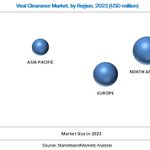



ALT The global viral clearance market is expected to reach USD 724.5 million by 2023 from an estimated USD 271.2 million in 2018, at a CAGR of 21.7% during the forecast period. The growth of this market is primarily driven by factors such as the growth in the pharmaceutical and biotechnology industries, increasing number of new drug launches, R&D investments in life science, advancements in nanofiltration technology, and high incidence and large economic burden of chronic diseases. The viral clearance market is segmented on the basis of application, end user, method, and region. Based on application, the market is segmented into recombinant proteins, blood and blood products, vaccines, and other applications. The other applications segment is expected to grow at the highest CAGR during the forecast owing to the increasing use of cellular therapies in the treatment of various disorders, increasing public and private funding for stem cell research

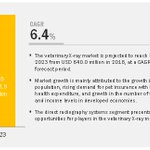
ALT The veterinary X-ray market is projected to reach USD 872 million by 2023 from USD 640 million in 2018, at a CAGR of 6.4%. The study involved four major activities to estimate the current market size for veterinary X-ray products. Exhaustive secondary research was done to collect information on the market, peer market, and parent market. The next step was to validate these findings, assumptions, and sizing with industry experts across the value chain through primary research. Both top-down and bottom-up approaches were employed to estimate the complete market size. Thereafter market breakdown and data triangulation were used to estimate the market size of segments and subsegments.

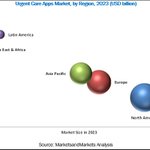
ALT The urgent care apps market is expected to reach USD 2,515.1 million by 2023 from USD 446.8 million in 2018, at a CAGR of 41.3% during the forecast period.The growth of this market is influenced by a number of factors, such as the increasing penetration of smartphones, growing penetration of 3G and 4G networks, rising focus on patient-centric healthcare delivery, and the benefits offered by urgent care apps. The report analyzes the urgent care apps market by type, clinical area, and region. On the basis of type, the market is segmented into pre-hospital emergency care & triaging apps, in-hospital communication & collaboration apps, and post-hospital apps. In 2017, the post-hospital apps segment accounted for the largest share of the market. The large share of this segment is mainly attributed the rising awareness of mobile apps to manage medications among patients and increasing demand for medication management & rehabilitation apps due to increasing number of stroke, trauma, and card

ALT The market size for synthetic stem cells is expected to grow from USD 14 million in 2023 to USD 37 million by 2028, at a CAGR of 22.5% during the forecast period. The study involved four major activities in estimating the current market size for synthetic stem cells. Exhaustive secondary research was conducted to collect information on the market as well as its peer and parent markets. The next step was to validate these findings, assumptions, and sizing with industry experts across the value chain through primary research. The top-down approach was employed to estimate the complete market size. Thereafter, market breakdown and data triangulation were used to estimate the size of the segments and subsegments of the market.

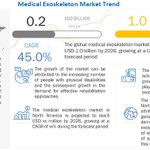
ALT The medical exoskeleton market size is projected to reach USD 1.0 billion by 2026, from USD 0.2 billion in 2021, at a CAGR of 45.0%. The growth of this market is mainly driven by factors such as the increasing number of people with physical disabilities and subsequent growth in the demand for effective rehabilitation approaches; agreements and collaborations among companies and research organizations for the development of the exoskeleton technology, and increasing insurance coverage for medical exoskeletons in several countries driving the growth of the medical exoskeleton market. However, the high cost of medical exoskeletons may restrict market growth to a certain extent.


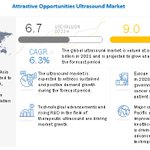
ALT The global ultrasound market is projected to reach USD 9.0 billion by 2026 from USD 6.7 billion in 2021, at a CAGR of 6.3% during the forecast period. Ongoing technological advancements in the field of diagnostic & therapeutic ultrasound imaging, availability of medical reimbursements for diagnostic ultrasound procedures in mature markets, and the growing applications of emerging ultrasound techniques (such as Doppler ultrasound in vascular imaging and 3D/4D ultrasound in oncology) are driving the growth of ultrasound market.

ALT The global microservices in healthcare market is projected to reach USD 343.3 million by 2023 from the estimated USD 103.1 million in 2017, at a CAGR of 21.3%. The benefits of microservice architecture, such as their ability to increase overall efficiency and project delivery speed, are the primary factor driving the market growth. However, concerns regarding security and regulatory compliance and the complexity of architecture are expected to hinder the growth.

ALT The cell harvesting market was valued at USD 196.9 Million in 2017 and expected to grow at a CAGR of 8.7% during the forecast period to reach USD 324.5 Million in 2023. Factors such as rising investments in Regenerative Medicine and cell-based research, growth of the biotechnology and biopharmaceutical industry, and increasing incidence of chronic and infectious diseases are contributing to the growth of this market.

ALT The back-end revenue cycle management market is projected to reach USD 10.4 billion by 2023 from USD 8.1 billion in 2018, at a CAGR of 5.0%. Factors such as the growing importance of denials management, increasing patient volume, process improvements in healthcare organizations, and declining reimbursement rates are driving the growth of the market. However, the high cost of deployment, integration of back-end revenue cycle management solutions, data breaches and loss of confidentiality, and lack of skilled IT professionals in healthcare are expected to limit market growth to a certain extent in the coming years.

ALT The global bone cement market is dominated by North America, followed by Europe. North America will continue to dominate the global bone glue market in the forecast period. However, Asia Pacific is expected to witness the highest CAGR, with the growth in this market centered in Japan, China, and India. Factors such as rising focus of major players in emerging Asian countries and government support are driving the growth of the global market in this region. The factors such as the high degree of consolidation, and complex regulatory framework for the approval of new products may restrain the market’s growth to a certain extent.

ALT The global virology specimen collection market is projected to reach USD 5.4 billion by 2026 from USD 5.6 billion in 2021, at a CAGR of -0.6% during the forecast period. Growth in this market is mainly driven by the rising prevalence of viral diseases, the increasing prevalence of human papillomavirus (HPV) and cervical cancer, and the growing number of blood donations. The Zika virus and Babesia outbreaks, alongside announcements for their inclusion in virology specimen collection tests, indicate the need for innovation in virology specimen collection technologies, consumables, and instruments. Other countries have also undertaken initiatives to check for new and emerging diseases. For example, the prevalence of malaria in African regions and the possibility of mosquito-borne transfer of Zika has resulted in mandates for Zika virus screening in the region.

ALT The global therapeutic drug monitoring market is projected to reach USD 2.7 billion by 2026 from USD 1.6 billion in 2020, at a CAGR of 9.4% during the forecast period. The growth of this market is majorly driven by the rising number of organ transplant procedures, the use of TDM across various therapeutic fields, the increasing preference for precision medicine, a growing focus on R&D related to TDM, and technological advancements in immunoassay instruments. However, the need for high capital investments and the reluctance of small hospitals to offer TDM services may restrain the growth

ALT The global surface disinfectant market is projected to reach USD 4.3 billion by 2026 from USD 2.9 billion in 2021, at a CAGR of 8.4%. Market growth is driven by stringent regulations for the use of surface disinfectants, increasing use of newer surface disinfectants for sanitization, and higher prevalence of HAIs.

ALT The global single-use assemblies market is projected to reach USD 6.3 billion by 2026 from USD 2.2 billion in 2021, at a CAGR of 23.3% during the forecast period. The growth of the market can primarily be attributed to the major advantages of single-use technologies as compared to traditional stainless-steel assemblies, such as rapid implementation and the low risk of cross-contamination. The increasing biopharmaceutical R&D expenditure and growing biologics market are also driving the market growth.

ALT The global rotator cuff injury treatment market is projected to reach USD 1,244 million by 2026 from USD 989 million in 2021, at a CAGR of 4.7% during the forecast period.”. The key factors fueling the growth of this market include an increase in sports-related shoulder injuries, technological advancements in arthroscopic surgical devices, increase in aging population with osteoarthritis, strong focus of players towards launch of highly advanced arthroscopic treatment devices. On the other hand, a dearth of skilled professionals, a high surgical treatment failure rate, and its high cost are major challenges faced by market players providing rotator cuff injury treatment products.

ALT The global rapid microbiology testing market is projected to reach USD 6.7 billion by 2026 from USD 4.2 billion in 2021, at a CAGR of 9.4%. Market growth is driven by the increased focus on the early detection of infectious disease, technological advancements, increased funding for R&D and increasing incidence of infectious disease The incidence of various infectious diseases such as HIV, tuberculosis, malaria, and pneumonia has increased. With a rise in the global burden of these diseases, the demand for rapid microbiology techniques for faster and accurate microbial screening, identification, and susceptibility testing against pathogens is expected to witness significant growth during the forecast period

ALT The global protein crystallization and crystallography market size is projected to reach USD 1.7 billion by 2025 from USD 1.1 billion in 2020, at a CAGR of 8.9% during the forecast period. The growth in this market is attributed to the increasing adoption of protein therapeutics, technological advancements in protein crystallization instruments and consumables, and the increasing focus on miniaturization. However, the high cost of instruments is expected to restrain the growth of this market during the forecast period.

ALT The global prefilled syringes market size is projected to reach USD 8.6 billion by 2025 from USD 5.6 billion in 2020, at a CAGR of 9.0% during the forecast period. growth in the prefilled syringes market is majorly driven by the rising demand for prefilled syringes is attributed to the growing prevalence of chronic diseases, technological advancements, rising adoption of self-injecting parenteral devices, and supportive government regulations (especially needlestick legislations). In addition, growing awareness on the benefits of prefilled syringes among patients and healthcare professionals, along with the growing number of biologics and biosimilars in the pharmaceuticals market, is supporting the growth of the prefilled syringes market.

ALT The global point of care & rapid diagnostics market is expected to reach USD 72.0 billion by 2027 from an estimated USD 43.2 billion in 2022, at a CAGR of 10.8% from 2022 to 2027. The growth of the global Point of Care diagnostics market can be attributed to factors such as increasing prevalence of respiratory diseases (such as COVID-19 and influenza) across the globe, and improved access to point-of-care devices through online platforms are some of the other key factors likely to drive the long-term growth of the point-of-care diagnostics market.