Stories from the past that help you make sense of the present.
Joined August 2024
- Tweets4.4K
- Following153
- Followers433
- Likes797




THE REAL HISTORY OF POLICE BRUTALITY IN NIGERIA 🇳🇬
In 1861, long before Nigeria gained independence, the British colonial government established a police force in Lagos.
But its original purpose was not simply to protect ordinary Nigerians. It was also used to protect colonial interests, suppress resistance and force communities to submit to British rule.
In 1930, regional police forces were merged to form a national police force.
Nigeria gained independence in 1960, but the culture of force did not disappear. Successive military governments further entrenched the use of security agencies to control citizens.
Then came SARS in 1992, created to fight armed robbery. Over time, officers faced widespread allegations of torture, extortion, unlawful arrests and extrajudicial killings.
In October 2020, Nigerian youths took to the streets under #EndSARS, demanding justice and an end to police brutality. The protests brought decades of anger into the global spotlight.
The painful truth is that SARS was not where the story began. It was one chapter in a much longer history.
A country cannot build trust between citizens and the police without accountability for abuse.
The question is: after all these decades, how much has truly changed?
#EndPoliceBrutality #EndSARS

One of the hardest lessons in life is accepting that some people you would never hurt will have no problem hurting you.
You’ll give your best, love sincerely, show up when they need you—and still find yourself wondering why you were never enough for them.
But please, don’t let their treatment of you make you forget your worth.
Walk away, even when it hurts. Let go, even when you still care. And never destroy yourself trying to keep people who are comfortable losing you.
Have a good heart, but learn when to close the door. Not everyone deserves access to the parts of you that took years to heal.
Protect your peace. Choose yourself. Keep your heart soft, but your boundaries strong. ❤️🩹

Some people are silently falling apart while doing everything they can to keep everyone else together.
They smile when their hearts are breaking. They say “I’m fine” because they don’t know how to explain the pain they’re carrying. They show up for everyone, even on the days when they can barely show up for themselves.
Sometimes, the person who gives the best advice is the one who feels completely lost. The person who comforts everyone is the one who cries alone at night. And the person who seems the strongest may simply have learned that the world doesn’t always make room for their pain.
Not everyone who is hurting will tell you. Some people have been strong for so long that they’ve forgotten how to ask for help. Some are afraid of being a burden. Others are just waiting for someone to notice that their smile doesn’t reach their eyes anymore.
So please, be gentle with people. Check on them, even when they say they’re okay. Sit with them, even when you don’t have the right words. Remind them that they don’t always have to be strong around you.
Because sometimes, a simple “I’m here for you” can mean more than you will ever know.
You may never know how close someone is to giving up on everything, or how much your kindness might help them hold on a little longer.
Never underestimate the power of making someone feel seen, heard, and loved in a world where so many people are silently hurting. ❤️🩹

History is often written by people who survive long enough to tell their side.
The victorious become founders. The defeated become rebels.
One generation calls someone a criminal; another generation builds monuments in their honor.
Of course, not every defeated person was a hero, and not every winner was evil.
But history raises an uncomfortable question:
If the outcome of a conflict changes, can the same actions suddenly acquire a different moral meaning?
Before accepting a historical judgment, perhaps we should ask who made it, whose voices were excluded, and who benefited from the final version.
Historylover retweeted

SOWORE UNTOLD: FROM HUMBLE BEGINNINGS TO PRESIDENTIAL AMBITION!
From fishing at the age of 9 and riding motorcycles at 12 to make ends meet, to student activism, fighting for justice, and eventually running for President of Nigeria, Omoyele Sowore shares the remarkable experiences that shaped his journey.
In Episode 5 of The Path with SaharaTV, titled “SOWORE UNTOLD,” he opens up about his early struggles, years of activism, political battles, personal sacrifices, and his plans for Nigeria’s future.
Watch the full interview here:
youtu.be/O1z9whOdtkA?si=9F7l…
THE HISTORY OF DICTATORSHIP: HOW LEADERS GAIN POWER AND REFUSE TO LET GO
Throughout history, people have fought to remove kings, emperors and dictators who ruled without accountability.
In ancient Rome, Julius Caesar rose to extraordinary power and was declared dictator for life in 44 BCE. He was assassinated that same year by senators who feared the concentration of power, although Rome did not immediately become a democracy.
In 20th-century Europe, Adolf Hitler rose to power in Germany in 1933. He dismantled democratic institutions, eliminated political opposition and established a brutal dictatorship responsible for enormous suffering and the Holocaust.
In Africa, independence brought hope for freedom after decades of colonial rule. However, some leaders who initially promised national unity later concentrated power in their own hands.
Mobutu Sese Seko ruled Zaire, now the Democratic Republic of the Congo, for more than three decades. Idi Amin ruled Uganda from 1971 to 1979, while Nigeria experienced several periods of military dictatorship between 1966 and 1999.
Why does dictatorship happen?
Sometimes it begins with promises of security, economic recovery or national unity. Leaders may exploit fear, weaken independent institutions, silence critics and gradually make it difficult for citizens to remove them peacefully.
The dangerous part is that authoritarianism does not always begin with a leader openly declaring himself a dictator. It can develop slowly as institutions lose their independence and political opposition becomes increasingly difficult.
History teaches us that no country is automatically protected from dictatorship.
Democracy requires more than choosing a leader. It requires independent courts, a free press, credible elections, strong institutions and citizens who can question those in power.
A leader who cannot be questioned may eventually believe that the country belongs to him.
The greatest protection against dictatorship is a system where nobody is above the law, including the president.
#History #Democracy #Dictatorship #Africa #Politics

THE HISTORY OF DEMOCRACY: FROM ANCIENT GREECE TO MODERN AFRICA
Democracy is not a new idea. Its history dates back thousands of years.
Around 508 BCE, ancient Athens in Greece developed one of the earliest known forms of democracy, allowing certain male citizens to participate in political decisions. However, women, enslaved people and foreigners were excluded.
In 509 BCE, Rome established a republic where citizens elected some officials, although political power remained heavily influenced by wealthy families.
In 1215, England’s Magna Carta challenged the unlimited power of the king and became an important influence on later constitutional principles.
In 1776, America declared independence, promoting the idea that government should derive its authority from the consent of the governed. In 1789, the French Revolution challenged absolute monarchy and popularized the ideals of liberty, equality and popular sovereignty.
But early democracy was far from perfect. Women could not vote in many countries, slavery existed, and political rights were restricted to privileged groups.
Throughout the 19th and 20th centuries, ordinary people fought for universal suffrage, civil rights, freedom of expression and accountable government.
In Africa, many societies had their own systems of governance before colonialism, including councils of elders, community assemblies and traditional kingships. Colonial rule restricted African self-government, leading independence movements to demand political freedom.
After independence, many African countries experienced military coups, dictatorships and one-party rule. From the late 1980s and early 1990s, multiparty elections expanded across the continent.
Nigeria gained independence in 1960, became a republic in 1963, experienced military rule from 1966, briefly returned to civilian government in 1979, and returned to democratic civilian rule in 1999.
Today, Nigeria holds elections, but an important question remains: does democracy truly serve the people when corruption, poverty, insecurity and poor governance continue to affect millions?
The lesson of history is simple: democracy was not handed to ordinary people as a gift. It was built through struggle, sacrifice and the demand for accountability.
Democracy is more than voting every four years. It means that leaders are accountable, the law applies to everyone, citizens can criticize government without fear, and public resources serve the public.
A country can hold elections and still struggle to deliver true democracy.
The real test of democracy is not how powerful its leaders are, but how much power and protection its citizens enjoy.
#Democracy #History #Africa #Nigeria #GoodGovernance

The average Nigerian is not asking for too much. People just want affordable food, stable electricity, good roads, security, and a country where hard work can actually provide a decent life.
Nigeria is a country where the ordinary man has to be strong just to survive. You wake up every morning with new problems, yet you still find a reason to hope that tomorrow will be better.
One thing life has taught me is that not everybody smiling with you is happy for you, and not everybody keeping quiet hates you. Sometimes, the people you least expect are the ones who genuinely wish you well.
President Bola Ahmed Tinubu is seeking re-election in 2027, with his administration defending its economic reforms as necessary for Nigeria’s long-term future.
However, many Nigerians are still concerned about the cost of living, unemployment, electricity and insecurity.
The government’s challenge is to turn its policies into tangible improvements in people’s daily lives.
As 2027 approaches, Nigerians deserve an honest assessment of both the progress made and the work still ahead.
Beyond politics and promises, results matter. 🇳🇬
#Nigeria #Tinubu #GoodGovernance

ALT President Bola Ahmed Tinubu
🇳🇬 EBOLA IS BACK IN NIGERIA: SHOULD WE BE WORRIED?
On October 20, 2026, Nigeria confirmed an imported case of Ebola in Abuja involving the Bundibugyo strain. The patient had recently travelled from Uganda, and health authorities identified 44 contacts for monitoring. <Cite refs={[“turn881857search0”]}/>
The news has raised concerns across the country, bringing back memories of the 2014 Ebola outbreak.
Health officials are working to prevent further spread through contact tracing, isolation and infection-control measures.
Ebola is serious, but panic and misinformation will not help. The virus spreads through direct contact with an infected person’s bodily fluids or contaminated materials.
Nigeria must act quickly, protect healthcare workers, monitor contacts and keep the public informed.
The big question is: Can Nigeria contain this case before it becomes a wider outbreak?
Stay informed. Follow official updates from the Nigeria Centre for Disease Control (NCDC).
#Ebola #Nigeria #PublicHealth

ALT Ebola
🇳🇬 NIGERIA: A COUNTRY FULL OF WEALTH, YET FULL OF SUFFERING
Nigeria has everything it takes to be a great nation, yet millions of citizens struggle daily to afford food, pay rent, find jobs, and access quality healthcare.
Every election comes with beautiful promises, but after the elections, ordinary people are left asking when things will truly get better.
The poor keep sacrificing, the youth keep struggling, and families keep hoping for a better tomorrow.
The problem is not just how wealthy Nigeria is, but how that wealth translates into the lives of ordinary citizens.
A nation cannot truly progress when its people are struggling just to survive.
Nigeria deserves leadership that delivers results, not just promises. 🇳🇬
#Nigeria #GoodGovernance #Accountability

ALT NIGERIA: A COUNTRY FULL OF WEALTH, YET FULL OF SUFFERING
Historylover retweeted
Earlier this year, on #TheHonestBunch, I clearly stated that @alexottiofr was working for Tinubu @officialABAT and effectively serving as his campaign manager. The hypocrites came out in droves to deny it, and pretend otherwise.
Have you all seen what I was talking about now?
Of course, expecting hypocrites to acknowledge the truth is asking too much. They would rather defend their political idols than confront uncomfortable realities!
One of the most painful lessons in life is discovering that the person who knows all your weaknesses is the same person who eventually uses them against you.
Sometimes, the biggest betrayal doesn’t come from an enemy.
It comes from the person you trusted enough to stop protecting yourself around.
Imagine going to prison at 22 for a crime you didn’t commit.
You come out at 50.
Your parents are gone. Your friends have moved on. Your youth is gone. And the people who put you there may never face the same punishment.
Who gives you back the years you lost?
Imagine spending 15 years paying school fees, feeding children, and sacrificing your life for your family, only to discover that the children you raised might not be biologically yours.
Would you still love them the same way, or would you walk away?
Be honest. 🧵

Thomas Jefferson (1743–1826) was one of the founding fathers of the United States, the principal author of the Declaration of Independence, and the third president of America.
He is remembered for promoting liberty and individual rights, but his life also involved a major contradiction: he wrote that all men are created equal while enslaving hundreds of people during his lifetime.
1. His early life
Born: April 13, 1743.
Birthplace: Shadwell, Virginia, in Britain's North American colonies.
Education: He studied at the College of William & Mary and trained in law.
Background: He came from a wealthy family that owned land and enslaved people.
Jefferson grew up when the American colonies were still under British rule. He became interested in politics, philosophy, science, and the question of whether people should govern themselves.
2. His role in American independence
In the 1770s, many colonists were increasingly opposed to British taxation and political control.
In 1776, Jefferson was selected to draft the Declaration of Independence. Other members of the Continental Congress reviewed and revised his draft before adopting the document on July 4, 1776.
The Declaration stated that people possess fundamental rights and that governments derive their authority from the consent of the governed.
One of its most famous statements reads:
“All men are created equal.”
This principle became central to American political ideals, although equality was not extended to everyone in practice.
3. His political career
Before becoming president, Jefferson held several important positions:
Governor of Virginia (1779–1781): He led Virginia during the Revolutionary War.
Minister to France (1785–1789): He represented the United States in France.
First US Secretary of State (1790–1793): He served under President George Washington.
Vice President (1797–1801): He served under President John Adams.
Third US President (1801–1809): He won the presidential election of 1800.
4. His presidency and major achievements
President of the United States
1801–1809
Jefferson reduced some government spending and taxes and sought to limit federal power. However, his presidency also included military conflict with North African states and controversial trade restrictions.
His most famous achievement as president was the Louisiana Purchase of 1803. He arranged for the United States to buy a huge territory from France for $15 million, nearly doubling the country's land area. The territory included lands inhabited by many Indigenous nations.
He also supported the Lewis and Clark expedition, which explored parts of the newly acquired territory and traveled toward the Pacific Ocean.
5. The contradiction: freedom and slavery
This is one of the most important parts of Jefferson's history.
Although he helped write America's declaration of equality and liberty, Jefferson enslaved more than 600 people over his lifetime. Enslaved men, women, and children worked on his plantations, including at Monticello.
He criticized slavery in some writings and supported certain restrictions on it, but he did not free most of the people he enslaved. Historical records also indicate that he fathered children with Sally Hemings, an enslaved woman who lived at Monticello.
This contradiction remains central to how historians assess his legacy.
6. His death
Jefferson retired from the presidency in 1809 and spent his later years at Monticello. He helped establish the University of Virginia, which opened in 1825.
He died on July 4, 1826, aged 83 — exactly 50 years after the Declaration of Independence was adopted. Former president John Adams, another key figure in American independence, died on the same day.
Why Thomas Jefferson matters
Jefferson helped define the political ideals on which the United States was founded: individual liberty, equality, and government by consent. Yet his participation in slavery exposed the gap between those ideals and the reality of American society at the time.


Before America became a country
Before European colonization, North America was home to Indigenous peoples who had lived there for thousands of years.
From the 1600s onward, Britain established colonies along the Atlantic coast. By the 1700s, 13 British colonies had developed in the area that would become the eastern United States.
*Conflict with Britain.
The British government imposed taxes and restrictions on the colonies. Many colonists protested because they believed Britain was making decisions about them without giving them proper representation in Parliament.
Tensions eventually led to war in 1775.
*Declaration of Independence — 1776
On July 4, 1776, representatives of the 13 colonies adopted the Declaration of Independence, announcing that they would no longer be under British rule.
They were led politically by figures such as Thomas Jefferson, while George Washington became the leading commander of their army.
This is why Americans celebrate July 4 as Independence Day.
*America wins the war — 1783
The colonists received important military and financial support from France. After years of fighting, Britain lost the war. On September 3, 1783, Britain formally recognized the United States as an independent nation through the Treaty of Paris.
*America establishes its government — 1787–1789
The new country needed a stronger system of government. In 1787, leaders drafted the US Constitution, which established the structure of the federal government. George Washington became the country's first president in 1789.


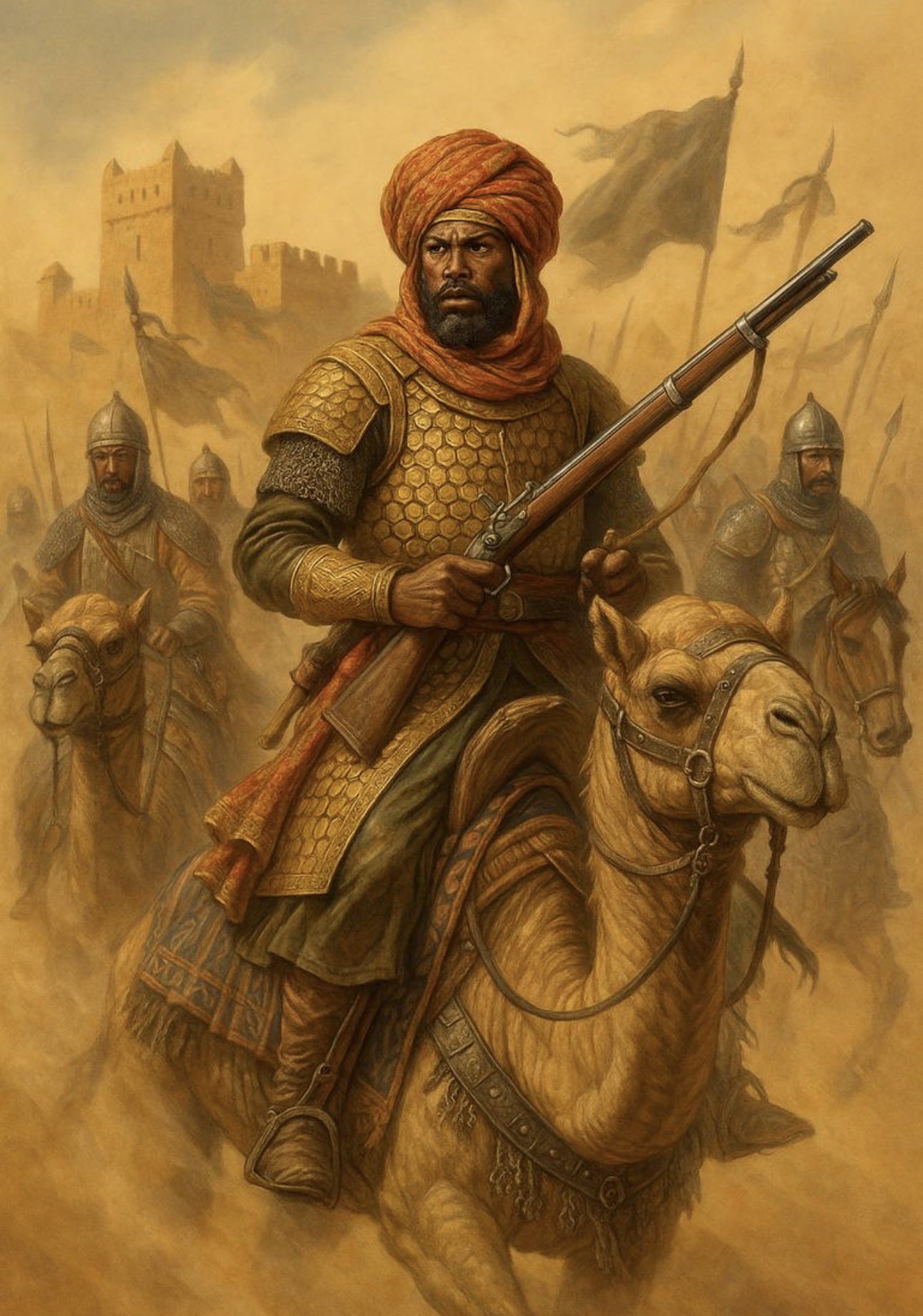
The Kanuri/Kanembu royal tradition developed around Lake Chad, with Kanem, east of Lake Chad in present-day Chad, becoming the original political centre.
The earliest period is difficult to reconstruct because the dates and identities of some early kings are uncertain. The traditional royal chronicle, the Girgam (Diwan), preserves the names of the rulers and their succession. It records 69 rulers of Kanem-Bornu.
The early rulers are generally associated with the Duguwa dynasty. Later came the Sefuwa/Sayfawa dynasty, which became the great Muslim royal dynasty of Kanem-Bornu.
2. The Sefuwa kings
The Sefuwa dynasty is particularly important because its rulers governed the Kanem-Bornu state for centuries.
One of the most important early kings was Mai Hummay (Ume/Hume), who is traditionally regarded as the founder of the Sefuwa line. He ruled around the late 11th century. His reign is also associated with the establishment of Islam within the royal court.
Another famous king was:
Mai Dunama Dibbalemi (c. 1221–1259)
He was one of the most powerful medieval rulers of Kanem. During his reign, Kanem expanded considerably and became an important power in the wider Central Sudan and trans-Saharan world.
3. The kingdom moves toward Bornu
By the 14th century, Kanem experienced severe political and military problems. The Sefuwa rulers eventually moved their centre of power westward into Bornu, in what is now northeastern Nigeria.
By around 1380, the Sefuwa were ruling Bornu rather than Kanem as their principal base.
This is why historians usually speak of Kanem–Bornu rather than treating Kanem and Bornu as completely separate civilizations.
4. Mai Ali Gaji
A major turning point came with Mai Ali Gaji in the late 15th/early 16th century.
He established Birnin Gazargamu as a major capital and helped restore the political strength of Bornu after a period of instability.
5. The greatest famous king — Idris Alooma
If you ask who the most famous Kanuri king was, one of the strongest answers is Mai Idris Alooma.
He ruled approximately 1570s–1600s. Different historical chronologies give slightly different dates.
Idris Alooma is remembered for:
major military reforms
expansion of Bornu’s influence
strengthening the administration
promoting Islam
improving diplomatic relations
developing fortified settlements and military infrastructure
strengthening trade across the region
His reign is often regarded as the golden age of the Bornu Empire.
6. How powerful were the Kanuri kings?
At its height, Kanem-Bornu was not simply a small kingdom around modern Maiduguri.
Its influence extended across large parts of the Lake Chad basin, reaching areas corresponding to parts of today’s:
🇳🇬 Nigeria
🇹🇩 Chad
🇳🇪 Niger
🇨🇲 Cameroon
and at different periods areas farther north toward the Sahara.
The empire benefited enormously from trans-Saharan trade, including trade in horses, salt, livestock, textiles and enslaved people.
7. Islam and the Kanuri kings
Islam became deeply connected with the monarchy. The first Muslim rulers are traditionally associated with the 11th century, and Islam subsequently became an important part of the political and intellectual life of Kanem-Bornu.
However, the conversion did not mean that all older Kanuri customs immediately disappeared. Traditional political institutions continued alongside Islam.
Interestingly, the Magira (Queen Mother) could wield significant political influence.
8. What happened to the Mai?
The Sefuwa dynasty lasted for an extraordinary period—roughly eight centuries or more depending on how the chronology is counted—before losing political power in the 19th century.
The last part of the story becomes particularly complicated because Shehu Muhammad al-Amin al-Kanemi and his descendants eventually replaced the Sefuwa dynasty’s political authority.
The traditional institution itself, however, survived.