

@Pulse_OS Founder. I´m building Persistent AI Memory for Developer Workflows. Neuroscience-inspired cognitive architecture. https://nitter.cf/t.co/EMDtM99Ahq
Caracas
Joined October 2024
- Tweets6.9K
- Following286
- Followers178
- Likes7.7K




Pinned Tweet
I've been building AI agents for 5 months.
Not using them. Building the infrastructure that makes them not stupid.
Let me tell you what that actually looks like.
It started with one problem:
Every AI agent wakes up with amnesia.
You spend 3 hours debugging something with Claude on Monday. Tuesday morning you open a new session and it has no idea that conversation ever happened. You start over. You explain the same context. It makes the same mistakes. You get the same wrong answers.
This isn't a "context window" problem. Context windows are big enough now. This is a memory architecture problem.
Nobody was solving it in a way that actually worked for agent systems — not just for chatbots, not just for a single model, not for multi-agent swarms.
So I built PULSE.
Not a product. A science project that became a product.
The idea was simple: what if AI agents could learn the way humans learn? Not just "remember things" — actually internalize, consolidate, pattern-match, and get BETTER at tasks over time the way a brain does.
That meant reading the actual neuroscience.
Reconsolidation. Hippocampal-neocortical transfer. Global Workspace Theory. STDP (spike-timing dependent plasticity). Hebbian learning. Prediction error signals. Dopamine and serotonin as computational variables.
Not as metaphors. As actual system designs.
---
5 months ago, PULSE was a Python script that saved chat logs to a text file.
Today it's v10.51.0:
- 12 subsystems running in parallel
- 48 managed daemons
- A consolidation pipeline that runs every 6 hours across 22 stages
- Cross-agent memory shared between Claude, Gemini, Codex, Ollama, Grok, and local models
- A brain that's been running continuously for 5 months and gets smarter every day
But the version number that matters isn't the code. It's the failures.
33 failed attempts to fix cross-session memory. 400+ AI agent sessions deployed on a single debugging problem. 268 times my agents declared "root cause found" and were wrong.
That's not failure. That's the R&D budget.
Every broken session taught the brain something. Every failure got logged, extracted, and injected back into the training set for the next agent that touched the same problem.
The system that teaches agents how to build software was built by agents learning from their own mistakes.
That's the loop NOBODY else has.
---
Three weeks ago I ran something I called AGI Adventures III.
50 Claude Sonnet sessions. 11 Claude Opus sessions. Everyone is reading the codebase, measuring the distance between what PULSE does now and what genuine artificial general intelligence would require, and proposing a roadmap.
The report came back at 3.8/10 on the AGI distance scale.
Structurally correct. Reactive. Mostly stateless.
So I gave Gemini the report and said: implement Phase A.
Here's what Phase A looked like:
**Trust bootstrapping**: New agents start at 0.1 trust. Not 1.0. Not a guess. A cautious prior that requires real contributions to climb. No agent gets to be authoritative until it earns it.
**Patience scalar**: Workers under pressure slow down and get careful. Workers with full patience move fast. Not a random walk — a serotonin-modeled response to accumulated task failures.
**Drive vector**: Curiosity, boredom, fatigue — implemented as actual computational signals. When a worker is idle too long, boredom builds. When boredom crosses a threshold, the system auto-generates Exploration tasks. The swarm is no longer purely reactive.
**Attention competition**: Search results don't just get returned in order. They compete. Results that overlap too much with what was just retrieved get suppressed. The brain stops fixating. It explores.
**Negativity bias**: When error rate rises above 15%, failures score 5x higher in retrieval. The system pays MORE attention after things go wrong — exactly like a human who just got burned.
Then Gemini implemented Phase C:
**Global Workspace ignition**: Search results compete for a broadcast slot. The winning coalition gets tagged and distributed to all subsystems. This is Baars' Global Workspace Theory — the exact mechanism most cognitive scientists believe underlies conscious awareness — running as a real search algorithm.
**Neocortical extraction**: Facts that get consolidated 5+ times automatically promote to permanent structural memory. Not episodic. Not context-window. Crystallized knowledge that doesn't decay.
**Sequence replay**: The brain now learns causal chains from actual agent session data. If Agent A always does X before Y, the system extracts that sequence and uses it to prime future agents.
**Epistemic crew composition**: Before assembling a swarm, PULSE checks whether the agents have contradictory worldviews. "Always type everything" vs "ship and break things" — flagged as a conflict before they're put on the same task.
This is v10.51.0. It ships today.
---
Here's why Anthropic, OpenAI, Google, and Meta will care about this.
They're building the models. Nobody's building the cognitive architecture that sits above the models.
Every LLM company is competing on tokens per second, context size, and reasoning benchmarks. That's the race they're in.
The race nobody's winning yet is: how do you make a swarm of AI agents actually learn and improve over time at the system level?
Not fine-tuning. Not RAG. Not a vector database with embeddings.
A real cognitive architecture with:
- Hierarchical memory consolidation (episodic → semantic → structural)
- Prediction error signals that modulate plasticity
- Anti-pattern injection that prevents repeated failures
- Cross-agent knowledge transfer that's model-agnostic
- Emotional priors (trust, patience, curiosity) that govern agent behavior
PULSE has been running this in production for 5 months. Not in a paper. Not in a demo. On real work, with real agents, producing real code.
The AGI distance score is 3.8/10 right now.
We have a plan to get to 7.
I'll be shipping each step in public.
---
If you're building with AI agents and they forget everything —
That's not a prompt engineering problem. That's a memory architecture problem.
Install: pip install pulse-os
Site: pulseos.dev
Follow for the next 6 months. This is going to get interesting.
#BuildInPublic #AIAgents #AGI #ContextEngineering #MachineLearning #DevTools


A guy claimin is Ansem but is not, because clearly is not Ansem's account is trynna to run a scam and stealed our banner.
Beware of this token
dexscreener.com/solana/7rxjk…
is a scam, we are OG $Dorae, we ran to billions, we been partaking for over 2 years, and we gonna make it!
1
3
409
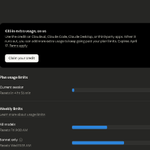
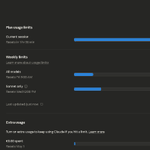
using @claudeai was good for a while but im cancelling my subscription.
I'm into max plan and im pretty sure im running out of it today, last week same issue. I can't work with this usage.
They gifted some euros according to our plan but it got consumed just as fast.
They did something affecting the usage since weeks ago and hvnt solved it.

1
1
69
getting a first client ready is a completely different problem than building the product
for 10 months i built PULSE for my own workflow. knew every edge case. worked around everything.
now i have to make it work for someone who doesn't know what ROOT_DIR means.
tbh it's the best QA pass we've ever done.
2
40
if your side project has never been used by someone who wasn't you — find one person.
the gap between "works for me" and "works" is where all the real bugs live.
pulseos.dev
32
things you don't notice until someone else uses it:
→ install fails silently if a dir doesn't exist
→ boot briefing assumes you know what "consolidation" is
→ error messages written for the dev, not the user
→ 48 files in ROOT_DIR that confuse everything
all caught in one week of first-client prep.
shipped v10.68.0. all of it fixed.
24
96% of the knowledge in PULSE's brain was invisible to search.
not missing. there. just scoring 0.50 confidence across the board.
turned out every single item entered at the same score regardless of source. a root-cause analysis by Opus got the same weight as a regex-extracted sentence fragment.
26 lines of code. confidence scorer at write time. fixed.
1
32
then we backfilled: 15,788 rows recomputed.
before: avg confidence 0.50, basically noise.
after: avg 0.53, but now differentiated — Opus-grade insights score 0.8+, fragments score 0.2.
sounds small. changes everything downstream. spaced retrieval, search ranking, quality gates — all of it runs on this number.
uniform scores = uniform garbage.
1
33
the lesson i keep learning:
build the architecture. ship it. then ask if the data flowing through it is actually real.
ours wasn't. for months.
pulseos.dev | pip install pulse-os
11
96% of the knowledge in PULSE's brain was invisible to search.
not missing. there. just scoring 0.50 confidence across the board.
turned out every single item entered at the same score regardless of source. a root-cause analysis by Opus got the same weight as a regex-extracted sentence fragment.
26 lines of code. confidence scorer at write time. fixed.
14
I'm gambling my daily timeframe to craft a product for you all to have better AI agents. I hope you enjoy it.
pulseos.dev
1
22
The most expensive thing in AI development isn't tokens.
It's forgetting.
Every time your agent re-discovers something it already learned, you pay twice: once in tokens, once in time.
Multiply that by 4 agents and 30 days.
That's the real cost nobody talks about.
1
19
RAG gives you similar text.
Memory gives you what you learned.
Your agent doesn't need to find a document. It needs to remember why that approach failed last time.
Those are fundamentally different problems.
1
16
I tracked how long it takes to get a productive line of code from my AI agent each morning.
47 minutes.
Not coding. Not debugging. Just re-explaining context.
That's 4 hours a week. 200 hours a year.
Onboarding an agent that forgets.
14
Fernando Esposito retweeted

AI companies have NOT yet fixed AI sycophancy and 'hallucinations' in LLMs, both of which are incompatible with factuality, accuracy, reliability, and science.
This is one of the factors that makes me deeply skeptical of extreme productivity and "abundance" predictions.