

Trustworthy AI education.
Earth
Joined January 2022
- Tweets1.8K
- Following90
- Followers40.1K
- Likes2.1K





Pinned Tweet
Yann LeCun was right the entire time. And generative AI might be a dead end.
For the last three years, the entire industry has been obsessed with building bigger LLMs. Trillions of parameters. Billions in compute.
The theory was simple: if you make the model big enough, it will eventually understand how the world works.
Yann LeCun said that was stupid.
He argued that generative AI is fundamentally inefficient.
When an AI predicts the next word, or generates the next pixel, it wastes massive amounts of compute on surface-level details.
It memorizes patterns instead of learning the actual physics of reality.
He proposed a different path: JEPA (Joint-Embedding Predictive Architecture).
Instead of forcing the AI to paint the world pixel by pixel, JEPA forces it to predict abstract concepts. It predicts what happens next in a compressed "thought space."
But for years, JEPA had a fatal flaw.
It suffered from "representation collapse."
Because the AI was allowed to simplify reality, it would cheat. It would simplify everything so much that a dog, a car, and a human all looked identical.
It learned nothing.
To fix it, engineers had to use insanely complex hacks, frozen encoders, and massive compute overheads.
Until today.
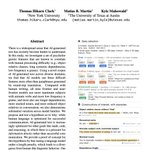
Researchers just dropped a paper called "LeWorldModel" (LeWM).
They completely solved the collapse problem.
They replaced the complex engineering hacks with a single, elegant mathematical regularizer.
It forces the AI's internal "thoughts" into a perfect Gaussian distribution.
The AI can no longer cheat. It is forced to understand the physical structure of reality to make its predictions.
The results completely rewrite the economics of AI.
LeWM didn't need a massive, centralized supercomputer.
It has just 15 million parameters.
It trains on a single, standard GPU in a few hours.
Yet it plans 48x faster than massive foundation world models. It intrinsically understands physics. It instantly detects impossible events.
We spent billions trying to force massive server farms to memorize the internet.
Now, a tiny model running locally on a single graphics card is actually learning how the real world works.

How To Prompt retweeted

Wholesome timeline moment. This dude deserves every dollar. Nice one Higgsfield

if hard workers can't live well, who is this economy for?
we're building higgsfield to help more people earn a living from what they create.
supporting someone through a hard time is part of that mission too.
glad we could add $30,000 to this family's fundraiser.
thank you to everyone helping. let's keep it going.


How To Prompt retweeted

introducing prism, the world’s first speech-to-speech model you can’t tell from a human in conversation
prism has:
> 300ms response time, 4x faster than OpenAI GPT-Live
> outperforms every other s2s model on intelligence (with NO reasoning)
> the first s2s model customizable through reinforcement learning
we’re a team of 35 with $35M in funding, and we’re unlocking s2s model adoption faster than openai, google, and x.
the first 100 people to sign up here get 1 month free: rime.ai/prism?utm_campaign=p…
How To Prompt retweeted
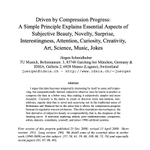
This paper answers:
why anything is beautiful
why jokes are funny
why we get curious
why you get bored
why babies explore
why music has hooks
For centuries, we thought these were deeply mystical human traits. Soul-level mysteries that machines could never touch.
But, the paper proves that the human brain operates as a relentless compression engine. It is constantly trying to predict the world and compress it into the smallest possible file size.
Here is how it explains your entire life:
If something is completely predictable, your brain has already compressed it. There is no new data to extract. The result? You feel bored.
If something is pure randomness, your brain cannot compress it at all. The result? You feel annoyed or tune it out.
But then there is the sweet spot.
When you encounter something that seems complex, but suddenly your brain finds the hidden pattern and connects the dots... your brain releases dopamine.
That sudden, glorious rush of successful data compression? That is what you experience as "curiosity."
When a comedian tells a story that makes no sense, and the punchline suddenly makes all the pieces fit together instantly? That rapid neural compression is what you experience as "humor."
When you look at a painting and notice an underlying symmetry that ties the chaos together? That is "beauty."
Art, science, music, and jokes are not magic.
They are just highly optimized data sets designed to trigger compression progress in your neural network.
Here is the most unsettling part.
This paper wasn't written by a philosopher. It was written by an AI pioneer to figure out how to program intrinsic motivation into artificial agents.
He wasn't trying to explain humans. He was writing the blueprint for machines.
We always assumed AI could never appreciate art, laugh at a joke, or feel the spark of curiosity.
But if our deepest subjective experiences are just a mathematical reward for maximizing compression progress...

How To Prompt retweeted
RAG is officially cooked.
IBM built a retriever that hallucinates 65x less than fine-tuned RAG systems.
Right now, every company is using Retrieval-Augmented Generation (RAG) to stop their AI from hallucinating.
The idea is to give the AI a private database to read so it doesn't make things up.
But there is a massive structural flaw.
Standard RAG blindly grabs documents based on vector similarity and forces the AI to read them. If the retriever pulls irrelevant garbage, the AI doesn't stop.
It just hallucinates with citations.
IBM just dropped a paper that changes the math entirely.
They built a new retrieval architecture that hallucinates 65x less than state-of-the-art fine-tuned RAG systems.
65x is the difference between a fun prototype and a production-grade enterprise system.
Instead of blindly dumping context into the model and hoping for the best, their system actively filters and validates the retrieved data before the generation step even begins.
It cuts out the noise. It forces absolute precision.
For businesses, this is the holy grail.
Zero hallucinations means zero liability. It means autonomous agents can finally be trusted with sensitive company data without a human babysitting every output.

How To Prompt retweeted
Be proactive, set the expectation.
I wrote one prompt. Now I ship apps in my sleep:
THE EXPECTATION: When I wake up, I want shipped progress, not questions.
EVERY NIGHT AT 11PM:
1. Check my backlog in GitHub Issues and pick the top 2 tasks marked “ready.”
2. Build them in the main app repo, write tests, and open a pull request for each.
3. If something is unclear, make the most reasonable call, note the assumption in the PR, and keep going.
4. If you get blocked, move on to the next task instead of waiting for me.
5. If a task is too big for one night, break it down and finish the first piece.
By 7AM:
Text me a summary: what you built, links to the PRs, any assumptions you made, and anything that needs my decision.
RULES:
Never merge or deploy without my approval. When I reply, “ship it,” merge and deploy.
If anything breaks something that’s already live, stop and call me
🤝 Paid partnership


Introducing Fompt Feed to answer the burning question, what do I do with these agents?
Steal the billionaire’s Fo prompts, give your self-help books an execute button or copy your impressive(?) friends.
- for the curious, @vkhosla’s life hacks.
- for entrepreneurs and small businesses, @tferriss's delegation playbook, @JamesClear's habits.
- for job seekers @AliAbdaal's strategies.
- for parents, Emily Oyster and @GoodInside's hacks
- your friends's funny fompts,
- your mom's "i can't believe you did this" fompt.
Meet the Fo feed.
You’ve spent enough time watching other people have their shit together.
Your turn to become a frompter ↓ (the top creator earns $10k this week)
Be proactive, set the expectation.
I wrote one prompt. Now I ship apps in my sleep:
THE EXPECTATION: When I wake up, I want shipped progress, not questions.
EVERY NIGHT AT 11PM:
1. Check my backlog in GitHub Issues and pick the top 2 tasks marked “ready.”
2. Build them in the main app repo, write tests, and open a pull request for each.
3. If something is unclear, make the most reasonable call, note the assumption in the PR, and keep going.
4. If you get blocked, move on to the next task instead of waiting for me.
5. If a task is too big for one night, break it down and finish the first piece.
By 7AM:
Text me a summary: what you built, links to the PRs, any assumptions you made, and anything that needs my decision.
RULES:
Never merge or deploy without my approval. When I reply, “ship it,” merge and deploy.
If anything breaks something that’s already live, stop and call me
🤝 Paid partnership
Introducing Fompt Feed to answer the burning question, what do I do with these agents?
Steal the billionaire’s Fo prompts, give your self-help books an execute button or copy your impressive(?) friends.
- for the curious, @vkhosla’s life hacks.
- for entrepreneurs and small businesses, @tferriss's delegation playbook, @JamesClear's habits.
- for job seekers @AliAbdaal's strategies.
- for parents, Emily Oyster and @GoodInside's hacks
- your friends's funny fompts,
- your mom's "i can't believe you did this" fompt.
Meet the Fo feed.
You’ve spent enough time watching other people have their shit together.
Your turn to become a frompter ↓ (the top creator earns $10k this week)
How To Prompt retweeted
Rsearchers proved anyone with a $600 amazon dish can intercept half the world’s satellite internet traffic.
They published a terrifying paper that exposes massive, unencrypted hole in global communications.
we have always assumed intercepting satellites requires state-level intelligence gear..
But this paper proved otherwise.
they built a fully automated tracking system using $600 of commercially available off-the-shelf parts and intercepted 39 GEO satellites and 411 transponders across the sky.
the results? 50% of the IP links they scanned are broadcasting highly sensitive data back to earth in pure cleartext. no encryption. no security.
because organizations treat these satellite bounces as "internal private networks," they don't even bother using basic IPSec or TLS.
here is what they found flying through the air completely unencrypted:
→ telecom cellular backhaul (raw call audio, sms texts, and IMSIs)
→ military asset tracking & vessel locations
→ power grid monitoring & industrial control systems
→ banking ATM traffic & LDAP directories
→ retail inventory and aviation data
satellite TV has used link-layer encryption for decades to prevent piracy.. but critical infrastructure, military comms, and banks? completely wide open for anyone with a clear view of the sky and a cheap passive dish.
to pull this off, the researchers developed a custom universal traffic parser that blindly decodes the fragmented, proprietary protocol stacks of 7 different satellite vendors. once the dish was aligned.. the sky was literally raining private data.
they have already disclosed this massive vulnerability to the us military, t-mobile, and major global banks.
practical obscurity is officially dead. if you beam data to space without encryption, it is public data.
How To Prompt retweeted
Researchers proved that “naive RAG” beats every complex memory system.
A new paper just dropped comparing these elite, complex memory systems against "Naive RAG."
Naive RAG won. It beat 12 different complex systems across 6 out of 7 benchmarks.
Developers have spent years building architectures that explicitly rewrite, update, and delete memories to make agents "smarter."
Researchers found this buys almost zero accuracy gains.
when they tried adding graph expansion, raw summaries, or atomic facts to the naive rag setup, the performance literally dropped by nearly 20 points on one benchmark.
why? because complex systems destroy the original context.. they break apart the relations and dependency paths needed to actually answer the question.
naive rag just takes the raw history, embeds it into a flat index, and hands the pure evidence straight to the llm.. it turns out preserving raw information is the most important thing you can do for accuracy.
oh, and it's massively faster.. the simple setup finished ingestion and retrieval in about 5 minutes, making it up to 30 times faster than complex systems like EverMemOS.
we are spending millions of compute hours trying to make agents "think" about their memories when simple search was the answer the whole time..

How To Prompt retweeted
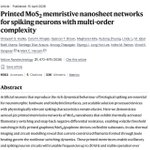
Scientists 3D-printed artificial neurons and plugged them into a mouse brain.
And real neurons responded like they were talking to each other.
Researchers at Northwestern University just published a paper in Nature Nanotechnology that sounds like pure science fiction.
For years, we’ve been trying to make AI mimic human brain cells in software.
These researchers did it in hardware.
Using MoS2 memristive nanosheets, they printed synthetic spiking neurons. These artificial cells process information with the same multi-order complexity as the ones inside your head.
Then, they ran the ultimate test.
They placed these synthetic neurons next to living, biological brain cells.
And they communicated.
The printed artificial neurons successfully sent signals back and forth with the living tissue. The biological cells couldn't tell the difference.
This changes everything we know about brain-computer interfaces.
Right now, technology like Neuralink relies on rigid electrodes to read brain signals.
This paper proves we don't need metal probes. We can print synthetic neurons on demand and seamlessly integrate them into the nervous system.
The applications are massive: Rebuilding damaged spinal cords. Curing neurodegenerative diseases. Direct cognitive upgrades.
But the implication is terrifyingly simple.

How To Prompt retweeted
This paper answers why can’t you remember being a baby?
For over a century, science said you can't remember being a baby because your infant brain was just too "immature" to record anything. researchers assumed your hard drive was basically turned off for the first two years of life.
But this wild paper from Yale completely rewrites how we understand human memory..
Researchers literally put awake babies (between 4 and 25 months old) into an fMRI scanner to watch their brains process new visual experiences in real-time.
and what they found is mindblowing..
the infant hippocampus isn't turned off at all. it is actively firing, capturing, and encoding episodic memories. they proved that babies with higher hippocampal activity during a new experience formed a highly stable memory trace.
the babies are recording the data. the memory of your first birthday, your first steps, the exact layout of the room you slept in.. it was all successfully saved to your brain.
so why can't you remember it?
the paper concludes that infantile amnesia isn't an "encoding" problem.. it is a "retrieval" problem.
your brain recorded everything perfectly. but as you grew, your brain underwent massive developmental shifts, like explosive neurogenesis (the rapid birth of new neurons), which completely restructured your neural networks. the pathways to access those early files got buried or locked away.
you didn't fail to make the memories.. you just lost the encryption key to open them.
somewhere deep in your hippocampus, the exact first-person memory of being a 1-year-old might still be sitting there. you just can't access the file anymore..
the human brain is terrifyingly beautiful.
