
PM and writer of Undervalued and undercovered. https://nitter.cf/t.co/Z8gNyWJt5M
Joined November 2019
- Tweets516
- Following88
- Followers15K
- Likes328




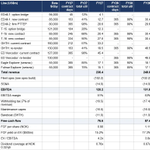



Are offshore services the new supercycle? Missed the tankers? Maybe go with the drillers.
100 pages of work, free, to get a deep understanding of the industry.
The thesis is simple. The rigs that drill for oil in deep water are in fixed supply, and more and more people want the oil that is down there.
Nobody has ordered a new drillship in a decade, because current day rates still do not pay for a newbuild. Utilisation is already above 90%. The leading edge for 7th generation drillships has moved from the mid 400ks to around 500k a day. And when the Transocean and Valaris merger closes, the last six cold stacked 7th generation rigs in the world will all sit inside one company, whose shareholders would rather have the cash than pay to reactivate them.
Offshore projects break even around 30 to 40 dollars a barrel with oil futures above 70 into 2029, and 2027 is shaping up as a big year for final investment decisions.
So demand is arriving into a supply base that cannot respond quickly. That is usually how day rates go a lot higher.
The two primers, one on the sector and one on jackups, are free with no paywall. The deep dives on the individual names, the fleets, the contracts and where we think the best risk reward sits, are paid.
Start with the primers (link in the comments).
Link to deep dive in the sector:
smallcaptreasures.substack.c…
Link to deep dive in jackups:
smallcaptreasures.substack.c…
Hugo Navarro retweeted

I got 1/3 of my portfolio in 🇯🇵 growth now. The opportunity set is unique and I love to see more and more western microcap investors are waking up on it.
13x EV/EBITDA, or 11x for the recruitment business alone, for a founder-led company planning roughly 40% EBITDA growth a year to 2029.
It runs the leading job marketplace for the part of Japanese healthcare nobody else wanted. The big recruiters fight over doctors, nurses and pharmacists, which is 21% of the workforce. Medley owns the other 79%: care workers, dental hygienists, nursery teachers, more than 50 occupations. 466,000 customer offices, about 40% of every healthcare and childcare establishment in Japan. It charges 3 to 12% of salary where agencies charge 20 to 35%.
Why it is cheap. A health ministry rule change banned the small bonus Medley paid job-seekers, and that bonus was how the company found out a hire had happened and billed for it. 2025 operating profit came in 28% below the initial guide. The whole sector de-rated, with the leaders down 80% from their highs. And in October the exchange put it on the list of 683 stocks being phased out of TOPIX, so index funds have to sell a slice every quarter from the end of this month, whatever the price.
The fix is already in the numbers. H1 recruitment revenue up 24% with profit up 29%, group operating profit up 67%, and 83% of full year operating profit guidance booked by June.
Founder owns about 20%. 10.5% of the shares bought back since listing, first dividend coming.
If they hit the plan it is more than a 5x. If growth halves, still about 17% a year.
Full deep dive on Undervalued and Undercovered.
SED Energy ($ENH.ol): new contract, net bullish
A month ago, after PTTEP gave the EDrill-1 and T-15 work to Foresight at a rate the market put around $70k, the question was where tender barge rates would settle. Today we got the first answer. T-16 secured a 30-month firm contract with CPOC worth around $87m including mobilisation, with 15 months of options, starting early Q3 2027 (SED release, 27 Oct 2026). Backing out a few million of mobilisation, that is roughly $ 90-93k a day, above our $85k base case, well above the $75k bear and the ~$79k the share price was implying, and inside the mid-80s to mid-90s range management gave us for the region. It is also 30 months, not eight years, so SED keeps the rig free for the next leg of the cycle instead of locking it up at break-even like Foresight did. On top of that, the release says the current campaign at today’s higher rate should run into Q1 2027, which wasn’t in our model at all, so the whitespace is around three to five months instead of six.
This should lift FCF estimates specially into 2028. The big swing factor is still the Middle East: once the conflict ends and those jackups go back to work, the rigs dumping into Asia at low rates disappear and tender barge rates should go much higher. We don’t need that to happen, we just need the remaining barges to re-price around where T-16 just did. Both me personally and the fund I advise hold a significant position.
Hugo Navarro retweeted

$COSH 3.5x 2027 EV/EBITDA against Seadrill 4.6x, Transocean 7.0x, Noble 7.2x. Cheapest in the group.
Guidance is sandbagged. H1 EBITDA was 223.6m against 350 to 385m for the full year, so H2 only needs 72m a quarter after doing 126m in Q2. Clean run rate is about 105m. That puts the year near 435m, 13% above the top of guidance and 10% above consensus. Q3 consensus is still 81m.
2026 distributions just went from 100m to 140m, around 11% of the market cap, and likely to increase into 2027.
The market behind it is tightening. UDW utilisation is already above 90% and the leading edge for 7th generation drillships has moved from the mid 400ks to around 500k a day. Nobody has ordered a newbuild in a decade because current rates still do not pay for one, and the Transocean and Valaris merger puts the last six cold stacked 7th gen drillships inside a single company that would rather distribute cash than reactivate them. COSH has 95% coverage for 2026 and 76% for 2027, so almost nothing re-prices until 2028, into that market.
Why is it cheap? Forced sellers. The restructuring turned creditors into shareholders, and more than a fifth of the company has traded in blocks since the uplisting. Oslo listed, thin liquidity.
Full deep dive on Undervalued and Undercovered.
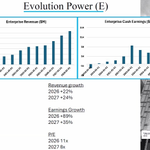
$E.TO reports Q3 soon. Some math on where it could print.
The gas rig count points to 12% growth year on year in their end market, which I take as the baseline. From management conversations, Q3 should also show the full effect of new clients ramping up spending that we did not see in Q2, and Q2 was already a very strong quarter. So I am betting on 12% to low 20s revenue growth, depending on client adoption and on when the new engines arrive and get put to work.
Debt will rise as they keep buying equipment to supply the Canadian LNG build out. They reinvest at over 20% returns on capital, so I am happy to see them lever up. Q4 should be stronger again.
Wide range of outcomes for this company, but the macro tailwind should sustain mid teens growth for a long time, and in the short term faster than that as they come off a low base.
$E.TO Enterprise Group is the best way to bet on the LNG super cycle — and today we got another substantial catalyst with LNG Canada Phase 2 approved.
This locks in a multi-year uptrend in drilling activity across Western Canada, directly expanding the market Enterprise Group services.
On top of that, their gas turbines solution keeps taking share as operators switch to the more efficient and cheaper alternative.
Net-net: HSD EV/EBITDA for a business that can reinvest every dollar it generates at +20% ROIC, while diversifying into long-term installations.
The story isn't reflected in the price. I don't think the recovery from 2025 lows is even reflected yet. I've been covering the stock for long and in Undervalued and Undercovered we have done 4 management calls over the last 5 quarters.
$PLBY is running another voting contest, and this time it is on their own platform.
The first one was Q4 last year and I believe it did around 500k of revenue, with a platform that had plenty of problems. The Honey Birdette one should show about 1.2m, but it ran on a third party platform so the margin is probably lower. I do not think any of it is in analyst estimates.
Running this one in house means they can guide for another quarter of high margin contest revenue, and it runs to 31 December so all of it lands in Q4. If it works, analysts can start to believe the company can do four to six of these a year at mid single digit millions. On top of that you get hundreds of thousands of emails they can sell into from the rest of the business.
Something positive to point at on the Q3 call, on top of what should be a beat on both lines.
Here is the link if you want to take a look, maybe you even want to enter. haha
playboy.com/read/great-playm…

Might regret saying this right before earnings, but the setup for $PLBY looks very good. Why? Let me explain.
The street is at 5.0m of Q3 Adj EBITDA. I get 7.1m on 33.4m of revenue. About 40% above consensus and up 75% year on year.
Q3 is the first quarter the media work actually prints: paid voting contests where Playboy gets paid to collect emails, voters pushed into a new subscription, plus the seasonal step up in licensing.
Coverage is thin and the published numbers look stale to me. That is usually where the gap between estimate and print comes from.
Honey Birdette has done seven straight quarters of double digit store comps, Q2 revenue up 18%, and June was the best month in its history. At 8 to 13x EBITDA that is 56 to 137m against a market cap of about 120m. If the US flagship rollout and the online growth work, that becomes 140 to 270m over two to three years.
So a good part of what you are paying is covered by the lingerie business, and the licensing arm comes at roughly 6x earnings that are mostly already contracted.
Byborg, a strategic, paid 1.50 a share in October 2024, before the turnaround was proven and when the company barely made any Adj EBITDA. This year should clear about 30m. The stock is 1.03.
Debt has gone from 218m to 145m, and they are buying back nearly 15% of the shares from Fortress at 1.05.
To be clear, this is a multiyear thesis rather than an earnings trade. But expectations going in are low enough that the short term entry does not look bad either.
I have done a lot of work on this name. Full write-up and the detail behind the Q3 numbers linked in the comments. It is a large position for me and in Pequity U&U Global Opportunities FIL.

At 19, I went from a Substack to a fund. Here’s our first quarterly letter.
PEQUITY U&U Global Opportunities, FIL crossed €2.3M only a few months after we started investing. Thank you to everyone who trusted us this early.
No traditional background, no connections. Just years of writing research in public until someone decided to back me.
No fancy title. No shortcuts. Just the work.
Hugo Navarro retweeted

GMS $GMS.L
Implied day rates are approaching a 10-year high🫣
Assuming historical cash conversion, we're generating +$50m/y FCF at steady state now, and +$90m/y three years out. Market cap ~$300m.
p/fcf ~6x
As deleveraging continues, we'll see a transfer of value from debt to equity holders. ✅


Hugo Navarro retweeted

Hugo is right. The alpha is usually in figuring out how governance will improve.
If I read one more pitch about a Korean net net I will go crazy. I do not care even a bit about the business, that is not where the alpha is in that market.
There are so many cheap Korean names that I could post an article a day on net nets, or on growing companies at very low valuations there. That is the point. A cheap Korean company is not necessarily an opportunity when there are that many of them.
The variant view you need in Korea is whether the Value Up program works, whether governance actually improves, whether activism can succeed in the country. Write about that if you like that market.
Everyone knows it is cheap. What you should be telling me is why you think differently from a market that is pricing the whole country that way.
I'll start with mine: Dovalue $DOV.MI
Everything about the story looks bad today, and it trades at 3x the free cash flow of its own worst case plan for 2029.
NPL formations are at the bottom of the cycle and the market treats the loan book as a melting ice cube. The credit market prices its debt as the safest in the sector, while the equity gets priced like one of the distressed names.
Two years out you have the deleveraging, a buyback already running, and rising credit stress in Europe feeding it new volumes instead of hurting it.
What is your best idea under 500 million market cap where everything looks ugly right now, and in two years it will look completely different?
If I read one more pitch about a Korean net net I will go crazy. I do not care even a bit about the business, that is not where the alpha is in that market.
There are so many cheap Korean names that I could post an article a day on net nets, or on growing companies at very low valuations there. That is the point. A cheap Korean company is not necessarily an opportunity when there are that many of them.
The variant view you need in Korea is whether the Value Up program works, whether governance actually improves, whether activism can succeed in the country. Write about that if you like that market.
Everyone knows it is cheap. What you should be telling me is why you think differently from a market that is pricing the whole country that way.