

Research | Evaluation | Training | Impact
Joined April 2019
- Tweets1.2K
- Following791
- Followers339
- Likes882
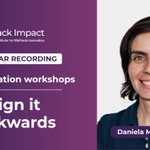





Missed Daniela Martin's Designing Collaborative Workshops That Produce Results session? The recording is now available to watch at any time.
Watch here: buff.ly/yu2vyT8
#ResearchImpact #Facilitation #CoCreation

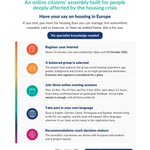
If housing has made life harder, this is for you. An online EU Citizens’ Assembly on housing is recruiting!
👉 Three paid evening sessions: 16 Nov, 19 Nov and 3 Dec 2026 (times confirmed with participants; at least one is enough).
5️⃣languages, open to anyone in the 🇪🇺
📝 About 10 min, closes 31 Oct: buff.ly/JSLnB9b

Looking for a methods partner for an EU-funded project? IMI works with research consortia across evaluation, evidence generation, public engagement and professional training.
Download our partner profile: buff.ly/vHZtvnl
@DrAaronMJensen | @JensenWarwick |
#HorizonEurope #ResearchMethods

REMHub is building a digital innovation hub to strengthen Europe's rare earth elements and magnets supply chain, from exploration and production to recycling. IMI leads stakeholder engagement, impact planning and public engagement across the project.
Learn more: buff.ly/Eyr24fC
#REMHub #HorizonEurope

Meet Lisa Sayles, Director of Education at IMI. Over two decades of experience in curriculum leadership and digital learning, ensuring inclusivity, accessibility and high pedagogical standards across IMI's educational programmes.
Read her full bio: methodsinnovation.org/about-…
#Education #DigitalLearning

If housing has made life harder, this is for you. An online EU Citizens’ Assembly on housing is recruiting!
👉 Three paid evening sessions: 16 Nov, 19 Nov and 3 Dec 2026 (times confirmed with participants; at least one is enough).
5️⃣languages, open to anyone in the 🇪🇺
📝 About 10 min, closes 31 Oct: buff.ly/JSLnB9b

🌍 Can markets for ecosystem services deliver for people, nature and climate?
A 2025 article by Mark Reed (@profmarkreed), Julia McCarthy, Eric Jensen (@JensenWarwick), Rosie Gearey and Hannah Rudman (@hannahrudman) analyses how governments can govern these markets at national scale without opening the door to corporate greenwashing.
👉 Poorly designed markets are prone to greenwashing and to negative outcomes for nature and local communities
👉 Most existing integrity principles were written for international scale or for single markets
👉 The authors set out 15 principles for high-integrity markets that can be operationalised nationally
👉 A governance hierarchy shows how those principles could be applied across UK markets
National policy oversight is what determines whether emerging markets deliver natural capital outcomes alongside wider public benefits. The framework is aimed at governments trying to scale these markets responsibly.
Read the full article here:
buff.ly/VPeSOb8
#NatureMarkets #EcosystemServices #EnvironmentalGovernance #SciencePolicy

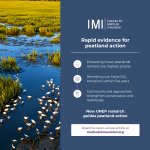
How can evidence keep pace with peatland policy?
A new UNEP report, methodology by IMI, synthesises evidence across seven peatland priorities.
Read it here: buff.ly/02kYWPd
@profmarkreed | @DiannaKopansky | @SRUC | @univofstandrews
#Peatlands #EvidenceSynthesis

If housing has made life harder, this is for you. An online EU Citizens’ Assembly on housing is recruiting!
👉 Three paid evening sessions: 16 Nov, 19 Nov and 3 Dec 2026 (times confirmed with participants; at least one is enough).
5️⃣languages, open to anyone in the 🇪🇺
📝 About 10 min, closes 31 Oct: buff.ly/JSLnB9b

Meet Daniela Martin, our Director of Communications. A science communicator, media producer and researcher with more than 15 years of experience, she leads IMI's communications strategy and digital presence, turning complex research into accessible formats for global audiences.
👉 She has led communication, engagement and impact activities in more than a dozen EU-funded projects.
👉 She has trained 400+ students, researchers and professionals in science communication, research impact and public engagement strategy.
👉 Her publications include peer-reviewed articles in JCOM and Open Research Europe and book chapters on science communication in Latin America.
Her work reflects a commitment to inclusive, culturally responsive communication that supports effective public and policy engagement.
Read Daniela's full bio here: buff.ly/STnAjYU
#ScienceCommunication #ResearchImpact #PublicEngagement #TeamIMI

🦜 Can live animal shows at zoos support public learning?
A study by Sarah Spooner, Eric Jensen, Louise Tracey and Andrew Marshall tested what audiences took from a sea lion show and a mixed species bird show, surveying visitors immediately before or after each performance.
👉 Audiences answered more animal knowledge questions correctly after the show than before
👉 Awareness of conservation action shifted only weakly
👉 Animals performing trick-type behaviours caused confusion about natural adaptations
👉 More than a quarter of zoo visitors attended some form of live animal show
What the measurement shows is a narrow gain in factual recall rather than a broad educational effect. The authors conclude that shows should prioritise natural behaviours with a clear focus on conservation action.
Read the full article here:
buff.ly/ef3qlnn
#ZooEducation #ScienceCommunication #PublicEngagement #InformalLearning

🗓️ What did daily life look like during the COVID-19 pandemic?
An open-access dataset from Prof. Eric Jensen, Dr Aaron Jensen and colleagues offers a longitudinal view of people's experiences during the pandemic, collected through a repeated-measures diary survey between 2020 and 2021. The dataset records participants' thoughts, emotions, social interactions and views of science and society in real time across several countries.
👉 Repeated entries at several time points show how people's lives changed over the course of the pandemic
👉 Quantitative items and open-ended questions together capture both broad trends and personal accounts
👉 Coverage across six countries allows comparison of how different public health responses shaped experience
👉 The data is openly available to researchers, educators and policymakers
The dataset gives researchers a way to understand how people coped with uncertainty and restriction during an exceptional global crisis.
Access the dataset here: buff.ly/hsiY6M8
#COVID19Research #LongitudinalData #SocialScience #OpenData

Meet Dr Charles Laurie, Managing Director at the Institute for Methods Innovation.
Charles is an experienced social researcher and research leader with expertise in research design, evaluation, public engagement and applied social science methods. As Managing Director, he supports the development of evidence-based research and evaluation projects that help organisations make informed decisions and improve outcomes.
Alongside his leadership role, Charles has advanced research methods through publications, training resources and educational content. He is co-author of Doing Real Research: A Practical Guide to Social Research, a widely used guide designed to help researchers apply robust methods in real-world settings.
Learn more about Charles's work: buff.ly/n6QTMvN

Looking for a methods partner for an EU-funded project?
IMI works with research consortia and organisations across evaluation, evidence generation, public engagement and professional training. We contribute to project proposals and deliver across the full project cycle.
Find out more: buff.ly/kHGScNo
#HorizonEurope #EUFunding #ResearchConsortium #ResearchMethods

📣 How can we ensure reliable survey research during public health emergencies?
A paper by Eric Kennedy, Prof. Eric Jensen (@JensenWarwick) and Dr Aaron Jensen (@DrAaronMJensen) sets out methodological considerations for survey-based research in crisis contexts such as the COVID-19 pandemic, when public opinion data informs science communication and policy.
👉 Surveys must be short and clear, especially when participants are under stress or facing information overload
👉 Drawing on validated, comparable measures improves data quality and supports cross-study comparison
👉 Rapid collection cannot come at the expense of sampling quality, ethics and transparency
👉 Stating trade-offs and constraints openly adds to the credibility of the findings
In an emergency, the value of public opinion data rests on the quality of the methods that produce it.
Read the full article here: buff.ly/eIz51J1
#SurveyMethods #ScienceCommunication #PublicHealth #ResearchEthics

🧠 How do people's beliefs about consciousness shape their ethical views of emerging neurotechnologies?
A recent study by Jonathan Lomax Boyd, Eric Jensen, Aaron Jensen and Nethanel Lipshitz examines how underlying beliefs about consciousness influence public attitudes towards biocomputers, biological computers created by integrating brain organoids with computer systems, and how those beliefs shape ethical judgements about the research and its future development.
👉 The researchers identified three distinct patterns in how people attribute consciousness across humans, animals, AI, plants and brain organoids, and these patterns strongly predicted how participants evaluated biocomputers.
👉 Participants who were more likely to attribute consciousness to biocomputers were also more likely to support legal protections for them, recognise responsibilities for their wellbeing and question whether they should always be considered morally less important than humans.
👉 Greater perceived consciousness did not reduce support for research. Overall support remained high, and in some groups attributing greater consciousness to biocomputers was associated with even stronger support for continued research.
👉 The findings suggest that public engagement, science communication, education and policymaking should recognise that people hold fundamentally different views about consciousness and that these differences shape ethical decision-making.
As neurotechnologies develop, understanding how people think about consciousness may be as important as understanding the technology itself.
Read the full article here: buff.ly/0AD3rdk
#Neuroethics #Biocomputers #PublicEngagement #ScienceCommunication

🛰️ What do young people really think about space careers?
A study by Prof. Eric Jensen, Dr Aaron Jensen and colleagues examines how young people perceive the European space sector and how outreach events shape those perceptions, drawing on data from six European countries.
👉 Many young people find space exciting but have little sense of what careers in the sector involve
👉 Outreach events raise interest and awareness, most of all among younger participants
👉 Students from underrepresented backgrounds are less likely to see space as meant for them
👉 Sustained engagement influences study and career choices more than one-off events
Space outreach works best when it is inclusive, sustained and backed by clear information about real opportunities.
Read the article here: buff.ly/RQS0Rid
#ScienceEducation #SpaceOutreach #YouthEngagement #STEMCareers

Meet Dr Aaron Jensen (@DrAaronMJensen), Chief Operating Officer at the Institute for Methods Innovation.
With more than a decade of experience in research leadership and innovation management, Aaron works across research design, evaluation and digital research technologies. His expertise spans mixed methods research, survey methodology, data governance and the development of digital tools for large-scale social research.
Aaron has contributed to more than 30 research and innovation projects across Europe, Africa, Asia and the Americas, including eight Horizon 2020 projects funded by the European Commission. His work focuses on helping organisations generate robust evidence to inform decision-making, policy and practice. His recent publications address research impact, science communication, survey methodology and public attitudes towards emerging technologies.
Learn more about Aaron's work: buff.ly/ws1hdQc

📝 How do we understand the working lives of science communicators?
A methodological study by Prof. Eric Jensen and colleagues reports findings from the pilot phase of the GlobalSCAPE diary survey, a repeated-measures tool that tracks how science communicators spend their time, the challenges they face and how they feel about their work. The aim is to build an evidence base for improving the support, recognition and effectiveness of the profession.
👉 Daily entries over time reveal fluctuations in workload, confidence, collaboration and perceived impact
👉 Clarity of language, frequency of reminders and mobile accessibility all affect participation and data quality
👉 For time-pressed professionals, making participation easy and meaningful sustains engagement across survey waves
Tools like these give a firmer basis for recognising and supporting science communication as a profession.
Read the full study here: buff.ly/da0y0TL
#ScienceCommunication #SurveyDesign #ResearchMethods #GlobalSCAPE
