









AI agents are “the best thing to happen to this industry in 30 years,” said MonetizationOS’ James Henderson. Six lessons from INMA’s Media Tech & AI Conference: ow.ly/W6Rx5102jYq


More than 60% of the traffic Cloudflare sees is now non-human. The customer is now the reader’s agent, and here’s what publishers should do about it: ow.ly/8aV35102jX0


Building an AI agent takes half a day. Working out what belongs in it takes 3½ weeks. Why AI adoption is a management problem, not a technology problem: ow.ly/s3va5102jTp


Meta has pushed back its content-scraping terms, but publishers see no retreat. Why the fight has shifted from delay to fair compensation: ow.ly/3R0U5102jQx


Readers’ AI agents are starting to research, decide, and pay for them. At INMA’s Media Tech & AI Week, James Henderson called it the best thing to happen to media in 30 years — if publishers set the terms: ow.ly/ON6j5101WXq


One publisher confronted five companies scraping its content. Three signed licensing deals. The other two stopped. Why “block by default” was the unanimous advice at INMA’s Media Tech & AI Week: ow.ly/Z77U5101WWY


43% of young Indians consume news daily; only 7% never do. Collective Newsroom’s research shows they discover news on Instagram, then go deeper on YouTube: ow.ly/zQZ65101WVR


Agentic AI could help publishers onboard subscribers, build habits, and cut churn. The catch: A prototype comes together fast; making it work every day takes much longer. INMA’s Jodie Hopperton on 6 lessons from our workshop with OpenAI: ow.ly/xwfc5101zsJ


156 news execs, 20 countries, 5 days in Silicon Valley. The big question: Who will own the next interface to news? A reader’s AI agent may matter more than your app. INMA’s Jodie Hopperton on 5 questions: ow.ly/9UGI5101z57

Star hosts leaving NRK and SRF didn’t go solo. A platform and a rival publisher bought them. The lure wasn’t money but owning a format, and Axel Springer now offers that in-house. INMA’s Kerstin Hasse: ow.ly/kaeO5101z4W

More than 60% of the traffic Cloudflare sees is now non-human. What 11 Silicon Valley companies, including OpenAI, Reddit, and AWS, told INMA about scarcity, AI deals, and owning the reader: ow.ly/Q6i75101cHE


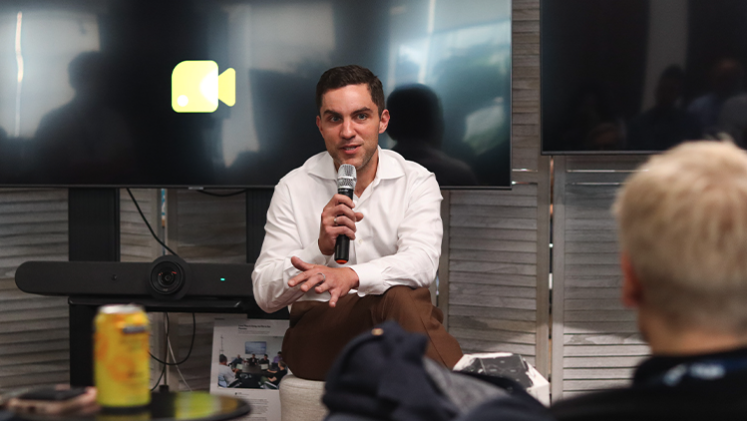
Google plans to let subscribers bring paywalled news into Gemini Notebook, co-founder Steven Johnson told INMA. Publishers opt in, and shared notebooks show their articles only to subscribers: ow.ly/3k9e5101cH4

The New York Times cut ad slots. Its ads now perform “way above industry benchmarks.” How NYT, DPG Media, Ozone, and Mediahuis Ireland are winning advertisers back with quality: ow.ly/pwxW5101cGG


Nine AI agents work on every police press release at Stuff before a human editor sees it. How New Zealand’s largest publisher is shifting journalists towards video and community: ow.ly/aAuv5101cFu


Ad spend on news is down 33% since 2019. Gabriel Dorosz on why publishers must move from selling ad inventory to selling brand partnerships: ow.ly/yxKF5100QNE


“Journalism begins and ends with people. AI changes what is possible in between.” How journalists at Bonnier’s Helsingborgs Dagblad build their own agentic workflows: ow.ly/l8bC5100QMw

Use AI to outsource your tasks, not your thinking. Why creative, awareness-led marketing needs to make a comeback: ow.ly/f7Mg5100QM4

“In a world that is increasingly mediated by Big Tech, that is the ultimate insurance.”
Substack’s Hamish McKenzie on the e-mail list — and why news brands should start thinking like networks: ow.ly/Qitj5100nmG

Search crawlers send back roughly 1 reader for every 11–15 crawls. Training scrapers send none.
Now Meta’s new terms reach any domain tied to a business account. Earl Wilkinson on who writes the contract: ow.ly/58fP5100nm1


The Times cut about a quarter of its stories and kept ~95% of pageviews.
How it, SCMP, The San Francisco Standard, and Applied XL are doing less, but better, in the AI era: ow.ly/6j7K5100nlu


