

International Universities Strength and Conditioning Association | Int'l Journal of Strength and Conditioning | Degree Accreditation | Courses & Qualifications
Joined June 2019
- Tweets1.9K
- Following1.4K
- Followers6.2K
- Likes440





🏋️ How strong does an athlete really need to be? And does being stronger automatically make them faster?
These are important questions for any Strength & Conditioning coach when designing training programmes to maximise athletic performance.
💡 In his session at the 2026 IUSCA International Conference on Strength and Conditioning, @DrTSuchomel explored the relationship between strength and athletic performance, examining how much strength athletes need and whether greater strength necessarily translates into greater athletic ability.
Understanding the balance between developing strength and improving other performance qualities is key to ensuring training delivers meaningful results on the field of play.
🎧 Whether you’re a student, coach, or experienced practitioner, this session offers valuable insights to help inform your approach to athlete development.
🎥 Watch the full session on IUSCA Video:
IUSCA.org/iusca-video
🔽🔽🔽
📚 Want access to more expert insights from leading figures in Strength & Conditioning?
Register for any IUSCA course or certification and receive FREE access to IUSCA Video at IUSCA.org/courses.
“We hypothesized that individuals with larger muscles at baseline would have a greater propensity to increase strength compared to those with smaller muscles.”
By Hammert, W., Song, J. S., Yamada, Y., Kataoka, R., Kang, A., Sallberg, R., Metcalf, E., & Loenneke, J. (2026).
Read the Full Text article for FREE⬇️
iusca.org/post/the-influence…

🏆 RECOGNISING EXCELLENCE IN HIGH-PERFORMANCE SPORT: ALEX NATERA
IUSCA is delighted to recognise Alex Natera with the distinction of Master International Strength and Conditioning Practitioner (mISCP), the highest practitioner level within the IUSCA International Qualification Framework (IQF Level 8).
Alex is an internationally respected Strength and Conditioning and performance science practitioner, with more than two decades of experience working across 20 professional and Olympic sports globally.
Currently Manager of Performance Sciences at the New South Wales Institute of Sport (NSWIS) in Australia, Alex brings extensive experience in high-performance environments, supporting the integration of scientific evidence, athlete monitoring and physical preparation.
His professional contributions include:
🏋️ Strength and conditioning methodology, particularly the development and application of isometric training approaches for athletic performance.
📊 Applied performance science, connecting research, monitoring and training prescription to support athlete development and performance.
🌍 Practitioner education and knowledge sharing, contributing to the professional development of coaches and sport scientists internationally.
Alex's work reflects the importance of combining scientific understanding with the experience and professional judgement required to make effective decisions in complex performance environments.
The IUSCA mISCP recognises practitioners who have demonstrated sustained excellence, advanced professional judgement, leadership and significant contributions to the development of Strength and Conditioning.
Congratulations, Alex, and thank you for your continued contribution to the profession.
🔗 Learn more about the IUSCA mISCP:
iusca.org/mISCP

🇺🇸 CELEBRATING OUR 2026 USA VOLUNTEER PLACEMENTS
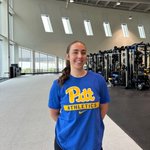
This year, students from across our university network have gained hands-on experience within NCAA Division I strength and conditioning programmes in the United States.
At IUSCA, we're committed to developing capable, confident S&C practitioners. Academic achievement is important, and so is learning how to coach, communicate and make decisions in real performance environments.
Our USA Volunteer Placement Programme gives students the opportunity to learn alongside experienced NCAA coaches, work with student-athletes and develop the applied competence and professional judgement reflected in the IUSCA International Qualification Framework (IQF).
We're proud to work with placement hosts including Colorado, Quinnipiac, Northwestern, Pitt, UCLA, CSUN, Portland, Arizona State, NJIT, UMass, USC, Cal State Fullerton and Washington.
Students from universities including our IUSCA Accredited Degree partners at Leeds Beckett, Lincoln, St Mary's, Cardiff Met, Portsmouth, Edinburgh and Liverpool John Moores have benefited from these international opportunities.
These placements are made possible by global collaboration. Our US partners provide high-quality learning environments and mentorship, while welcoming motivated emerging coaches who contribute to their performance programmes.
A huge thank you to our hosts and university partners, and congratulations to all our 2026 placement students. We're proud to support your development.
📸 A selection of moments from this year's placements.
Interested in future opportunities? Learn more at iusca.org/placements


🏋️ Great coaching isn’t just about having a plan. It’s knowing how and when to change it.
In Strength & Conditioning, the ability to adapt training in real time is essential. Whether responding to an athlete’s readiness, adjusting to the demands of a session, or making decisions on the gym floor, effective coaches need to be able to think on their feet.
🎧 In this webinar, Cole Hergott (aISCP) explored the art of making on-the-spot adjustments to training, offering valuable insights for coaches looking to improve their decision-making and become more adaptable practitioners.
🎥 Watch the full webinar on IUSCA Video:
IUSCA.org/iusca-video
🔽🔽🔽
📚 Want access to more expert insights from the world of Strength & Conditioning?
Register for any IUSCA course or certification and receive FREE access to IUSCA Video at IUSCA.org/courses.
#strengthandconditioning #sportscience #sportperformance #coaching #cpd

🚨 LATEST S&C JOBS | 24 OCTOBER 2026
This week's IUSCA Job Board features opportunities across professional baseball, cricket, football and high-performance sport in the USA, Australia and UK.
Every vacancy is independently classified against the IUSCA International Qualification Framework (IQF), with salary assessed against the responsibilities and professional demands of the role.
FEATURED THIS WEEK
🇺🇸 Colorado Rockies | Head of High Performance
IQF Level 8 | $250,000–$350,000
🟢 Green | IUSCA Aligned Role
🇦🇺 NSW Institute of Sport | Senior High Performance Manager
IQF Level 7 | AUD $177,222
🟢 Green | IUSCA Aligned Role
🇬🇧 Leicestershire CCC | Academy S&C Coach
IQF Level 6 | £24,000
🔴 Red
🇺🇸 Washington Nationals | Assistant Minor League S&C Coach
IQF Level 4 | $60,000
🟢 Green | IUSCA Aligned Role
🇦🇺 Williamstown FC | VFLW Rehabilitation S&C Coach
IQF Level 4 | Salary undisclosed
⚪ Indicative minimum: AUD $85,000
🇬🇧 Sheffield United FC | Youth Academy Physical Performance Coach, Women's Football
IQF Level 6 | Salary undisclosed
⚪ Indicative minimum: £40,000 FTE
WHY SALARY ALIGNMENT MATTERS
Professional responsibilities, qualification expectations and remuneration should be appropriately aligned.
The IUSCA Job Board assesses roles according to their autonomy, complexity, accountability and professional demands.
🚦 Green: Salary appears appropriately aligned.
🟠 Amber: Salary appears somewhat modest.
🔴 Red: Salary appears materially below the level indicated.
⚪ Grey: Salary undisclosed, with an IUSCA Indicative Minimum Salary Benchmark.
🏅 IUSCA Aligned Role: Recognition of appropriate alignment across role scope, qualification expectations and remuneration.
This week's listings highlight contrasting approaches to remuneration, including three Green-rated roles and a Red-rated academy position.
🔎 View vacancies and apply:
iusca.org/jobs
Better jobs. Fairer recruitment. Greater transparency. Higher professional standards.


🚨Published Today🚨
Positional Differences in American Football Players Internal Load and Recovery Over a 10-Week In-Season
By Dr. Valerie Smith-Hale, Ruben Mendoza, Cody Vargo, Dr. Jordan Sabourin, Dr. Brian Rider, Dr. Jeffery Martin, Dr. Whitney Moore,Dr. Tamara Hew-Butler
You can also find the full article for 🆓 by heading over to the IJSC website 💪⬇️🔓
journal.iusca.org/index.php/…

📖You can learn a lot in the classroom—but coaching experience is where knowledge comes to life.
For young strength and conditioning practitioners, gaining an education is an important step in developing the knowledge and understanding needed to become an effective coach. However, education alone isn’t enough.
Getting out into the coaching environment, working with athletes, learning from experienced practitioners and applying what you’ve learned are all essential parts of the development process.
Practical experience provides opportunities to make decisions, solve problems, adapt to different situations and understand the realities of coaching that can’t always be replicated in a classroom.
During the roundtable at the IUSCA 2026 International Conference on Strength and Conditioning, @bighousepower highlighted the importance of young practitioners gaining as much practical experience as possible alongside their formal education.
Because becoming a better coach requires more than knowing the theory. It’s about learning how to put that knowledge into practice.
🎥 Watch all the IUSCA 2026 conference videos to hear insights from leading practitioners and continue developing your coaching knowledge.
🤔💭 For young practitioners entering the industry, what do you think is the most valuable way to gain practical coaching experience?
#StrengthAndConditioning #CoachDevelopment #PracticalExperience #CoachEducation #AthleteDevelopment
“This study, in combination with previous studies, indicates the JJAPT provides reliable measures of Jiu Jitsu competition performance.”
By Peveler, R., Kilian, J., & Peveler, W. (2026).
Read the Full Text article for FREE⬇️
iusca.org/post/anaerobic-per…

FREE WEBINAR | REDEFINING COMPETENCE IN STRENGTH & CONDITIONING
What does it actually mean to be a competent Strength and Conditioning practitioner?
How should we evaluate scientific knowledge, practical experience, autonomy and professional judgement across different levels of practice?
Join Alex Wolf, Founder of the Strength and Conditioning Academy, for a FREE IUSCA webinar exploring the evolving understanding of professional competence and the newly updated International Qualification Framework (IQF) Level Descriptors.
Alex brings over 23 years of experience in high-performance sport, including 15 years working with Great Britain's Olympic programmes and previously serving as Head of Strength and Conditioning at the UK Sports Institute.
He has also contributed to the development of the IQF, helping to establish a more comprehensive approach to defining and evaluating professional competence in S&C.
WHAT WILL WE EXPLORE?
🎓 Knowledge and Scientific Reasoning: What knowledge should practitioners possess, and how should they demonstrate its effective application?
🧠 Autonomy and Professional Judgement: How do decision-making, accountability and professional responsibility develop across different levels of practice?
🏋️ Applied Competence: What does it mean to demonstrate competence in complex, real-world coaching environments?
🌍 The Updated IQF Level Descriptors: Exploring the framework's approach to professional progression, assessment and internationally recognised standards.
The discussion will consider how we can develop clearer, more meaningful standards for the profession, recognising the importance of scientific understanding, practical capability, critical reflection and the ability to exercise effective professional judgement.
📅 Thursday 12th November 2026
⏰ 11:00am PT | 2:00pm ET | 7:00pm GMT
Proudly sponsored by Hawkin Dynamics.
🌍 IUSCA.org/events

🏆 WHY NORTHWESTERN UNIVERSITY VALUES IUSCA ACCREDITATION
What do leading NCAA Division I athletic departments look for when recruiting Strength and Conditioning professionals?
In the final instalment of our Northwestern University series, Adam Hermann, Assistant Athletic Director for Olympic Sports Performance, explains why IUSCA professional accreditation is so highly valued within their performance programme.
Speaking about the IUSCA Accredited International Strength and Conditioning Practitioner (aISCP), Adam describes it as:
“The gold standard for S&C professionals around the globe.”
He also highlights the importance of scientific knowledge, practical competence and the confidence that IUSCA accreditation provides when evaluating prospective performance coaches.
WHY IUSCA ACCREDITATION MATTERS
IUSCA professional certification is built around comprehensive assessment of practitioner competence, with requirements appropriate to each IQF level:
🎓 Validated Academic Knowledge: Scientific knowledge and education appropriate to the level of certification.
🏋️ Significant Practical Experience: Demonstrated experience applying knowledge in professional S&C environments.
🎥 Practical Assessment: Direct evidence of coaching competence, professional judgement and applied decision-making.
📂 Practitioner Portfolio: Documented professional practice, critical reflection and continuing development.
Together, these provide employers with meaningful evidence of a practitioner's ability to apply scientific knowledge effectively in real-world performance environments.
We thank Adam and Northwestern University for sharing their perspective on professional standards and the value of IUSCA accreditation.
🎬 Watch the full testimonial to hear why Northwestern values IUSCA accredited practitioners.
🌍 Explore IUSCA Professional Certification:
iusca.org/aISCP
🤔 How can we develop power to maximise sports performance?
⚡ Power is a key physical quality across a wide range of sports, but understanding how to train it effectively and apply it to the demands of competition is essential for any strength & conditioning coach.
🎤 In his keynote session at the 2025 IUSCA International Conference on Strength & Conditioning, @jbryanmann mISCP explored Training Power for Sport, examining the role of power development in athletic performance and how coaches can apply these principles to their own sporting environments.
💡 Whether you’re working with team-sport athletes or individual competitors, developing a better understanding of power training can help you make more informed decisions when designing programmes to improve performance.
🎥 Watch Bryan Mann’s keynote session exclusively on IUSCA Video: IUSCA.org/iusca-video
🔽🔽🔽
🆓 Access IUSCA Video for FREE by registering for any IUSCA course or certification.
👉 Find out more at IUSCA.org/courses
#StrengthAndConditioning #SportsPerformance #PowerTraining #AthleteDevelopment #SportsScience StrengthTraining StrengthCoach IUSCA

🚨 LATEST S&C JOBS | 17 OCTOBER 2026
This week's IUSCA Job Board features opportunities across professional football, university sport and Olympic and Paralympic performance programmes in the UK and USA.
Every vacancy is independently classified against the IUSCA International Qualification Framework (IQF), with salary assessed against the responsibilities and professional demands of the role.
FEATURED THIS WEEK
🇺🇸 NJ/NY Gotham FC | Performance Coach
IQF Level 6 | $100,000–$120,000
🟢 Green | IUSCA Aligned Role
🇬🇧 Durham University | Senior Performance Sport Manager
IQF Level 7 | £47,389–£56,535
🟠 Amber
🇬🇧 Sheffield United FC | Academy Physical Performance Coach, Return to Play
IQF Level 6 | Up to £35,000
🟠 Amber
🇺🇸 D.C. United | Academy Head of Performance
IQF Level 6 | $60,000–$65,000
🟠 Amber
🇬🇧 UK Sports Institute | S&C Coach, GB Para Badminton
IQF Level 6 | £35,120 FTE
🟠 Amber
🇬🇧 GB Boxing | S&C Coach, World Class Programme
IQF Level 6 | £30,000–£34,000
🟠 Amber
WHY SALARY ALIGNMENT MATTERS
Professional responsibilities, qualification expectations and remuneration should be appropriately aligned.
The IUSCA Job Board independently evaluates each vacancy against the IQF, considering the role's autonomy, complexity, accountability and professional demands.
🟢 Green: Salary appears appropriately aligned with the role.
🟠 Amber: Salary appears somewhat modest relative to the role's demands.
🔴 Red: Salary appears materially below the level indicated.
⚪ Grey: Salary undisclosed, with an IUSCA Indicative Minimum Salary Benchmark provided.
🏅 IUSCA Aligned Role: Recognition of appropriate alignment across role scope, qualification expectations and remuneration.
This week's listings highlight the importance of transparent salary assessments, with five vacancies receiving an Amber rating and one recognised as an IUSCA Aligned Role.
🔎 View vacancies and apply:
iusca.org/jobs
Better jobs. Fairer recruitment. Greater transparency. Higher professional standards.


🚨Published Today🚨
An Exploration of Psychological Skills and Strategies in Division-I Strength and Conditioning
By @aefeit, Elizabeth Mullin, Jasmin Hutchinson and Brian Thompson
You can also find the full article for 🆓 by heading over to the IJSC website 💪⬇️🔓
journal.iusca.org/index.php/…

🤔 What can ground contact times tell you about an athlete’s acceleration? 🏃♂️
When analysing sprint performance, it’s not just about how fast an athlete can cover 10 metres. Understanding what happens during each ground contact can provide valuable insight into how they accelerate.
Ground contact time is an important consideration, but it needs to be interpreted in context. Coaches should look at how long an athlete spends in contact with the ground, how this changes throughout the sprint, and how it relates to their ability to produce and apply force effectively.
The key is understanding that shorter ground contact times aren’t automatically better. The aim is to understand how an athlete uses each contact to support acceleration, rather than chasing a particular number in isolation.
At the IUSCA 2026 International Conference on Strength and Conditioning, @DerekMHansen explored the effectiveness of a 10m sprint protocol, highlighting the importance of analysing ground contact times and understanding what coaches should be looking for when assessing sprint mechanics and performance.
Because effective sprint analysis goes beyond the numbers — it’s about understanding what an athlete is doing with every step.
🎥 Watch Derek Hansen’s presentation to learn more about the 10m sprint protocol and how ground contact time analysis can inform your coaching.
🤔💭 When analysing acceleration, what do you look for in an athlete’s ground contact times?
#StrengthAndConditioning #SprintAnalysis #GroundContactTime #Acceleration #speeddevelopment
“BFR added to endurance training may help improving performance in recreationally trained runners with specific adaptations depending on the intensity used.”
By Rodrigues, R. A. A., do Carmo, E. C., Boullosa, D., Lopes, C. R., Sindorf, M. A. G., & Barroso, R. (2026).
Read the Full Text article for FREE
🔗 iusca.org/post/effects-of-en…
