


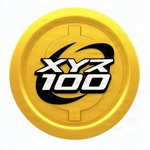





no one noticed that pumpfun gave us a random index in the api ??
wtf is INDEX : XYZ100
is this not them giving us a free coin to run paired to the highest pump coins?
frontend-api-v3.pump.fun/coi…

king retweeted

Been seeing all the quantum-attack talk, so I used AI to explore an idea: what would a memecoin with a post-quantum seal on its origin look like? That experiment became Quantum Seal. The proof starts with a digital birth certificate: the mint address, creator, token name, ticker, initial supply, timestamp and a hash of the metadata URI. These details are encoded in a fixed format so a verifier can reproduce exactly the same bytes. We hash that message with SHA3-512, then sign the resulting commitment using ML-DSA-65, a post-quantum signature algorithm. A separate SHA3-512 fingerprint commits to the proof record, including its public key and signature. That final fingerprint was included in the same Solana transaction that created the token. The full proof stays off-chain; its fingerprint is permanently recorded with the launch. Here’s where to look:
solscan.io/tx/4TSGgkvf4csfDN…
The launch transaction Open the launch on Solscan Under Instruction Details, expand #5 — Memo Program v2. You’ll find a string beginning with PQB1:. That is the commitment to the external proof. Solscan may label this instruction “Unknown”; expand it to see the memo data. The external proof record:
api.npoint.io/bee368d18e7347…
This is the public JSON record used for verification. The included public key lets people check the signature without needing any private key. Keep a copy: the on-chain fingerprint preserves the commitment, but it does not store the complete proof.
The token itself solscan.io/token/5RpZVdZmpuw…
What does verification actually involve? Reconstruct the message using the protocol’s exact byte format and calculate its SHA3-512 commitment. Verify the ML-DSA-65 signature against that commitment. Calculate the proof record’s fingerprint and compare it with the PQB1: memo. Compare the signed mint, creator, name, ticker, metadata URI hash and supply with the launch transaction. The fingerprint is calculated from the protocol’s encoded record—not simply by hashing the downloaded JSON text.
The local proof passed verification and matched the launch memo and displayed launch details. Anyone checking independently should repeat those checks against the published record. That’s the “seal”: a verifiable connection between this token’s launch and a post-quantum-signed origin record. The metadata URI hash commits to the URI string; it does not freeze whatever a website serves at that address. AI-assisted, experimental and unaudited. The post-quantum component authenticates the launch record through external verification; token transactions continue through Solana’s standard authorization system.


Today I call upon the blockchain industry to calmly begin planning for "bunker mode". My personal recommendation is to set in motion a controlled mass migration of assets to fresh addresses, i.e. addresses whose pubkeys remain hidden behind a hash.
Holders, starting with large and sophisticated ones, should consider moving the bulk of their funds to addresses that have never signed a transaction. And when they do sign one, they should also move remaining funds to a new address (possibly generated from the same seed phrase).
Don't rush. While I believe there is cause for action a rushed migration would do more harm than good. Don't panic either. Moving assets to protected addresses is a simple, preventative step which does not require new cryptography or new wallets.
IMO it is now reasonable to brace for the possibility that ECDSA breaks before qday, in the worst case in months not years. By "break" I mean fast private key recovery (e.g. in one week) on available hardware (e.g. a large GPU cluster).
Recent days have been humbling for human mathematical intuition. Long-held, unquestioned hypotheses have fallen. This includes the n log(n) bound for integer multiplication and the 3SUM conjecture. In hindsight, May's unexpected disproof of the Erdős unit distance conjecture was our warning shot.
Yesterday's OpenAI drop made it clear that mathematical superintelligence is upon us. They say there are weeks where decades happen. We are about to live through weeks where centuries of mathematical progress happen. Could our magic 64-byte ECDSA signatures be too good to be true? Was it just security through obscurity all this time?
Elliptic curves feel especially vulnerable to superintelligence. Curves carry rich structure, with room for fancy tricks like Schoof, Frobenius, pairings. (By contrast, hashes are designed to minimise algebraic structure.)
Separately, as Ewin Tang can attest, an efficient quantum algorithm sometimes foreshadows an efficient classical one. We should be open to the possibility of a classical counterpart to Shor that breaks elliptic curves and RSA at once.
Also noteworthy is the striking under-representation of cryptographic breakthroughs among the 722 mathematical results OpenAI published. I've witnessed first-hand the US government censoring academic quantum cryptanalysis results. Backroom interventionism is my base case.
I urge large, sophisticated actors to lead by example. Project11's "risq list" (bitcoin-risq-list.projecteleven[.]com) is a great tracker of exposed BTC pubkeys. Binance, Bitbank, Robinhood, Bitfinex, and Tether have an opportunity to harden their cold storage. Next month I'll address institutions in London in a live Q&A (forum.ethereuminstitutional[.]org/london-2026).
Again, please do not rush. Wallets holding under 50 BTC enjoy partial cover from "Satoshi's shield", i.e. his 20K exposed addresses that hold 50 BTC each. Load-bearing signers like oracles and L2 security councils should consider rotating ECDSA pubkeys with every signed message and/or multi-signing with a hash-based schemes like SPHINCS.
Exiting bunker mode safely will require post-AI cryptography. My inclination is to go all-in on hash-based cryptography and avoid structured mathematical assumptions entirely, whether from curves, lattices, or isogenies. A single battle-tested hash (e.g. from the SHA or BLAKE families) yields plausible post-AI security.
The Ethereum roadmap on strawmap[.]org fully embraces hash-based cryptography with end-to-end formal verification as a response to the quantum threat. Those timelines must now be revisited and accelerated in light of mathematical superintelligence. I'll be pushing for maximum defensive acceleration.

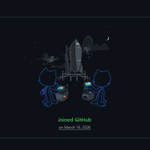
I found this in the ONDO github
They have a project called "meme dollar" and the project name is PINA
Heres the proof
github.com/ondoprotocol/yiel…


king retweeted
I want to quickly explain what happened with the previous launch.
The X user @pollatrenches launched a memetoken for me and promised me a share of the fees/rewards. In return, I was supposed to post a SOL contract address for him.
Unfortunately, I ended up getting rugged.
After that, a lot of people suggested that I should simply launch my own coin, without involving anyone else, and do it directly through Robinhood.
So that’s what I’ve done.
Sorry for any confusion or inconvenience caused by the first launch. This is now my own launch, and I’m fully here for it.
And if you have any questions about the first humanoid fly ever made in the world, feel free to ask me.
I’m here.
king retweeted
The project is still in development, i will be posting updates on the environment and the training while you guys can watch it live on here:
flyer.h5nn.me/sim
i've genuienly found pepe 2.0.
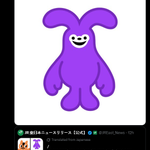
Japan has just created a brand new meme mascot named S-uica Rabbi-t it has the most views and likes ive ever seen fora character on X and is getting memed like crazy. 60 Million viewso nthe main post and he's about to become the mascot for the entire country.
this should go millions
post1: nitter.cf/Mllkwalkee/status/2097…
Tweets: nitter.cf/JREast_News/status/209…
website: jreast.co.jp/suica-new-chara…


/
Suicaの新たなイメージキャラクターの選考投票をスタートします📢
\
Suica導入時からイメージキャラクターを担ってきた「Suicaのペンギン」は、2027年3月31日に卒業し、同年4月1日から新たなイメージキャラクターにバトンタッチします🤝
これに伴い、新たなキャラクターを選考するお客さま投票を本日9月8日15時からスタートしました🎉
最も多くの票を獲得した候補を新たなイメージキャラクターとして採用し、Suicaを導入した記念日である11月18日に発表します🎊
↓↓↓お客さま投票の特設サイトはこちら↓↓↓
jreast.co.jp/suica-new-chara…
特設サイトでは、原案候補の選定に至る過程をまとめた動画公開や、投票に関する注意事項も掲載していますので、ぜひご覧ください❗
↓↓↓プレスリリースの詳細はこちら↓↓↓
jreast.co.jp/press/2026/2026…
#JR東日本 #Suica #新キャラクター


1
1
572

king retweeted
So I found the Vlads first ever interview in 2013
where he talks about robinhood being your stock market companion. then proceeds to show screenshots of the earliest robinhood App where he demonstrates Buys and sells with his alter ego "Horst Staley"
venturebeat.com/business/rob…


king retweeted
Chairman Mike Selig @MichaelSelig has finally acknowledged the trenches.
The CFTC’s new Innovation Advisory Committee agenda for next week’s meeting literally lists “Stories from the Trenches” as a topic under crypto’s regulatory evolution. After years of builders grinding through uncertainty, overlapping rules, and regulation-by-enforcement, it’s good to see the Chairman put it on the official docket.
We would love to share stories from the Trenches.
govinfo.gov/content/pkg/FR-2…
@a1lon9
@Pumpfun
6HnoTFvt6eE6Y9KfbbRcv6dbrxBAQtaTCHP3TfcSpump

HOLY FUCK THE PUMPFUN TRENCHES IS THE AGENDA FOR THE CFTC MEETING NEXT WEEK. DOWNLOAD THE DOCUMENT ITS REAL
CLICK THE HERE LINK FOR DOWNLOAD
cftc.gov/PressRoom/PressRele…
