

PhD in ML. @DeepMind Machine Learning Research Engineer in Biosecurity & Tech Lead of Biosecurity. Opinions are my own.
London
Joined February 2016
- Tweets527
- Following3K
- Followers2K
- Likes1.8K





Pinned Tweet
Very happy to share “AntBO: Towards Real-World Automated Antibody Design using Combinatorial Bayesian Optimisation” was accepted at @CellRepMethods
TL;DR improved ML method for sample efficient CDR design.
Paper - arxiv.org/abs/2201.12570
Code - github.com/huawei-noah/HEBO/…
/1

Alexander Imani Cowen-Rivers. retweeted

Google DeepMind just released SynthID Bio, a watermark written into the amino acid sequence of an AI-designed protein. We validated the proteins in our lab at @adaptyvbio and you can now find all the experimental results on Proteinbase.
Alexander Imani Cowen-Rivers. retweeted

I am hiring a Student Researcher at the SynthID team at @GoogleDeepMind in London. We work on provenance across all modalities: text, images, audio, video and bio sequences, deploy on every single GenAI surface at Google and with partners like OpenAI, Apple and NVIDIA.
Alexander Imani Cowen-Rivers. retweeted

Delighted to see the launch of the UK’s new AI Biosecurity Lab, which @GoogleDeepMind will partner with and support.
As life sciences enter a transformational era, it is essential for researchers, government, and industry to collectively strengthen our biological defences and guide these new capabilities responsibly.
Congratulations to @KanishkaNarayan and the entire team that has worked on making this a reality.

2/7 We're launching a £165m National AI Biosecurity Initiative, including £100m for a world-first AI Biosecurity Lab.
This will harness British scientific expertise and latest AI to detect biological threats and protect people from emerging risks.
As with our @AISecurityInst, I want the new AIBL to lead the world in capability.
Alexander Imani Cowen-Rivers. retweeted

Introducing AlphaProtein Novo, a pipeline for de novo enzyme design! In collaboration with @francesarnold's group, we developed AP Novo and used it to get SoTA "novel-scaffold" activity on 2 benchmark reactions and create enzymes to synthesize the pharmaceutical motif piperidine and degrade the environmental toxin DEHP.
Work led by @ZvxyWu @ZiqiLi0513 with teammates @alexechu_ @kelly_ruijie @schulluc @jacobjinkelly @rosaliags @davidla @solserpens @j_reisenbauer, @pengliu_group, Josh, Thomas, Amy, Tristan, Harshnira, and others. It was a joy and privilege to work with you all!
Preprints and code:
biorxiv.org/content/10.64898…
biorxiv.org/content/10.64898…
github.com/google-deepmind/a…
We are officially expanding the Biosecurity Initiative within the Google DeepMind Science Unit! We are hiring one Research Scientist and up to two Research Engineers. Job postings linked in the comments.
We have a number of exciting projects in progress. If you are motivated to use ML to eliminate the impacts of biological threats globally within our lifetimes, we want to hear from you!
1
89
Research Scientist role - tinyurl.com/GDM-biosec-RS
Research Engineer roles - tinyurl.com/GDM-biosec-RE
(Please note I will endeavor to respond to questions about the roles, but will not be referring candidates)
1
85
Alexander Imani Cowen-Rivers. retweeted
It was such a pleasure to talk through our journey to make AI-generated artefacts identifiable with SynthID. @FryRsquared is not only a great communicator but she also has deep technical insight and innate curiosity.
While @jeremydratcliff and I were representing the team, this work wouldn't be possible without the leadership and contributions of @sgowal @sdathath @FStimberg @BunelR @davidstutz92 @ImanisMind and so many exceptional team members at @GoogleDeepMind.

When AI-generated content has become so realistic, how do we verify what's made by human, machine, or nature?
We explore the vital role of provenance – and how imperceptible watermarking can safeguard both digital media and biological designs – on our podcast. ↓
Timecodes:
00:00 Introduction
00:34 What is a watermark?
04:35 SynthID
15:16 Images and video
19:28 SynthID Bio
28:00 Future of resilience
Had a fun time making this video with @davidstutz92 !
Alexander Imani Cowen-Rivers. retweeted
The #AlphaFold 3 model code and weights are now available for academic use. We @GoogleDeepMind are excited to see how the research community continues to use AlphaFold to address open questions in biology and new lines of research.
github.com/google-deepmind/a…


Very excited to share an update on what we've been working on at GDM and Iso - the latest version of AlphaFold!🧬⚛️
Today in partnership with @IsomorphicLabs, we're sharing progress on the next generation of #AlphaFold. 🧬
Our new model greatly expands coverage of structure prediction beyond proteins to other key biomolecular classes.
How could it help scientists? 🧵 dpmd.ai/alphafold-progress
Alexander Imani Cowen-Rivers. retweeted

Excited to show a glimpse of the next generation of AlphaFold from our teams at @IsomorphicLabs and @GoogleDeepMind. This model expands beyond proteins to include other molecules like small molecules and nucleic acids, and improves accuracy on proteins 1/n
bit.ly/45Qt4yT
Alexander Imani Cowen-Rivers. retweeted

New! We’ve just put up a note evaluating the latest, in-development version of AlphaFold (“AlphaFold-latest”). This is a preview - development is still in progress - but performance across a wide range of tasks is striking.
deepmind.google/discover/blo…
Highlights in the thread.
1/7

Alexander Imani Cowen-Rivers. retweeted

Toward real-world automated antibody design with combinatorial Bayesian optimization dlvr.it/SgLG8p

Alexander Imani Cowen-Rivers. retweeted

Defense of PhD candidate #31. Congratulations, Alexander Cowen-Rivers!

ALT Zoom screenshot of candidate and committee
Alexander Imani Cowen-Rivers. retweeted
Pleased to say @DeepMind has just released a code update to #AlphaFold 2.
This includes updated model weights trained on newer data, minor changes to the codebase to inference larger proteins and predictions for the #CASP15 targets.
Find out more: github.com/deepmind/alphafol…

ALT A large number of three dimensional models of proteins scattered through space, mimicing the Hubble Deep Field images of galaxies.
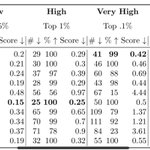
Other experiments include an analysis of starting with no prior knowledge to starting with knowledge of low, high, …, binders.
Our method is able to successfully find binders with no prior knowledge, as well as benefit from knowledge.
/4

1
4
Overall, we show improvements over many ML based methods for sequence design, such as SOTA method LaMBO.
Work done with
@KhanAsif__
@victorgreiff
@hbouammar
@EvaSmorodina
@PRobertImmodels
and many others! Thanks to the editors for their insightful comments.
/5