JB retweeted

I'm a spine surgeon. You asked a fair question, so here's the plain-English answer.
Before 2012 you could buy an individual plan online for about $200 a month, pick from six or seven insurers, and choose your own deductible: $500 if you wanted to pay more up front, $5,000 if you didn't. If you were healthy, that is. If you were sick, they could turn you down, and that part was real and had to be fixed.
Obamacare fixed it by requiring every plan to cover everyone for everything. Good. But that made the real price of a plan jump, and the only way to keep the monthly number from looking insane was to push the cost onto the back end. That's your $6,500 deductible. You're paying comprehensive prices for catastrophic coverage.
Then the quiet part. The law caps what insurers can keep at 20% of premiums. So the only way an insurer makes more money is if the total bill gets bigger. 20% of $10,000 beats 20% of $5,000. They have no reason to fight the hospital's price. They pass it through, take their cut, and send you the premium.
And the hospital's price went up. Hospitals bought the independent doctors, and the same visit & surgery under the hospital's name now costs 3-10 times more. Hospital prices are up 281% since 2000.
The number of insurers you can choose from fell to one in half the counties in America by 2018. Meanwhile, six in ten adults now have a chronic disease, so the pool is sicker.
So: sicker patients, pricier hospitals, an insurer that profits from a bigger bill, and a law that moved the cost to your deductible. That's what you're paying for.
Nobody in that chain gets paid more if you get better. That's the part to fix.

CAN SOMEONE EXPLAIN HEALTH INSURANCE LIKE I’M FIVE?
I pay $580 every month for health insurance. Then I get sick, visit the doctor, and receive a $1,400 bill because I haven’t met my $6,500 deductible.
So I paid nearly $7,000 in premiums just to be told I still have to spend another $6,500 before most of my coverage kicks in.
And every January, the deductible resets and the whole game starts over.
WHAT EXACTLY AM I PAYING FOR IF I STILL HAVE TO EMPTY MY OWN POCKETS BEFORE MY INSURANCE DOES ITS JOB?


Dr. Hooman tells it how it is!

Senator Sanders @SenSanders I am a surgeon This is the MOST IMPORTANT chart in American healthcare.
Since 2000, hospital prices are UP 281%. Number one on the chart. Above college tuition. Three times inflation.
Now ask yourself: is your care three times better than it was in 2000? Shorter waits? More time with your doctor? Easier to get an appointment?
You know the answer. You PAID 281% more for 15-minute visits, a six-week wait for a specialist, a portal instead of a phone number, and a different doctor every time. The money went somewhere. It didn't go to the room you were in.
Here's where it didn't go. Medicare's payment to the physician over the same 25 years: up 7%. Inflation: up 93%. Adjusted for the cost of running a practice, that's a 33% cut. Every other line on this chart rose. The one for the person treating you went backwards.
So what inflated? The building. Hospitals started buying doctors' practices. Same visit, same doctor, same room, now with a "facility fee." Medicare pays more, your insurer pays more, your copay goes up. The care got worse & so did the invoice.
Then they merged. One system buys the hospital across town, the next county, the next state. Insurers can't drop them, so they pay whatever's asked. RAND found consolidation raises prices with no improvement in quality & Sometimes even worse quality.
And the backwards doctor line is the fuel. An independent practice can't survive a 33% real cut. It sells to the hospital. Now that doctor sees 28 patients a day on a quota, with an administrator deciding what gets ordered. The 281% grows by eating the doctor.
Look at the bottom of the chart. TVs -98%. Software -73%. Cellphone service -44%. Everything with real competition got cheaper and better. Everything that consolidated into a few giants got more expensive and worse.
"Nonprofit" hospitals? Many are. Nonprofit means no shareholders. It doesn't mean no surplus. The surplus goes to the next acquisition, the next tower, the next executive.
This is corporate medicine on a graph. Not greedy doctors. The doctor line went backwards. It's the building that got expensive, and it's the building that decides how long you wait.
Next time someone blames your doctor & the no surprise act for the cost of healthcare, send them this chart and ask one question:
Which line is the doctor on?
Chart: @Mark_J_Perry
@SenWarren #MedicareForAll

1
40



Welcome to the party, @NYSE. We’ve been waiting for you.

"This New York Stock Exchange ATS is already set up to accept tokens minted on Solana."
"We also already support Solana for ICE Digital Trust, and we're looking at whether we can become a validator for Solana."
Hester Serafini, President of ICE Clear Europe, on how @ICE_Markets and @NYSE are already working with Solana
37

JB retweeted

So the great battle of our time is not US vs Iran...
But all things centralized vs all things decentralized.
In the long term centralization cannot hold.
The frontier has been in the world of money.
The world of intelligence is next.

JB retweeted

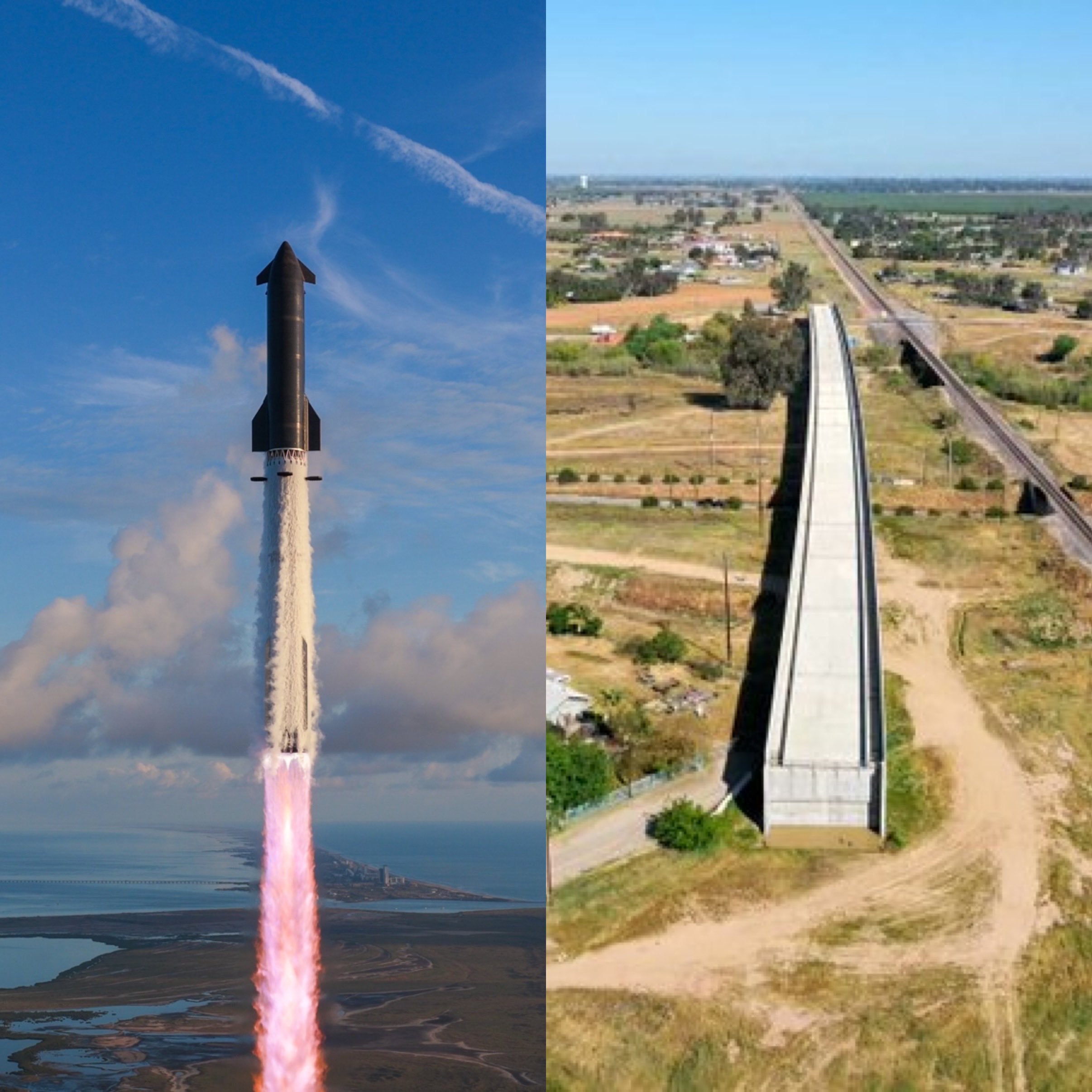
I’ve worked that heatshield my entire adult life. Peak career moment today
To go from little 7 tile patches to a full reusable ship. Absolute marathon
I’m so grateful I got to do something useful, that I was given the chance
I don’t really have many good memories from this experience.
It was so difficult. It almost looks easy now, but none of it came easily
Please do something amazing with this rocket. This tech is such a gift, a love letter to the species


Flow state writing 👇

The real pressure on NVDA isn’t just the Jensen drama or macro noise, it’s Anthropic quietly driving the policy fight.
Their incentives are structurally opposed.
For Anthropic to win and justify a sky-high valuation, they need high-margin closed-source frontier models to dominate, with open-weight models heavily restricted or de facto banned (or at least sandboxed to the point they’re not competitive).
Wide availability of strong open models collapses pricing power, enables local/self-hosted use, and turns inference into a commodity that anyone with GPUs can serve.
For NVIDIA to keep compounding, the opposite is required: open models everywhere, running on as much hardware as possible. More open weights = more developers, more fine-tunes, more agents, more total tokens, more GPUs sold.
Jensen’s public push for open weights and the Open Secure AI Alliance wasn’t charity, it was core to the business model.
When one side needs the open ecosystem throttled and the other needs it to explode, the “safety” and “national security” arguments start looking a lot like competitive strategy.
Show me the incentive and I’ll show you the outcome.
1
53
Hey Brian and @BallardFirm, how did SV-40 get put into the Covid shots?

Statement from Brian Ballard regarding recent allegations from Calley Means. @calleymeans @joerogan @FaceTheNation

1
68
Need this

If I could ask for one thing @TimJDillon please dress up as Susie Wiles and do a bit about her spreading Monsanto glysophate cancer everywhere for a handbag!
1
70