
Miami, FL
Joined January 2013
- Tweets1.5K
- Following163
- Followers116
- Likes461







Jonathan Iglesias, MD retweeted

I’m a cardiologist who started practicing in the years right before the ACA passed. At the time, I assumed the health policy professionals knew what they were doing and would design a system that improved things for patients and physicians.
I was wrong.
Watching the revisionism from the health policy class about what actually happened after passage has been something to behold.
Anyone who still claims the Affordable Care Act lowered the federal deficit or made health care more affordable cannot be taken seriously on this topic. They may believe it in good faith, but a credential plus that belief does not entitle them to more say on future health policy than a random person on the street.
The strongest positive claim one can make is narrow: a small group of previously uninsurable patients (roughly 3% of the population) gained access to insurance. Policymakers took a real problem affecting a small minority and used it to fundamentally redesign the entire health care system. The result made things worse for the other 97%.
That is not a hypothetical.
In practice, the law created a mechanism to funnel large sums of taxpayer money to insurance companies and Medicaid managed-care middlemen—on the order of $800 billion in subsidies for ACA plans and another $800 billion in federal dollars to states for Medicaid expansion. The CBO scored this as paid for primarily through higher taxes and reduced Medicare payments to hospitals.
Because the ACA mandated essential health benefits and community rating, and because insurers knew government subsidies would kick in, premiums rose sharply even as deductibles on these plans reached thousands of dollars. Individuals were then required to buy one of these products or pay a penalty.
For physicians, the law built the first major penalty-based quality-reporting apparatus. This added overhead and cost for a set of largely clinically meaningless metrics, which contributed to many doctors retiring early or selling their practices to hospitals.
On the fiscal side, the tax increases and Medicare payment cuts covered a portion of the new spending on paper. What the CBO did not adequately account for was the fraud and waste incentives created by a 90/10 federal match on expansion populations. When the state and managed-care organizations receive 90 cents on the dollar for every enrollee, the incentive to rigorously verify eligibility is weak. When federal dollars are flowing into home care, learning centers, and similar services that boost the local economy, states have little reason to aggressively pursue fictional or inflated claims.
Medicaid spending is now roughly 20% higher than earlier projections. Any serious attempt to slow that growth is met with academic preprints and media coverage warning that large numbers of people will die.
Helping a small number of previously uninsurable patients did not require redesigning the entire health care system around subsidies, mandates, community rating, and penalty-based reporting. That redesign raised costs, accelerated consolidation, and created spending dynamics that are now treated as untouchable. The results are visible. The revisionism is not.

An extremely narrow field of view from Fiedler on Obamacare :
1. Actual Medicaid spending has far outstripped early projections. CMS reports tens of billions in improper payments annually. Independent analyses put millions of expansion enrollees as likely ineligible—ghosts and fraud CBO never fully scored.
2. Medicare payment cuts didn’t magically create free savings. Hospitals consistently report Medicare/Medicaid underpayments. The gap was just shifted onto commercial insurers and the uninsured. It isn’t an accident that hospital Private rates run 200-250% of Medicare. Those “savings” Fiedler is pumped about just became higher premiums for everyone else.
3. Essential health benefits + community rating (and a healthy dose of consolidation driven by the ACA) produced major premium increases for people buying coverage on their own. Benchmark premiums rose ~75% from 2014–2024 (and more for older enrollees)—roughly double the growth in employer plans. That’s a large, unaccounted-for tax on families
Bottom line: If the goal was deficit reduction, raise taxes. Don’t pair the tax increases with a massive new spending entitlement and a regulated individual market that has driven large premium inflation.
Jonathan Iglesias, MD retweeted

This is always hilarious.
We have a growing physician shortage and worsening burnout. Yet somehow, cutting physician compensation remains a popular solution to rising healthcare costs.
Physicians’ actual earnings accounted for just 8.6% of total U.S. healthcare spending in 2017.
You could pay every physician $0 and still have 91.4% of healthcare spending left.
And somehow, the focus keeps returning to physician compensation rather than hospital pricing, insurers, pharmaceuticals, and administrative overhead.

Jonathan Iglesias, MD retweeted

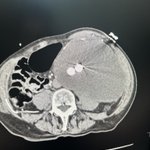
PE thrombectomy in a patient with chronic RV dilatation and a proximal, horizontal right PA origin. Sneaky, frustrating anatomy to navigate. Tip: the curved back end of a Benson wire helps accentuate the access catheter angle. #IRad #PE #Thrombectomy




Jonathan Iglesias, MD retweeted

This is true.

Physicians keep paying specialty association dues. Apparently, losing requires a subscription.
Hospital ownership? Gutted. Stark and anti-kickback restrictions? Alive and well. Certificate of Need laws? A handful of individual physicians get to spend their own money fighting for permission to compete.
CMS pays a premium to send patients to the most expensive buildings in town while treating the physician’s professional fee like a clerical error it intends to correct downward.
And when Washington comes for physician ownership in ASCs, I’m sure we’ll get another beautifully formatted statement expressing profound concern.
For decades, physicians have funded executive directors, boards, committees, lobbying teams, and annual trips to Washington. Meanwhile, they’ve lost income, ownership, and autonomy.
Then comes the victory lap: We “mitigated some of the more significant concerns.”
Congratulations. They wanted both kidneys. You negotiated one.
At some point, the people collecting dues need to explain why the people paying them keep losing ground. Access to lawmakers is lovely. A photograph with a senator must be thrilling. Neither pays the overhead.
Imagine a surgeon explaining that the operation failed for the twentieth consecutive year, but the relationships in the operating room have never been stronger.
Please renew your membership.
And here come the “to be fair…” comments.
We are at war.
We are losing big time.
Jonathan Iglesias, MD retweeted
I have transitioned to pedal for majority of cases. If I can’t feel pulses, ABI/US first and I think twice about offering this.
Pedal is objectively faster/easier in my opinion. TCNK catheter is very nice for this.
If groin I’m going shesthless 4fr glide cath. Manual hold
Jonathan Iglesias, MD retweeted

You want lower premiums?
Stop protecting expensive healthcare from cheaper competition.
Obamacare gutted cheap catastrophic coverage ($161 for me) and slammed the door on more than 500 hospitals.
34 States make people beg for permission to open new hospitals and medical facilities and then don’t allow it.
Meanwhile, university health systems own hospitals AND insurance companies, enjoy paying no tax , collect 49 subsidies, and screw you on the premium and the bill.
Then the people protecting this arrangement tell you healthcare is just expensive.
Of course it’s expensive.
You made cheaper competition a problem and subsidized the rich educated non profit grifters.

Jonathan Iglesias, MD retweeted
Medicare cuts the base rate for most physicians by 2.31% in January. That’s six cuts in seven years. The decline in reimbursement when accounting for inflation is close to 50% in the last 20+…
The standard hospital facility fee for the same clinic visit goes up 7.4%.
A question for our politicians….
Why should physicians and the people who provide care trust CMS or congress not to continue to screw this up…
Why should we support Medicare, much less Medicare for All?

Breaking: CMS finalized the 2027 physician fee schedule. Most physicians face a 2.31% conversion factor cut Jan. 1, while the modifier -25 same-day cut drops to 20% and traditional MIPS reporting now ends in 2031.
#Medicare #PhysicianFeeSchedule #CMS
🔗 hubs.li/Q04DnBVm0

Jonathan Iglesias, MD retweeted

Physician pay cuts. Rising inflation. Increasing cost of medicolegal coverage. Demand to increase wRVU YoY. Supply taking back my stapler.
Yeah….this cycle is finally nearing completion.

Jonathan Iglesias, MD retweeted

Stuck between a rock & a hard place when it comes to brain calcifications?!
Calcification pattern is key to rocking the diagnosis!
Here's a quick guide to the most common entities associated w/different patterns
For the three most common patterns, I remember what you do when ROCK music plays:
I HeaR = Infection & Hematoma give a Rock pattern
I GYRate = Infarct give a GYRiform
And finally...
I Dab = Infection gives tiny Dabs or Dots everywhere
For the rest:
If they are grouped: think tumor or vascular
If they are diffusion: think metabolic
If they are along the ventricle: think TORCH
Now hopefully you can rock & roll when it comes to the diagnoses for intracranial calcifications!

Jonathan Iglesias, MD retweeted

Do people realize that for that speech alone Hillary Clinton historically has charged what a pediatrician makes in an entire year and more than what an internal medicine resident makes during their entire three year residency?

Extraordinary, world-class speakers will take the stage at #STS2027! Come be inspired! Register by Nov. 2 for early bird savings.
ow.ly/c1Ki50ZZubq


Jonathan Iglesias, MD retweeted
The physician real estate syndicator. Did not make my recent blog post about influencers but also a phenotype that requires careful scrutiny. @drmoneymatters

"I'm a surgeon. I make $850,000 a year. I consider myself a pretty smart guy.
A few years ago, I decided to get serious about investing.
The stock market was fine, but I wanted something more sophisticated.
That's when I discovered private markets.
My first introduction was at a steak dinner.
The sponsor was a 31-year-old guy who'd worked at a real estate brokerage for two years.
He was buying apartment buildings in Phoenix.
22% projected IRR.
I asked him what IRR meant.
He explained it was the annualized return.
The steak was excellent. Wagyu. $250 a plate. He paid.
I invested $250,000.
Next came private equity.
The manager had an MBA from Wharton and wore a watch that cost more than mine.
He explained that his previous fund had generated a 28% IRR. I asked how much investors had made.
He said the assets hadn't been realized yet. Even better. Compounding!
I invested another $250,000.
Then I discovered private credit. Now THAT was something.
A manager explained that he lends money to companies at 15% interest.
I asked why these companies didn't just borrow from a bank. "Traditional banks don't understand the opportunity."
By the end of the year, I had $4 million invested across 16 funds.
Different sponsors. Different strategies. Different asset classes.
For the first two years, things were fantastic.
My quarterly statements showed 17% annualized returns.
Then things got a little complicated.
My Phoenix apartments stopped paying distributions.
My private equity fund extended its life by three years.
My private credit fund switched several loans to PIK interest.
My wife asked how much money we'd actually made.
I showed her my latest statements.
She asked why I was still working weekends if I was making 17% a year.
Some people just don't understand investing.
Last week, I attended another private markets dinner.
Amazing event. Private dining room. Twenty people. Screaming Eagle Cabernet.
The GP explained that the current dislocation presents a once-in-a-generation opportunity.
25% target IRR.
I asked him how his last fund performed.
"Challenging vintage. But we've learned a lot."
I respect that. Medicine is all about continuous learning.
I invested $500,000.
My wife says I'm addicted to gambling.
That's absurd.
I'm a doctor. I know how to assess risk."

Jonathan Iglesias, MD retweeted

Fun case showing a combo of PARTO/CARTO techniques with a bunch of little tips on the way (fyi, I am usually a PARTO person when dealing with these).

How do you approach managing gastric varices in patients with cirrhosis?
This week’s Case Highlight features Drs. Sabeen Dhand (@SDhandMD) and Aparna Baheti (@bahetimd) discussing treatment strategies for gastric varices in patients with cirrhosis, including the role of embolization.
Explore this case and more clinical discussions in the BackTable App: backtable.com/shows/vi/cases…
#InterventionalRadiology #GastricVarices #Cirrhosis #Embolization @HarborUCLA @beckcj

Jonathan Iglesias, MD retweeted

Nick Fuentes talks about Vivek's newest ad against Amy Acton, as well as the response to the ad.
"Her own mother lost custody of her children, which, you know, is so rare. This never happens for a mother to lose custody of her children."
AF 1766
Jonathan Iglesias, MD retweeted
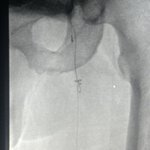
Adrenal vein sampling for primary hyperaldosteronism, with right and left adrenal venograms. Quick poll for the IR crowd: are you using cosyntropin stimulation during AVS, or sampling unstimulated? Curious what everyone's doing. #IRad #AVS #Hyperaldosteronism


Jonathan Iglesias, MD retweeted

Watched UM get completely jobbed by a bad fumble call against GT where Mario pissed himself.
You think i give a single fuck about FSU bitching about a holding call and an obvious interception.
Cry more losers. Give your coach an extension you broke fucks.
Jonathan Iglesias, MD retweeted

THE U IS BACK ON TOP 🔥
Miami is No. 1 in the AP poll for the first time since 2002.

Jonathan Iglesias, MD retweeted

I have nothing but water in my system doing the exact same shit in the stands rn non-canes just can’t comprehend the inner turmoil

