

The JCI is a premiere venue for discoveries in basic & clinical biomedical science. Est. 1924- https://nitter.cf/t.co/xG7OGiBMjm Bluesky: https://nitter.cf/t.co/2cy2MP5k6A
Ann Arbor, MI
Joined December 2010
- Tweets10.2K
- Following3.9K
- Followers51.2K
- Likes1.2K





Pinned Tweet
On the Cover: Ultra-rare variants in children with systemic juvenile idiopathic arthritis challenge purely cytokine-centered view: doi.org/10.1172/JCI196975
Anthony C. Cruz et al. @NIH report that variants of TNF receptor 1 found in patients with systemic juvenile idiopathic arthritis confer loss of function in TNFR1 signaling yet induce an inflammatory phenotype. The novel variants were retained in the Golgi apparatus, causing persistent cellular stress and downstream innate immune activation.

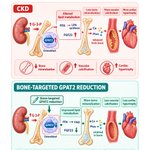
How might we mitigate bone and cardiovascular complications in chronic kidney disease? doi.org/10.1172/JCI207322
Petra Simic & team @harvardmed @MassGeneralNews report attenuated skeletal and cardiovascular pathology in #ChronicKidneyDisease models by targeting osteoblast fatty acid metabolism. The authors identified GPAT2 as a metabolic checkpoint in osteoblasts that underlies the mineral redistribution—reduced bone mineralization and increased vascular mineralization—that is associated with chronic kidney disease.
The illustration was generated using OpenAI ChatGPT (GPT-6).
@MGB
#CKD
🤖 Made with AI

Targeting osteoblast fatty acid metabolism attenuates skeletal and cardiovascular complications in chronic kidney disease models: doi.org/10.1172/JCI207322
🤖 Made with AI
155
Journal of Clinical Investigation retweeted

Excited to share our new paper in JCI! What do you think drives mitochondrial decline first in brain aging? Read free: doi.org/10.1172/JCI207965 #Neuroscience #Mitochondria #Aging #JCI
@jclinicalinvest
@PittNeurosurg
@PittTweet

How does a rare genetic mutation cause familial episodic pain syndrome (FEPS)? doi.org/10.1172/JCI206667
Matilde Marini, Francesco De Logu & team @UNI_FIRENZE reveal a rare gain-of-function mutation in TRPA1 causes pain in mouse models of FEPS through two different cell types. Mice that selectively expressed the mutation in Schwann cells or sensory neurons helped the researchers disentangle the contribution of TRPA1 function in Schwann cells from that of neuronal cells. While TRPA1 mutations in sensory neurons enhanced pain perception of acute painful stimuli, Schwann cells expressing the mutation were implicated in mechanical allodynia.
AI attribution: Schwann cell image generated By GTP-6 Astra
#channelophathies
🤖 Made with AI

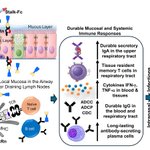
An intranasal influenza vaccine achieves broad protection in mouse models: doi.org/10.1172/JCI203675
Intramuscular vaccine delivery may not generate strong mucosal immunity, which is important to prevent respiratory infections. Li et al. @UofMaryland engineered a mucosa-targeted influenza vaccine by modifying the hemagglutinin Stalk protein to bind neonatal Fc receptor, enabling transcytosis of the immunogen across respiratory tract epithelial cells (image). Intranasal delivery protected against lethal infection with a range of group 1 influenza viruses, indicating the potential for a universal intranasal influenza vaccine.🧵


Mucosal vaccination with hemagglutinin stalk provides broad protection against influenza virus subtypes in mice: doi.org/10.1172/JCI203675

1
228
The dynamic behavior of neutrophils in this video showcase intravital lung microscopy in a new #CysticFibrosis chronic lung-infection model: doi.org/10.1172/JCI205523
Wanhai Qin @WanhaiQin, Paul Kubes @Kubes_Lab & team @UCalgary combined cystic fibrosis-like strains with bead–embedded P. aeruginosa that forms persistent, tobramycin-refractory biofilms, then used the model to evaluate dual targeting of virulence factors. Infection and inflammation were effectively controlled by the bispecific antibody gremubamab (MEDI3902).
Can we prevent kidney disease progression with pyridoxine in #SPLIS, a recently recognized inborn error of lipid metabolism that causes #NephroticSyndrome? doi.org/10.1172/JCI206980
Julie D. Saba @juliedeane & team @UCSF used a variety of approaches including analysis of purified recombinant enzyme, SPL activity in patient-derived fibroblasts, patient clinical responses and biomarkers, and the generation of a novel mouse model recapitulating the most common SPLIS-associated variant. The mice showed glomerulosclerosis, podocyte loss, and foot process effacement and pyridoxine supplementation ameliorated SPLIS features.
The featured transmission electron microscopy image shows a glomerulus within the kidney cortex of an SPL R222Q mouse model of SPLIS after onset of nephrosis on a diet lacking added pyridoxine. Podocyte foot process effacement is evident along endothelial basement membrane.
@the_asci @gyarmatigina @proialab

Pyridoxine supplementation ameliorates SGPL1 R222Q variant sphingosine phosphate lyase insufficiency syndrome in mice: doi.org/10.1172/JCI206980

1
263
Journal of Clinical Investigation retweeted

Congratulations to Prof. @saip_pydi and team on their JCI publication uncovering a novel macrophage pathway linking obesity to β-cell dysfunction and type 2 diabetes!
📄 Read the publication:jci.org/articles/view/202344
🎥 Watch the research video:youtu.be/8oJ15ikjn7o?si=CWAd…
#IITKanpur

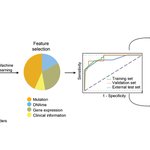
DNA methylation status predicts response to MDS treatment: doi.org/10.1172/JCI208317
Myelodysplastic syndromes (#MDS) are characterized by changes in DNA methylation, but treatment with DNA methyltransferase inhibitors is only successful in a subset of patients. Maria E. Figueroa @KenFigueroaLab & team @umiamimedicine analyzed epigenetic signatures of MDS patients at diagnosis and used machine learning to identify a signature predictive of response to azacitidine.
@the_asci @QMyPath
#ArtificialIntelligence

Sunday Highlight💫: Is it possible to separate the aversive (nausea) and appetite-suppressing effects of #GLP1 drugs? doi.org/10.1172/JCI193743
Findings from Yacawych et al. @UMich suggest no. The research team investigated Glp-1 receptor-expressing neuronal populations in mouse models, reporting a single dorsal vagal complex circuit mediates the aversive and anorectic responses to GLP-1R agonists.
The featured image (1/2) shows activation (purple) of genetically targeted Glp-1 receptor-expressing neurons (green) in the brain region called the area postrema. Activating these areas reproduced most of the feeding-related effects of GLP1R agonists.
@the_asci


Research Spotlight💫: How do JAK inhibitors promote secondary malignancies? doi.org/10.1172/JCI199141
Helene Pasquer @HelenePasquer, Lina Benajiba @BenajibaLina & team @Inserm combine cohort studies and in vitro and in vivo models, demonstrating JAK inhibitor exposure increases the risk of secondary aggressive cutaneous squamous cell carcinoma (#cSCC) by activating the MAPK pathway.
@camille_lobry


Journal of Clinical Investigation retweeted

Years ago, we treated a patient with advanced melanoma whose cancer had progressed despite multiple lines of immunotherapy. After combining the oncolytic virus T-VEC with binimetinib, we observed a remarkable response that has continued for years after discontinuing treatment.

Six of the 7 patients with NRAS-mutated #Melanoma achieved a complete response, many of which appear to be durable: doi.org/10.1172/JCI211137
In this Research Letter, David Y. Chen @chenlabwustl & team @washumedicine report combined #Oncolytic viral therapy with MEK inhibition is associated with unexpectedly strong responses in checkpoint-failed NRAS-mutated melanoma.
@SaligramaLab @WashUNeurology
#TVEC

Neutrophils close the loop: self-sustaining splenic myelopoiesis in #Cancer: doi.org/10.1172/JCI213855
Hongpeng Jia @JohnsHopkins comments on Lan Zhu et al.: doi.org/10.1172/JCI204067

Self-propagating splenic neutrophils restrain anti-tumor immunity: doi.org/10.1172/JCI204067
Lan Zhu et al. reveal that tumor-associated neutrophils drive a feed-forward circuit that sustains tumor-promoting immunosuppressive myelopoiesis in the spleen through release of ROS. Interrupting oxidative stress-driven neutrophil-to-progenitor signaling normalized anti-tumor immunity and reduced tumor progression in mice. 🧵

Neutrophil-progenitor feedback sustains splenic myelopoiesis and promotes immune evasion in cancer: doi.org/10.1172/JCI204067
1
379
See the Commentary highlight by Hongpeng Jia: doi.org/10.1172/JCI213855
252
Serotonin biosynthesis emerges as a metabolic driver in #ProstateCancer therapy resistance: doi.org/10.1172/JCI210677
Kevin Holm & Neil A. Bhowmick discuss Jing Wei et al.: doi.org/10.1172/JCI200391
@jasonbwu

Targeting serotonin synthesis in drug-resistant neuroendocrine #ProstateCancer (NEPC): doi.org/10.1172/JCI200391
Boyang Jason Wu @jasonbwu & team found that upregulation of the serotonin-producing enzyme TPH1 in NEPC tumors critically supports differentiation by increasing serotonin-dependent posttranslational modification and activation of mTOR. Silencing TPH1 suppressed NEPC growth in tumor models (see image).


