


fhash retweeted

Agents don't just need models. They need machines. 🖥️🤖
QuickSilver Machines: a cloud dev box with Claude Code, Codex, OpenCode and Hermes preinstalled. Open a tab, let your agent work.
20 machines in the open beta, first come first serve. ⚡

QuickSilver Machines is open: a dev box for your agents.
A Linux desktop + terminal in your browser, with Claude Code, Codex, OpenCode and Hermes preinstalled. Open it and let your agent work.
🇺🇸 US exit IP
💸 $0.02/h, billed per minute, paused is free
⚡ 2 vCPU / 4 GB, bursts to 4 vCPU
20 machines in the open beta. First come, first served. Free trial, no card.
quicksilverpro.io/machines

fhash retweeted

🔍 What made you trust it?
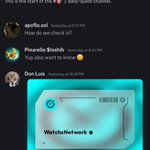
A familiar logo. A convincing photo. Would you trust the message?
Crypto 101 e48 asks us to look beyond appearances.
What made you trust something too quickly when you started in Web3? What would you tell a newcomer now?
nitter.cf/NodleNetwork/status/21…


fhash retweeted
🚨 Security advisory for all IoTeX delegates and node operators.
CVE-2026-98432 is a critical Linux kernel bug (CVSS 9.8) that can let an attacker get remote root over TCP. If you are running an IoTeX delegate on an affected Linux kernel, please patch today. 🧵
Why nodes are affected:
Go 1.24+ turns on Multipath TCP (MPTCP) for listeners by default, so iotex-core's P2P port 4689 listens over MPTCP. That is exactly the path the demonstrated remote-root exploit uses. You don't need to have enabled anything yourself.
Fix: upgrade the kernel, then reboot
• Debian 12/13: apt update && apt install linux-image-amd64 → 6.1.190+ / 6.12.113+
• Ubuntu (all releases): no fixed kernel yet. Apply the mitigation below 👇
Mitigation (no reboot):
Drop IPv4 packets that carry IP options, which the exploit needs:
nft add table ip ipopt_guard
nft add chain ip ipopt_guard pre '{ type filter hook prerouting priority -300; }'
nft add rule ip ipopt_guard pre ip hdrlength gt 5 drop
We've been working with delegates directly and many have already patched. If you run a node, please don't wait. 👀

🚨 Critical Linux kernel TCP flaw enables remote root code execution; CVE-2026-98432
A race condition in the Linux kernel’s IPv4 TCP implementation can trigger a use-after-free before application authentication, potentially allowing an unauthenticated remote attacker to leak kernel memory, corrupt memory or crash the system.
Anthropic says Claude developed a working exploit that executed attacker-chosen commands as root against Linux servers with a Multipath TCP listener. The exploit took approximately 53 minutes to complete during testing and has not been publicly released.
⠀
• CVSS: 9.8 Critical, according to the Linux kernel CVE team
• Affected: Linux kernels beginning with version 4.4
• Fixed: 5.10.272, 5.15.223, 6.1.190, 6.6.159, 6.12.113, 6.18.56, 7.2.10 and 7.3
• Attack requirements: Network access, no credentials and no user interaction
• Exploitation status: No known attacks in the wild
⠀
Ubuntu and Red Hat Enterprise Linux had not released corrected kernel packages as of October 29. Debian, Oracle Linux, Amazon Linux and SUSE have released fixes for at least some affected branches.
Distribution severity ratings differ substantially. Red Hat rates the flaw 5.9 because it considers the race difficult to win and describes denial of service as the most likely practical impact.

fhash retweeted

BANGKO SENTRAL SOLD OUR GOLD RESERVES AT A LOSS!
You would think the members of the Monetary Board, who manage our Bangko Sentral, are geniuses, wise men averaging 70 years old.
But they just sold a pile of our gold reserves at a loss. Big, big loss.
In 2024, they sold 25 tons of gold when prices were ranging from $2,000 to $2,400 per ounce.
In 2025, they again sold 25 tons of gold when prices were ranging from 2,338 to $2,427 per ounce. Supposedly to prop up the peso.
How much is gold trading now? $3,884.90. It in fact peaked at $5,500 this year.
We lost by half. And yet, they're paid from P30 Million to P50 Million a year for their supposed wisdom and expertise.
They still failed to prop up the peso. It keeps falling against the dollar. So, essentially, all that gold vanished into thin air.
Will the Ombudsman look into this and if warranted, fire them all for gross inexcusable negligence. They're not impeachable officials.
And better check how much gold is still left in our vault. And keep it away from these old men.

fhash retweeted
Door #3 is getting busy. ⚡
9B tokens served by QuickSilver since launch, with weekly volume more than tripling week over week.
Connect intelligence, at scale!

fhash retweeted
🔥 Brace yourselves – this November will be the hottest you’ve ever experienced.
We’re about to spotlight the places where activity is building fast.
Can you guess which locations are about to light up?
🥨 🍰 🫕
fhash retweeted

AI makes everything possible - the bad surprises, and the good ones!
We're preparing for the first kind. 🛡️
We're building for the second. 🪁

What if your $IOTX had a doomsday bunker? 🛡️
We're introducing IIP-65: Bunker Mode—a draft proposal and working proof-of-concept for AI-safe, quantum-safe staking, inspired by @drakefjustin 's call for crypto to plan a "bunker mode."
The Problem
Today, a single ECDSA key controls your onchain asset. If a large enough quantum computer or AI-accelerated breakthrough cracks the math, an attacker could derive your private key from your public key and withdraw everything. Making the entire ecosystem AI & quantum-safe will take years and depends on many partners.
But a bunker doesn't have to wait.
The Solution: A Second Lock
1️⃣ Go in now: Bind a post-AI/quantum key to your bucket once, while your current key is still safe.
2️⃣ Wait it out: Your bucket keeps voting and earning rewards. But any critical action (unstaking, withdrawing, transferring) now requires the new key.
3️⃣ Come out later: Once post-quantum accounts exist, sign once with the new key and safely migrate your IOTX. If Q-day or an AI breakthrough comes while you're inside, the attacker hits a wall.
Why hash-based?
The new lock uses SLH-DSA (NIST FIPS 205). While lattice-based schemes rely on algebraic structures that future math might crack per @VitalikButerin, SLH-DSA rests purely on hash functions. It has no structure to break, making it the most conservative choice.
The trade-off is a "heavy door" (~16 KB signatures, signed offline)—perfectly fine for a vault you only open a few times a year.
Proof-of-Concept Highlights
⚡️ Fast: 0.23 ms to verify a signature on-chain.
🪶 Lightweight: 48-byte public key per bucket.
🔌 Frictionless: Fully opt-in & per-bucket. No EVM changes, no new address formats, no waiting on anyone else.
It's still a draft, and we want your feedback (and vote later) to make it real and bulletproof.
🎥 Explainer below
fhash retweeted
Machines that see and decide in real time. 👀⚡
Trio-Spark v1.4 from @machinefilab now reads photos, video frames and text through one API: spotting hazmat placards and inspecting truck equipment, zero-shot.
This is how machines get smarter. One more door into the open intelligence network. 🗝️

Trio-Spark v1.4 is officially here. 🔥
We’ve unified text, images, and short video behind one powerful API. On 13 public benchmarks against top models like Jev 1.14 and Clef-Flash, Trio-Spark consistently ranks best or tied for best.
Read the full breakdown: machinefi.com/blog/trio-spar…

fhash retweeted
What if your $IOTX had a doomsday bunker? 🛡️
We're introducing IIP-65: Bunker Mode—a draft proposal and working proof-of-concept for AI-safe, quantum-safe staking, inspired by @drakefjustin 's call for crypto to plan a "bunker mode."
The Problem
Today, a single ECDSA key controls your onchain asset. If a large enough quantum computer or AI-accelerated breakthrough cracks the math, an attacker could derive your private key from your public key and withdraw everything. Making the entire ecosystem AI & quantum-safe will take years and depends on many partners.
But a bunker doesn't have to wait.
The Solution: A Second Lock
1️⃣ Go in now: Bind a post-AI/quantum key to your bucket once, while your current key is still safe.
2️⃣ Wait it out: Your bucket keeps voting and earning rewards. But any critical action (unstaking, withdrawing, transferring) now requires the new key.
3️⃣ Come out later: Once post-quantum accounts exist, sign once with the new key and safely migrate your IOTX. If Q-day or an AI breakthrough comes while you're inside, the attacker hits a wall.
Why hash-based?
The new lock uses SLH-DSA (NIST FIPS 205). While lattice-based schemes rely on algebraic structures that future math might crack per @VitalikButerin, SLH-DSA rests purely on hash functions. It has no structure to break, making it the most conservative choice.
The trade-off is a "heavy door" (~16 KB signatures, signed offline)—perfectly fine for a vault you only open a few times a year.
Proof-of-Concept Highlights
⚡️ Fast: 0.23 ms to verify a signature on-chain.
🪶 Lightweight: 48-byte public key per bucket.
🔌 Frictionless: Fully opt-in & per-bucket. No EVM changes, no new address formats, no waiting on anyone else.
It's still a draft, and we want your feedback (and vote later) to make it real and bulletproof.
🎥 Explainer below
fhash retweeted

🏆 THREE CATEGORIES. THREE SHOTS AT MAKING HISTORY.
And if we win, we’re celebrating with a 500 USDT GIVEAWAY! 🔥
We are competing at the @PlayToEarn Blockchain Game Awards 2026 for:
📱 BEST MOBILE GAME
🖥️ BEST BROWSER GAME
🏆 GAME OF THE YEAR
Last year, we took home two awards. This year, let’s go for all three!
Until November 13, you all can make some noise!
🗳️ VOTE FOR US NOW: playtoearn.com/awards/2026?i…
fhash retweeted
Every release makes the machine on your desk smarter. That's how an open intelligence network grows, one node at a time. 🍎🤖

Rapid-MLX 0.16.9 is out 🐆
⚡ 47× faster first token on repeated long prompts. A ~32K-token prompt that took 18.6 s to start now starts in 0.39 s.
🔥 Flint 40B runs on a 36 GB Mac at 131 tok/s, with tool calls and reasoning built in.
👉 rapid-mlx serve flint-40b-a2.5b-4bit
👥 Parallel chats decode together: 2× aggregate throughput on Qwen3.8-27B.
👉 rapid-mlx serve qwen3.8-27b-4bit
🧠 New: Nemotron 3.5 Bolt E4B, with tool calls and thinking controls.
👉 rapid-mlx serve nemotron-3.5-bolt-e4b
🛠 One command to connect your coding agent, offered as soon as the server is ready.
👉 rapid-mlx launch codex
Give it a try: rapidmlx.com/download

fhash retweeted
Security has been core to the IoTeX L1 since mainnet launched in 2019. Now we're bringing the security research community in.
The IoTeX L1 now has a formal vulnerability disclosure policy: private reporting, clear scope, safe harbor, and public credit for researchers.
Come break things (on devnet). 🛡️
github.com/iotexproject/iote…

fhash retweeted

Ready. Set. Capture. 🎥🟣
Before you start a task, check your setup:
✓ Secure your head mount
✓ Keep your camera view clear
✓ Make sure your hands and actions are visible
A little preparation goes a long way toward capturing useful training data for Physical AI.
V3 Early access are rolling out. Stay tuned for updates.

fhash retweeted
Simple for humans. Complex for robots. 🪑💜
Assembling a chair may feel effortless to us, but for a robot, every movement holds information, from grip and force to object orientation, timing, and sequence.
Teaching Physical AI to understand the real world starts with capturing the details humans rarely think twice about.
The action is simple. The data behind it isn’t.

fhash retweeted

Panoorin ninyong mabuti kung paano kumilos ang Dilawan/Pinklawan, Leftists, at pro-LP oligarchs na magamit muli si Jr. para buhayin ang partido nila. Sabi nitong vlogger, hinihintay nila ang Martial Law at cha-cha para ulitin nila ang playbook na ginawa sa tatay niya.
fhash retweeted
IIP-59 is live, so we visualized it.
Every dot in this video is a real staking reward payment on the IoTeX L1, replayed block by block from on-chain data. Nothing is simulated.
Since the Zanzibar upgrade, the protocol has paid 432,542 IOTX to 13,846 voters across 46 delegates, in 34,485 payments.
No claims. No manual payouts.
✅ Zanzibar is officially live on the IoTeX mainnet!
The headline: Staking rewards are now paid directly by the protocol.
Thanks to IIP-59, voter rewards are computed and distributed on-chain every reward era. No off-chain services, no middlemen. Every payout is fully verifiable by anyone, directly from the chain. The first on-chain distribution lands tomorrow. 🗓️
Zanzibar also hardens our consensus ahead of BLS signature aggregation via proof-of-possession checks on delegate keys.
A massive thank you to all the delegates and node operators who upgraded on time. 🙏
Less trust. More verification.
fhash retweeted
Useful training data comes from everyday actions, even preparing a meal. 🍳
From picking up ingredients to chopping, stirring, and placing objects, every movement can help robots better understand how people interact with the physical world.
Real-world actions. Structured data. Smarter Physical AI.

fhash retweeted
Zero-shot. Multimodal. Calibrated. $14 per million images.
Our Trio-Spark model reads a highway frame in one forward pass and knows what the truck is hauling, and how sure it is.
IoTeX has always been about making machines smart. Now they understand what they see, on an open, verifiable intelligence network.
We showed our multimodal fast-decision model Trio-Spark random photos of US trucks and asked one question: "What is it hauling?"
• Zero training. Zero examples.
• 83% accuracy across 7 trailer types.
• 100% hazmat placards caught.
• Cost: Just $14 per MILLION photos. 🤯
Extracting equipment, hazmat, or load status on every highway frame used to be cost-prohibitive. Now, Spark delivers calibrated probabilities in a single pass, letting your pipeline automate the confident calls and only route edge cases to humans.
Run a camera network? Send us 10k labeled images and we'll prove the accuracy and cost on your own data.
Try it out: platform.machinefi.com/spark
fhash retweeted
To understand how humans interact with the world, start with the view from their eyes. 👀
Head-mounted capture records tasks from a first-person perspective, capturing the movements and interactions that help robots learn from real-world demonstrations.
Different perspective. More meaningful data.
That’s how we help power Physical AI. 🟣
🤖 Made with AI

fhash retweeted
The real world doesn’t happen inside a lab. Neither should all the data used to teach robots. 🌍
From homes to warehouses, everyday human activities create diverse data that helps robots learn to navigate the physical world.
With CapturGO, contributors everywhere can help build the foundation for Physical AI🤖
