



Pinned Tweet
Do we really need to learn from our mistakes? Couldn’t we just… make optimal decisions like computers 🤖 and not make mistakes?
Well, our new work accepted in Computational Brain & Behavior journal indicates that it might be possible!
arxiv.org/abs/2203.02776 🧵👇1/9

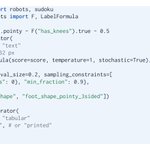
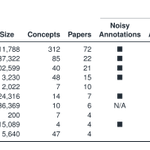
We built synthetic benchmarks to help researchers study concept bottleneck models (CBMs)! 🧵
📄 Paper: arxiv.org/abs/2606.04326
💻 Code: github.com/ustunb/concept-be…
📦 pip install concept-benchmark

This was joint work with @1000_harrry @shresearchucsd @meredithds99 and my advisor @berkustun.
I'll present it at the Interpretable Deep Learning seminar on Wed, Nov 25, 8:30am PT (youtube.com/@InterpretableDe…), and at #NeurIPS2026 in Sydney (Tue 10am, poster S512).

1
1
35

I recently gave a 15-min talk at #NeurIPS2025 on why "interpretable" AI doesn't automatically lead to better human decisions, and discussed my research on human-AI collaboration.
Watch here: youtube.com/watch?v=JTuUhyzc…
54
Right to explanation laws assume explanations help people detect algorithmic discrimination.
But is there any evidence for that?
In our latest work w/ David Danks @berkustun, we show explanations fail to help people, even under optimal conditions.
PDF shorturl.at/yaRua

But if they are indeed used to dispute discrimination claims, we can expect multiple failed cases due to insufficient evidence and many undetected discriminatory decisions.
Current explanation-based auditing is, therefore, fundamentally flawed, and we need additional safeguards.
1
46
We’ll be presenting @FAccTConference on 06.24 at 10:45 AM during the Evaluating Explainable AI session!
Come chat with us. We would love to discuss implications for AI policy, better auditing methods, and next steps for algorithmic fairness research.
#AIFairness #xAI