

Director/Director of Photography IG: JabrielFilms
Atlanta, GA
Joined July 2010
- Tweets8.6K
- Following4.7K
- Followers1.9K
- Likes26K




16 retweeted
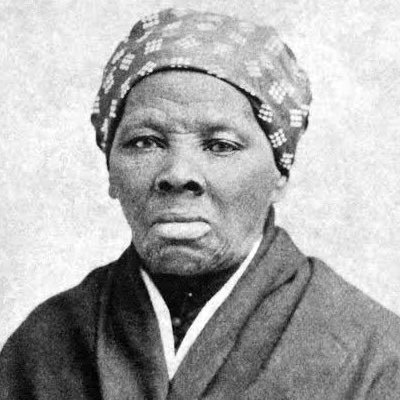
On this day in 1961, Charlayne Hunter and Hamilton Holmes, the first black students enrolled at the University of Georgia 2 days earlier, were suspended.
This was after thousands of white people violently rioted. They were initially denied enrollment but a federal judge ordered their admission.
—Hamilton simply wanted to become a doctor. Charlayne simply wanted to become a journalist.
Both agreed that the University of Georgia had the classes they needed to reach those goals. But when they graduated from Henry McNeal Turner High School in Atlanta in 1959—Holmes as valedictorian and Hunter (now Hunter-Gault) as third in their class—it wasn’t quite that simple.
Both Hunter and Holmes applied to UGA for the fall 1959 quarter but were denied. Holmes was accepted to Morehouse College, and Hunter enrolled at Wayne State University in Detroit, but they continued to submit applications to UGA each quarter.
Eventually Hunter and Holmes became the first black students to attend UGA, but that is just the beginning of their stories.
On January 9, 1961, thousands of white people violently rioted because Charlayne Hunter and Hamilton Holmes registered at the University of Georgia, becoming the university's first Black students. Their enrollment came days after federal judge William Bootle ordered the university to admit them, ending a two-year administrative and legal fight to integrate the school.
When Ms. Hunter and Mr. Holmes arrived to register for classes they were met by nearly 100 white students opposing their admission. The crowd grew in the coming hours and the opposition escalated into full-scale riots, involving nearly 2,000 white students, local residents, and Ku Klux Klan members. The rioters set fires outside Ms. Hunter's dormitory, hurled rocks inside, and yelled racist epithets. At least one student in the dormitory was injured by a flying object. After several hours, campus officers, city police, and local firefighters quelled the riot.
In response to this violent white mob, composed of many white students from the university, officials forced Ms. Hunter and Mr. Holmes to withdraw from the university and Georgia state troopers escorted them home. White student leaders gloated at their victory, and one cited the University of Alabama's violent reaction to the enrollment of Autherine Lucy in 1956 as inspiration for their own demonstration.
Days later, Judge Bootle ordered the university to readmit Ms. Hunter and Mr. Holmes. They both completed their studies in 1963, becoming the first Black undergraduate students to graduate from the University of Georgia.
🖋️You can support the page via donations to keep up on africanarchives.support 🖤 thanks!





16 retweeted
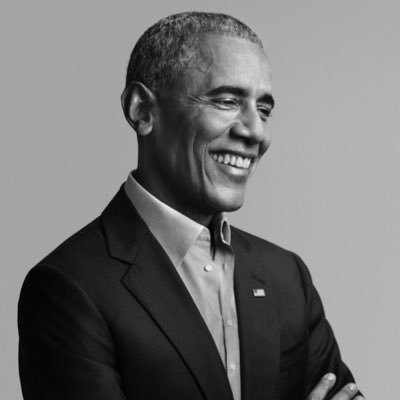
Congratulations to US Open champion, @CocoGauff! We couldn’t be prouder of you on and off the court - and we know the best is yet to come.
16 retweeted

flyanaboss.lnk.to/youwishrem… 🏃🏾♀️👋🏾🔥🔥💃🏾🕺🏾😮💨👽👽👽👽
16 retweeted
Henry Ossian Flipper, the first black cadet to graduate from the United States Military Academy at West Point in 1877. He was also the first Black man to be commissioned in the Army, he led buffalo soldiers of the 10th Cavalry.
—Born near Thomasville, Georgia on March 21, 1856, Henry O. Flipper rose to prominence as the first African American graduate of the United States Military Academy at West Point in 1877. Despite being born into slavery to Festus, a shoemaker, and Isabella Flipper, Henry was reared in a family that emphasized excellence, and he and his younger brothers all became respected members of their communities as a military officer, AME bishop (Joseph), physician (E.H.), college professor (Carl), and farmer (Festus, Jr.).
Commissioned a 2nd Lieutenant in the U.S. Army upon completing West Point, Flipper was transferred to the l0th U.S. Cavalry Regiment where he became the highest ranking and most famous of the Buffalo Soldiers (African Americans in all-black regiments) stationed at Western military installations. Flipper’s assignments included Fort Sill, Oklahoma, and Fort Elliott, Fort Concho, Fort Davis, and Fort Quitman, all in Texas. Flipper earned distinction during the the Victorio Campaign which pitted the Apache leader Victorio against the U.S. Army in Texas and New Mexico between 1879 and 1880. There he was assigned to A Troop under the command of Captain Nicholas M. Nolan. While on that assignment he became the first officer of color to lead Buffalo Soldiers in battle.
Trained as an engineer, Lt. Flipper was known for his design of a drainage system at Fort Sill, Oklahoma (popularly known as Flipper’s Ditch and now a national monument) which minimized malaria by removing standing water.
Flipper’s military career ended when Flipper was accused of embezzling $2,000 in government funds while serving as quartermaster at Fort Davis, Texas. Flipper was charged with taking the funds and then lying about it when confronted. He was tried and acquitted of all charges except “conduct unbecoming an officer and a gentleman” at a U.S. Army court-martial at Fort Davis on September 17, 1881. Despite appeals by Flipper’s supporters who argued that his close association with Mollie Dwyer, the sister-in-law of Captain Nolan, was the real motive behind the charges and the harsh sentence (two white officers were found guilty of embezzlement but neither was dishonorably dismissed from the Army) was racially motivated, President Chester A. Arthur refused to alter the court-martial verdict. Flipper was discharged from the Army on June 30, 1882. He spent much of the rest of his life challenging the charges and attempting to clear his name.
After his dismissal from the U.S. Army, Flipper lived primarily in El Paso, Texas until 1919 where he worked as a civil mining engineer, surveyor, translator, newspaper editor, historian, and folklorist in Arizona, New Mexico, and Mexico. His success in these areas was partly because of his fluency in Spanish. In 1921 Flipper came to Washington, D.C. as the assistant to former U.S. Senator Albert Fall of New Mexico when the Senator was appointed Secretary of the Interior by President Warren G. Harding. By 1923 he was employed by Texas oilman William F. Buckley Sr. to worked as an engineer in the petroleum industry in Venezuela.
Flipper authored two autobiographies: The Colored Cadet at West Point in 1878 and Negro-Frontiersman, The Western Memoirs of Henry O. Flipper (completed in 1916), which Theodore D. Harris edited and published in 1963.
Despite his many accomplishments, Lt. Flipper is most remembered in history as a casualty of racism in the military for his court-martial trial primarily on the charge of embezzlement at Fort Davis. Flipper retired to Atlanta, Georgia in 1931 and died there on May 3, 1940 at the age of 84. Thirty-six years later, in 1976, Flipper was posthumously granted an honorable discharge by President Jimmy Carter. He received a full presidential pardon

16 retweeted

ScHoolboy Q speaks on Isaiah Rashad being a “perfect artist” :
“He’s one of the most perfect artists to ever exist. Like when it comes to song structure, when it comes to songwriting, when it comes to soul, when it comes to ‘that’ thing, when I hear Zay, he just has something [about him] that I’ll never have.”


16 retweeted
During the Oscar ceremony, Hattie wasn’t allowed to sit on the same table with her fellow actors from the ‘Gone with the wind’ film, due to the hotel’s ‘No Blacks’ policy.
Her white agent had to call in favors and she was allowed to sit at a small table at the far end.


16 retweeted

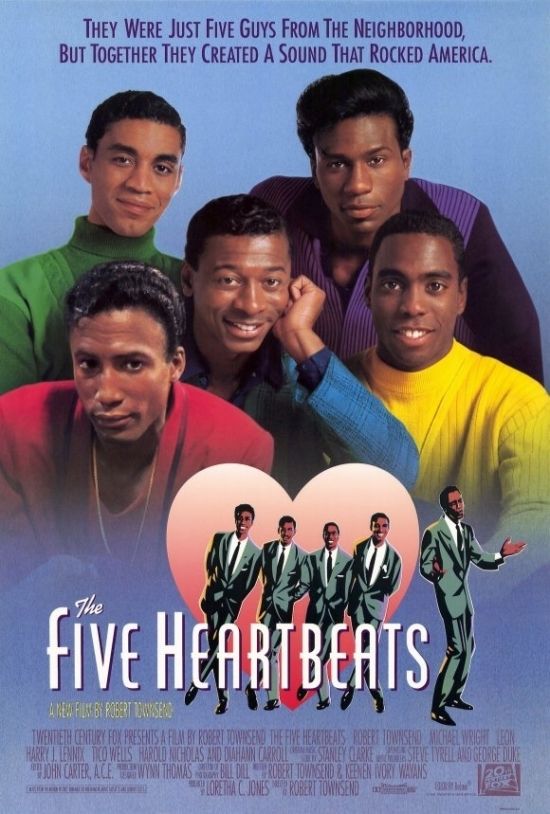
Hey y’all. Please read and share as you feel led. My friends and their daughters have lost everything in a home fire. They are working to recover everything that has been lost. If you can’t give, please amplify. Love ✨
gf.me/u/4qppr8

16 retweeted

Ironically a month before
Yusuf Hawkins was killed
Spike lee created a film set in Brooklyn
Called “do the right thing”
Where racial tension between
Black Americans and Italian store owners would explode into chaos
On the streets


