

Father, market follower , reader, my private views and interesting items Liked, understand Grit, sustainable entrepreneurship
South Africa
Joined October 2012
- Tweets940
- Following3.2K
- Followers442
- Likes3.3K






Jacques Groenewald retweeted

Current situation:
1. The US is preparing $2,000 stimulus checks
2. Japan is preparing a $110 billion stimulus package
3. China has approved a $1.4 trillion stimulus package
4. The Fed is officially ending QT on December 1st
5. The US is issuing~$1.9 trillion in treasures per year
6. Canada is restarting its Quantitative Easing program
7. Global M2 money supply is at a record $137 trillion
8. Global rate cuts are at 320+ over the last 24 months
In what world is another wave of inflation not on its way?
Jacques Groenewald retweeted

THE GREAT EXODUS: Silicon Valley’s Legends Just Fled AI’s $3.5 Trillion House of Cards
The smartest money in history just executed the largest coordinated retreat from a single technology in financial markets. What they discovered will redefine civilization.
Peter Thiel deleted 537,742 NVIDIA shares. Every single one. The man who turned $500,000 into $1.7 billion with Facebook and predicted the 2000 crash now runs from AI hardware while his own company Palantir rides AI euphoria to 174% gains. That contradiction is the signal.
Michael Burry deployed $1.1 billion shorting NVIDIA and Palantir, then announced fund closure. The investor who called the 2008 housing collapse is making his largest bet ever against AI infrastructure. His options generate 72% returns purely from volatility explosion, not price decline. He expects regime change from certainty to crisis.
SoftBank sold $5.83 billion NVIDIA to fund $22.5 billion for OpenAI, which buys NVIDIA chips. Parse that: they liquidated the stock to fund the customer. This circular architecture requires $140 billion yearly to avoid collapse. When capital inflows decelerate below that threshold, the loop breaks.
Ray Dalio cut NVIDIA 64%. Viking Global exited entirely. Bridgewater, Coatue, sovereign wealth funds from Norway and Canada, all rotating away. Total institutional selling reached $20.4 billion in Q3 while retail drove the stock up 47.6%. That divergence has a name: distribution into strength. It preceded every major crash.
The physics nobody mentions: AI compute demand grows 50% to 100% annually. Energy infrastructure grows 3% to 5%. By 2027, AI consumes 460 terawatt hours, exceeding UK total electricity. The math does not work. Exponential projection meets thermodynamic ceiling.
Thiel survived dot com by recognizing transformative technology can arrive 15 to 20 years before profits. Markets cannot wait that long. NVIDIA trades at 54x trailing earnings versus 20x historical norm. The valuation assumes 80% permanent market share, infinite energy, Taiwan geopolitical stability, and monetization within three years.
November 20 earnings decide everything. Guidance miss above 10% triggers what Burry positioned for: the largest AI infrastructure revaluation in history.
Three prophets with perfect records just ran. The building is still full. Your move.
open.substack.com/pub/shanak…

Jacques Groenewald retweeted
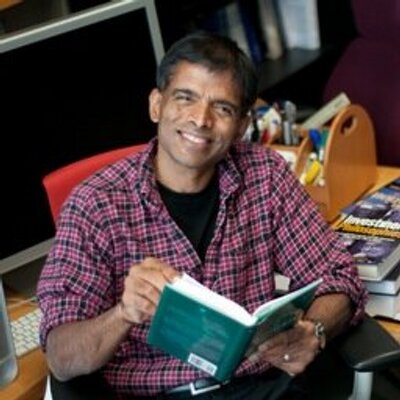
Stock and bond markets climbed walls of worry nonchalantly in 2025, but gold also had its best year since 1979. I am a novice when it comes to gold, but my thoughts on gold as investment and insurance are in this post. bit.ly/43ktAH4

Jacques Groenewald retweeted

The Ratio of the Defensive Consumer Staples ETF to the S&P 500 ETF has moved down to its lowest level on record, below where it stood at the dot-com bubble peak in March 2000. $XLP $SPY
bilello.blog/newsletter

Jacques Groenewald retweeted

All Hell Breaks Loose In Repo Markets... And Why A Historical Meltup Could Follow zerohedge.com/markets/all-he…
Jacques Groenewald retweeted

🚨Oracle's risk of DEFAULT is surging:
Oracle's 5-year Credit Default Swap spiked to 81 basis pts, the highest in 2 YEARS.
Credit traders are buying protection against Oracle defaulting on its debt at the fastest pace since 2023.
Can Oracle sustain its aggressive AI buildout?


Jacques Groenewald retweeted

Berkshire Hathaway (BRK.B) continues to raise cash, now having $381 billion. I still remember in 2008 when Warren Buffet used his cash pile to bail out financials like Goldman Sachs (GS) for an epic deal. He knows something big is coming and is preparing.


Jacques Groenewald retweeted

“Money is essentially an information system for labor allocation, so it has no power in & of itself. it's like a database for guiding people as to what they should do.”
— Elon Musk

Jacques Groenewald retweeted

A Nostalgic Look Back at the 1990s
A Thread 🪡
1. Hands-free telephone headset tv commercial from 1993
Jacques Groenewald retweeted
It is too early to even call this the tariff cycle, but if history is any guide, there will be aftershocks, more negative than positive, near term economic damage and a long term effect on both the size of the economic pie as well as who gets what slice. bit.ly/4jth9hT

Jacques Groenewald retweeted
I revisit my Tesla valuation from January 2024 (where I valued the stock at $182) and revalue the company with a less soaring EV story, competition from BYD and the backlash to Musk's politics to arrive at a value of about $150 a share. bit.ly/41Q8WNh

Jacques Groenewald retweeted
On the day that Nvidia has the market's attention, and AI is the talk of the town, I look at the personal disruption (to you work and jobs) that is likely to come from AI, and what you can do to stay ahead of the game. bit.ly/3X7dXi8
Jacques Groenewald retweeted
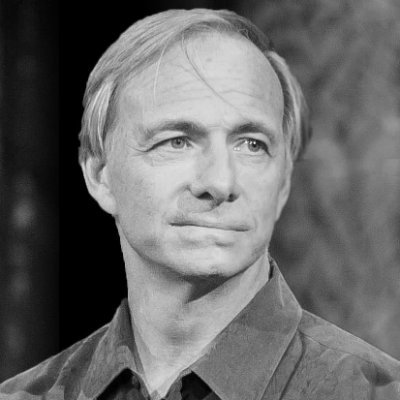
Based on my study of history, I believe there are now and have always been five big, interrelated forces that drive how domestic and world orders change.
The following article linkedin.com/pulse/pick-side…, which appears on @TIME, focuses on why I believe we are approaching the point in the internal order-disorder cycle when you will have to choose between picking a side and fighting for it, keeping your head down, or fleeing.
Please leave any thoughts or feedback you have in the replies.

Jacques Groenewald retweeted

Aswath Damodaran with an INCREDIBLE video on valuing stocks
This is a pure investing masterclass:
Jacques Groenewald retweeted

MUST READ 🙏
Remembering my teacher Charlie Munger - By Li Lu
Thursday, November 30, 2023
I was on a business trip in Asia on Tuesday when I got the call from the Munger family informing me that Charlie was in his final hours. I hopped onto the next flight I could find to California, and before departure, was able to talk to Charlie through the help of his daughter. Charlie had largely lost consciousness, but still I could clearly hear him trying to make a sound to acknowledge he had heard me. Upon landing, I learned that Charlie had left us a few hours earlier.
I arrived at his Santa Barbara home and had the opportunity to spend cherished time with family members, reminiscing about all things Charlie. Charlie was engaging, humorous and full of wit even at Thanksgiving dinner just a few days ago, family members told me. I visited his home library again. In that very room, exactly 20 years ago, also on a post-Thanksgiving weekend afternoon, following the introduction by our mutual friend Ron Olson, Charlie and I first struck up a deep conversation which ran for several hours. It began an investment partnership that has now endured two decades. Charlie became my mentor, partner, dear friend and above all, life-long role model.
I was so deeply grateful that the Munger family made a special arrangement the next day for me to say a proper and private goodbye to Charlie.
There, lying quietly with eyes closed, Charlie looked the same as ever, peaceful and sincere with a subtle smile on his face. There was a serenity about him. For a moment, I was reminded of the Living Buddhas I once saw in the Buddhist temples of Thailand. In the Buddhist tradition, the bodies of truly enlightened monks, through life-long self-cultivation, can remain incorrupt, without any traces of mummification after death. In that moment, it is what I saw in Charlie, an enlightened sage with an incorruptible body, surrounded by a glimmer of eternal light.
Charlie was not a Buddhist. That vision can never be tested. But it is incontrovertible that his legacy and impact will live on for generations to come.
In our capitalist society, where do virtue, moral responsibility, truth-seeking and public service fit in? Charlie Munger answered these questions through his long exemplary life. He insisted on making money in the most morally sound way, entering transactions only when, if positions were reversed, he would comfortably take the other side. He sought worldly wisdom through life-long learning. He guided life with rationality devoid of mental deficiencies such as envy, resentment and self-pity. He faced and persevered through countless adversities with stoicism and equanimity. As he gained in wealth and stature, he showed little appetite for the trappings of that success, and instead spent his wealth on worthy causes and tirelessly spread his worldly wisdom to those who would listen, often with humor. He remained deeply engaged with family, friends, partners and the broader world with loving assiduousness through his last days.
In his later decades, Charlie Munger’s ideas began to spread across the world, particularly in the most populous countries of China and India. In China, the Mandarin language version of “Poor Charlie’s Almanack,” an anthology by and about Charlie Munger, sold over 1.2 million copies over the last 10 years. There, the educated class increasingly came to view Charlie as the embodiment of the modern-day Confucianism, maintaining a virtuous and enlightened life while embracing the market forces of capitalism. In time, that vision of modern Confucianism will be crucial for Chinese modernization and how China interacts with the rest of the world.
Charlie’s teachings will continue to spread, inspire and impact the world even more profoundly. That will be his eternal legacy.
Please retweet

Jacques Groenewald retweeted
My Tesla tweetstorm stands by itself, but if you prefer a different format, here you go.
Blog Post: bit.ly/47fyyEt
Spreadsheet: bit.ly/3tTnjDj
YouTube: youtu.be/iqyfByXmZHI?si=dF_g…
Sorry but no TikTok or Instagram (yet)!
Jacques Groenewald retweeted

In an unprecedented shift, AI and other technological advancements now require more capital investment than sectors traditionally associated with natural resources.
To be precise:
The S&P 500 tech companies, including Amazon and Alphabet, collectively allocate a higher annual capital expenditure than the combined spending of the energy and materials sectors.
